Fashion Design
& Technology
Design garments, collections & fashion systems for global markets.
Programme
overview.
See curriculum →
The B.Des. in Fashion Design & Technology trains students to design garments, textiles, and fashion systems that bridge creativity, culture, and commerce.
The programme integrates India's textile heritage with digital tools, sustainable design principles, and global market awareness - from foundation to full collection.
Your 4-year
curriculum.
How to apply →
First Year: Foundation Year
Exploring Design, Craft & Fashion Fundamentals.
- Fundamentals of design
- Fashion history, design evolution, and cultural contexts
- Fashion drawing, representation, and communication skills
- Craft study, yarn craft, and surface manipulation
- Introduction to fashion studios and creative exploration
- Understanding materials, textures, and basic garment concepts
Second Year: Skill Enhancement
Developing Fashion Design & Technical Skills.
- Fibre to fabric, textiles, and cultural textiles of India
- Pattern making, fit, form, and function
- Fashion studios focusing on craft-to-wear and wearable concepts
- Digital fashion, representation, and simulation tools
- Fashion styling, photography, and textile design
- Traditional embroidery, painting, and printing techniques
Third Year: Specialisation
Industry Engagement, Innovation & Emerging Practices.
- Fashion apprenticeship and industry interaction
- Conscious forecasting, design innovation, and fashion futures
- Apparel merchandising and retail branding strategies
- Fashion for social impact and sustainable practices
- Digital production, wearable structures, and smart textiles
- Fashion communication, storytelling, and wearable art
Fourth Year: Professional Practice
From Designer to Fashion Professional.
- Fashion industry internship and professional practice
- Graduation design studio and final collection development
- Portfolio development and personal brand building
- Fashion entrepreneurship, presentation, and professional ethics
Semester
subjects.
How to apply →
- Material Matters
- Designverse
- Design: Contexts & Perspectives
- Space, Form & Structure
- Design Evolution
- Fashion Studio I
- Craft Study & Documentation
- Fashion Genesis
- Communication & Presentation Skill
- Fashion Drawing & Representation
- Fashion Studio II
- Fibre to Fabric
- Craft & Culture: An Experiential Approach
- Digital Fashion & Representation
- Design Studio - Craft to Wear
- Introduction to Fashion Styling
- Fashion Karkhana
- Cultural Textiles of India
- Fashion Representation & Simulation
- Creative Pattern Making
- RTW - Fashion Fit, Form & Function
- Fashion Apprenticeship
- Digital Production Studio
- Conscious Forecasting & Design Innovation
- Apparel Merchandising
- Fashion for Social Impact
- Portfolio Development
- Fashion Business & Entrepreneurship
- Fashion Futures: AI & Smart Textiles
- Wearable Structures: Garment Design Studio
- Retail Branding & Strategy
- Fashion Industry Internship
- The Designer's Journey: Graduation Studio
- Industry internship (6 months)
Career outcomes.
Apply now →Fashion Designer
Apparel Designer
Textile Designer
Fashion Stylist
Visual Merchandiser
Fashion Buyer
Fashion Entrepreneur
Studios
& facilities.



Brunnai
Professional handlooms studio with traditional weaving equipment.
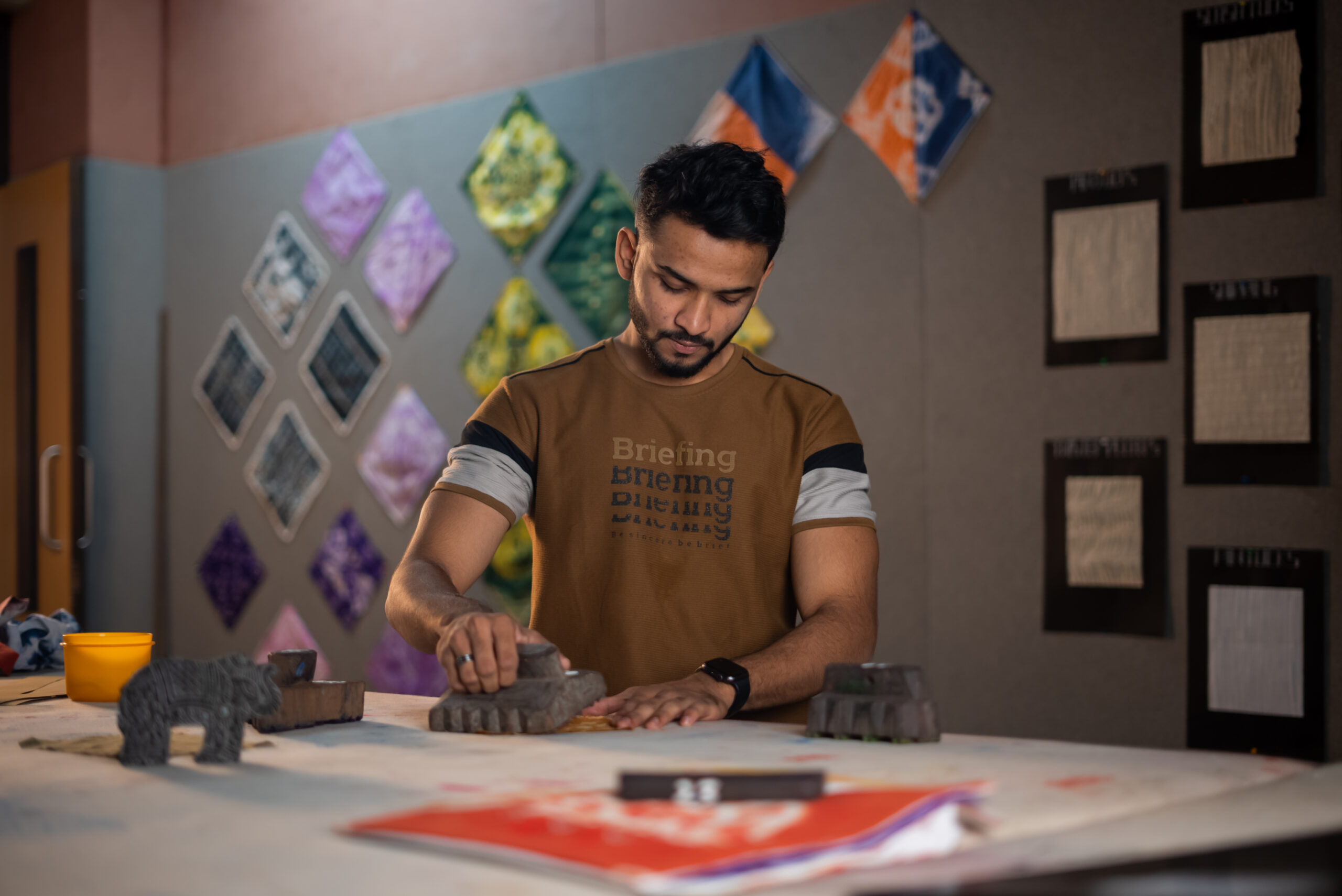
Chhaap
Garment printing studio for sustainable surface design.
Sanchana
Industrial sewing lab with 40+ professional machines.
Fashion Studio
Cutting & draping tables, exhibition spaces.
Design Aptitude Test
An online entrance test assessing visual sensitivity, creative thinking, and logical reasoning. No prior design experience required.
Portfolio Review
Submit work reflecting your creative curiosity - sketchbooks, photographs, mood boards, and DIY projects all qualify.
Frequently
asked.
India’s fashion and apparel industry is worth over ₹6 lakh crore and is one of the world’s largest exporters of textiles and garments. Opportunities exist in luxury fashion, sustainable labels, textile design, styling, and retail – in India and globally.
Fashion design is for anyone interested in the intersection of creativity, culture, and commerce. The industry employs designers of all backgrounds, and PID welcomes students from all genders and academic streams.
Yes. Sustainability is embedded across the curriculum – from conscious forecasting in Year 3 to material selection throughout. PID’s Chhaap studio specifically focuses on sustainable surface design and natural dyeing.
Ready to design your future?
Apply for PU-DAT 2027.
Applications for the 2027 cohort are open. Sit the PU-DAT, share your portfolio, and step into India's most exciting creative classroom.