CHART YOUR future.
FIVE SPECIALISATIONS.
A comprehensive
design education.
A Bachelor of Design is a 4-year undergraduate degree that trains students to solve visual, spatial, product, and experiential problems – through studio practice, industry projects, and a professional internship.
Five programmes.
diverse trajectories.
Each card opens a dedicated programme page with curriculum, fees, and career outcomes. Choose your discipline; we'll build the rest of your future with you.
Communication Design
Brand identities, campaigns, motion graphics, packaging, editorial design, and UI/UX assets that shape how the world sees and reads.
Know MoreProduct Design
Consumer products, furniture, packaging, and human-centred objects - designed for manufacturing and the real world.
Know MoreUX & Interaction Design with AI
Apps, digital interfaces, AI-integrated products, and interactive systems built around how humans actually think and behave.
Know MoreFashion Design & Technology
Garment collections, textile design, sustainable fashion systems, and merchandising for India's ₹6 lakh crore apparel industry.
Know MoreInterior & Furniture Design
Residential, commercial, and public spaces; bespoke furniture; and spatial environments that shape how people live and work.
Know MoreFour principles that define
PID's identity.
Concrete, credible distinctions that set your B.Des at PID apart from any other programme - no generic claims, only substantiated practice.
Studio-First Learning
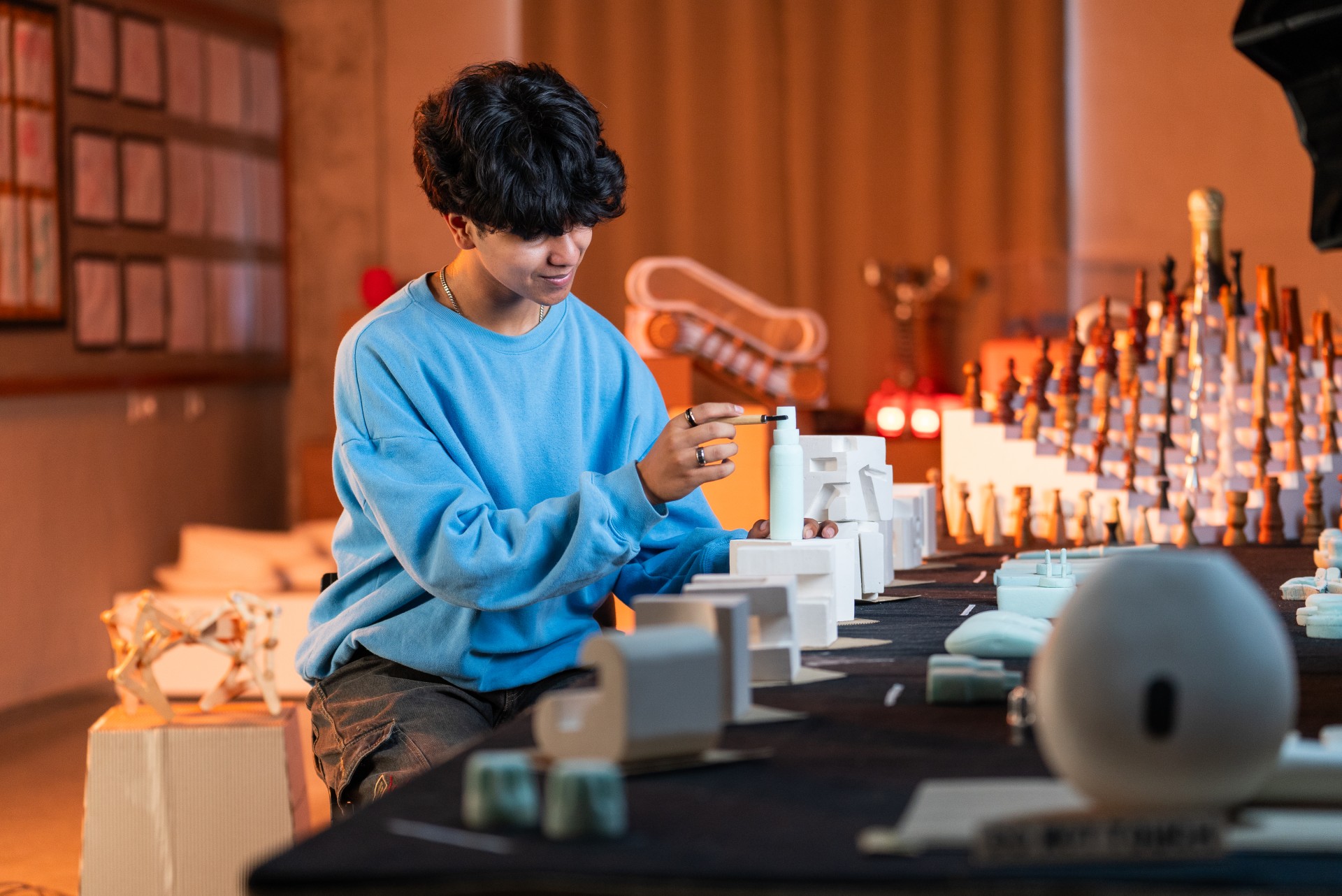
Every discipline has dedicated, industry-grade studios, where students practise their craft daily alongside peers and faculty.
Industry Embedded
Live client briefs, apprenticeships, craft-cluster visits, and an industry internship are integral to the programme, not supplementary additions.
Taught by Practitioners
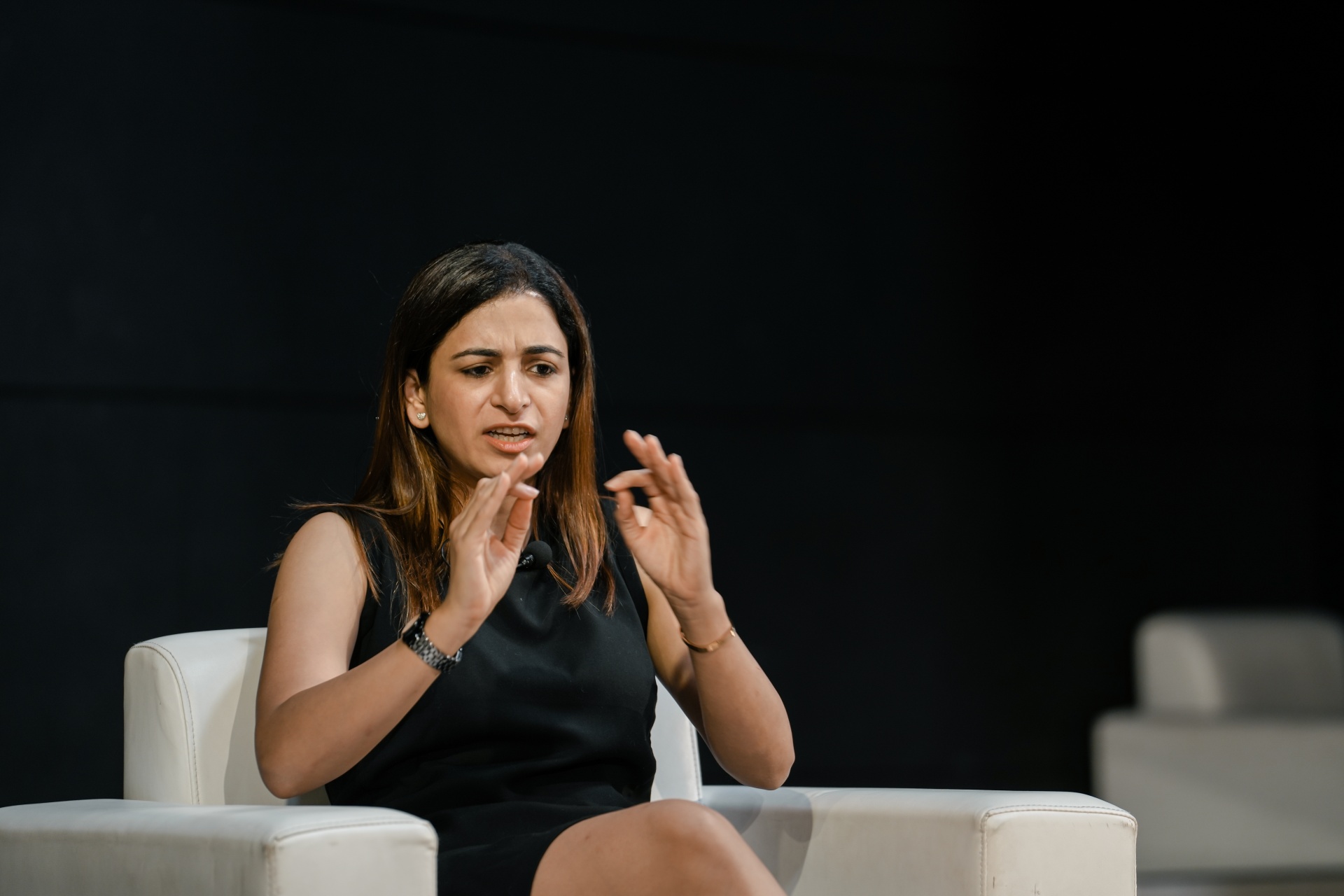
Faculty and guest experts are practising designers, directors, architects, and technologists whose work reaches the market.
Technology Forward
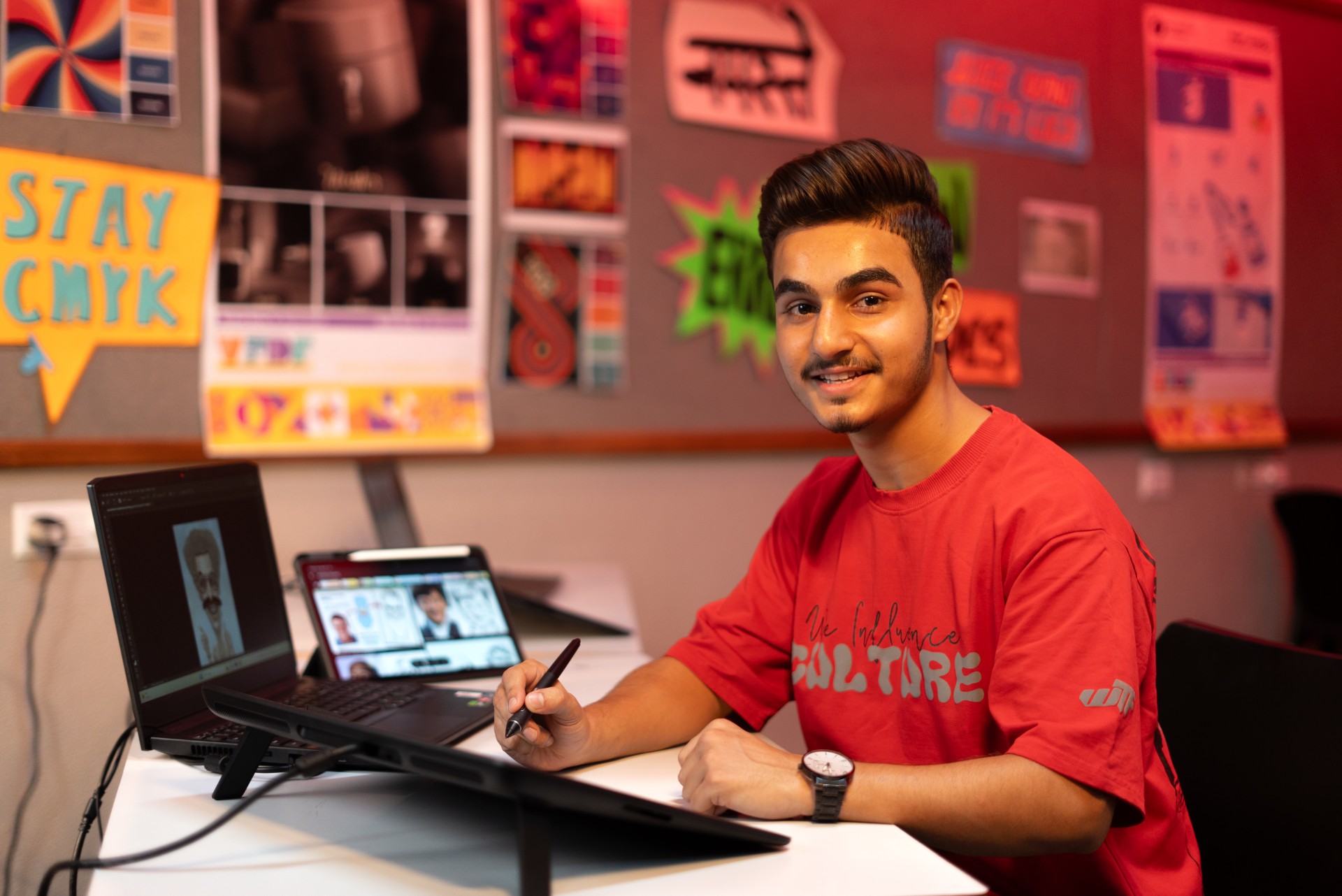
From AI-integrated UX curricula to Unreal Engine in Animation, programmes are designed around the industry's future direction.
Your comprehensive
design education.
Every B.Des programme follows the same four-stage arc - Foundation, Skill Enhancement, Specialisation, Professional Practice - structured so you leave with documented industry experience, a curated portfolio, and direct relationships in your discipline.
Foundation
Every student starts here. Design fundamentals, visual thinking, material exploration, craft studies, and design history. No prior art or design background needed.
Shared across all 5 specialisationsSkill Enhancement
You enter your discipline. Core technical and creative skills - studio practice, digital tools, and discipline-specific modules - through projects and workshops.
Discipline starts · studios + workshopsSpecialisation
Advanced studios, industry apprenticeships, and live project work. You apply your skills to real contexts - industry briefs, client projects, and competitions.
Live briefs · apprenticeshipsProfessional Practice
A mandatory industry internship, graduation project, and portfolio development. You leave with documented experience, a curated portfolio, and industry relationships.
Internship · graduation · portfolio
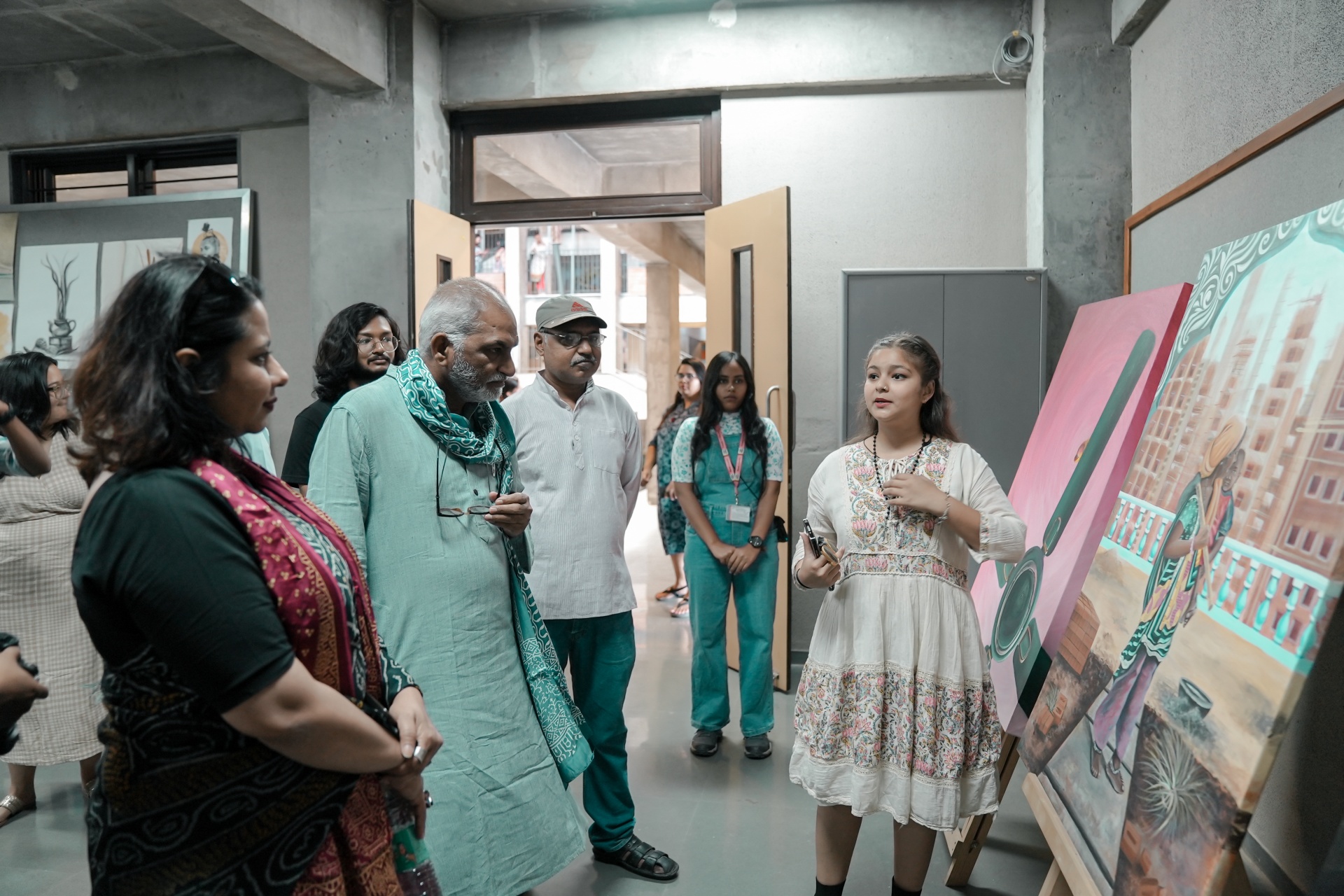
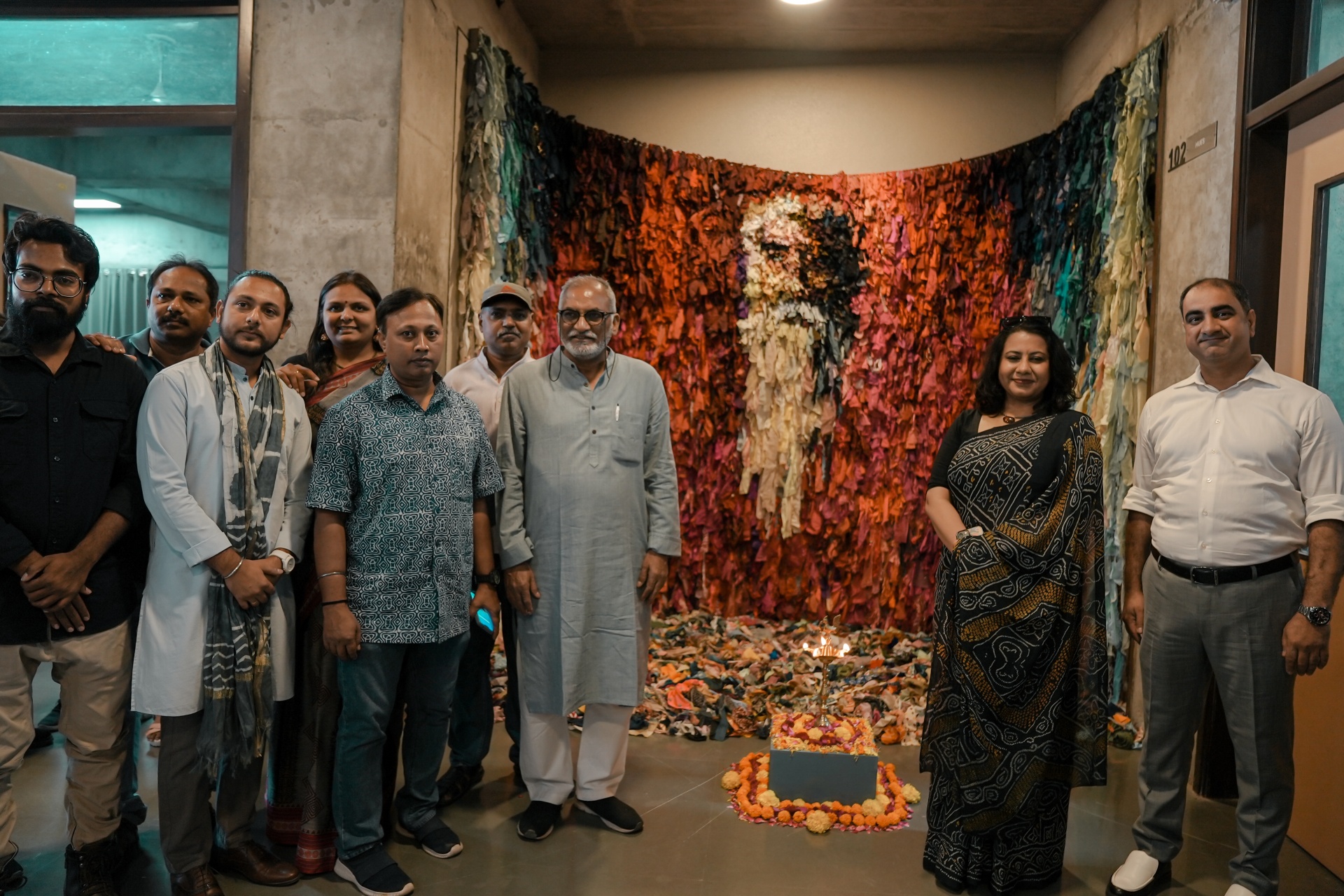
Fashion Studios
-
Brunnai Professional handlooms studio with weaving equipment
-
Chhaap Garment printing studio for surface design & sustainable dyeing
-
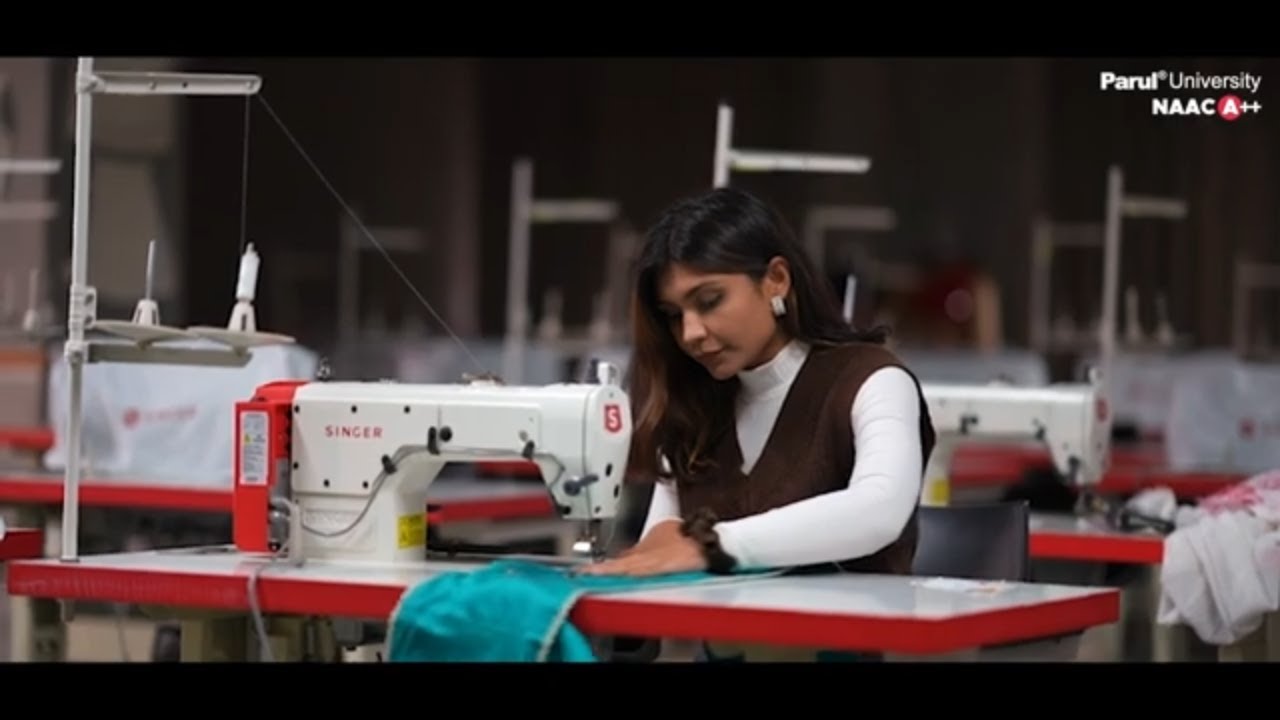
Sanchana Industrial sewing lab with 40+ machines
Fabrication
-
Laser Cutting Lab Precision cutting and pattern engraving
-
3D Printing Lab Geometric to organic form output
-
Metal Fabrication Lab Full-scale industrial prototyping
-
Wood Workshop Furniture construction and joinery
Digital Production
-
Editing Suites Audio & video post-production (Animation, Film)
-
ICT Computer Labs 2 labs, 2 smart classrooms
-
Painting Studio Fine arts practice (Communication Design)
-
Design Library & Exhibition Spaces Research, critique, and showcase areas

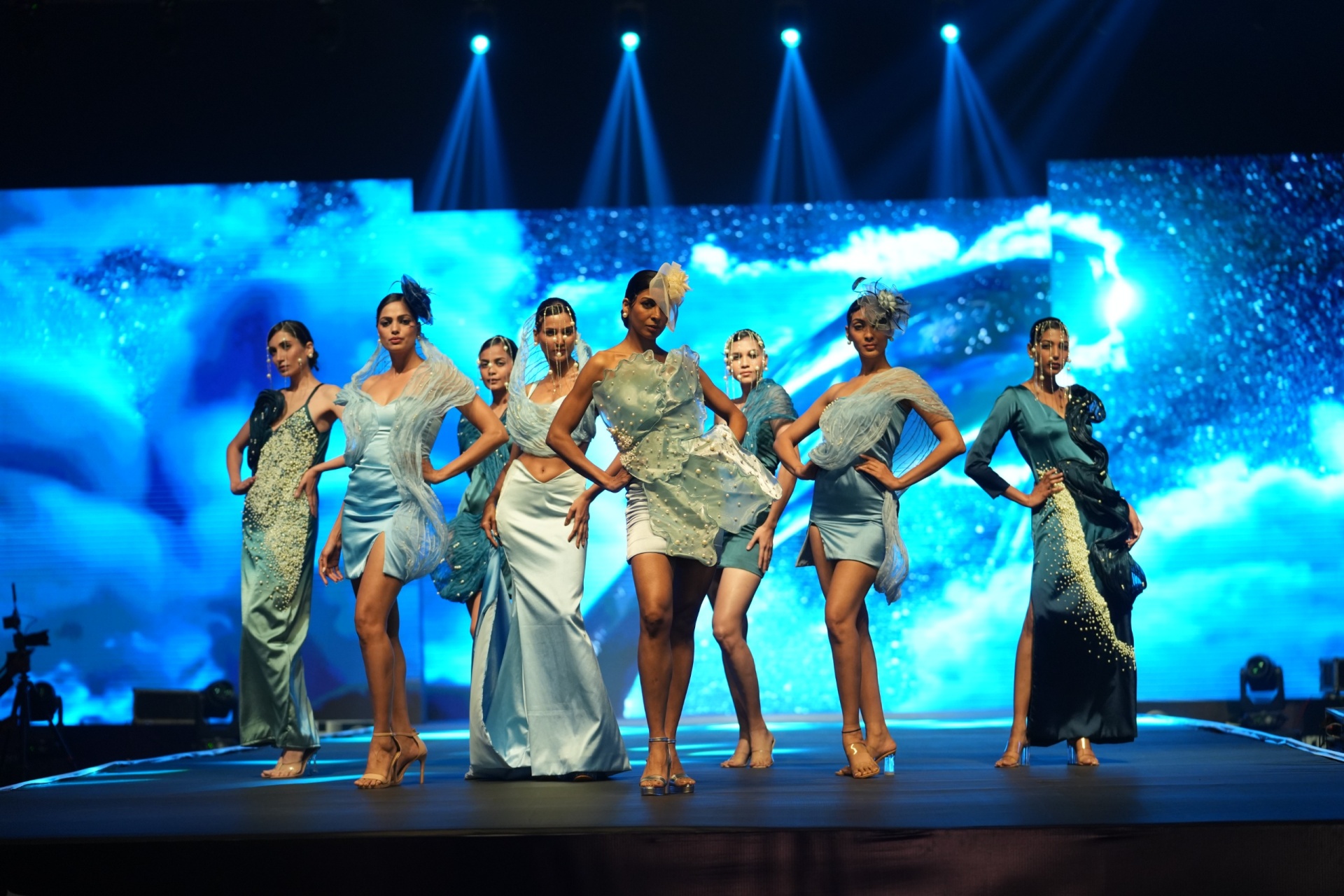
Vadodara's craft heritage, artisan clusters, and events like Vadodara Fashion Week and the Crafts Festival extend the classroom for PID students.
100+ acres · WaghodiaMerit scholarships and tuition-fee waivers of up to 100% are available on PU-DAT performance. See the Admission & Aid page, or write to pid.admissions@paruluniversity.ac.in.
Admissions for
2026.
Application Opens
The PU-DAT 2026 application portal will go live shortly. Sign up early to get registration reminders, sample papers, and counsellor support.
- Online registration via the PU portal
- Choose your preferred specialisation
- Sample papers + prep guide
- Counsellor support available throughout
Registration Deadline
Final cut-off to register for PU-DAT 2026. Late applications are not accepted, so make sure your form is submitted and payment confirmed before this date.
- Complete profile & payment
- Upload required documents
- Receive admit card via email
- Confirm test centre / online slot
Design Aptitude Test
An online entrance test that evaluates how you think - not what you already know. No prior design or drawing skill needed to clear the PU-DAT.
- Visual sensitivity & spatial reasoning
- Creative thinking & lateral problem-solving
- Logical reasoning & general awareness
- Design aptitude & perception
Portfolio Review
Shortlisted candidates upload a portfolio on the same portal, on the same day as the exam. This is not a test of technical drawing - show your curiosity.
- Sketchbooks & visual journals
- Photographs & observation studies
- Mood boards & creative references
- DIY projects, crafts, hobby work
Results & Shortlist
The final cohort is announced after evaluation by a panel of senior faculty and industry experts. Selected candidates receive an offer letter with onboarding instructions.
- Final shortlist announcement
- Offer letter & programme allocation
- Fee payment & seat confirmation
- Orientation invite for the 2026 cohort
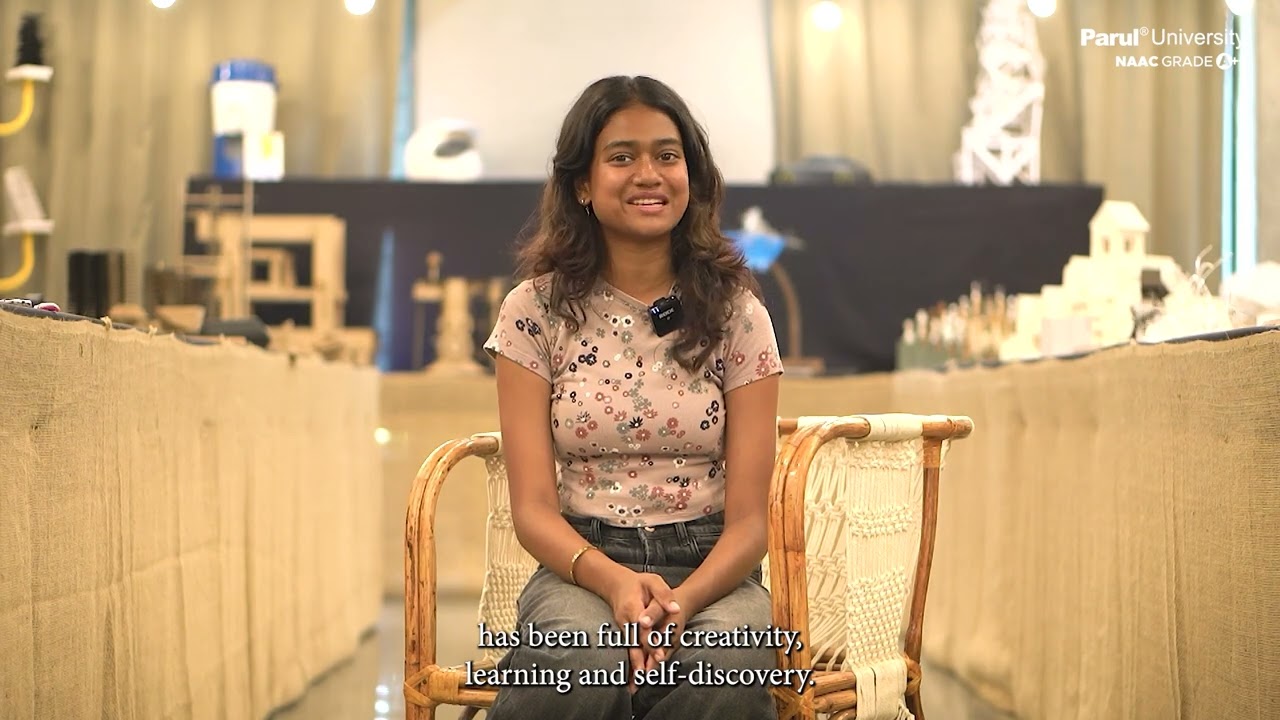 Watch · 2:14
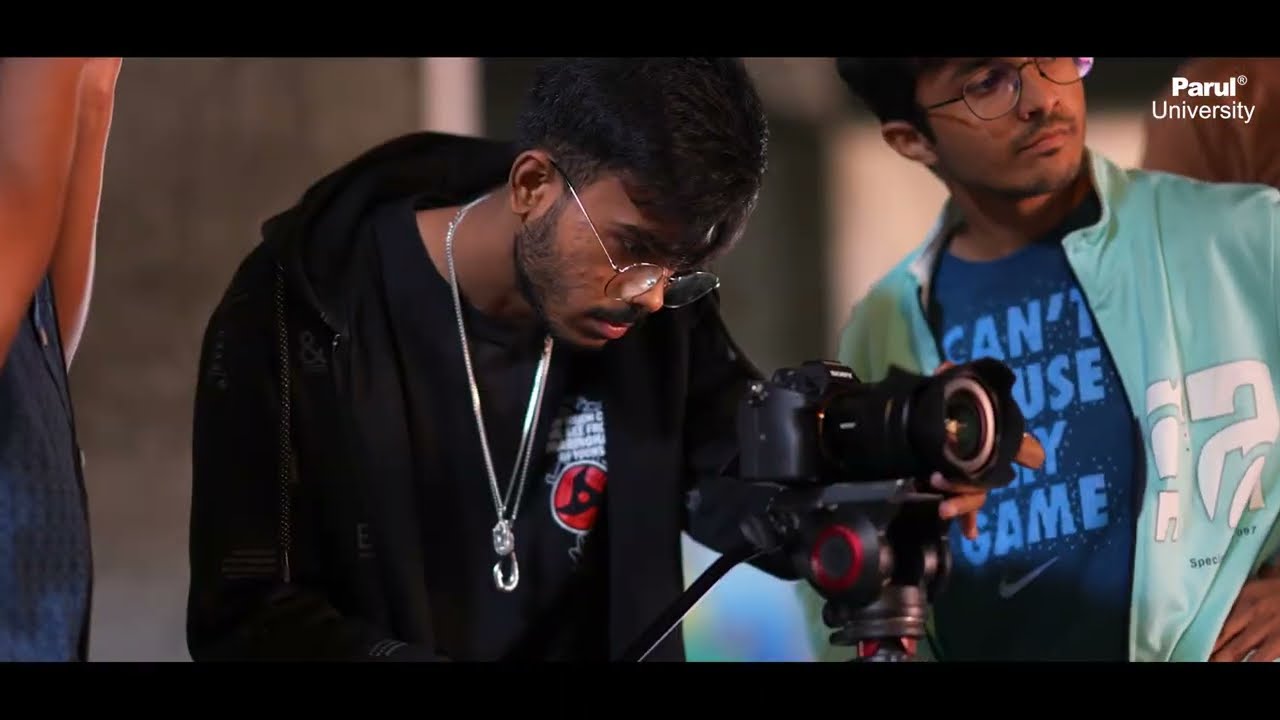 Watch · 1:48
 Watch · 2:30
Frequently
asked.
Common questions from students and parents - addressed candidly, with facts and no promotional language.
Yes. India’s design industry is expanding rapidly across digital products, e-commerce, film, gaming, fashion, and architecture. B.Des graduates from accredited institutions are recruited by organisations including Tata, Titan, H&M, and Jio Creative Labs, along with numerous studios and startups. UX continues to see strong hiring growth.
B.Des programmes (Communication, Product, Fashion, Interior, UX) centre on design disciplines – integrating conceptual, creative, and technical learning. B.Sc programmes (Animation & VFX, Film & TV Production) are technically rigorous, structured around production pipelines, equipment operation, and industry-standard software. See the B.Sc Design page for those.
Yes. All PID Bachelor’s programmes admit students from Science, Commerce, and Arts streams, regardless of prior design experience. Year 1 is a Foundation year that develops visual thinking, drawing, and design fundamentals from scratch.
The Parul University Design Aptitude Test (PU-DAT) is an online entrance exam evaluating creativity, visual sensitivity, logical reasoning, and general awareness, requiring no prior design knowledge. Practise visual puzzles and creative-thinking exercises; sample papers are available from the admissions office.
All five B.Des programmes are priced at ₹3,54,000 annually. The B.Sc programmes in Animation & VFX and Film & TV Production are priced separately – see the B.Sc Design page. Merit scholarships are available based on PU-DAT performance.
All five disciplines offer strong placement potential. UX & Interaction Design ranks among India’s highest-demand fields; Communication and Product Design provide the broadest career paths; Fashion benefits from India’s ₹6 lakh crore apparel industry.
Yes. Parul University’s 100+ acre campus in Waghodia, Vadodara offers residential facilities. Contact pid.admissions@paruluniversity.ac.in for details and fees.
NAAC A++ is the highest accreditation grade awarded by India’s National Assessment and Accreditation Council – held by fewer than 10 universities nationwide. It certifies academic quality, infrastructure, faculty, and outcomes, and is recognised by employers, scholarship schemes, and international universities for credit transfer.
Specialisation is finalised at admission. Applicants are encouraged to discuss their interests with the admissions team before applying to ensure the right fit.
Yes. Shortlisted candidates upload a portfolio on the same portal, on the same day as the exam. It is not a test of technical drawing – sketchbooks, photographs, mood boards and personal projects all count.
Prepared to shape your future?
Apply for PU-DAT 2026.
Applications for the 2026 cohort are open. Complete the PU-DAT, submit your portfolio, and join India's most dynamic creative learning community.