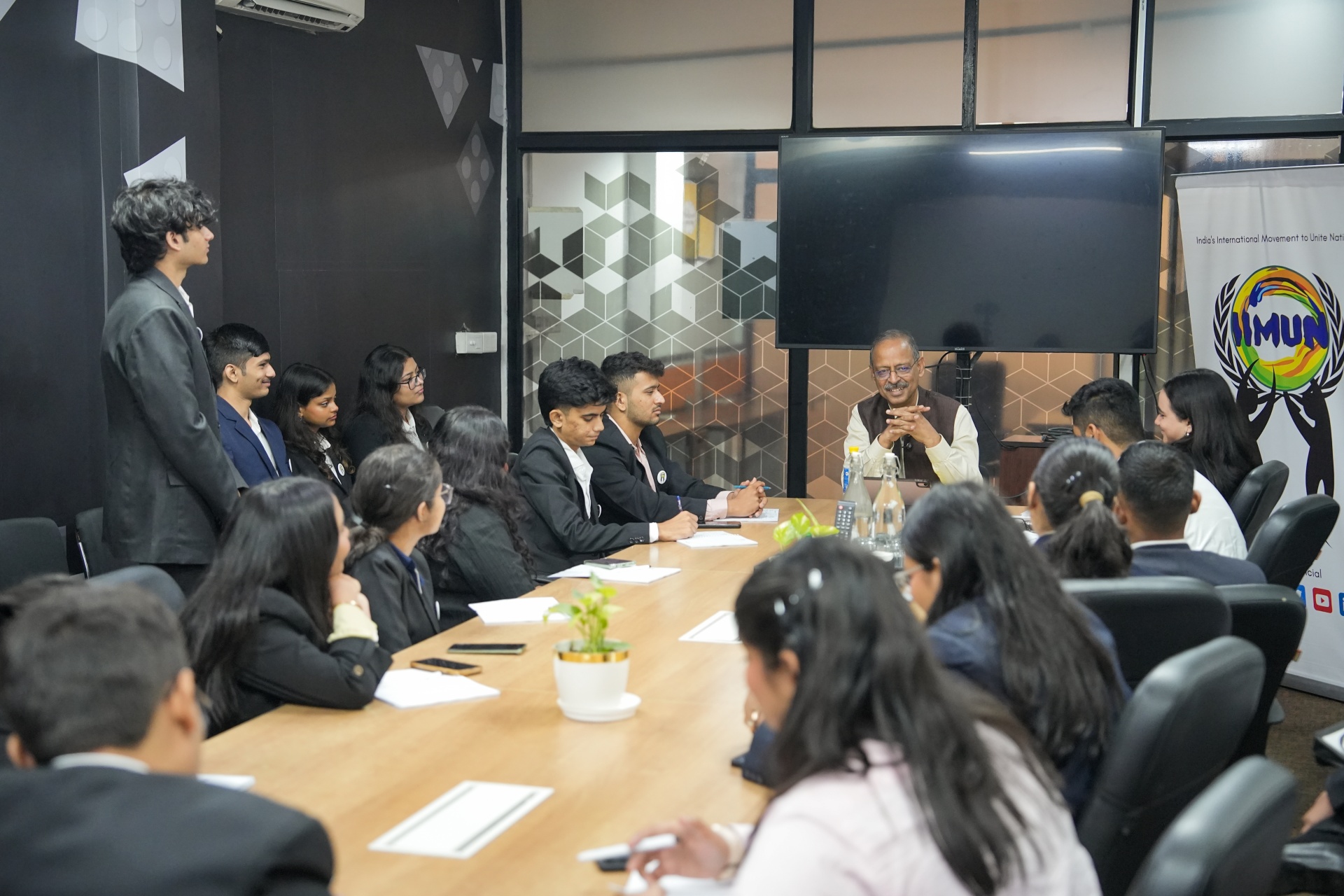
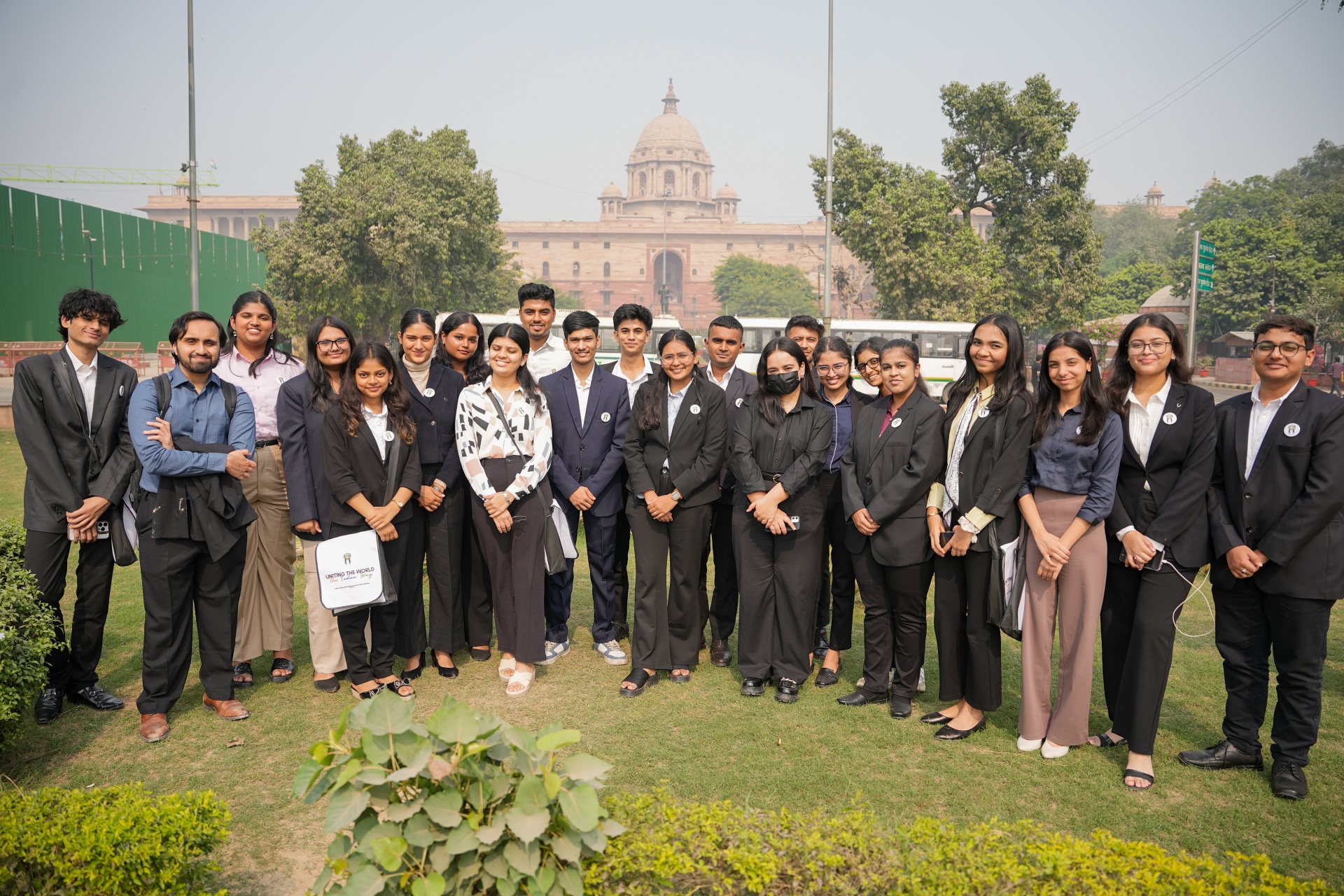
When Anil Swarup was eleven or twelve years old, he found a piece of paper his father had written. It was a complete plan showing exactly which subjects he would need to study to become an IAS officer. He did not follow that exact route. But the paper sowed a seed. He started learning what the civil services were about. It became his dream.
“When anything becomes your dream and you are passionate about it, then you move towards it.”
He told students a secret that reframed the entire exam preparation mindset. He was not just preparing to clear the exam. He was preparing himself to become a person capable of clearing the exam. The distinction matters. One approach focuses on the syllabus. The other focuses on the self. If you’re passionate about building your career in the legal domain, then enrol into Law Courses after 12th of Parul University.
“The goal is to evolve as a person to manage circumstances.”
He was open about weaknesses. He studied physics, chemistry, and maths, leaving no time for writing or speaking skills. When he switched to humanities, he could not write five sentences in English or Hindi. His solution was deliberately uncomfortable: standing in front of a mirror talking to himself, reading newspaper articles aloud. His friends laughed. He improved. He became the main debater for his university.
The 90/10 Framework: Focus on What You Can Control
Many young people believe that in government, politicians control everything. Swarup used to think the same way. He blamed politicians and the system for problems. As he gained experience, his thinking reversed completely.
He realised that he actually had 90 percent of the space to work with. Politicians had only 10 percent. His obsession with the 10 percent he could not control had prevented him from using the 90 percent he could. He started focusing on what he could control: arriving on time, clearing files quickly, maintaining disciplined processes.
He told students that wasting energy complaining about what you cannot change costs you the time you need to do good work. The framework applies beyond government: in any career, in any organisation, the space you actually control is far larger than the space controlled by others. Most people never discover this because they are focused on the wrong 10 percent.
The Coal Ministry: From Scam to Surplus in Two Years
When Swarup became Coal Secretary, the sector was known for corruption. He called a friend to ask about the coal sector. The friend joked it was like Gangs of Wasseypur. But Swarup did not look at the surface. He asked why the scams were happening. He discovered that scams were not the disease. They were the symptoms. The real problem was that there was not enough coal.
He asked the next question: why was there a shortage when India has enough coal underground to last 300 years? He found three root causes blocking extraction:
- Land acquisition for mining was extremely difficult
- Forest clearance permissions were slow and complex
- Railway lines to transport coal out of jungle areas did not exist
“You have to go to the depth of a problem to find a solution.”
By addressing the three root causes directly, his team transformed the coal sector in two years. India went from not having enough coal to considering exporting it. The entire turnaround happened because one person asked why three times instead of accepting the surface-level narrative. Head here to explore the key learnings from 16 Sessions, 16 Senior Officials at NITI Aayog, Delhi!
Transparency: India's First Paperless Office and Live Auctions
To stop corruption during coal auctions, Swarup used a simple but powerful tool: transparency. His belief was that bad things only happen when people can hide them. He removed all paper files from the office. It became the first government office in the country to go completely paperless. Every document was on a digital system. Anyone could see whose desk a file was sitting on. If an officer tried to delay a file to ask for a bribe, everyone would know.
A famous businessman visited his office and was shocked to see an empty desk with no files. Swarup explained that he could afford to be completely transparent because he had nothing to hide.
“Opacity brings corruption.”
The RSBY Story: Empathy as a Reward
Swarup was assigned the RSBY (Rashtriya Swasthya Bima Yojana) health insurance project for workers. Nobody in the government wanted it because health insurance schemes usually failed. He did not even know what health insurance was when he got the job. He worked hard to make it successful. Eventually it became one of the most effective health schemes in the country.
The real reward came when he visited a hospital. An old, weak woman was lying on a bed, unable to sit up, holding her smart insurance card. When she found out he was the man who helped create the scheme, she insisted on touching his feet. She told him she would have died without the card.
He told students that he calls these blessings empathy bharatas. Doing work for the poorest people brings a satisfaction that money can never buy. The good wishes of the people you save always come back to you. Head here to read Inside the Civil Services Tour: Student Review!
The Art of Working With Politicians
Swarup worked with leaders from different political parties across his career. His position was clear: fighting with politicians is wrong. In a democracy, politicians make decisions. The officer’s job is to listen, as long as the order is not illegal. The real skill is packaging your idea so the politician accepts it.
He shared a formula: any idea in a democracy must be politically acceptable, socially desirable, technologically feasible, financially viable, administratively doable, judicially attainable, emotionally relatable, and environmentally sustainable.</p?
He told a story about a meeting with the Prime Minister. Another officer presented a case blaming coal for power sector problems. The PM agreed with the presentation. Swarup, had he been younger, would have argued. Instead, he stayed calm and stated one fact about power losses that showed coal was not the cause. Because he was calm and smart, the leaders respected him.
Skills for the Future
Before questions, Swarup outlined three skills every student needs:
- Comprehension: the ability to understand what you are reading and hearing. Not just the words but the meaning and context
- Analytical skills: the ability to break down a problem into its component parts and examine each one
- Communication skills: the ability to speak and write clearly so that other people listen and follow
He recently learned Japanese management styles to teach Japanese professionals about them. At this stage of career, he is still learning. He told students that the important thing is to never stop.
“Nothing would be difficult if you start learning.”
The Rapid Fire Round
The host conducted a rapid fire. His answers revealed character through compression: Bureaucracy: enormous potential and necessary. Integrity: absolutely imperative. Coal: great challenge, great experience, learned a lot. Education: a lot needs to be done, the mafias of school education are worse than mafias of coal. Politics: not my cup of tea. Failure: so much to learn from them. Reform: a continuous process. India: I love it. Youth: they are the future.
The Final Lesson: Happiness Is a Choice
A student asked how to control the mind. Swarup shared a story. He was stuck in traffic with his wife, getting angry. She asked: are you enjoying being irritated? The question changed his life. Getting angry would not make the cars move. He told students that when a school bell rings, one student is happy, another is sad. The bell is the same. Only the mind is different. You cannot control circumstances. You can control yourself. Delay not and explore Law Courses at Parul University.
Frequently Asked Questions
Who is Anil Swarup?
Former Secretary of Education and Coal, Government of India. Three decades in the IAS. Cleaned up the coal ministry after the coal allocation scam, transforming India from coal shortage to coal surplus in 2 years.
How did India solve the coal crisis?
Anil Swarup asked why scams were happening and discovered that scams were a symptom, not the disease. The real problem was coal shortage despite 300 years of reserves underground. Three root causes were blocking extraction: difficult land acquisition, slow forest clearance, and no railway lines to transport coal.
What is the 90/10 framework?
Swarup's principle is that in any role, you control approximately 90 percent of your working space while external factors (politicians, bosses, circumstances) control only about 10 percent. Most people focus on the 10 percent they cannot control and neglect the 90 percent they can. Focusing on what you can control, arriving on time, clearing files, maintaining discipline, expands your effective space over time.
What skills do you need for civil services?
According to Swarup: comprehension (understanding what you read and hear in context), analytical skills (breaking problems into components), and communication (speaking and writing so others listen and follow). He also emphasised continuous learning, noting that he recently learned Japanese management styles to teach Japanese professionals. His personal preparation included standing in front of a mirror reading newspaper articles aloud.