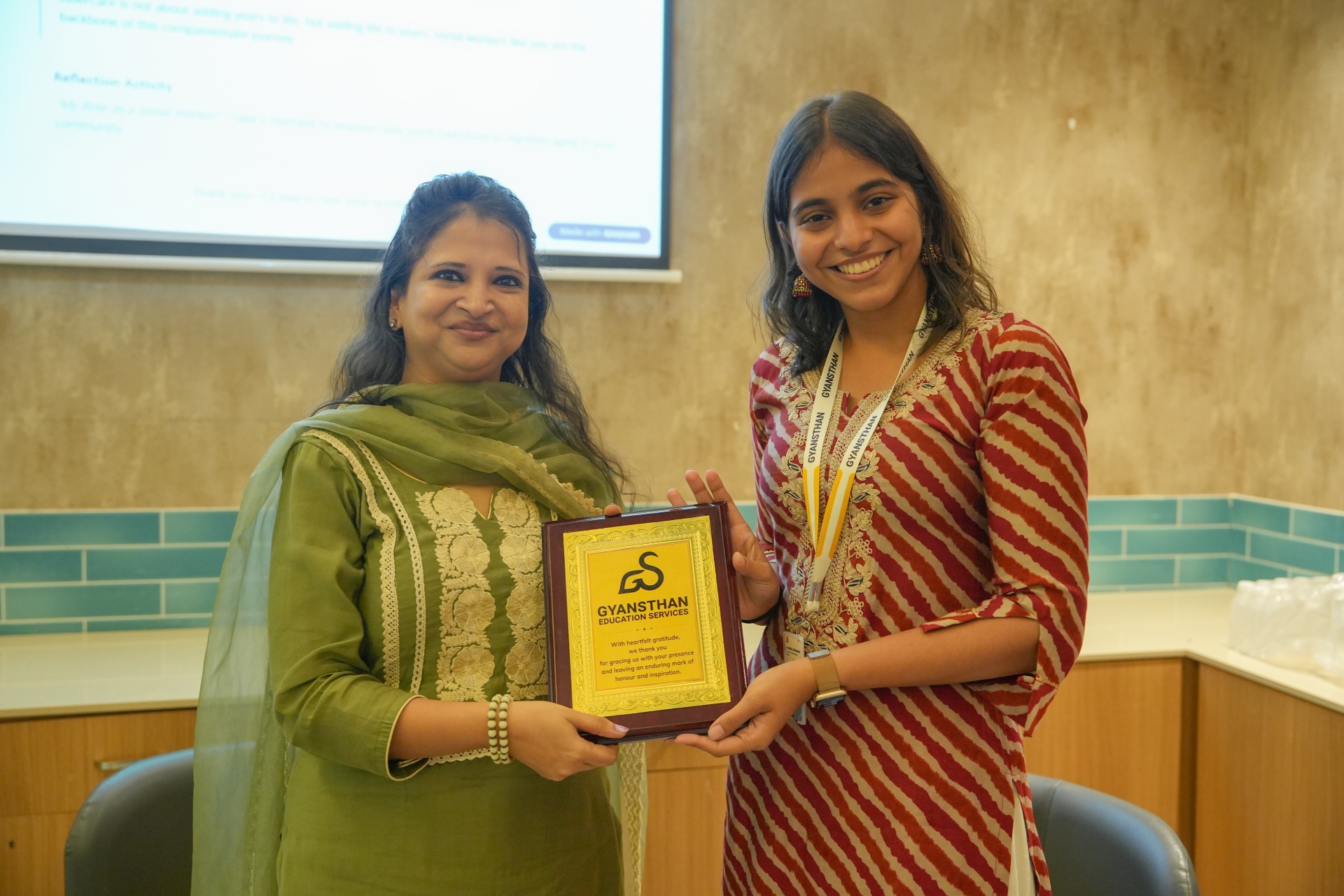
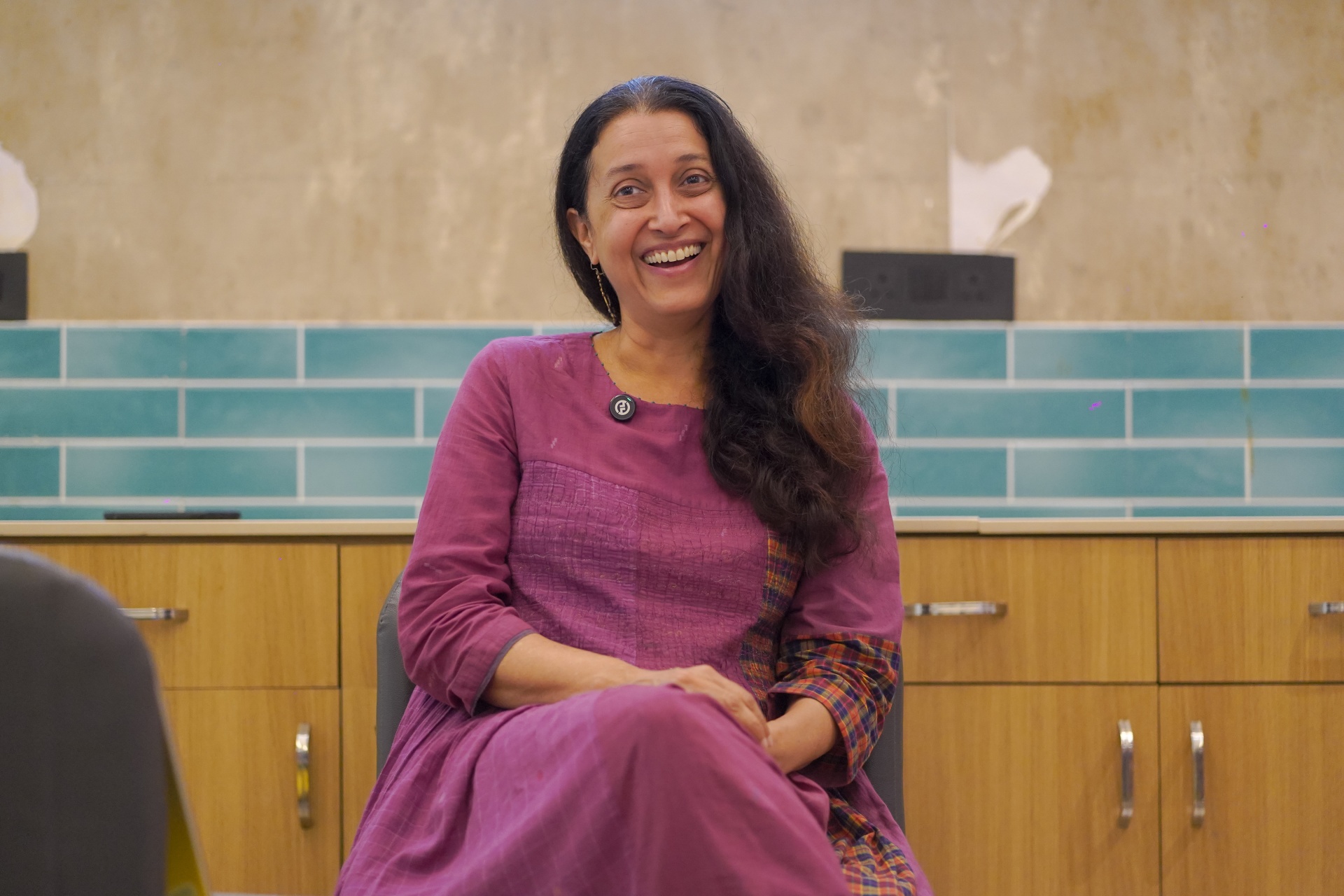
Shaheen Mistri founded the Akanksha Foundation and then Teach For India. Her session opened Day 1. The atmosphere was warm from the start. She did not deliver a lecture. She shared a philosophy.
Her main principles shaped education through 6 lenses of love: see with love, care with love, teach with love, learn with love, stretch with love, and at the last grow with love. Real education is about hope, building purpose, shaping direction and in uplifting communities at all the levels via love, care and leadership!
Her 11 principles for life and leadership: keep looking for purpose every single day, stay close to positivity, love others and ourselves, look for opportunities and positivity, see the light in everyone, care for others, teach and forward the learnings, learn from others through both successes and failures, stretch yourself, grow, reach out and create impact.
Ishan Kashiv asked a question that shifted the conversation: do you think more education leads to more consumption and more mountains of trash? Shaheen Mistri smiled and agreed: yes, we need to change how we look at education. We need to go back to the preachings of our gurus. That exchange stayed with students because it acknowledged that education without wisdom creates its own problems.
“Look with love. You will care for it. And you will automatically teach with love.”
Dignity Foundation: 5.3 Million Reasons to Care About Dementia
Saniya Gupta, clinical psychologist, 17 years in the field, most of it spent around dementia and elderly care. The figures she opened with weren’t easy to hear. 5.3 million people in India are living with dementia today. By 2050, that number will triple. One in eight people above 60 deals with some form of cognitive decline. WHO’s 2023 count puts the global figure at 55 million. Alzheimer’s sits at the top as the most common form.
She didn’t let it stay abstract. Students were put through role-play asked to actually inhabit what a dementia patient goes through on an ordinary day. The room changed after that. Something about doing it rather than hearing it lands differently. Gupta’s point was simple: the qualities this work asks for aren’t just professional. You need patience. Genuine care. The ability to accept a person as they are on their worst days and keep turning up anyway.
Shilp Burman’s review on MSW tour
Dignity Foundation has 30 centres spread across 8 cities. Chai Masti Centres give older adults somewhere to go – social spaces, recreational activities, company. They also run dementia day care, caregiver training, counselling sessions, and broader well-being programmes. Reminiscence therapy, using storytelling, music, and memory is one of the clinical tools. Respite care and village workshops are part of the picture too. The motto hasn’t changed: adding life to years.
MSW students got a clear picture of where they fit into all this. Not doing the clinical work but making sure it actually reaches people. Counselling families who don’t know what’s happening to someone they love. Helping caregivers who are exhausted and mostly ignored. Linking patients to resources. Managing cases nobody else is coordinating. The social worker holds the space between the hospital and the community and without that, a lot of people simply fall through. You too can become a successful social worker by mastering the Master of Social Work from Parul University!
Sampoorna Shiksha: Every Child Deserves Joyful Education
Students visited Motilal Nehru School, adopted by Sampoorna Shiksha Foundation (a patron project of Gyaandaan Foundation), co-founded by Lata Srinivasan and Pushpa Subramanian. The philosophy: learning extends beyond textbooks and grades. Three pillars: teacher training, toy libraries, and child-centred learning.
What students saw in the classroom was not rote learning. Children were singing with rhythm, raising hands eagerly, interacting with confidence. Even those with speech or hearing challenges were participating fully. Ishan Kashiv wrote: these were children fluent in spoken English, yes, but more importantly, fluent in self-expression, something our education system often forgets to teach.
- Project Khilona (Sikshalaya): 100+ toy libraries built across India, integrating play into foundational learning
- E-Shiksha Kits and digital boards: visual learning that stays
- Tech Pathshala: 13+ computer labs across 5 states, bridging the digital divide
- Shikshak Vikas: teacher training, internships, and spoken English programmes empowering educators
- Global collaborations including partnerships with schools in Dubai
“Every child deserves not just education, but joyful education.”
Read students’ reviews on how their experience on LinkedIn.
Amaya Raj on how Teach For India inspired her!
Ishan Kashiv on meeting Shaheen Mistri, Mumbai Tour
Yash Ladva on her experience with Make-A-Wish-India, Mumbai Tour
Yuva Parivartan / KSWA: 1.5 Million Lives Through Skilling
The Kherwadi Social Welfare Association goes back to 1928, when Bal Gangadhar Kher started it with one clear intention, health, education, and income for young people, and through them, a better country.
The journey since then: balwadis, tailoring classes, dental clinics in 1935-40. Certification in 1955. National recognition by 1958. Yuva Parivartan came in 1998 and has been running for 25+ years now. Dr APJ Abdul Kalam formally launched it in 2003. In 2022, Fast Food Chain Training was added, practical, job-ready, and current. The reach today stands at 1.5 million people across 18 states. HDFC, Tata, SBI funded the work. PricewaterhouseCoopers aka PwC audits it.
Ankita Bhatt’s review on Day 1, Mumbai Tour
Kishor Kher, grandson of the founder, runs the organisation now alongside Mrinalini Kher. CEO Sunil Kumar Sharma had a solid MNC career and left it behind to do this. His words to students were plain and direct, stop building your life around a salary target. Let values and discipline lead. And write your goals down. There’s a real difference between a dream you speak and one you put on paper.
Students also got time with department heads across IT, hospitality, counselling, accounts, rural development, and academics. Each department looks completely different. The direction they all face is the same. For anyone drawn to this kind of work, Parul University’s social programmes after 12th are worth a serious look.
What Four Organisations Reveal About Social Work in Practice
- Education is not a system. It is a relationship. Shaheen Mistri builds it through love. Lata Srinivasan builds it through play. Yuva Parivartan builds it through livelihood skills. Each approach works because it centres the person, not the curriculum
- Elderly care requires more than medicine. Dignity Foundation shows that community spaces (Chai Masti), creative therapies (reminiscence, music, storytelling), and trained social workers who bridge clinical and community care can transform quality of life for 5.3 million people and their families
- Scale comes from structure. Yuva Parivartan reached 1.5 million lives because it built departments, donor relationships, and audit systems. Make-A-Wish granted 97,200 wishes because it has a governing committee, programme management, and field operations. Passion without structure stays local
Frequently Asked Questions
What does Teach For India do?
Founded by Shaheen Mistri, Teach For India recruits fellows who dedicate 2 years to teaching in low-income schools, creating equity in education. The philosophy: lead with love, stay proximate, find purpose daily. Shaheen Mistri told Parul University students that education is about discovering hope, building purpose, and uplifting communities.
How many people have dementia in India?
5.3 million, expected to triple by 2050. 1 in 8 elders above 60 face cognitive decline. WHO (2023): 55 million globally. Dignity Foundation operates 30 centres across 8 cities providing Chai Masti Centres, dementia day care, caregiver training, and reminiscence therapy. Clinical Psychologist Saniya Gupta told Parul University students that social workers are the bridge between clinical treatment and community support.