Every semester, a new cohort of engineering students watches an AI tool write code in seconds, generate designs from text prompts, and automate workflows that used to take teams of people. The anxiety is understandable. GitHub Copilot writes functions. ChatGPT explains algorithms. Midjourney creates visuals. For a student halfway through a four-year B.Tech, watching AI do in five minutes what used to take a week feels existential.
The problem with the question is not the anxiety. It is the abstraction. Most answers online are written by commentators, not by people who run the companies building and deploying AI at scale. The four leaders who addressed this question during the AI Tech Tour to Bangalore collectively manage technology operations that touch billions of users, secure critical global infrastructure, and process millions of transactions daily. Their answers are not speculative. They are operational.
Also check out the full AI Tech Tour: 10 Sessions Complete Guide.
Expert 1: Udit Goyal, COO, Google Cloud India
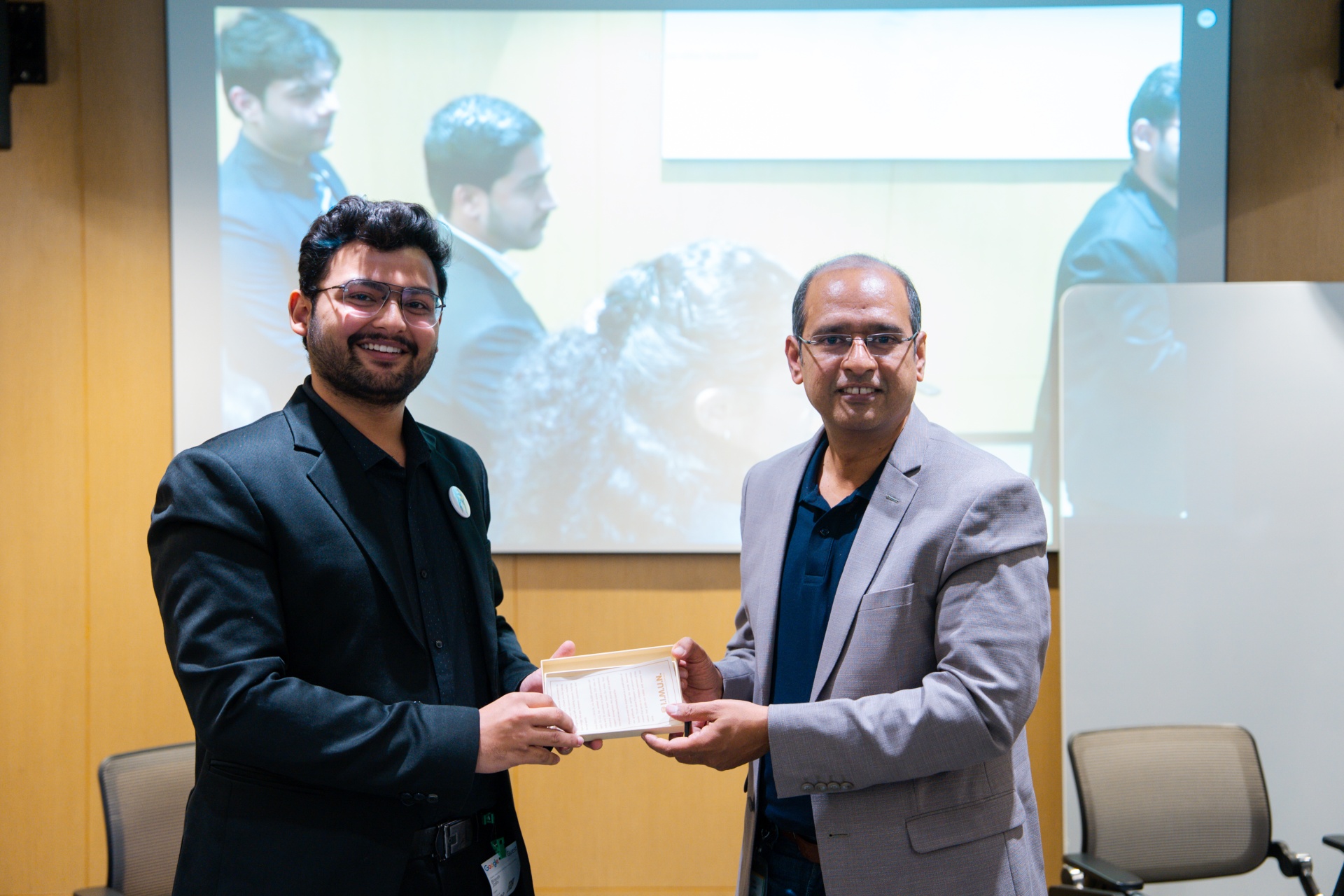
Udit Goyal runs cloud operations for Google in India. His career started with a final-year project on Urdu Text Recognition, a problem in accessibility and language inclusion. That trajectory, from a student project rooted in social inclusion to leading cloud initiatives at a company that serves billions, is itself the answer to the AI question: technology serves people who solve meaningful problems.
His response to the AI anxiety was historical and precise:
“When ATMs were introduced, people believed cashiers would disappear. Instead, their work became more efficient. AI will not replace humans. It will help people become more intelligent and productive.”
He extended this to product thinking. Customers do not need features or design. They want their job done. The engineer who understands this, who builds products that solve real problems rather than demonstrating technical capability, is the engineer who remains valuable regardless of what AI can automate. He told students that to succeed at companies like Google, the focus should be on problem-solving depth, clarity of thinking, and long-term curiosity rather than short-term interview preparation.
“We are all born original, but most of us die as copycats.”
The implication for students: do not copy career paths. Build your own by solving problems that matter to you. AI cannot do that. It can generate code. It cannot generate purpose.
Expert 2: Dr Kiran, Board Member, IBM (25 Years in Tech)
Dr Kiran has watched the technology industry reinvent itself across 25 years. He started by controlling spindle speeds in a textile mill, writing in Assembly and C. He navigated the Y2K transition, learned Java when e-commerce was emerging, managed database systems when Amazon was just beginning to be understood as a model, and now works at the intersection of synthetic data, machine learning, AI operations, and cloud infrastructure at IBM.
His answer was structurally precise. He asked students to think about a bank help desk. A customer calls because their ATM card is not working. The agent creates a ticket, checks the account, and either guides the customer to a service centre or resets access. Standard steps. A script followed with minor variations.
“This kind of work can be completely automated. The person who specialises in exactly this routine task, following the same steps without applying independent judgment, is the one whose job is at risk.”
Then he shifted the perspective:
“There is something called intelligence, specifically human intelligence, that cannot be substituted. Not even by agentic AI that is capable of thinking, deciding, planning, and executing. Routine jobs with no intelligence applied to them, those are going. Specialised skills in the market, those are not going anywhere.”
He made it clear: when jobs disappear, people do not. It signals the need to upgrade. In technology, learning is constant. If you are not evolving your skills, you risk becoming redundant.
He also identified a gap AI cannot fill: communication. A strong idea has no value if it cannot be explained, defended, and presented clearly. Engineering education often treats communication as a one-semester subject, but in reality, it should be developed continuously throughout the degree.
Expert 3: Mahipal Nair, VP and MD, Trellix India (Cybersecurity)
Trellix protects 25 percent of global ATMs, 60 percent of oil and gas companies, 75 percent of water systems, and 90 percent of global utilities. The scale of what cybersecurity professionals defend is not abstract. It is the infrastructure that keeps cities running.
The cybersecurity perspective on the AI-jobs question is structurally different from other industries. Mahipal Nair and his team (Sudhir Kumar Rai, Director of Data Science, and Pavan Kumar Podila, Head of Threat Research) explained the fundamental asymmetry:
“Attackers need to succeed once. Defenders must succeed every time.”
Systems generate 20 billion events per day from endpoint detection alone. Trillions of events per hour from network systems. No human team can process this volume. AI is essential for pattern detection, anomaly identification, and automated response. But the Ukraine case study demonstrated that cyberattacks can disrupt water, electricity, and banking before a single physical weapon is deployed. The stakes of getting AI wrong in cybersecurity are not commercial. They are civilisational.
For this reason, cybersecurity needs more skilled humans, not fewer. AI handles the volume. Humans handle the judgment. The security professional who understands data patterns, who can distinguish a genuine threat from a false positive, who can explain AI decisions in auditable language, is not replaceable. The field is growing because the threats are growing faster than automation can contain them alone.
Expert 4: Anoop Menon, CTO, RedBus
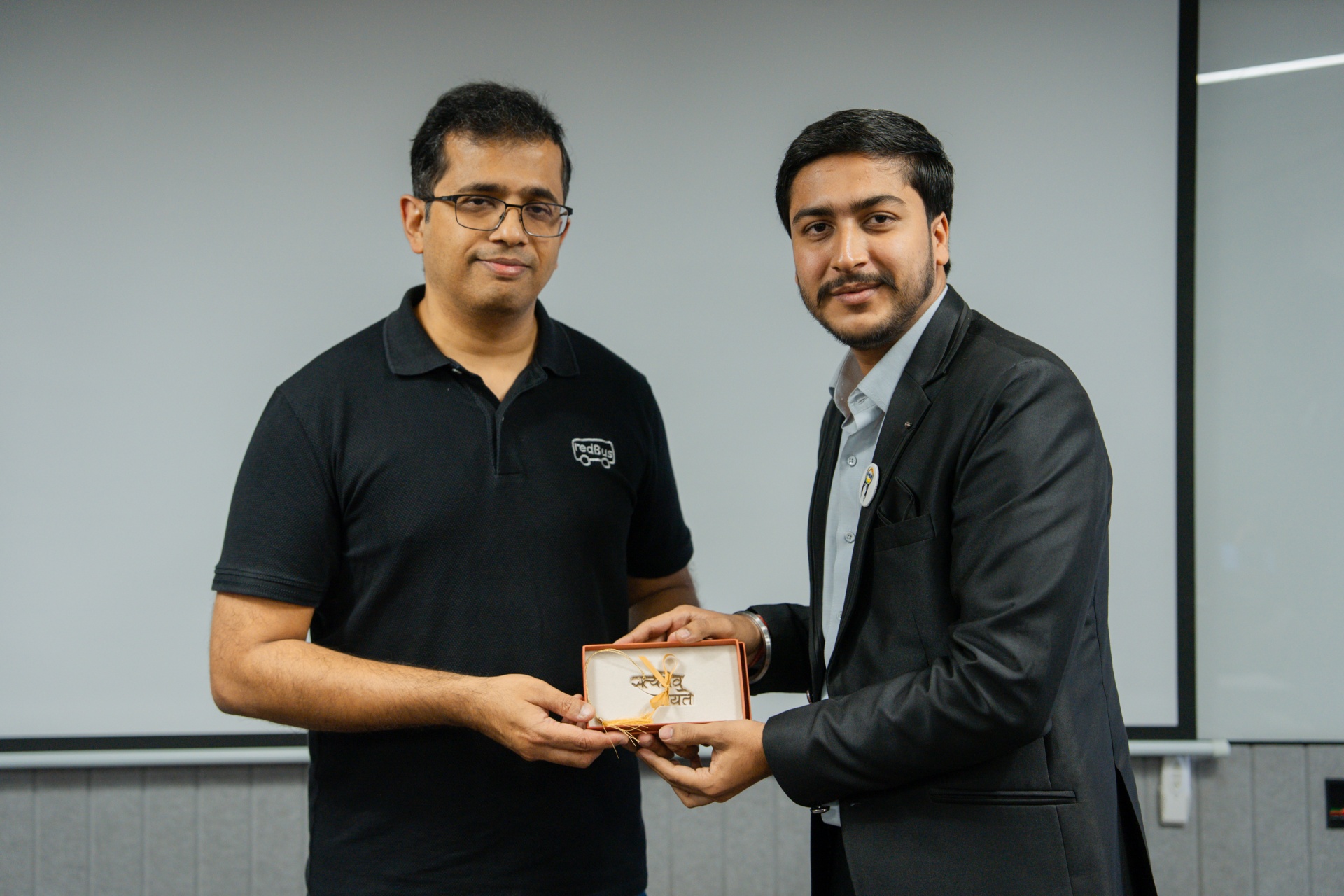
RedBus operates in 8 countries, serves 52 million people, connects 10,000+ towns, and handles 300,000 to 350,000 bookings daily. Anoop Menon‘s perspective came from running AI at consumer scale, where the system directly touches millions of users every day.
His position on AI and careers was pragmatic:
- AI will augment, not replace jobs
- The focus should shift from coding to critical thinking and problem-solving
- Engineers must learn to read and understand code, not just write it
- Product and business roles should focus on insights and decision-making
RedBus uses AI for dynamic pricing, demand prediction, seat availability optimisation, fraud detection, and personalised recommendations. Every one of these applications was built by engineers who understood the business problem first and the AI tool second. The AI did not invent dynamic pricing. A human identified that pricing should change based on demand, timing, and booking patterns. The AI executes. The human decides what to execute.
His strongest example was the women’s safety features. Single women can see how many other women are on their bus. Safer boarding points are highlighted. Buses rated highly by female travelers are flagged. These innovations came from real user feedback, not from an AI generating features. The insight was human. The implementation used AI. That distinction is the answer to the AI-jobs question in consumer technology.
The Consensus: AI Changes the Job Description, Not the Profession
Across four leaders managing technology operations that touch billions of users:
- AI automates routine, repetitive, script-following work. It does not automate judgment, creativity, communication, or purpose.
- The engineer who uses AI tools will outperform the one who does not. The AI tool without an engineer who understands the problem is a fast way to produce wrong answers at scale.
- Communication skills are as critical as technical skills. Dr Kiran (IBM) called it the most undervalued skill in engineering education.
- Cybersecurity needs more humans because threats grow faster than defences. Trellix is hiring, not firing.
- Consumer tech (RedBus) uses AI to execute human insights. The women’s safety features came from listening to users, not from training a model.
- Google Cloud COO says success depends on problem-solving depth and long-term curiosity, not on being able to write a for loop faster than Copilot.
For students studying B.Tech at Parul University, the practical implication is clear: learn AI tools as part of your toolkit. But invest most of your time in the skills AI cannot acquire, such as understanding real problems, communicating solutions to non-technical people, making judgment calls under uncertainty, and building things that matter to humans. The demand for engineers who combine AI fluency with human judgment will continue to grow.
Parul University‘s engineering programme integrates both dimensions. The curriculum covers AI, ML, cloud computing, and cybersecurity. The Practical Learning Tours, like the Bangalore AI Tech Tour where these leaders spoke, provide industry interaction that builds the human skills AI cannot replace.
The 60 LPA placement at Microsoft (Tanish Patel, 7.04 CGPA, B.Tech CSE, 2027 batch) was not achieved by coding alone. It was achieved through the 40-day impact training, real project work, and the problem-solving mindset built within the university ecosystem.
Frequently Asked Questions
Will AI take engineering jobs in India?
No, according to four leaders at Google, IBM, Trellix, and RedBus. AI automates routine tasks (help desk scripts, repetitive data processing). Specialised skills requiring judgment, creativity, and human understanding are not replaceable. Cybersecurity (Trellix) is actively hiring because threats grow faster than automation. Google Cloud COO says AI makes humans more productive, not redundant. IBM Board Member says the only people at risk are those who stop learning.
What skills should engineering students develop for an AI world?
Based on four leaders: problem-solving depth and long-term curiosity (Google COO), communication and the ability to argue for ideas (IBM), data awareness and pattern recognition (Trellix), critical thinking over coding syntax (RedBus CTO). AI fluency is necessary but insufficient. The engineer who combines AI tools with human judgment will outperform both the AI-ignorant traditionalist and the tool-dependent automator.
Is cybersecurity a good career despite AI?
Trellix secures 25 percent of global ATMs, 90 percent of utilities, and processes 20 billion security events daily. Cybersecurity needs more humans because attackers need to succeed once while defenders must succeed every time. AI handles volume. Humans handle judgment. The field is growing faster than automation can contain threats alone.
What did Google Cloud COO say about careers?
Udit Goyal (COO, Google Cloud India) said success depends on problem-solving depth, clarity of thinking, and long-term curiosity, not on short-term interview preparation. He used the ATM analogy: ATMs did not replace cashiers, they made their work more efficient. AI will do the same for engineers. Build products that solve real problems. Customers want their job done, not features.