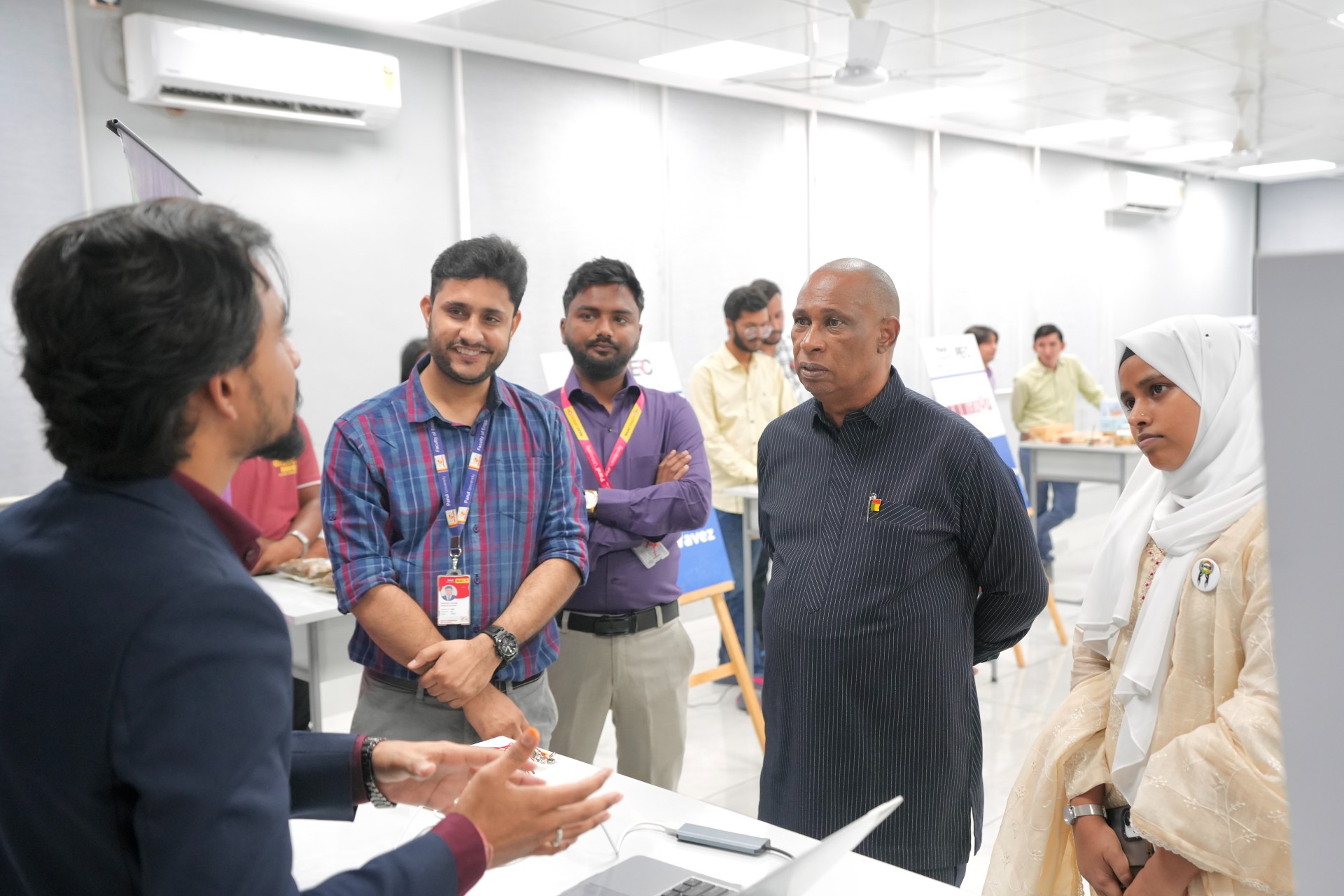
It started with how India and Africa share similarities through colonialism and now see a shared future.
H.E. de Barros was specific. Since the time of colonization, African people have believed in and followed Mahatma Gandhi’s development ideas. India is a country that rises above its potential in science, economy, and technology and hence becomes a nation that the world wants to study because of its vast population. Africa sees India as one of the respected nations.
He raised a geopolitical point that the audience did not expect: India should have a permanent seat on the UN Security Council. The reason was like a reality check. Minority nations cannot make an exact decision for the vast population. India’s exclusion from the permanent five, given its size, diversity, and non-violent democratic tradition, is an anomaly that the global system needs to correct. He later reinforced this by noting that India is one of the founders of the Non-Aligned Movement and is the only major power with a fundamentally non-violent past. Africa is happy to see India in bigger positions on the world stage.
On trade, he pointed to growing India-Africa economic ties and described India as the pharmacy of the world. Hindustani pharmaceuticals are taking over global markets. His question to the room was direct: if India can supply medicines to the world, why is Indian business not coming to Africa at a greater scale? The opportunity is mutual, and the infrastructure for partnership, including university exchanges like Parul University, is already being built.
Parul University International Students is the largest community in India, allowing students to blend and gain experiences across the nations.
500 Years, 3 Engineers, and Why Colonialism Still Shapes Africa
In the session he was asked about racism; the speaker H.E. de Barros connected it directly to colonialism. He mentioned Guinea-Bissau was under Portuguese colonial rule for 500 years. In that entire period, only 3 engineers were produced. To progress under the colonial system, people had to change their names to something Portuguese. Fighting for independence was the only constant for those years, and it eventually came, but it separated communities that colonialism had already fractured.
He was honest about the limits of progress: racism is still something we must tackle. It cannot be fought totally. But it can be reduced through opportunity, and for opportunity to exist, education is the foundation. Technology has helped: knowledge does not depend on race or ethnicity, and with the access that modern technology provides, everyone has the same tools. But structural inequalities persist, and dismantling them requires sustained investment in schools, universities, and inclusive policy.
54 States, Not One Country: What the World Gets Wrong About Africa
A student asked about misconceptions. H.E. de Barros was pointed. When you read a Western newspaper, it thinks Africa is a country. It is 54 states with different cultures, different languages, and different levels of development. The root cause is the media that shapes global perception.
He gave two examples that the room had not heard before. Nigeria is the biggest producer of films in the world, comparable to Hollywood, but nobody talks about it. Kenya has the best mobile money transfer system on the planet, but nobody talks about it either. What gets covered instead: safari and conflicts. The reality is totally different if you actually visit. The gap between media representation and ground truth is one of Africa’s most persistent challenges, and it can only be corrected through direct exchange, travel, and university-level partnerships.
What India Has That Africa Needs: Schools
When asked what India can offer Africa, H.E. de Barros did not say technology or investment first. He said schools. What India has that Africa needs is the level of education: universities that produce professionals, research institutions that generate knowledge, and educational exchanges like the one he was participating in at Parul University. If you ask an African student why they want to study abroad, they will say it is because countries like India, China, and France have the technology and knowledge that they need.
But this creates a problem he addressed with visible emotion. Students who leave Africa to study in larger economies often remain abroad. The brain drain is real. People study for bigger positions and then stay. If they do not return, there will be no one left to build the country. He told students directly: Your grandparents worked their entire lives to earn some money and send you abroad. When you are done, please come back home and help the community. We have problems with water, education, and the most basic things.
Governance, Corruption, and Cultural Diplomacy
On governance, H.E. de Barros offered a principle that applies well beyond Africa. If you promise things you cannot give, that is corruption. Elections are never fair when promises are inflated beyond capacity. Be comprehensive, be moderated, and do exactly what you think is best for your country. He described a Washington meeting where leaders discussed corruption and concluded that the corruption sometimes comes from abroad: African politicians buying houses and investing money in foreign countries instead of their own, because they believe they will not benefit from domestic investment. That mindset, he argued, is the deepest form of corruption.
He advocated cultural diplomacy as the mechanism for solving problems across borders. To be inclusive, you must use cultural diplomacy to understand where you are, where people are, and how to solve problems. Listen to the people and know their needs. This approach, he said, resolves a lot of problems that adversarial or transactional diplomacy cannot. For young people entering public life, his advice was to analyze things before deciding. When you enter society as a beginner, you have strong energy to innovate. The government’s job is to provide conditions for that energy to develop productively.
His Final Message: Long Life to the University
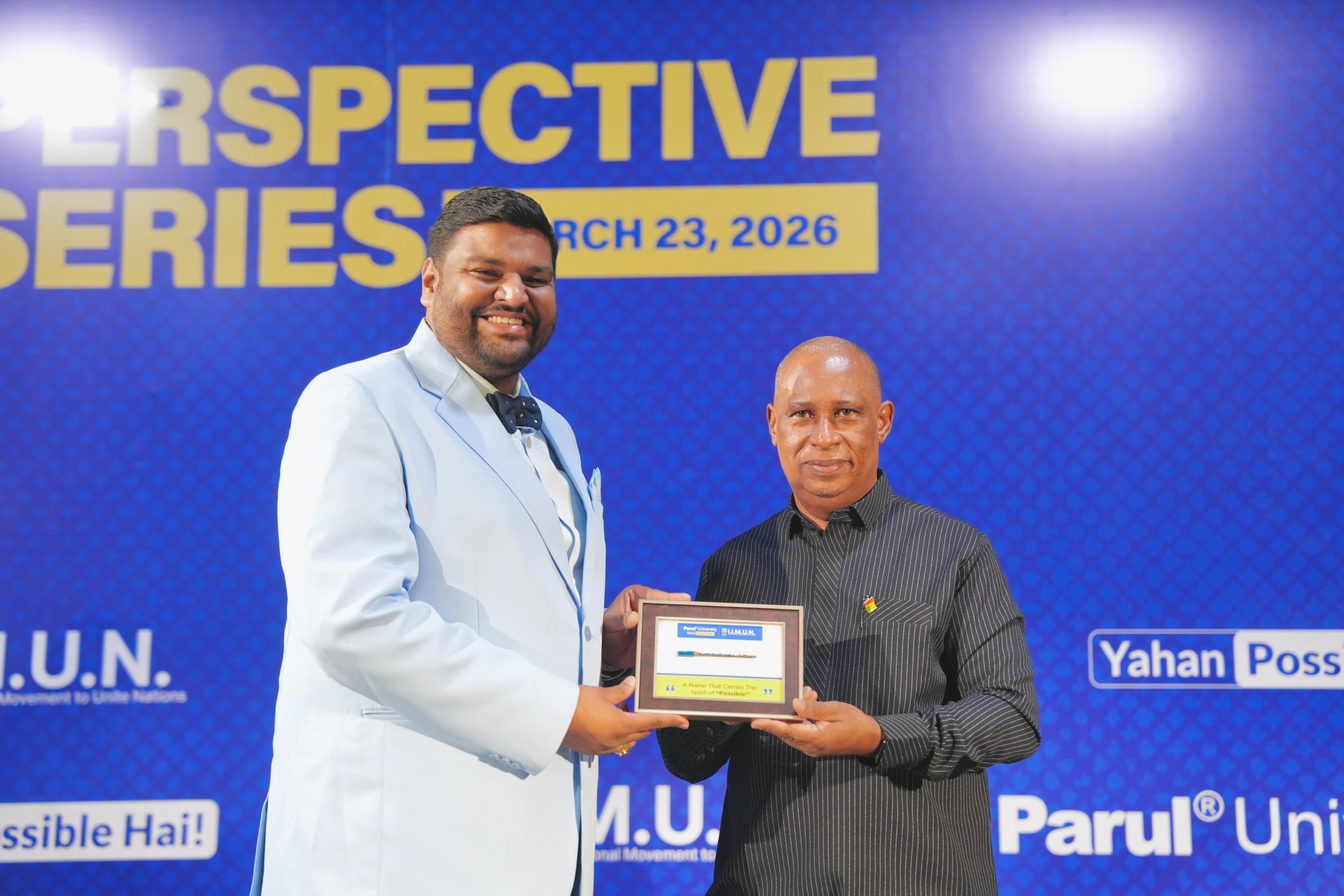
H.E. de Barros closed by saying he was very happy to participate. His final words were addressed to the Parul University community: long life to the university and to its president and staff. His presence at the Global Perspective Series, alongside previous guests including Nobel Peace Prize Laureate Shirin Ebadi, demonstrates that the series is building a genuinely international platform where students engage with heads of state, Nobel laureates, and global thought leaders on their own campus.
Explore the Faculty of Law at Parul University and wisely make your career in the Indian Law System with B.A. LL.B. (Hons.) at Parul University.
Session Quick Facts:
Speaker: H.E. Rui Duarte de Barros, Former Prime Minister of Guinea-Bissau. Role: Economist, political leader, and development advocate. Series: PU x IIMUN Global Perspective Series. Visit: 2nd time in India, 1st time in Vadodara/Parul University. Key themes: India-Africa relations, UN Security Council, colonialism, racism, education as development, brain drain, cultural diplomacy, corruption. Guinea-Bissau: 500 years of Portuguese colonial rule, and only 3 engineers were produced during the entire colonial period. India references: Mahatma Gandhi, Non-Aligned Movement, pharmacy of the world, and UN Security Council seat. Africa facts: 54 states, Nigeria = biggest film industry (Nollywood), Kenya = best mobile money transfer system.
FAQ: H.E. Rui Duarte de Barros at Parul University
Who is Rui Duarte de Barros?
Economist and Former Prime Minister of Guinea-Bissau. He spoke at Parul University as part of the PU x IIMUN Global Perspective Series. It was his second visit to India. He addressed India-Africa relations, colonialism, racism, education, the UN Security Council, and brain drain.
Why does he say India should be on the UN Security Council?
India is one of the founders of the Non-Aligned Movement, has a fundamentally non-violent past, has the world's largest population, and is a progressive democratic nation. A minority cannot decide for the majority. Africa supports India's inclusion in the permanent council.
What did he say about Africa and education?
What India has that Africa needs most is schools and universities. Nigeria produces more films than Hollywood. Kenya has the best mobile money transfer system. But Africa is represented in Western media as safari and conflicts. University exchanges like Parul University help correct this. Brain drain is a serious problem: students who study abroad must return.