Why Most Student Startups Fail - and What Design Thinking Fixes
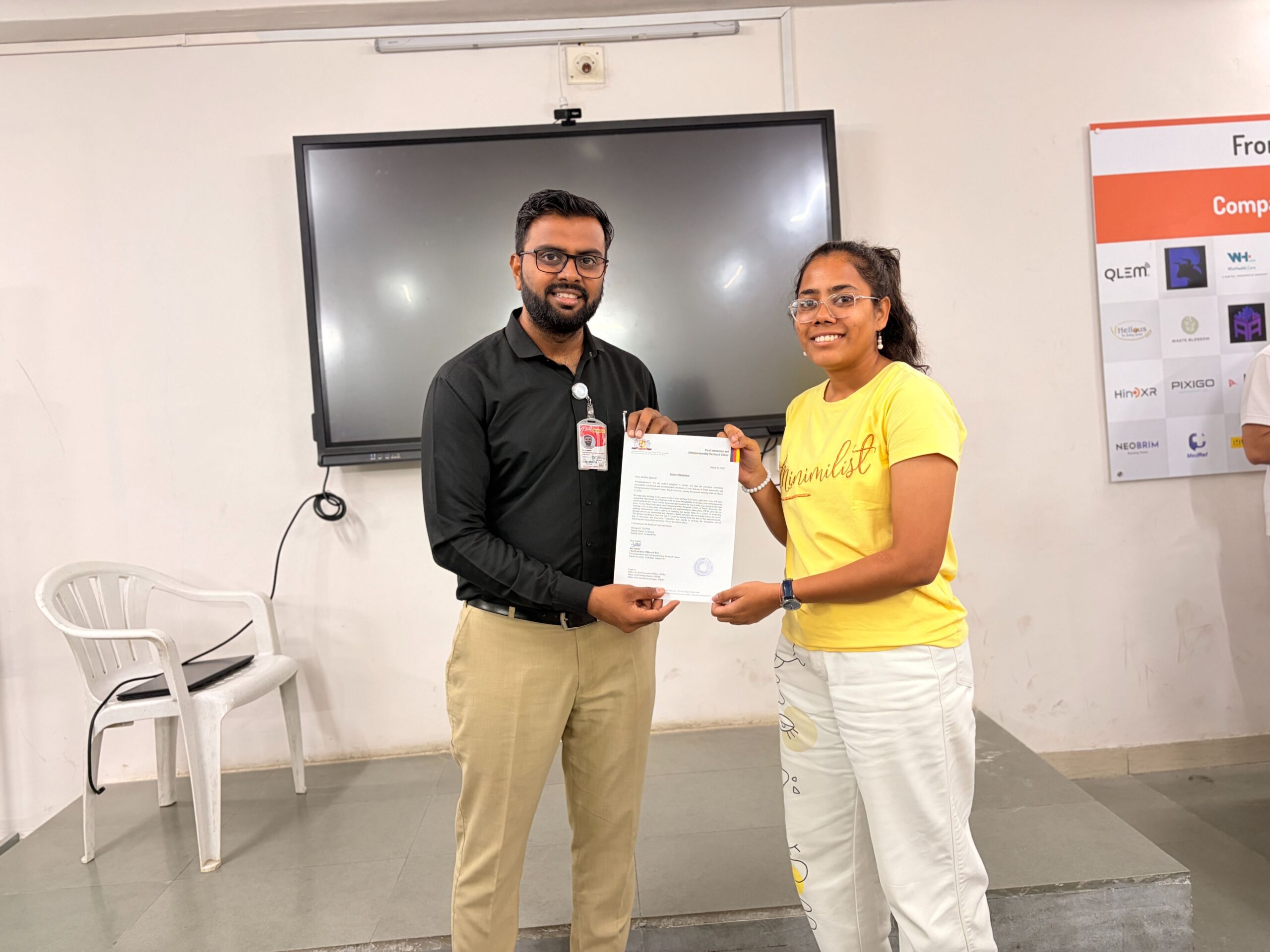
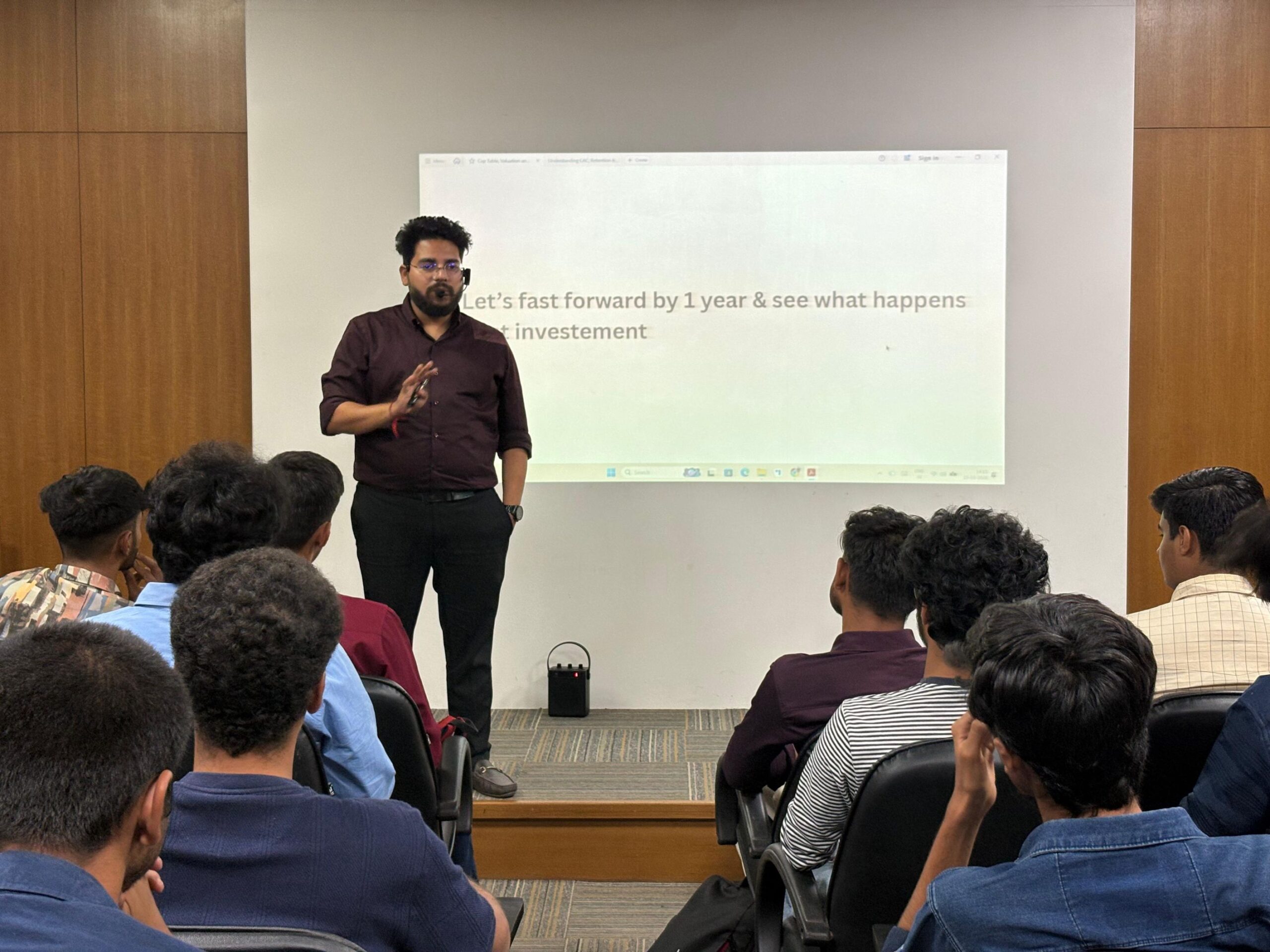
Jay Sudani, CEO of PIERC, opened Cohort with a question that every aspiring founder needs to answer before they write a single line of code or spend a rupee on a prototype: why are you doing this? He asked every founder to list at least three personal reasons for starting a startup. Some wrote about a problem they had lived through. Some wrote about freedom – financial, personal, creative. Some wrote about impact. His point was direct: a startup without a reason has no resilience. When things get hard and they will, your personal ‘why’ is the only thing that keeps you going.
The core problem he identified is that most founders fall in love with their own idea without ever stepping outside their own experience. They assume they know what people need. They build in isolation. They launch to silence. Design thinking is the antidote – a step-by-step method to solve real problems for real people, not imagined problems for imagined customers.
The Five Steps of Design Thinking - Explained for Student Founders
Step 1: Empathise - Stop Assuming, Start Listening
Jay Sudani said: stop sitting in a room and assuming. A survey will not give you this. A Google Form will not give you this. Only a genuine, unhurried human conversation will. Because people rarely say what they truly feel – your job as a founder is to read between the lines, notice the frustration in their voice, the hesitation in their actions, and find the real problem hiding beneath the surface. Real empathy means sitting with real people, watching how they actually live, asking ‘why’ repeatedly until you reach the truth that even they have not said out loud.
Step 2: Define - Write the Problem in One Sentence
Once you have listened deeply, write the problem down clearly. One sentence: who is struggling, with what, and why. This sentence becomes your guide for everything that follows. If you cannot write this sentence clearly, you have not understood the problem well enough to solve it.
Step 3: Ideate - Push Past the Obvious
Brainstorm solutions. No judgement, no filtering, no one says ‘that will not work.’ Jay Sudani warned that the first ideas are always the most obvious – the ones everyone thinks of. The real, original ideas come when you push yourself further. The majority of startups fail because founders grab the first idea that sounds good and start building. The best solution is never the first one. Stay in this phase longer. Do not stop until something truly different shows up.
Step 4: Prototype - Build It Cheap, Build It Fast
Do not build the full product. Make a simple, rough version – a sketch on paper, a basic screen on Figma, a cardboard model. The prototype is your safety net. It saves you from your own assumptions and shows you what works before it is too late. Jay Sudani was explicit: words are never enough. People only react when they can see or experience something. Build it cheap and build it fast. If something is wrong, you need to find out now – not after spending six months and all your money. If you’re equally passionate about building a career in design, explore Parul University’s Design Programmes!
Step 5: Test - Put It in Front of Real Users
Share your prototype openly and without ego. Watch reactions carefully, not hoping for praise, but hunting for truth. Absorb feedback without getting defensive, without explaining yourself, without justifying your choices. Simply listen. Then improve. Testing is not the end – it is the beginning of a better version. This entire process is a loop: you test, you learn, you go back, you improve. Every round makes your understanding sharper, every iteration makes your solution stronger.
What Comes After Design Thinking: The Startup Lifecycle
Hardik Kharva followed Jay Sudani’s session by mapping the full startup lifecycle that every founder must understand. He identified the stages as: ideation (not every thought is worth building around – a real idea comes from a real problem), problem-solution fit (your solution must match the problem like a key matches a lock), market research (your map – without it you are driving blind), prototype, customer validation (the step that separates real startups from hobby projects – talk to at least 10 real potential customers), MVP (launch the smallest, simplest version that solves the main problem – launch before you feel ready because waiting for perfect means waiting forever), business model (a great product with no business model is just a charity), go-to-market planning, scaling (scale too early and you collapse, scale too late and someone else takes your market), and funding (money is not the goal, it is the fuel – you raise money to do more of what is already working). If you too wish to give wings to your dreams, then wait no more and enrol into MBA Entrepreneurship & Innovation – Parul University.
Real Validation in Action: 's Field Visit
To show what validation looks like in practice, consider – a Cohort startup building a scan-and-pay app for retail stores. Instead of assuming the problem existed, the team visited real retail stores across supermarkets, fashion brands (Zudio, Spykar, U.S. Polo), departmental stores (MR.DIY), and a pharmacy (Max Well).
They discovered that peak-hour billing queues were rated 5/5 difficulty by stores like One Centre and Zudio, that stores were 4.8/5 open to new technology, but that trust in digital payments varied (Zudio and MR.DIY rated trust at only 3/5 due to fraud concerns). The biggest benefit retailers expected: faster checkout (41.7%), better customer experience (33.3%), and improved efficiency (25%). This field data – not guesswork – became the foundation for their product decisions. Data is the real goldmine, is what we taught students at PIERC – Parul Innovation & Entrepreneurship Research Centre.
Read More : Government Funding for Startups India 2026, SSIP, Seed Fund, SPARSH Guide
FAQ - How to Validate a Startup Idea
What is design thinking for startups?
Design thinking is a five-step framework - empathise, define, ideate, prototype, test - used to solve real problems for real people. It prevents founders from building products nobody wants by requiring direct engagement with potential users before any product is built.
How many people should I interview to validate my startup idea?
At minimum 20-30 real potential customers through face-to-face conversations, not online surveys. According to PIERC mentors, meaningful patterns only emerge after this many interviews. Speaking to 5 people and assuming validation is a common and costly mistake.
Does Parul University have a startup incubation programme?
Yes. PIERC (Parul Innovation & Entrepreneurship Research Centre) runs a 14-day incubation programme with + cohorts completed, offering design thinking training, mentorship, field validation support, Fab Lab access, and up to ₹2.5 Lakhs SSIP funding. Parul University also offers BBA, MBA in Entrepreneurship & Innovation, and Integrated BBA-MBA programmes.