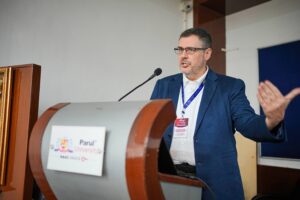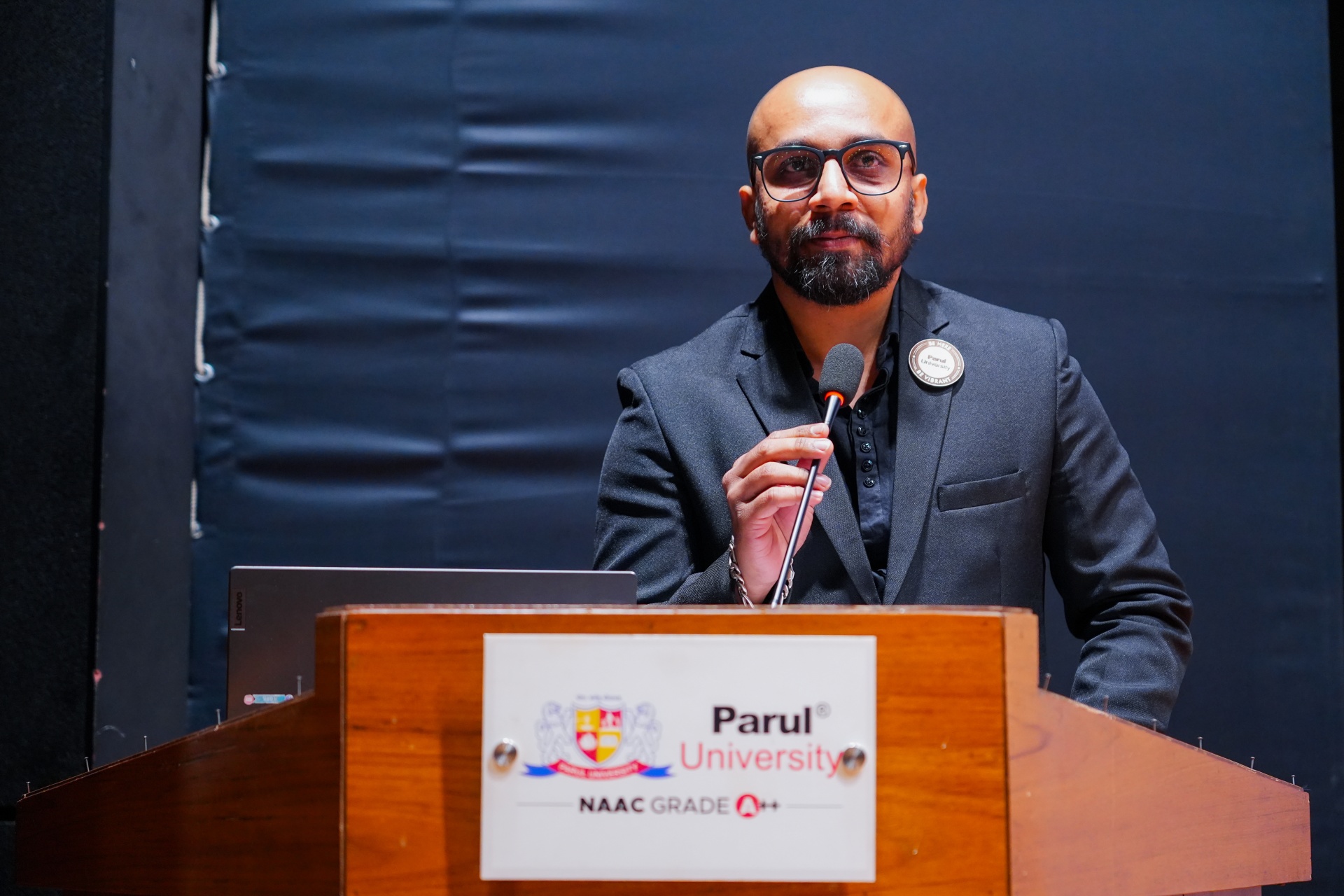
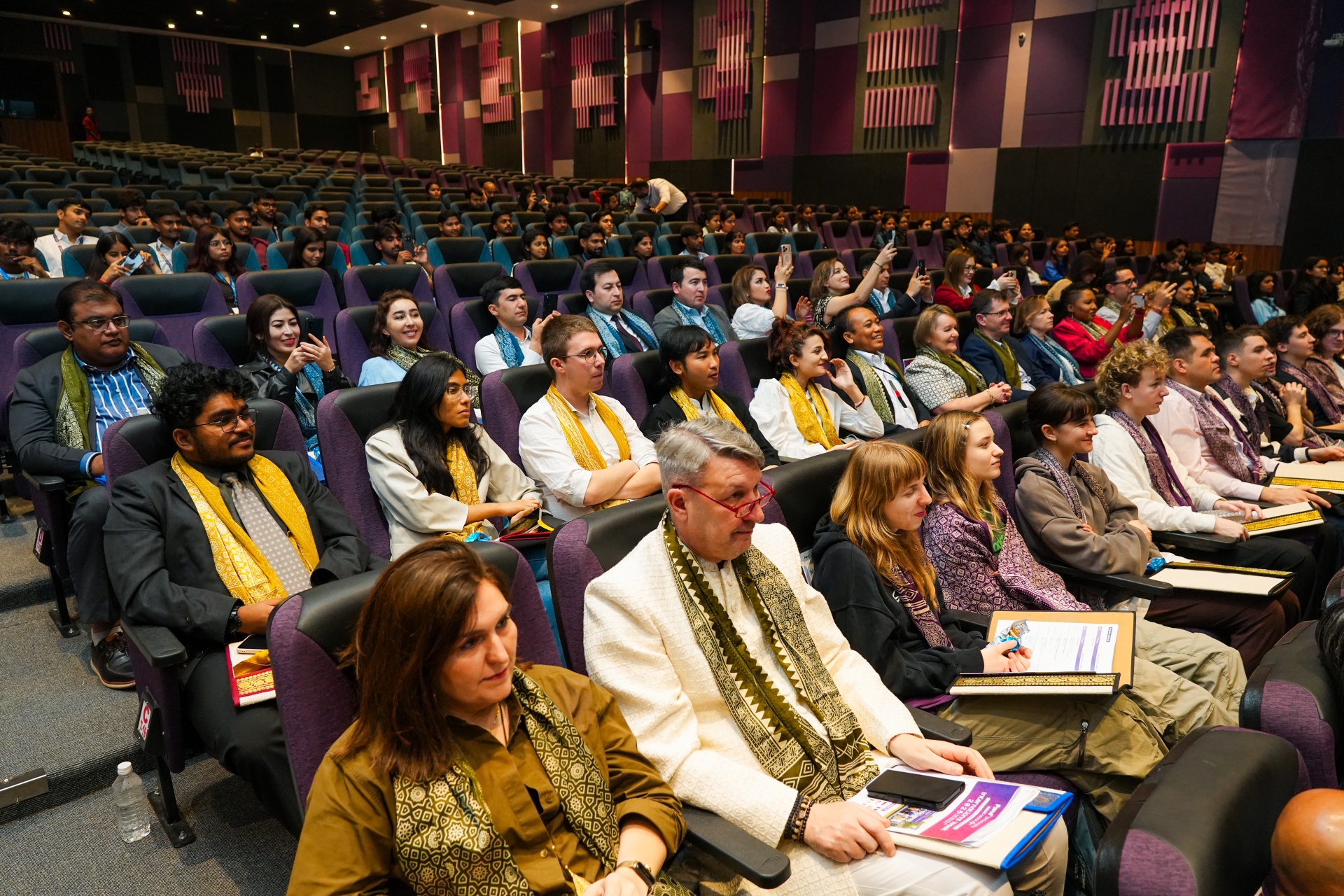
Most universities ask students to travel abroad for international exposure. Parul University does the opposite. The Center for International Relations and Research (CIRR), directed by Dr. Preeti Nair, brings international professors to Vadodara to teach across multiple faculties.
In February and March 2026, Parul University saw something it had never seen before. 20 professors from 12 countries came to campus and stayed. They ran four-week programmes, students got 32 hours of direct training, 8 hours went into live research work, and the total clocked 40 hours of learning and research combined.
Alongside this, 150 plus faculty members underwent 25 hours of International Faculty Development Program (IFDP) training. Dr. Bindi Thakkar from IFDP deliberated, it was a pure delight in experiencing such global talents under one roof.
The 20 International Professors: Who Came, From Where, and What They Taught
Each visiting professor brought a different discipline, teaching method, and cultural lens. Here is who taught and what students experienced:
Indonesia: Intercultural Communication and Tagore
Dr. Bonifacius Hendar Putranto from Universitas Multimedia Nusantara taught MBA students over 15 days. He opened every lecture by reading from Rabindranath Tagore’s Gitanjali while Indian classical music played on screen. His core curriculum covered Kim’s Cross-Cultural Adaptation Theory, corporate case studies on US returnees in Indian organisations, the Buddy System for cultural transitions, and identity frameworks from scholars including Gayatri Chakravorty Spivak, Alois Moosmuller, Kathryn Sorrells, and Al-Araki. Key concepts taught:
- Four forms of identity: I-identity, see-identity, do-identity, and should-identity
- Spivak’s Can the Subaltern Speak? applied to voice and representation in organisations
Parul University students shared their heartfelt experiences from the programme. Khushi Gajjar shared her learnings from Dr. Putranto’s session, Firdaus Alam described those 15 days that felt like family, and Harsh Gupta spoke about how Intercultural Transition and Relationships helped him gain immense knowledge.
USA: Psychiatric Nursing, Schizophrenia, and Psychotropic Medications
Dr. Trae Stewart from Massachusetts College of Pharmacy and Health Sciences (MCPHS) conducted two sessions for nursing students. In the first, he displayed a drawing by a chronic schizophrenia patient, a beheaded person wearing a mask, to demonstrate how patients perceive reality differently. He introduced Elyn R. Saks, a law professor at USC who lives with schizophrenia, and showed her TED Talk. Key clinical content:
- Five types of hallucinations: auditory (most common, voices that command), visual (shadows progressing to structured images), olfactory (phantom unpleasant smells), gustatory (metallic or bitter tastes), tactile (itching, sensation of ants crawling)
- Disorganised speech and loose associations as formal thought disorder, not intentional incoherence
- Psychosis patients are rarely inherently dangerous; risk increases with substance use or extreme fatigue, not psychosis alone
- In the psychotropic medications workshop, students presented on Escitalopram (SSRI for depression) and Lorazepam (benzodiazepine for acute anxiety)
His closing message: a pill can balance a chemical, but a nurse balances a life. If you’re equally passionate about it, explore the Bachelor of Science in Nursing Program of Parul University.
China: Creative Writing, Short Story Structure, and Student Story Reviews
Dr. Al Ryanne G. Gatcho from Hunan Institute of Science and Technology taught English Literature students across three sessions. In the second session, he taught publishing strategy: choosing the right platform, why wrong platforms force writers to change their voice, and persistence through rejection. In the third, he reviewed five student stories:
- Rudransh: A Search For What Doesn’t Exist (fantasy). Appreciated philosophical tone and the line ‘this child has no fate yet’. Noted: too much explanation, emotional build-up too late, naming overload
- Anamika: A story about a young woman finding her voice. Favourite lines: ‘the voice shook but did not break’ and ‘love remained intact with a voice’. Advised: show not tell, add sensory detail
- Yashna: Th
He also shared his own anthology work, including Dance with the Letters, a poem inspired by his dyslexic nephew, published in When Words Become Verse.
Jamaica: Disaster Risk Assessment and Climate Change
Mr. Lance Scott from Mico University College conducted two sessions. In the first, geology students presented case studies on the Gujarat Earthquake (magnitude 7.7), Bhopal Gas Tragedy, Hiroshima, and Odisha cyclones. Most chose events from their native regions. After presentations, Scott drew a Risk Mapping Table on the whiteboard.
At Parul University, B.Tech In Computer & Science Engineering means learning from faculty who come from across the world, Japan, USA, New Zealand, Canada, Ireland and more. Real sessions, real people, real growth. Come be part of something bigger than a classroom.
Vietnam: Global Marketing, BRICS, and Counterfeiting
Dr. Nguyen Thi Gam, Deputy Dean at Phenikaa University, taught BBA and MBA students global marketing strategy. She explained that developing nations have three coexisting market segments: traditional rural, modern urban, and transitional low-income urban. Key topics covered:
- India is an emerging market.
- BRICS advantages.
- NAFTA to USMCA transition and MERCOSUR (Treaty of Asuncion, 1991).
- Nepal’s structural barriers.
- Pharmaceutical counterfeiting is one of the most dangerous IP crimes.
Australia: Research Methodology, Parasitology, HDR, and AI
Two professors from Charles Sturt University brought different disciplines. Dr. Shokoofeh Shamsi taught faculty members a structured 8-week research workflow (Idea, Asset, Evaluation, Paper) and proposed student project ideas including zero-trust smart campus security, federated IoT intrusion detection, carbon-aware scheduling, and privacy-preserving student analytics. She also taught food technology and agriculture students about Toxoplasma gondii, a parasite present in approximately 80% of the French population, explaining its life cycle, behavioural manipulation of hosts, and significance in livestock abortion.
Dr. Quazi Mamun discussed HDR (Higher Degree Research) coordination, AI in education (personalised learning, adaptive assessments, predictive tracking), and comparative infrastructure between Indian and Australian universities. So to study at Parul Institute of Technology, means to give wings to your International Dreams!
Poland: Simulation, Motherhood Penalty, and CO2 Reduction
Dr. Bozena Mielczarek from Wroclaw University of Science and Technology, with 40+ years of experience, delivered two research presentations using simulation modelling. The first examined the motherhood penalty in Polish pensions:
- Women retire 5 years earlier, live longer, receive lower monthly pensions because capital is divided across more years
- Career interruptions from childbearing reduce contributions further
- Simulation scenarios: women with 0/1/2 children, with/without family support, different professions and salary levels
Tanush Jajoo – a proud student of Parul University shared her experience on how as an MBA student, she received clarity in business planning, market analysis and world-class management practices.
Russia, Germany, South Africa, and the Cultural Workshop
Dr. Svetlana Nikolaevna Morozkina from ITMO University (Russia) delivered an advanced session on endocrine theory in breast cancer, steroid chemistry, estrogen receptor pathways, the Torgov synthesis scheme, and carcinogenicity through covalent DNA binding. PhD scholars asked questions on enzyme kinetics and catalytic regions.
Dr. Daniel Alexander Porath from Hochschule Mainz (Germany) taught BBA students regression analysis, OLS estimation, VIF for multicollinearity detection, and model specification based on theoretical considerations.
Dr. Suresh Babu Naidu Krishna from Durban University of Technology (South Africa) taught nursing students research methodology using the Delphi Method and told them: people think nursing students are just caregivers, but they should be entrepreneurs. Become your own boss and give jobs to others.
Additional International Faculty at IVPP 2026
Here’s the list of other international faculty members –
- Dr. Robin Sakamoto, Dean & Professor, Kyorin University, Japan, visited under the Visiting Delegate Program
- Nathan Cooper, Associate Professor, University of Waikato, New Zealand, QS World Rank 235, visited for international engagement discussions
- Dr. John Tookey, Associate Dean, Auckland University of Technology, New Zealand
- Dr. Neelima Chauhan, Associate Professor, University of Illinois Chicago (UIC) School of Public Health, USA
- Dr. Matthew Noone, University of Limerick, Ireland
- Dr. Adaora Osondu-Oti, Afe Babalola University, Nigeria
- Dr. Musili Odutuyi, Adeyemi Federal University of Education, Nigeria
- Marta Nowakowska (Poland) conducted a month-long Cultural Intelligence Masterclass covering corporate cultures, hierarchy norms, and international adaptation strategies
- Dr. Faith Mashele, Grove University, South Africa, taught sustainability and supply chain management
- Dr. Yvonne Delaney, Grove University, taught global trade and sustainability
- Hanadi Alnawab, Humber Polytechnic, Canada, conducted sessions on digital sustainability and AI in business
- Anke Foller-Carroll, from Humber Polytechnic, Canada
Parul University’s students shared their experiences on what they’ve learnt out of these sessions. However, in the response of the same, Dr. Bonifacius Hendar Putranto thanked Parul University for hosting international and intercultural collaboration in the future.
What Students and Faculty Said: LinkedIn Testimonials
The student and faculty responses after the programme were not institutional press releases. They were personal reflections posted publicly on LinkedIn. Key voices:
- Khushi Gajjar (MBA): Communication is not just about language but about empathy, context, cultural awareness, and mutual understanding
- Firdaus Alam (MBA): This was more than a seminar. It was a journey of perspectives. He did not just teach us. He connected with us, and we all learned from each other
- Harsh Gupta (MBA): Described Day 7 of Indonesian sessions, listing every framework from Kim’s micro-level synchrony to Jackson’s Development Model, ending with: we ended our day with a big smile and eagerness for the next session
- Yuvraj Singh (MBA): His group from Punjab, Delhi, and Gujarat found that Hindi acted as a unifying link across cultures, reinforcing unity in diversity as lived experience
- Jayasri Acharya: Described a 3-week session concluding with research papers, project reports, and presentations on Harmony in Diversity, analysing HCL Technologies, Glenmark Pharmaceuticals, and Waste Management Inc.
- Tanush Jajoo (MBA): Learning how simulation supports decision-making, risk analysis, and business planning added great value to my understanding of modern management
- Jayesh More (Liberal Arts): Dr. Gatcho’s teaching style allowed ideas to breathe freely. His farewell referenced the Japanese concept of Ichigo Ichie, cherishing fleeting moments
The Strategic Conference: What the Programme Builds Toward
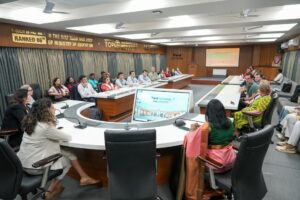
Dr. Preeti Nair led a strategic conference with all visiting faculty to map outcomes beyond classroom sessions. The discussions covered:
- Dual degree programmes: students receive two degrees simultaneously from PU and a partner university
- Three-month internship programmes: costs limited to visa and flight in some collaborations
- Semester exchange across approximately 70 faculties
- July Global Summer School and Sustainability Camps open to PhD scholars
- Adjunct professor roles, fully funded for one year in certain collaborations
- Incubation hub partnerships for innovation contests
- Joint publication and Scopus indexing strategies
- Government-funded, cross-mobility, and fully funded selection-based scholarships
- PhD durations: part-time 3 years, full-time 4 years
Australian and Chinese universities expressed interest in welcoming more Indian students. The conference acknowledged challenges openly: scheduling across IST, mixed batches making content alignment harder, and some faculty asked to deliver lectures outside their specialisation. Infrastructure was praised, and departments were described as well-connected. Wait no more and explore Parul University’s admissions and get a chance to build your career amongst global personalities.
IFDP Faculty Feedback
Five faculty members provided formal feedback on the International Faculty Development Program:
- Dr. Sourav Parmar (Public Health): Connected learnings to India’s Viksit Bharat vision, described the experience as highly enriching
- Dr. Yajubendra Dhakad (BBA): Appreciated structured planning, practical knowledge, and innovative educational ideas from international experts
- Mr. Miten Pandya (Aviation): Highlighted SDGs and the opportunity to interact with faculty from different countries as the most enriching aspect
- Dr. Sonal Pujara (Applied Science, Coordinator): Noted active interdisciplinary engagement reflecting PU’s commitment to internationalisation
FAQ: International Visiting Professor Program at Parul University
What is the IVPP at Parul University?
The International Visiting Professor Program (IVPP), organised by CIRR (Center for International Relations and Research), brings international faculty to teach at Parul University.
Who organises the IVPP?
CIRR at Parul University, directed by Dr. Preeti Nair, Dr. Bindi Thakkar. Supported by Dr. Devanshu Patel (President), Dr. Geetika Madan Patel (VP), Dr. Bijal Zaveri (Dean), Dr. Ashutosh Verma (Academic Coordinator CIRR).
Can students study abroad through these partnerships?
Yes. The IVPP feeds into dual degree programmes, semester exchanges across 70 faculties, three-month internships, a July Global Summer School, and fully funded scholarships.