Shape Memory Alloys (SMAs) are a class of smart materials that exhibit a remarkable physical property: the ability to recover their original, pre programmed shape after being deformed, when heated above a critical temperature. This property the shape memory effect arises from a reversible phase transformation between two crystal structures. In the low temperature phase (martensite), the material is relatively soft and deformable. When heated above the transformation temperature, it reverts to the high temperature phase (austenite) and recovers its original geometry. A comprehensive 2025 review in RSC Advances covers recent advances in SMA fabrication, properties, and applications for next generation smart systems.
The most commercially significant SMA is Nitinol (nickel titanium), which has been used in medical stents, orthodontic archwires, and automotive actuators for decades. For space applications, the interest in SMAs centres on their unique ability to function as deployable actuators mechanisms that remain in a compact, stowed configuration during launch and then deploy reliably in orbit when thermally activated, without motors, gears, or electrical actuators. This eliminates weight, moving parts, and failure modes that conventional deployment mechanisms carry.
NASA Glenn Research Center’s shape memory metal matrix composite research demonstrates how SMAs strengthened with ceramic nanoparticles can achieve improved dimensional stability, creep resistance, and hardness properties critical for long duration space missions. The MNRDC’s ISRO project works within this same domain of characterising SMA properties under processing conditions relevant to space deployment.
ISRO and the Strategic Importance of SMA Research in India
The Indian Space Research Organisation (ISRO) has increasingly focused on developing indigenous advanced materials for space applications as part of India’s broader push toward self reliance in space technology a priority that accelerated following the success of Chandrayaan 3 in 2023 and Aditya L1 in 2024. SMAs sit at the intersection of materials science, aerospace engineering, and precision manufacturing areas where ISRO is investing in university partnerships to build the research pipeline needed for next generation missions.
The MNRDC’s project represents exactly the kind of university ISRO collaboration that the national space programme seeks: a well instrumented research center with the specific analytical tools needed to characterise SMA microstructure, phase transformation behaviour, surface properties, and mechanical performance under controlled processing conditions.
How the MNRDC's Instruments Are Used in SMA Research
SMA research at the MNRDC is inherently multi instrument. Each characterisation technique reveals a different aspect of the material’s properties and behaviour.
SEM - Surface and Microstructural Characterisation
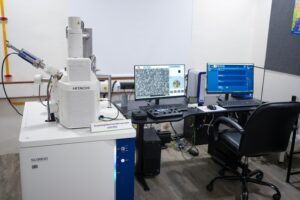
The Hitachi SU3800 SEM at the MNRDC examines the surface morphology and microstructure of processed SMA specimens revealing grain structure, phase boundaries, surface defects, and the distribution of secondary phases that influence transformation behaviour. SEM combined with EDS determines whether the elemental composition of the processed alloy matches the intended specification verifying, for example, the exact nickel to titanium ratio in Nitinol components. Research on SMA characterisation frequently cites SEM microstructural analysis as the primary tool for process validation, as demonstrated in peer reviewed work on this topic available through the Journal of Alloys and Compounds.
XRD - Phase Identification and Transformation Analysis
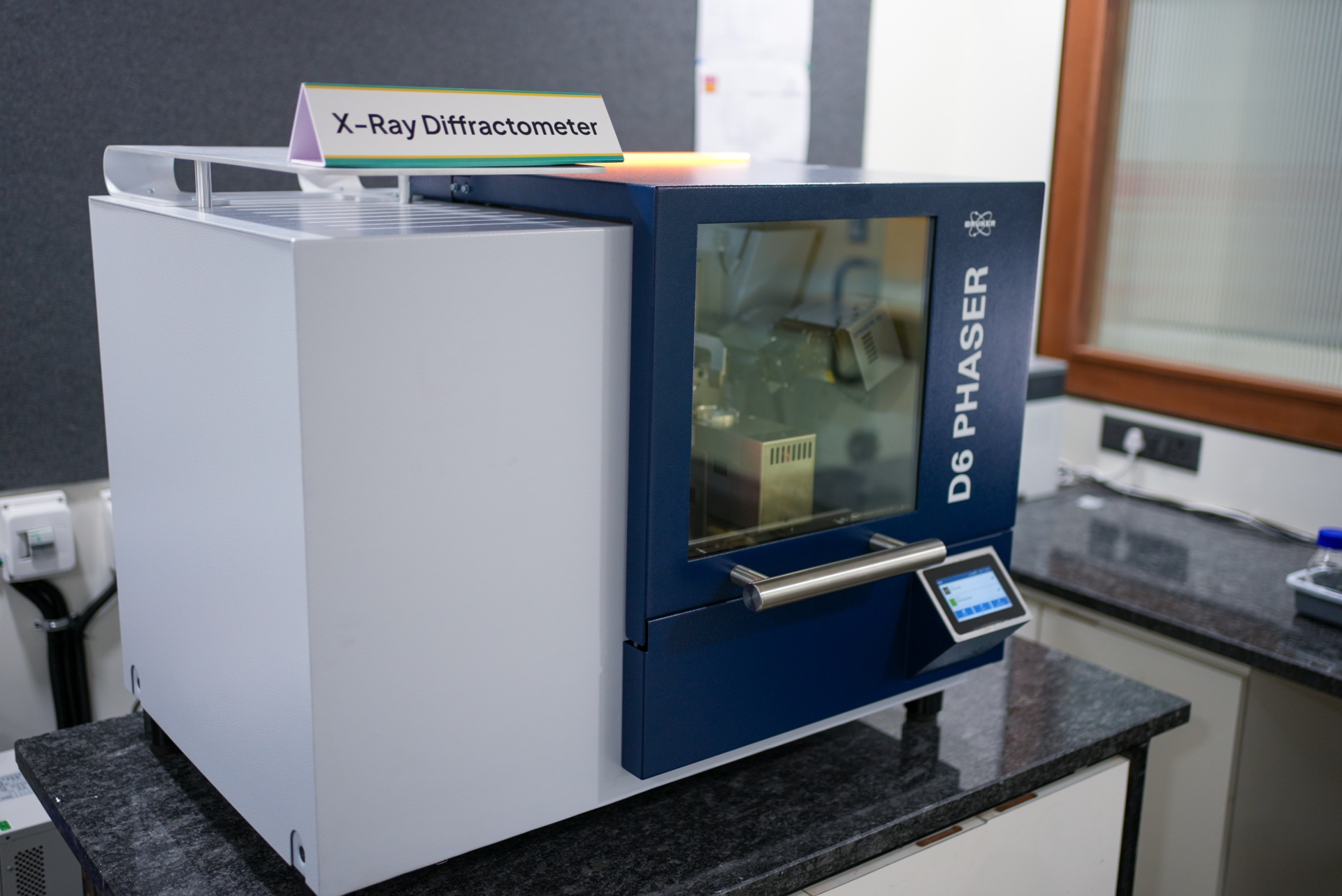
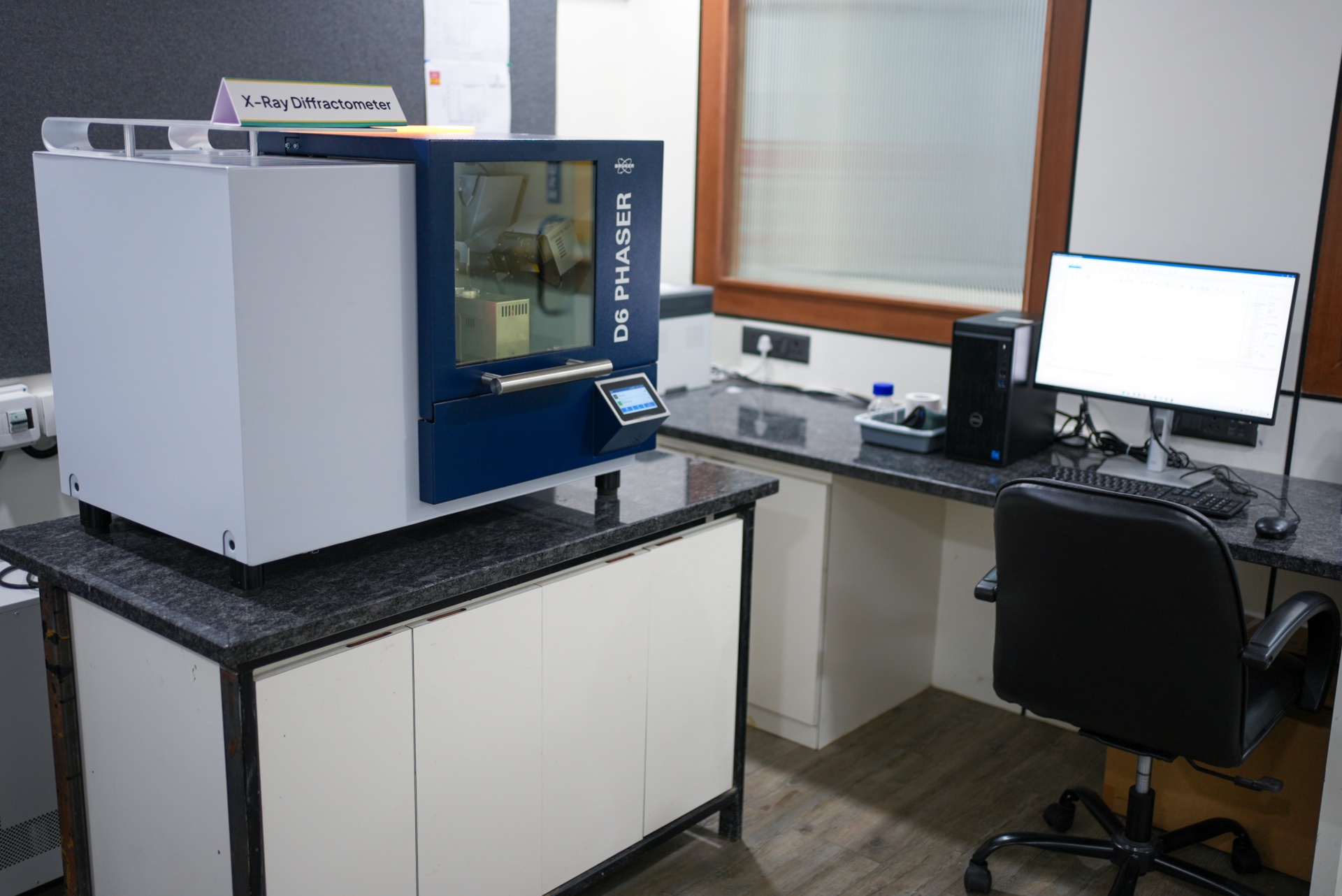
The Bruker D6 PHASER XRD is central to SMA research because it directly identifies and quantifies the martensite and austenite phases present in the material at any given state of processing. Bragg’s Law analysis of diffraction peak positions, widths, and intensities reveals the phase proportions, crystallite size, and lattice strain in the SMA all of which directly determine the shape memory effect magnitude, transformation temperatures, and cycling stability. TOPAS Rietveld refinement, available at the MNRDC, provides the quantitative phase analysis needed for publication quality characterisation.
AFM - Nanoscale Surface and Grain Analysis
The Nanosurf Core AFM contributes surface roughness data, grain size measurements, and nanoscale topographical maps of SMA specimens before and after thermal cycling. Changes in surface morphology following repeated shape memory cycles are indicative of material fatigue and stability crucial data for evaluating SMA components intended for deployment mechanisms that must perform reliably over hundreds of cycles in the harsh thermal environment of space. The AFM’s ability to operate across a range of environments makes it suitable for studying SMA surfaces under conditions approaching their operational context. For further reading, a 2025 Science Direct review on shape memory alloys for smart systems covers the breadth of SMA applications including space deployment mechanisms.
Pin-on-Disc Tribometer - Wear and Friction Under Simulated Conditions
SMA components used in deployable mechanisms are subject to tribological stresses during deployment and repeated actuation cycles. The Pin on Disc Tribometer at the MNRDC operating to ASTM G99 standard measures the wear rate and friction coefficient of SMA specimens under controlled loads and sliding conditions, providing data critical for predicting component lifetime in space applications where replacement is not possible.
MNRDC Leadership Behind the ISRO Project
The ISRO project at the MNRDC is led by Sr. Prof. Dr. Anand Joshi, Chairperson of the MNRDC and HAG Professor of Mechanical Engineering at Parul University. A PhD graduate from IIT Roorkee with over 23 years of research experience and 50+ publications, Dr. Joshi has core expertise in CAD, Mechatronics, and Nanotechnology. He is a recipient of the DST Fast Track Research Grant for Young Scientists and has received travel grants from SERB and AICTE. Notably, one of his publications in Physica E was ranked among the top 25 hottest articles in the journal and remains its most cited since 2008 a mark of the research quality the MNRDC’s leadership brings to the ISRO project. Students pursuing B.Tech in Mechanical Engineering at Parul University are among the primary beneficiaries of this research infrastructure.
The project also draws on the expertise of Prof. Dr. Unnati Joshi, Chief Research Officer, whose track record includes a Royal Academy of Engineering UK funded project (Newton Bhabha Fund) on green refrigeration using solar energy and funded projects from GUJCOST and DST. Her publications in Materials, Physica E, and Composites Communications reflect the multi instrument, multi discipline research approach that ISRO’s SMA project demands. Students interested in advanced materials research can explore M.Tech Chemical Engineering Programs at Parul University.
Career Pathways in Aerospace Materials Engineering
The MNRDC’s ISRO collaboration creates direct exposure to aerospace materials research for students and research scholars at Parul University. Career pathways in this domain include aerospace materials engineers at ISRO, HAL, and DRDO; research scientists at national laboratories including NAL and DMRL; academic researchers in materials science and nanotechnology; and materials characterisation specialists in the growing private aerospace sector. The B.Tech Mechanical Engineering programme at Parul University covers materials science, strength of materials, and manufacturing processes providing the foundational knowledge for advanced SMA research.
FAQ
What is the MNRDC's ISRO-funded research project about?
The MNRDC at Parul University is executing an ISRO-funded project titled "Development and Characterisation of Processed Shape Memory Alloy (SMA) Components for Space Applications." The project uses SEM, XRD, AFM, and tribometer testing to characterise SMAs - smart materials that recover their pre-programmed shape when heated - for use in deployable mechanisms, actuators, and structures in ISRO missions.
What is a shape memory alloy and how does it work?
Shape memory alloys (SMAs) are smart materials that return to a predetermined shape when heated above their transformation temperature. The most common SMA is Nitinol (nickel-titanium). They work through a reversible phase transformation between two crystal structures: martensite (low-temperature, soft, deformable) and austenite (high-temperature, rigid, original shape). This property makes SMAs ideal for deployable spacecraft structures, actuators, and mechanisms that must function reliably without conventional motors or gears.
How does XRD help in SMA research?
X-Ray Diffraction (XRD) is central to SMA research because it directly identifies and quantifies the martensite and austenite phases present in the material. Diffraction peak positions, widths, and intensities reveal phase proportions, crystallite size, lattice strain, and texture - all of which determine transformation temperatures, shape recovery magnitude, and mechanical stability. TOPAS Rietveld refinement software, available at the MNRDC, provides quantitative phase analysis required for publication-quality characterisation.
What engineering programme at Parul University best prepares students for aerospace materials research?
B.Tech Mechanical Engineering at Parul University provides the foundational knowledge in materials science, strength of materials, and manufacturing processes most relevant to aerospace materials research. For advanced research, the doctoral programme at Parul University offers direct access to MNRDC instrumentation and supervised research under faculty who lead the ISRO collaboration. M.Tech Mechanical Engineering and M.Sc Physics provide advanced preparation for materials characterisation roles.