Green hydrogen hydrogen produced by splitting water using electricity from renewable sources has emerged as one of the most strategically important technologies for achieving net zero energy systems. The International Energy Agency (IEA) identifies green hydrogen as essential for decarbonising hard to abate sectors including steel, shipping, and heavy industry. India has responded with ambition: the National Green Hydrogen Mission, administered by the Ministry of New and Renewable Energy, targets production of 5 million metric tonnes of green hydrogen per year by 2030 positioning India as a global green hydrogen hub.
At the core of green hydrogen production is the electrolyser a device that uses electricity to split water into hydrogen and oxygen. The efficiency and cost of electrolysers depend critically on the performance of the electrode catalysts used in the oxygen evolution reaction (OER) and hydrogen evolution reaction (HER). This is precisely where the MNRDC’s research contributes.
The Research - NiFeP@Ni Nanotubes for Efficient Electrolysis
The MNRDC’s published research, available at Renewable Energy (Elsevier), is titled “Vertically aligned NiFeP@Ni nanotubes for efficient electrochemical production of green hydrogen and sulfur: Circular economy meets sustainable energy.” Published in 2025 in a journal with an Impact Factor of 9.1 (Q1 ranking), it represents the highest impact research output from the MNRDC to date.
The research addresses the design of nanostructured electrocatalysts. NiFeP@Ni nanotubes are vertically aligned nanotube structures based on a nickel iron phosphide (NiFeP) active layer on a nickel (Ni) substrate. Their vertical alignment maximises the exposed catalytic surface area the more active sites available to water molecules, the more efficiently hydrogen can be produced per unit of electrical energy input. The nickel iron phosphide composition provides high catalytic activity for both hydrogen and oxygen evolution reactions, reducing the overpotential the excess energy beyond the thermodynamic minimum required to drive water splitting.
What distinguishes this research is its circular economy angle: the simultaneous production of sulfur as a valuable byproduct alongside hydrogen. This transforms what is typically a waste stream in certain industrial electrolysis processes into a recoverable resource, improving the overall economic sustainability of the electrolyser system. The title’s explicit reference to “circular economy meets sustainable energy” reflects a research philosophy pioneered by the MNRDC team that positions green hydrogen not merely as a replacement fuel but as part of a broader sustainable industrial system.
Role of the Royal Academy of Engineering and International Collaboration
The Royal Academy of Engineering is the UK’s leading professional body for engineering. Its international funding programmes including the Newton Fund and the Newton Bhabha Fund (administered in partnership with the British Council and the Department for Science, Innovation and Technology) specifically support research collaborations between UK universities and institutions in emerging science nations. These programmes are awarded on the basis of scientific merit, the quality of the collaborative partnership, and the potential for research to deliver impact aligned with sustainable development goals.
The MNRDC’s Royal Academy funding is not the institution’s first connection to this body. Prof. Dr. Unnati Joshi, Chief Research Officer, previously secured Newton Bhabha funding for a project on Green Refrigeration Systems Using Solar Energy a research line connecting directly to the broader clean energy theme of the current green hydrogen project. This track record of successful Royal Academy engagement reflects sustained research excellence and proposal quality.
How the MNRDC's Instruments Support Green Hydrogen Research
The green hydrogen project draws on the MNRDC’s characterisation infrastructure across multiple instruments.
SEM and EDS - Nanotube Structure and Composition
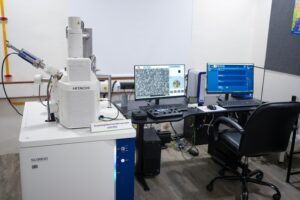
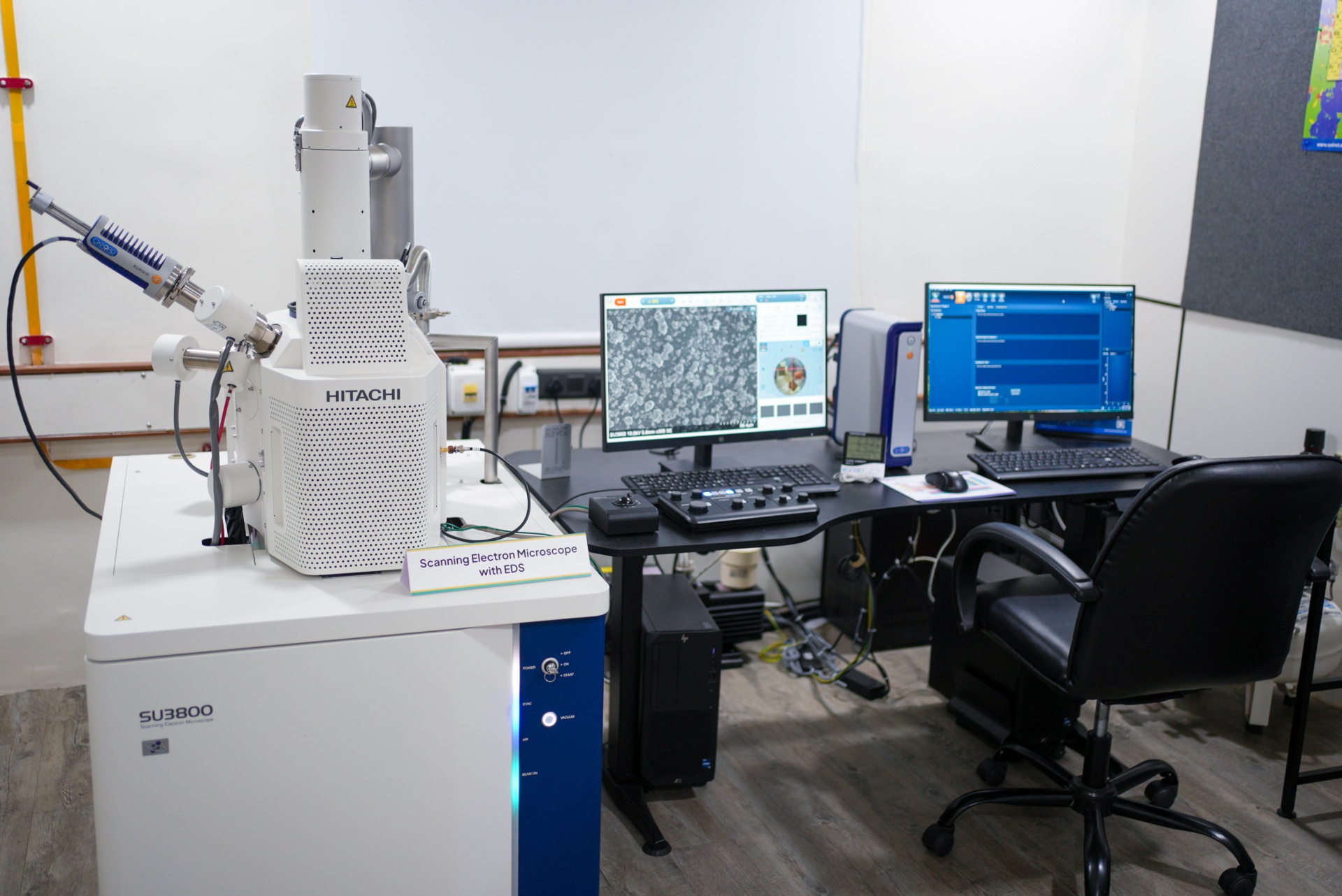
The Hitachi SU3800 SEM characterises the morphology of the NiFeP@Ni nanotube arrays verifying vertical alignment, tube diameter uniformity, and surface structure at the nanoscale. EDS confirms the elemental composition of the NiFeP active layer, ensuring the correct nickel iron phosphorus ratio that determines catalytic performance. SEM cross sectional imaging measures nanotube length and wall thickness.
XRD - Phase Identification and Crystallinity
The Bruker D6 PHASER XRD identifies the crystal phases present in the NiFeP catalyst distinguishing between different nickel phosphide phases (Ni2P, Ni3P, NiP2) and iron phosphide phases that have different catalytic activities. Crystallite size calculated from peak broadening using the Scherrer equation determines the active surface area contribution from each phase.
AFM - Surface Roughness and Active Site Mapping
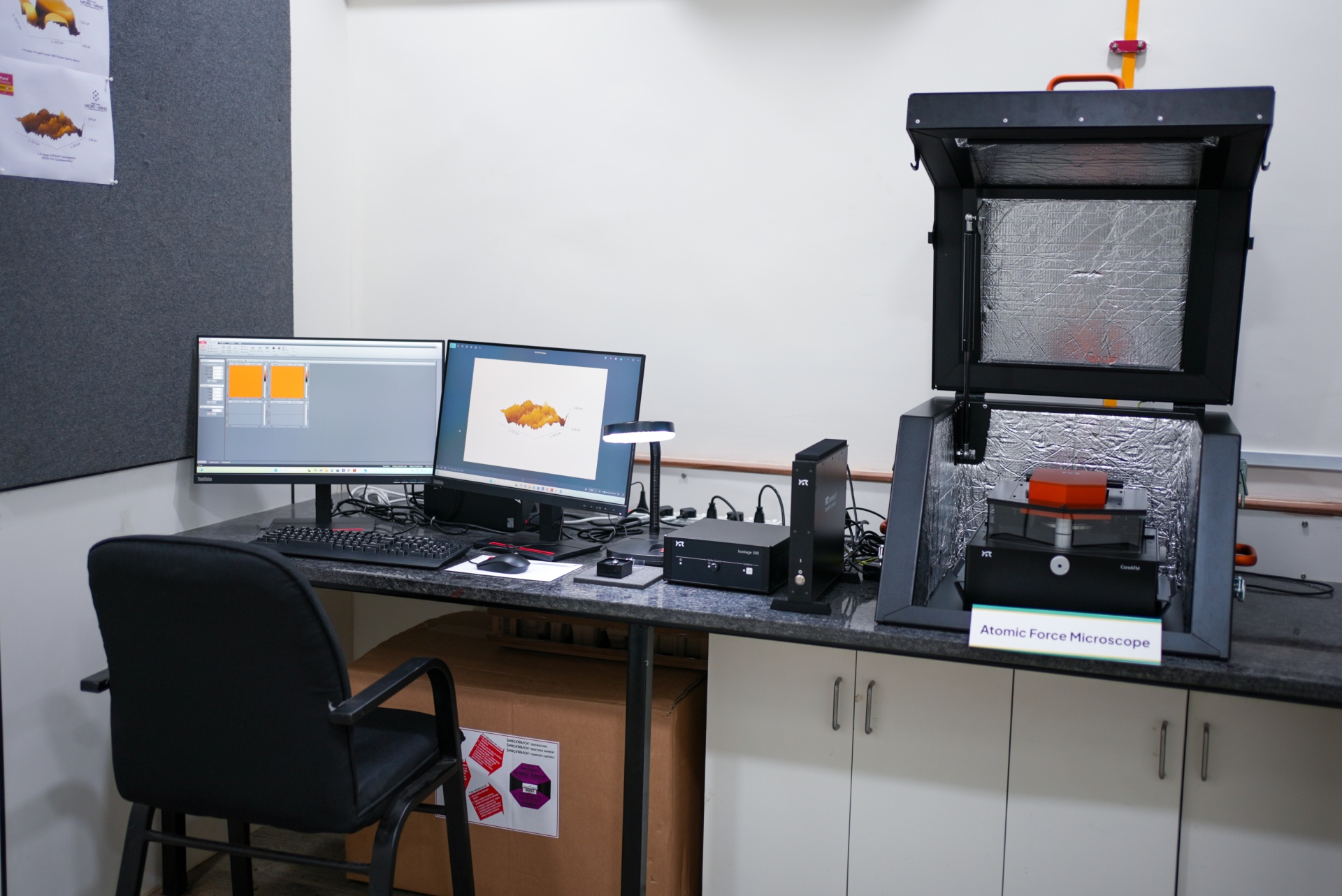
The Nanosurf Core AFM measures the surface roughness of the nanotube arrays at the nanoscale rougher surfaces generally indicate more active sites per unit area. AFM topography data complements SEM morphology images with quantitative height distribution data and grain scale structural information.
RF/DC Magnetron Sputtering - Thin Film Electrode Fabrication
The Auto 500 Sputtering System contributes to the fabrication side of the research: depositing ultra thin metal and metal oxide layers onto electrode substrates during catalyst preparation. Precise control over film thickness, composition, and substrate temperature enables systematic variation of catalyst structure to optimise electrochemical performance.
Students interested in clean energy research at Parul University can explore B.Tech Chemical Engineering and M.Tech Chemical Engineering programmes with direct access to the MNRDC research infrastructure. For doctoral level clean energy research, PhD programmes at Parul University
FAQ
What is Parul University MNRDC's most significant research publication?
"Vertically aligned NiFeP@Ni nanotubes for efficient electrochemical production of green hydrogen and sulfur: Circular economy meets sustainable energy," published in Renewable Energy journal (Impact Factor 9.1, Q1) in 2025.
What are NiFeP@Ni nanotubes and why are they important for green hydrogen?
NiFeP@Ni nanotubes are vertically aligned nanotube structures with a nickel-iron phosphide (NiFeP) active catalytic layer on a nickel (Ni) substrate. Their vertical alignment maximises exposed active surface area for water splitting reactions. The NiFeP composition provides high catalytic activity for both hydrogen and oxygen evolution reactions, reducing the energy required for electrolysis. The simultaneous production of sulfur as a byproduct aligns with circular economy principles.
What is India's National Green Hydrogen Mission?
India's National Green Hydrogen Mission, administered by the Ministry of New and Renewable Energy, targets the production of 5 million metric tonnes of green hydrogen per year by 2030 and aims to position India as a global green hydrogen hub. The mission supports R&D, production incentives, and infrastructure development for green hydrogen and its derivatives. Parul University MNRDC's Royal Academy of Engineering-funded research contributes to the scientific foundation this mission requires.
What career options are available in green hydrogen research in India?
Green hydrogen research careers in India include electrochemistry researchers at national labs (CSIR-CECRI, CSIR-NCL), energy materials scientists at PSUs like ONGC, NTPC, and BHEL, research engineers at hydrogen startup companies, academic faculty in chemical engineering and materials science, and policy and technology analysts at organisations implementing the National Green Hydrogen Mission. B.Tech and M.Tech Chemical Engineering from Parul University with MNRDC research exposure provides direct preparation for these roles.