AI isn’t replacing biologists; it’s amplifying their impact, and graduates who learn to work with AI will lead the biotech future.
Biotechnology is experiencing strong, measurable growth worldwide. This global momentum is reflected in India, where the bioeconomy expanded biotech startups, reshaping the skill expectations for today’s biotech graduates.
Why AI Now Shapes Biotechnology?
AI has quietly embedded itself into almost every domain of life sciences. What once took years of trial-and-error can now be simulated, predicted, or optimised in weeks, or even days.
Today, AI supports:
- Drug discovery and molecular modelling
- Genomics and gene-editing prediction
- Diagnostics and digital pathology
- Epidemiology and disease modelling
- Bioprocess and fermentation optimisation
- Environmental biotechnology simulations
- Agricultural biotech forecasting
- Clinical trial automation
This shift has created a clear industry preference: biotechnology graduates who can work alongside AI tools, interpret their outputs, and connect them to biological reality. The science still matters, but so does the ability to translate data into decisions.
Which New-Age Roles are Emerging with the Onset of AI
AI isn’t just refining existing jobs; it’s creating entirely new ones that sit at the intersection of biology and data.
Look out for these roles:
AI-Assisted Research Associate
Modern research teams use AI to screen compounds, analyse experimental results, and predict biological outcomes. Graduates in these roles are expected to understand wet-lab workflows and make sense of AI-generated insights.
Bioinformatics & Genomics Analyst
With tools like AlphaFold and AI-driven variant callers transforming genomics, students with foundational bioinformatics exposure are entering some of the fastest-growing roles in biotech.
Digital Lab Technician
Automation platforms, robotic pipetting, and AI-powered lab information systems demand technicians who are fluent in both benchwork and digital systems.
Biotech Data Associate
These professionals validate AI predictions, annotate biological datasets, and support computational biology teams, making biological judgment as important as technical accuracy.
Quality control labs now rely on AI for contamination detection, image analysis, and assay optimisation, opening doors for tech-aware biotech graduates.
The key takeaway? AI doesn’t replace lab biologists, but empowers them to work faster, smarter, and more accurately.
Why Skill Depth Beats Theory ?
AI has widened the gap between graduates who only know concepts and those who can apply them. In the AI era, strong preparation means combining biology fundamentals with hands-on exposure.
A future-ready learning environment focuses on:
- Repeated wet-lab practice
- Exposure to bioinformatics and sequence analysis tools
- Research methodology and experimental design
- Domain exploration (molecular biology, microbiology, diagnostics, industrial biotech)
- Strong project or dissertation work
- Industry-facing workshops and expert sessions
- Skill-based, outcome-driven learning
This blend ensures graduates don’t feel intimidated by intelligent systems; they know how to question, validate, and use them.
Wet-Lab Skills Still Matter a Lot
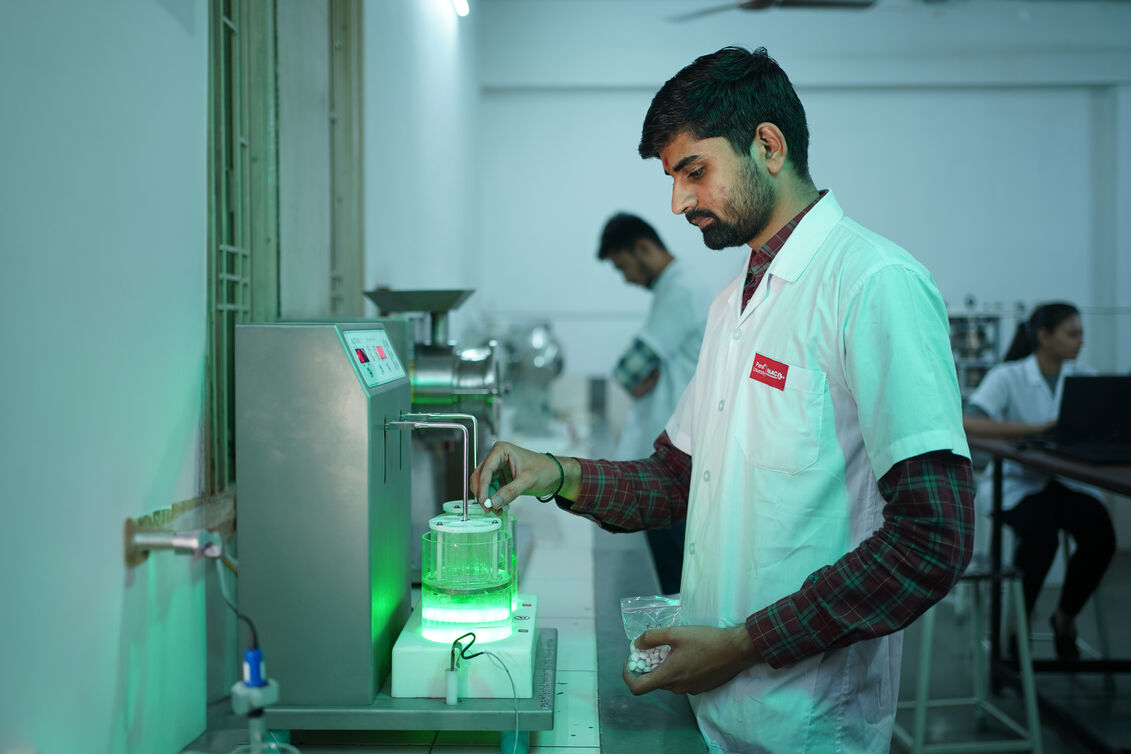
No matter how advanced AI becomes, biology still begins at the bench. Techniques like PCR, DNA extraction, protein assays, microbial culture, and electrophoresis remain foundational. AI can assist with prediction and optimisation, but experiments must still be designed, executed, and troubleshot by trained scientists.
Graduates who combine dependable wet-lab skills with AI literacy become indispensable because they bridge theory, data, and reality.
Can Bioinformatics Be a Career Catalyst for Biotech Graduates?
As molecular data explodes, bioinformatics has shifted from a “nice-to-have” to a core competency. Even a basic understanding of tools like BLAST, sequence alignment, structure prediction, and biological data modelling can dramatically expand career options.
Hands-on exposure to real datasets helps students:
- Understand how AI models are trained
- Interpret genomic and proteomic outputs
- Spot errors or biological inconsistencies
- Communicate effectively with computational teams
AI-driven companies increasingly hire candidates with research exposure, not just degrees. This is where internships, projects, and dissertation work become powerful differentiators. Notably, universities such as Parul University have also begun aligning student research exposure with emerging AI-enabled biotech workflows.
What Difference Does Mentorship Make?
New technologies can feel overwhelming without guidance. Mentorship plays a crucial role in helping students overcome the fear of complex tools and unfamiliar datasets. When faculty and research supervisors encourage experimentation, critical thinking, and troubleshooting, students build confidence, not just competence.
That confidence is what allows graduates to walk into AI-enabled labs ready to contribute from day one.
What are the Skills that will Define Biotech Careers in the future?
Biotechnology students don’t need to become programmers. They must become biologists who understand AI outputs and ask the right questions.
The most valuable skills include:
- Molecular biology and microbiology techniques
- Bioinformatics tool familiarity
- Data interpretation and analytical thinking
- Research experience and documentation
- Troubleshooting mindset
- Ability to work with digital and automated lab tools
These skills compound over time, leading to better roles, faster promotions, and global research opportunities.
Preparing for What Comes Next
AI is not a threat to biotechnology careers; it’s a multiplier of potential. Graduates who adapt early find themselves moving faster, earning more, and accessing broader pathways in research, diagnostics, pharma, industrial biotech, and AI-enabled labs.
The future belongs to biologists who stay curious, stay hands-on, and stay open to intelligent tools that expand what science can do. Preparing for that future doesn’t start after graduation; it starts with how students choose to learn today.