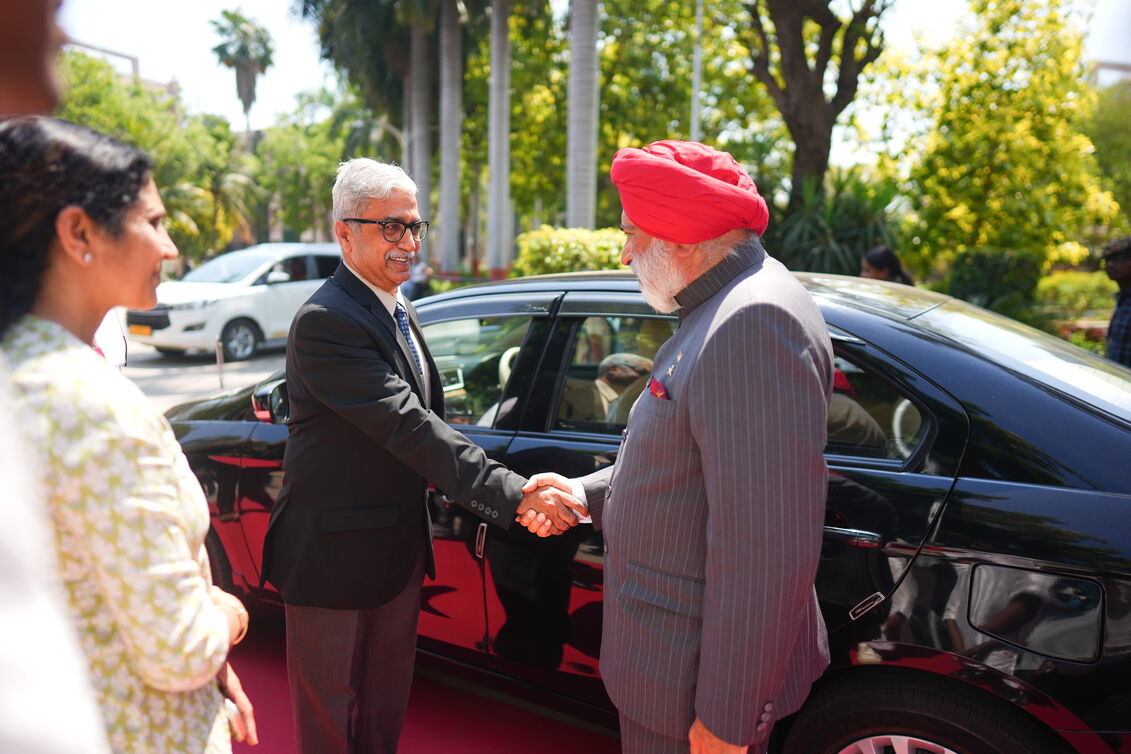
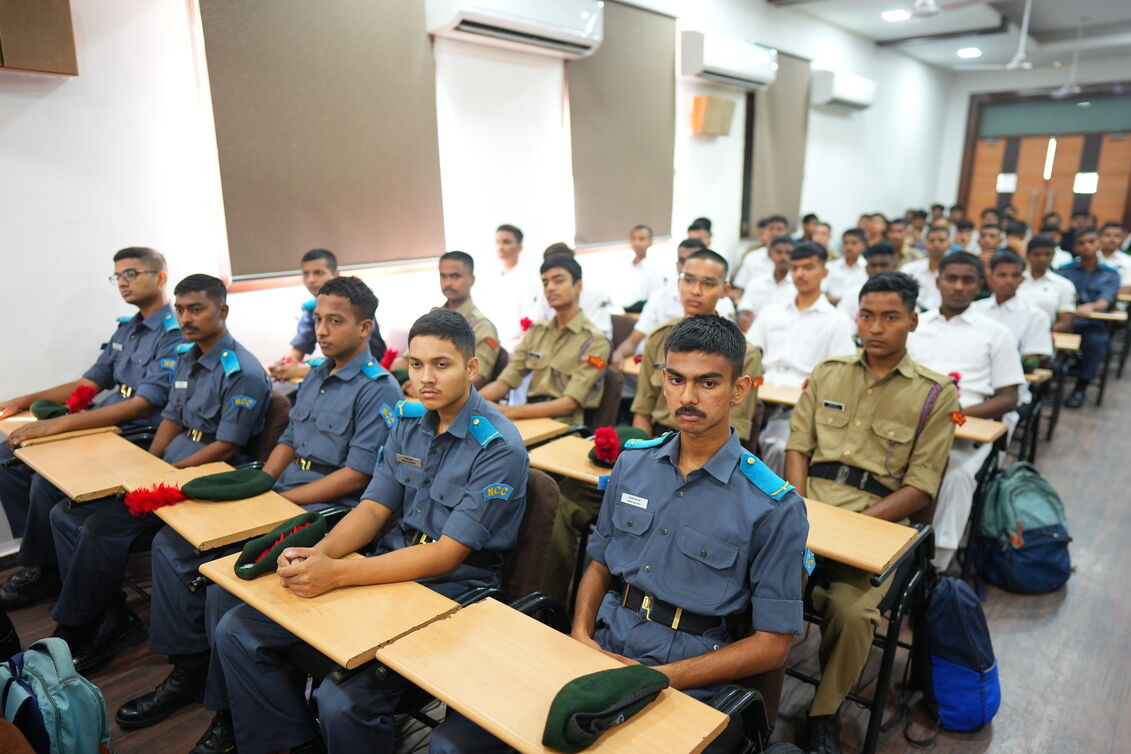
Let me put three numbers in front of you. These came straight from General Joginder Jaswant Singh, the 22nd Chief of Army Staff, a man who commanded over a million soldiers, when he stood in front of Parul University students and spoke plainly about what the Indian Army actually needs right now.
- Number one. There is a shortage of approximately 9,000 officers in the Indian Army against an authorised strength of 50,083. Nine thousand. That is not a minor staffing gap. That is a structural deficit in the leadership layer of the world’s largest volunteer army.
- Number two. The selection standards are deliberately, almost ruthlessly high. Only 300 to 400 candidates make it through the NDA examination out of 20,000 to 30,000 who sit for it. The army would rather carry vacancies than lower the bar. General Singh said as much himself.
- Number three. The military does not just need people who can march and shoot anymore. It increasingly needs people who understand information technology, cyber warfare, space warfare, and artificial intelligence. The battlefield is changing. The officer corps has to change with it.
Put those three facts together and the career landscape comes into sharp focus. High demand. High standards. And an expanding, almost desperate need for officers who are technology-literate. If you are a student at Parul University, whether you are in engineering, computer science, law, management, or anything else and you have ever thought about defence as a career, the intersection of your academic work and that aspiration creates opportunities that are both genuinely meaningful and fiercely competitive. Both things at once. That is rare.
Entry Points Into the Indian Armed Forces
The Indian Armed Forces, Army, Navy, and Air Force do not have just one door. They have several. Which one you walk through depends on where you are in your education and what kind of commission you are aiming for.
National Defence Academy (NDA)
This is the big one. The premier entry route, and it opens right after 12th. NDA takes candidates aged 16.5 to 19.5 years. Once you get in, it is a 3-year training programme at NDA Khadakwasla, one of those places that changes people permanently, followed by 1 year at the Indian Military Academy (IMA), Officers Training Academy (OTA), Naval Academy, or Air Force Academy depending on your branch. The exam itself is conducted by UPSC, and General Singh reminded the audience just how savage the competition is. Only 300 to 400 selected from 20,000 to 30,000 applicants. Those are not comfortable odds.
Here is where Parul University’s connection matters concretely. The university has an MoU with NDA, signed specifically to provide continuing education opportunities to boarded-out cadets. That is not a vague partnership. It is a direct institutional link between a university campus and India’s premier military training academy.
Combined Defence Services (CDS) Examination
This one is for graduates. You have finished your degree, and now you want in. The CDS exam, also conducted by UPSC — opens the door to IMA for Army, Naval Academy for Navy, Air Force Academy for Air Force, and OTA for Short Service Commission. The one non-negotiable requirement? A degree from a recognised university. Which means the academic foundation you build at a place like Parul University is not just relevant to CDS eligibility — it is the ticket that gets you into the examination hall in the first place.
Short Service Commission (SSC)
Think of this as the fixed-tenure route. SSC gives you a commissioned officer entry for 10 years, extendable by 4. You can come in through CDS, the University Entry Scheme, the Technical Entry Scheme, or NCC Special Entry. And if you perform well during your tenure, you can opt for permanent commission down the line. It is worth noting that General Singh specifically mentioned short service commissions as one of the mechanisms the army uses to address its officer shortage. The door is there. It is narrower than you think but wider than you might assume.
Technical Entry Scheme (TES)
If you have passed 12th with Physics, Chemistry, and Mathematics, PCM — with a minimum 70% aggregate, TES offers something unusual. Direct entry into the technical branches of the Army. No NDA exam. No CDS exam. The programme runs 4 years — training at the Officers Training Academy followed by completion of an engineering degree. For students already in engineering programmes at Parul University, this entry route sits right in their lane. The qualification overlap is almost exact.
Beyond Uniform: Defence and Security Career Paths for Graduates
Here is something people miss when they think about defence careers. They picture the uniform. The marching. The salute. And all of that is real and honourable. But defence and national security careers extend far, and really far, beyond military service in uniform.
Defence technology and R&D is a massive space. DRDO, HAL, BEL, ISRO, the growing ecosystem of private defence contractors, all of them need engineers, data scientists, and AI specialists who can work on weapons systems, satellite technology, cyber defence, and autonomous platforms. This is not future talk. This is hiring-right-now talk.
Cyber security and intelligence. India’s digital infrastructure is expanding at a pace that outstrips the country’s ability to protect it. The nation needs professionals who can defend national systems from cyber threats. Remember what General Singh said? He specifically called out cyber warfare and AI as domains where the military needs capability it does not yet fully have. That gap is a career for someone reading this.
Defence policy and diplomacy. Not everyone in national security carries a weapon. The Ministry of Defence, Ministry of External Affairs, National Security Council, and think tanks like IDSA and ORF, all need policy analysts, researchers, and strategic affairs specialists who can think clearly about hard problems. If your mind works that way, this is your field.
Defence journalism and strategic communication.
Covering national security well requires two things at once, deep domain expertise and strong communication skills. Most people have one or the other. Very few have both. That scarcity makes it a career worth considering.
Defence entrepreneurship. This one is newer, and it is growing fast. India’s defence manufacturing sector is opening its doors to private companies in ways it never did before. And here is a direct connection, PIERC at Parul University has already incubated startups working in technology domains that are directly relevant to defence applications. The pipeline from campus to defence startup is shorter than you might think.
Parul University’s Defence Ecosystem
Talk is one thing. Infrastructure is another. Parul University has built specific, tangible connections that link students to defence careers. Not brochure language, actual institutional arrangements.
- The MoU with the National Defence Academy. Signed in 2021. Its purpose, providing continuing education opportunities to boarded-out cadets. What that means in plain terms is a formal institutional link between the university and India’s premier military training academy. Cadets who are boarded out of NDA for medical or other reasons can continue their education at Parul. That kind of arrangement does not happen without serious institutional credibility on both sides.
- Defence Scholarships. Tuition fee waivers of 30 to 50% for serving and retired defence personnel and their dependents. Higher waivers for gallantry awardees and dependents of personnel killed in service. This is not symbolic. For a family that has given years or a life to the armed forces, a 50% fee waiver changes what is possible for the next generation.
- Armed forces training opportunities. The university provides training pathways for students who want to join the armed forces. Not just information sessions or career fairs. Actual training pathways.
- B.Sc. IT in Cyber Security and Forensics. A programme that builds exactly the skills General Singh was talking about the skills the military needs for cyber operations and digital defence. It is one thing to hear a former Army Chief say the army needs tech-literate people. It is another thing to be sitting in a university that already runs a programme designed to produce them.
- And then there are events like the General JJ Singh address itself. Bringing a former Chief of Army Staff to campus is not decoration. It creates direct exposure to defence thinking and opens mentorship possibilities that students at most universities simply do not get access to.
PU Defence Connection
Parul University’s MoU with the National Defence Academy, Defence Scholarships for armed forces families, and armed forces training programmes create a structured pathway from campus to defence careers. The university’s NAAC A++ accreditation, NIRF Top 50 Innovation ranking, and 200+ programmes across engineering, law, management, and technology provide the academic foundation that defence entry examinations require.
FAQ - Career in Defence After Graduation
Can I join the Indian Army after graduation?
Absolutely. The Combined Defence Services (CDS) examination conducted by UPSC -- is open to graduates who want entry into the Indian Military Academy (Army), Naval Academy (Navy), Air Force Academy, or Officers Training Academy (Short Service Commission). If you are from an engineering background, the Technical Entry Scheme is another route worth looking at.
Does Parul University have defence connections?
It does, and they are formal. The university holds an MoU with the National Defence Academy for continuing education, offers Defence Scholarships ranging from 30 to 50% fee waiver for defence families, and provides armed forces training opportunities on campus. There is also a B.Sc. IT in Cyber Security and Forensics programme that feeds directly into defence technology career paths.
How many officer vacancies exist in the Indian Army?
General JJ Singh put a number on it during his Parul University address, approximately 9,000 officers short against an authorised strength of 50,083. The NDA selection process is extraordinarily competitive. Only 300 to 400 candidates make it through from 20,000 to 30,000 applicants. The vacancies are real. So is the difficulty of filling them.
What subjects should I study for a defence career?
Defence careers do not live inside a single discipline. Engineering and technology open doors to technical entry and defence R&D. Law gets you into the JAG (Judge Advocate General) branch. Computer science and cyber security are directly relevant to cyber warfare roles.


