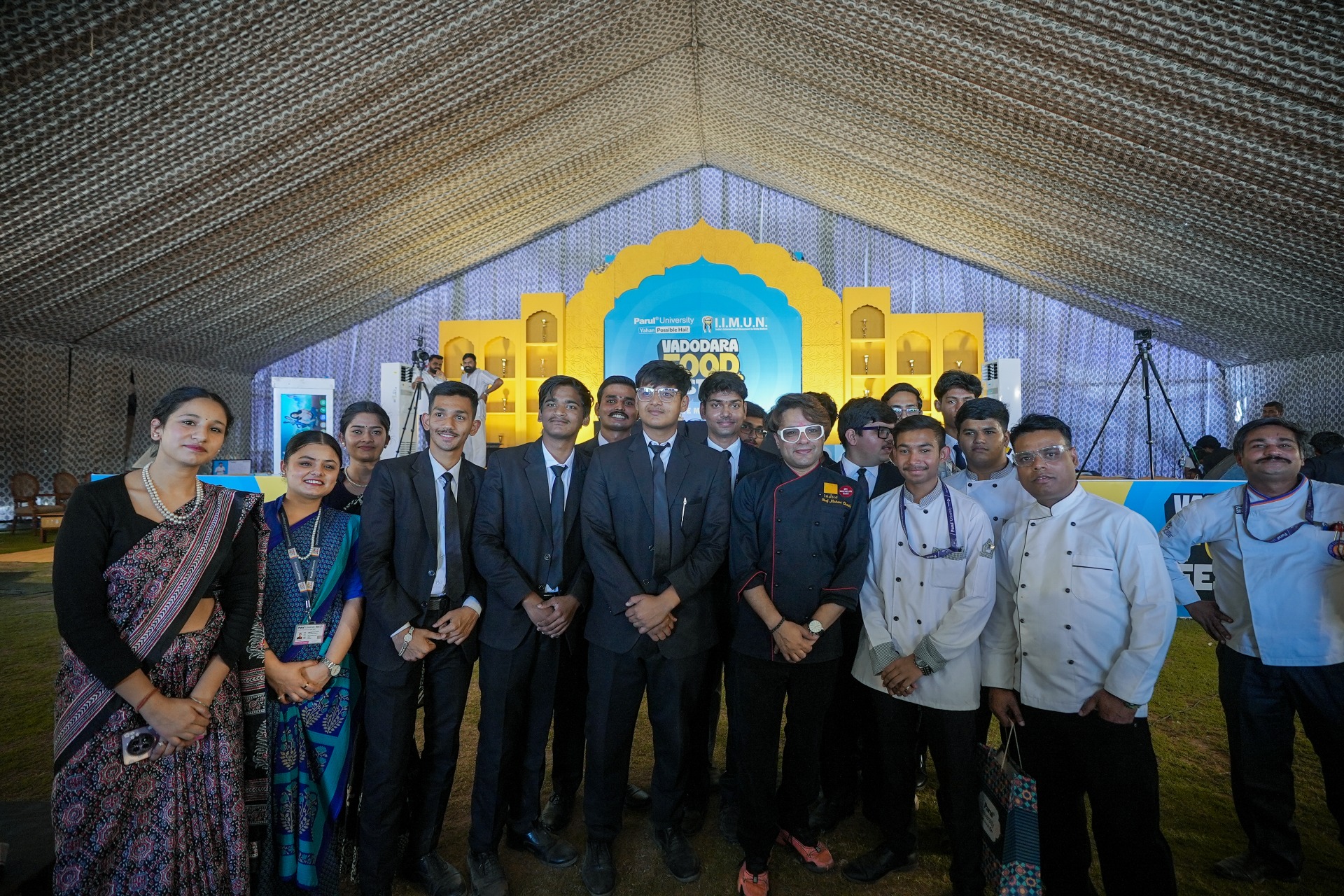
Chef Nishant Choubey has spent 25 years in the culinary profession. He created Indus, a restaurant built around the food and civilizational history of the Indus Valley, spanning Punjab, Himachal, and the territory that is now Pakistan. He currently has restaurants in Khan Market (Delhi) and Alibag. He was the chef at the widely reported Jamnagar wedding that attracted international attention, where every dish served had his personal signature. He is the author of Stay With Indus: Culinary Journey of a Chef, containing 32 recipes connected to India’s northwest culinary corridor.
His session at the Dome on PID Ground covered multiple dimensions of what it means to be a professional chef:
On Communication
Chef Choubey described himself as shy and introverted when he was younger. He made the case that cooking good food is only part of the work. If a chef cannot explain the origins of a dish, its cultural context, and why it matters, the food sits without meaning. He told the room: a lot of us make great food. But we do not talk. He made the decision to change that, and it changed his career.
On Vegetarian Cooking
He said something unusual for a chef of his profile: he is a better version of himself when he does vegetarian cooking. His reasoning was practical. With vegetables, there is always a new ingredient to discover. In the Indian market, meat options are comparatively narrow: chicken, fish, and mutton. Creatively, the vegetarian space gives him more room to move.
On Social Media and Responsibility
He uses a dedicated social media manager and content creator. Everything posted is reviewed by him personally. But there is a line he will not cross. He will not create content with no culinary logic behind it just for attention. He tested a matcha lassi served in a coconut shell, where the matcha floated on top because of its viscosity. He served it to Indian and Japanese guests. Both responded well. His point: engage fully with a trend rather than copying one ingredient superficially.
On Technology
Chef Choubey uses sous vide regularly. Combi ovens are standard in his kitchens because they allow steaming and grilling simultaneously. He described connected kitchen technology arriving in Delhi restaurants: machines that alert when a dish is ready. With staff turnover, rising real estate costs, and energy challenges, technology is becoming the backbone of professional kitchens.
On Tradition
His position was direct: rogan josh should taste like rogan josh. Dahi vada should be dahi vada. That part is not open to discussion. He brought up a dahi vada with aloo dum from Bhubaneswar, hot spiced masala over cold dahi vada with no sweetness, which he now serves at his Khan Market restaurant. He created a Jamun ki Chaat that includes Southeast Asian soya sauce and vegetarian oyster sauce alongside traditional chaat elements, mapping onto all six Ayurvedic rasas. He told the room: India cannot be summarised with only one picture.
On the Chef's Coat
Near the session’s close, he addressed something he felt strongly about. He said he is puzzled by people who wear a chef’s coat without formal training. His analogy: you cannot decide to fly a plane by putting on a white shirt. The coat means something. He only hires formally trained chefs and encouraged the students to value the education they are receiving.
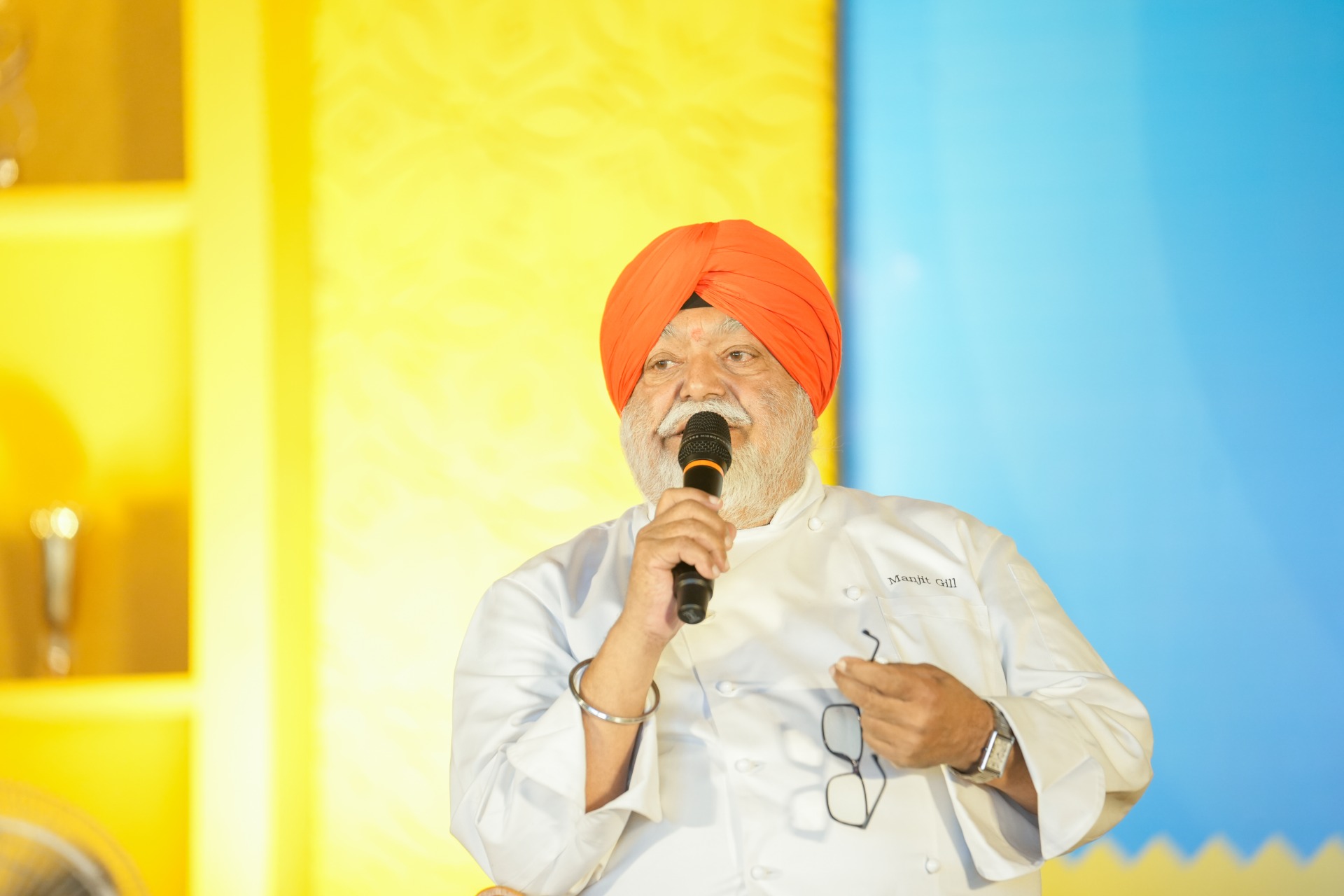
Chef Manjit Singh Gill: 50 Years in Kitchens and the Gap India Has Not Filled
Chef Manjit Singh Gill is the President of the Indian Federation of Culinary Associations and has spent 50 years in professional kitchens. He graduated from IHM Pusa Delhi after his father noticed a newspaper advertisement for the entrance examination during the chef’s third year of B.Sc. He spoke at the Dome on PID Ground to hotel management and aviation students from Parul University.
His central message was that recipes, by themselves, have no meaning. Food is like music: anyone can play around with it. Food can be a raga. The process of cooking matters far more than following instructions on a page. His challenge: understand the story, heritage, and science behind a recipe. Read it with your own mind. Cook with your mind and mood.
He made a statement that landed heavily in the room: there is not a single book written from an Indian perspective on Indian food the way such texts exist for French or Italian cuisine. He put that out as a challenge, telling the students that one of them could be the person who writes it. He called Ayurveda a blessing that Indians do not understand, noting that the connection between food and Ayurvedic philosophy, how elements interact, what food does to the body in different seasons, has not been explored rigorously in culinary education.
On motivation and burnout, he said: what food does, nothing else can. When someone does their work with genuine enjoyment, they experience burnout differently. He told the room: you can also create passion. That idea, that passion does not have to be innate but can be developed, surprised the audience. His closing advice was deliberately simple: be a master of one thing, one cuisine, one dish. After the session, he visited the 40+ student-run food ventures on PID Ground.
Hotel Management at Parul University is way through your career in the hospitality industry.
FAQ
What did Chef Nishant Choubey teach at Parul University?
Storytelling in food, social media responsibility, Indus Valley cuisine, AI and kitchen technology, vegetarian innovation, and why the chef's coat requires formal training. He is the chef from the Jamnagar wedding, author of Stay With Indus, with restaurants in Khan Market and Alibag.
Who is Chef Manjit Singh Gill?
President of the Indian Federation of Culinary Associations with 50 years of professional kitchen experience. IHM Pusa graduate. He challenged students to write the first comprehensive book on Indian food from an Indian perspective and called Ayurveda a blessing that Indians do not understand.


