The Middle-Class Education Trap
- Information fragmentation: Scholarships spread across government portals, university websites, corporate programs, NGO initiatives. No central database.
- Eligibility confusion: Criteria overlapping and contradictory. Income limits varied. Merit requirements differed. Documentation is unclear.
- Application complexity: Different forms for different scholarships. Repeated documentation. Separate deadlines. Easy to miss opportunities.
- Selection opacity: Why some applications succeeded and others failed was a mystery. No feedback. No transparency. Just rejection or acceptance.
- Disbursement delays: Even after approval, funds arrived late. Sometimes after tuition deadlines.
The Insight Born from Denial
Most people respond to scholarship denial by:
- Applying to different scholarships
- Taking education loans
- Deferring admission
- Compromising on institution choice
Mayank responded differently: “If I’m struggling with this, how many other students are stuck?”
Not hundreds. Millions.
India has 38 million students in higher education. Conservative estimate: 60% face affordability challenges. That’s ~23 million students navigating scholarship systems annually.
If the system fails even 10% of them, that’s 2.3 million students whose education path is altered by system dysfunction rather than merit or need.
This wasn’t a niche problem. This was infrastructure failure affecting millions.
Building Scholify: More Than Scholarship Search
The ₹7-8 Crore That Changes Lives
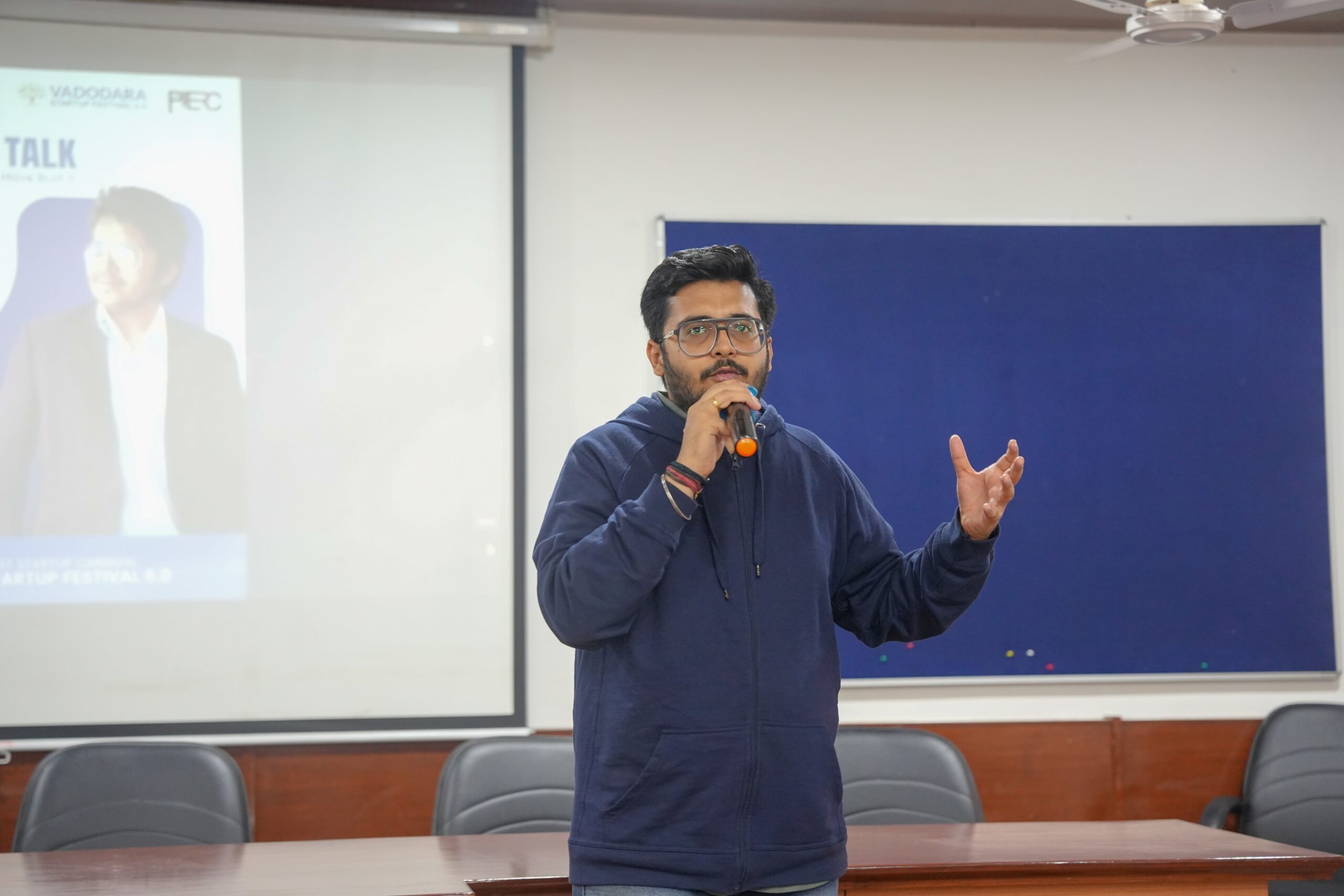
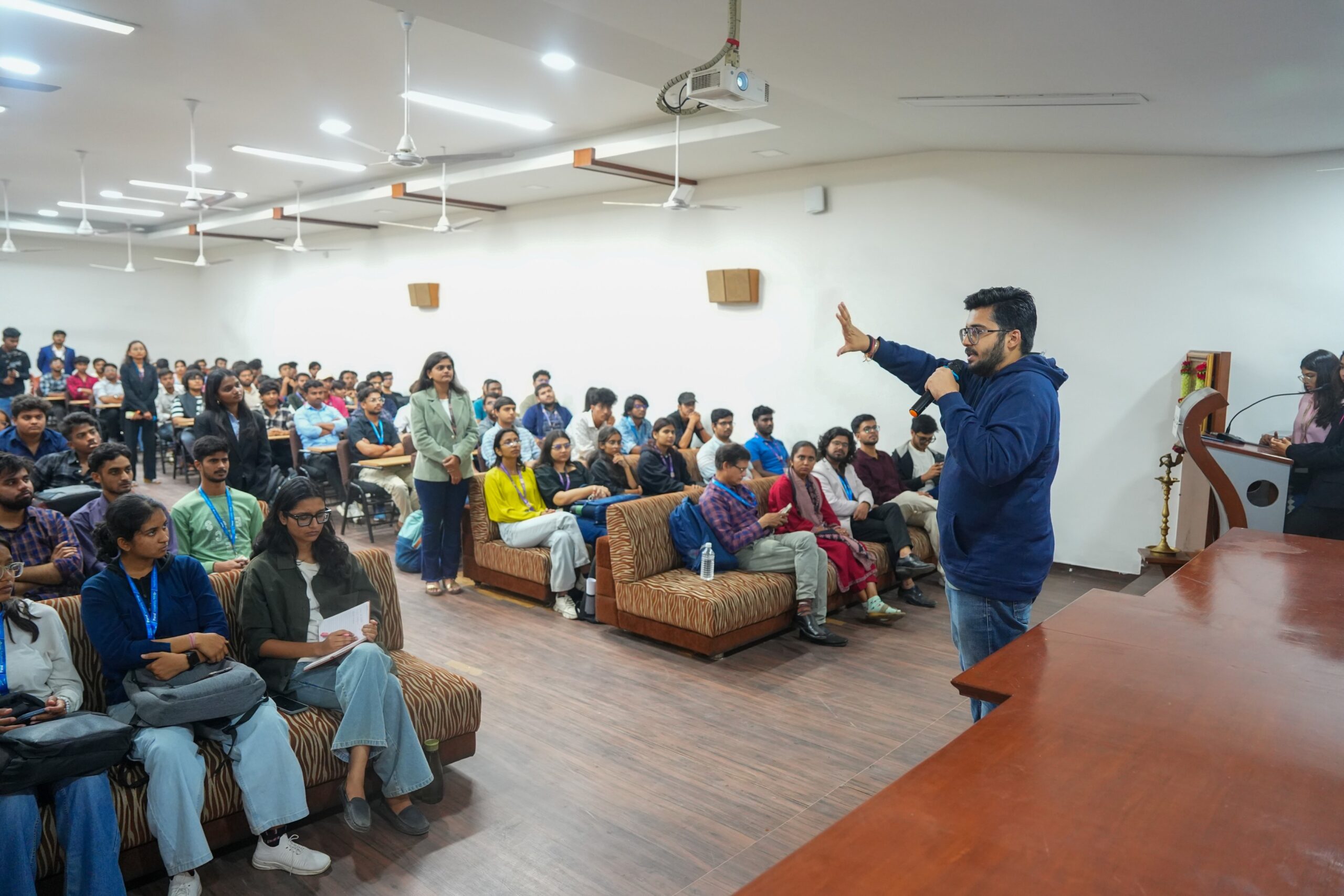
We’ve now disbursed scholarships worth ₹7-8 crore to deserving candidates,” Mayank stated during VSF – Vadodara Start-up Festival 6.0.
That number deserves unpacking.
₹7-8 crore in scholarships means:
- Assuming average scholarship ₹50,000 per student: ~1,400-1,600 students supported
- Assuming average scholarship ₹1 lakh per student: ~700-800 students supported
- Assuming average scholarship ₹2 lakh per student: ~350-400 students supported
The real numbers are probably mixed. Some smaller scholarships (₹25,000-50,000), some larger ones (₹2-5 lakh).
But the actual number of students impacted is just one metric.
More important metrics:
Education paths preserved: Students who would have dropped out or compromised on quality now accessing better education
Family burden reduced: Parents not taking crushing loans that take decades to repay
Merit rewarded: Talented students getting opportunities matching capability rather than family wealth
System efficiency: Same scholarship money reaching students who genuinely need it rather than being lost in inefficient processes
Multiplier effect: Each educated student potentially lifting entire family economically
₹7-8 crore disbursed isn’t just a financial number. It’s futures changed.
Ranking Above Byju's, Unacademy, and Vedantu
During his talk, Mayank mentioned something extraordinary:
Scholify ranks higher than Byju’s, Unacademy, and Vedantu in education-related search results.
These companies have:
- Raised billions in funding
- Employed thousands of people
- Spent hundreds of crores on marketing
- Dominated education technology sector for years
Scholify is a student-founded bootstrap company with a fraction of their resources.
How did they outrank giants?
1. Solving actual problem
Students search for scholarship help, not just general education content. Scholify directly addresses that specific need.
2. Content relevance
Every page, every guide, every resource optimized for students searching for financial aid solutions. Focused expertise beats generalist platforms.
3. User engagement
Students who find relevant scholarships through Scholify engage deeply. Time on site, pages viewed, return visits all metrics that signal search engines this content solves user intent.
4. Success stories
Every student who successfully secures scholarship becomes data point reinforcing platform effectiveness.
5. SEO fundamentals
Understanding what students actually search for and providing exactly those answers. Not flashy marketing just solving real queries.
The lesson: You don’t need a billion-dollar budget to rank above billion-dollar companies. You need to solve specific problems better than they do.
The Startup vs. Business Distinction
Mayank made important distinction during his talk:
“There’s a major difference between a startup and a traditional business.”
Traditional business:
- Focuses on stability and steady income
- Grows gradually through reinvested profits
- Prioritizes profitability from early stages
- Operates in known markets with proven models
Startup:
- Driven by innovation and scalability
- Grows through external funding and aggressive expansion
- Prioritizes growth over early profitability
- Creates new markets or transforms existing ones
Scholify started as a startup (innovation in scholarship access) but operates with business discipline (sustainable model, real revenue, controlled growth).
This hybrid approach matters.
- Pure startup mentality without business discipline leads to cash burn, unsustainable growth, eventual collapse.
- Pure business mentality without startup innovation leads to incremental improvements, limited impact, slow growth.
- Scholify balances both: Innovative platform creating new categories, built on a sustainable business model.
The Personal Sacrifice Reality
The Middle-Class Background Advantage
Coming from a middle-class family shaped Mayank’s approach fundamentally.
Wealthy founders often solve problems they observe academically rather than experience personally. Their solutions can be technically impressive but miss the emotional nuance of actually living the problem.
Poor background founders may lack access to networks, capital, and education that accelerates startup growth.
Middle-class founders understand struggle without being destroyed by it. They have enough education to see solutions, enough constraints to stay grounded, enough stability to take calculated risks.
Mayank’s middle-class experience mattered:
- He genuinely understood scholarship frustration (lived it)
- He had education to conceptualize solution (technical capability)
- He had network to test initial ideas (peer validation)
- He had family support to attempt (not financial support, emotional backing)
- He had hunger to succeed (not desperation, but motivation)
The sweet spot for solving middle-class problems: middle-class founders who’ve experienced them.
The Scholarship Ecosystem Mayank Navigates
Scholify doesn’t create scholarships. It connects students to existing ones. Understanding the ecosystem matters:
Government scholarships:
- Merit-based (academic performance)
- Need-based (family income)
- Category-specific (SC/ST/OBC)
- State-specific (domicile requirements)
University scholarships:
- Merit awards for high achievers
- Need-based support for struggling students
- Diversity scholarships for representation
- Research funding for postgraduate work
Corporate scholarships:
- CSR initiatives from companies
- Industry-specific support (tech companies funding engineering students)
- Employee children programs
- Merit-and-need combinations
NGO and foundation scholarships:
- Cause-specific (education for girls, rural students)
- Merit-focused (IIT/IIM entrance toppers)
- Professional field support (medical students, teachers)
International scholarships:
- Study abroad programs
- Exchange opportunities
- Research collaborations
Each category has different:
- Application processes
- Eligibility criteria
- Selection mechanisms
- Disbursement timelines
- Renewal requirements
Scholify’s value: Navigating this complexity so students don’t have to figure it out alone.
The Question Every Student Should Ask
“When was the last time you did or learned something for the first time?”
This question, which Mayank opened with at VSF – Vadodara Start-up Festival 6.0, reveals something profound about entrepreneurship.
Most people stop learning new things. They find a comfortable routine and maintain it. They develop expertise in narrow domains and stay there.
Entrepreneurs continuously do things for the first time:
- First platform launch
- First customer acquisition
- First funding pitch
- First team hire
- First major setback
- First pivot
- First success
Each “first time” builds capability that transfers.
Mayank’s first time navigating scholarship complexity made him expert at understanding student challenges.
First, Scholify taught him product development, user experience, and market positioning.
First time disbursing scholarships showed him operational excellence requirements.
The advice: Keep doing things for the first time. Capability compounds.
The Persistence Philosophy: "Start Early, Fail Early"
Mayank strongly emphasized: “Start early, fail early.”
This contradicts conventional advice: study hard, gain experience, build savings, then start something when you’re “ready.”
Problem with waiting: You’re never ready. There’s always one more degree, one more job, one more year of savings that would make starting “easier.”
Advantage of starting early:
Failures are cheaper – ₹2 lakh loss at 22 is recovered easily. ₹20 lakh loss at 35 with family responsibilities is devastating.
Learning compounds longer – Start at 22, by 32 you have decades of entrepreneurial experience. Start at 35, you have less runway.
Risk tolerance is higher – No dependents, no mortgage, no lifestyle expectations. Can sleep on floors and eat instant noodles.
Energy is maximum – Can work 80-hour weeks without breaking. The body recovers faster. The mind processes information quicker.
Opportunity cost is lowest – Corporate career can start anytime. Prime entrepreneurship years are limited.
“Failures are not setbacks but learning milestones,” Mayank emphasized. “Early mistakes reduce long-term risk and provide clarity.”
Each failure teaches something the next attempt uses.
The Financial Background Question Every Founder Faces
Mayank acknowledged question students always have:
“Should financial limitations limit ambition?”
His answer was unequivocal: No.
“Background does not define potential. Struggles can become strength.”
Evidence:
- He came from middle-class background
- He faced scholarship denial himself
- He built platform solving exactly that problem
- Platform now disburses ₹7-8 crore to other students
- Business ranks above billion-dollar competitors
Financial limitations didn’t stop him. They gave him the advantage of understanding the problem deeply.
Wealthy founders might have an easier path to capital. But they might not understand scholarship frustration viscerally.
Poor background founders might understand struggle. But might lack access to education and networks enabling solutions.
Middle-class founders live the problems AND have capabilities to solve them.
The message: Your background gives you unique insights. Use them. Don’t wait until the background changes.
Lessons from Scholarship Denial to ₹7 Crore Disbursed
1. Personal frustration beats market research
Mayank lived scholarship complexity. That made the solution authentic.
2. Systems fail millions silently
38 million students, 60% with affordability challenges, inefficient scholarship system = massive opportunity.
3. Focus beats funding
Outranking Byju’s, Unacademy, Vedantu without their budgets. A better solution to a specific problem beats a generalist approach.
4. Startup innovation + business discipline
Not pure startup (growth at any cost) or pure business (incremental improvement). Hybrid of innovation and sustainability.
5. Start early, fail cheap
Early failures teach lessons without catastrophic consequences. Wait too long, stakes get too high.
6. Background provides insights
Middle-class experience gave Mayank the exact understanding needed to solve middle-class problems.
7. Impact matters more than income
₹7-8 crore disbursed to students is the metric that matters. Changed lives, preserved education paths, rewarded merit.
The Advice for Students from Similar Backgrounds
Mayank’s closing message specifically addressed students who see their financial background as limitation:
“One good idea, born from personal pain, can help thousands of others.”
Your scholarship struggles = insight into system failure
Your loan application rejections = understanding of credit gap
Your part-time job necessity = knowledge of student employment challenges
Your tuition fee stress = grasp of affordability barriers
Every personal financial challenge you face is potential business opportunity if you:
- Recognize it’s not just personal problem it’s systemic
- Understand it deeply because you’re living it
- Design solution that addresses root cause
- Build sustainable model to scale solution
- Focus on impact, not just income
Scholify proves this.
From scholarship denial to ₹7-8 crore disbursed. From personal rejection to systemic solution. From middle-class constraints to platform helping thousands.
The journey validates the philosophy.
FAQs
Q1: Who is Mayank Pareek and why is his story significant?
Mayank Pareek is the founder of Scholify, a platform built after he faced scholarship rejection himself. His journey highlights how personal struggles can turn into scalable solutions impacting thousands of students.
Q2: What is Scholify and how does it help students?
Scholify is a scholarship guidance platform that provides personalized matching, application support, and mentorship to help students secure financial aid more effectively.
Q3: How much impact has Scholify created so far?
The platform has helped facilitate the disbursement of ₹7–8 crore in scholarships, supporting hundreds of students in continuing their education.
Q4: What advice did Mayank Pareek share with aspiring entrepreneurs?
He encouraged students to start early, fail early, and not let financial background limit ambition, emphasizing that struggles can become strengths.
Q5: What is PIERC at Parul University and how does it support startups?
PIERC (Parul Innovation & Entrepreneurship Research Centre) supports student entrepreneurs through mentorship, incubation, networking, and startup guidance to turn ideas into ventures.
Mayank Pareek spoke at VSF - Vadodara Start-up Festival 6.0 on January 21, 2026, at Parul University, Vadodara. Scholify continues expanding scholarship access for students. PIERC accepts startup applications year-round: pierc@paruluniversity.ac.in | www.pierc.org


