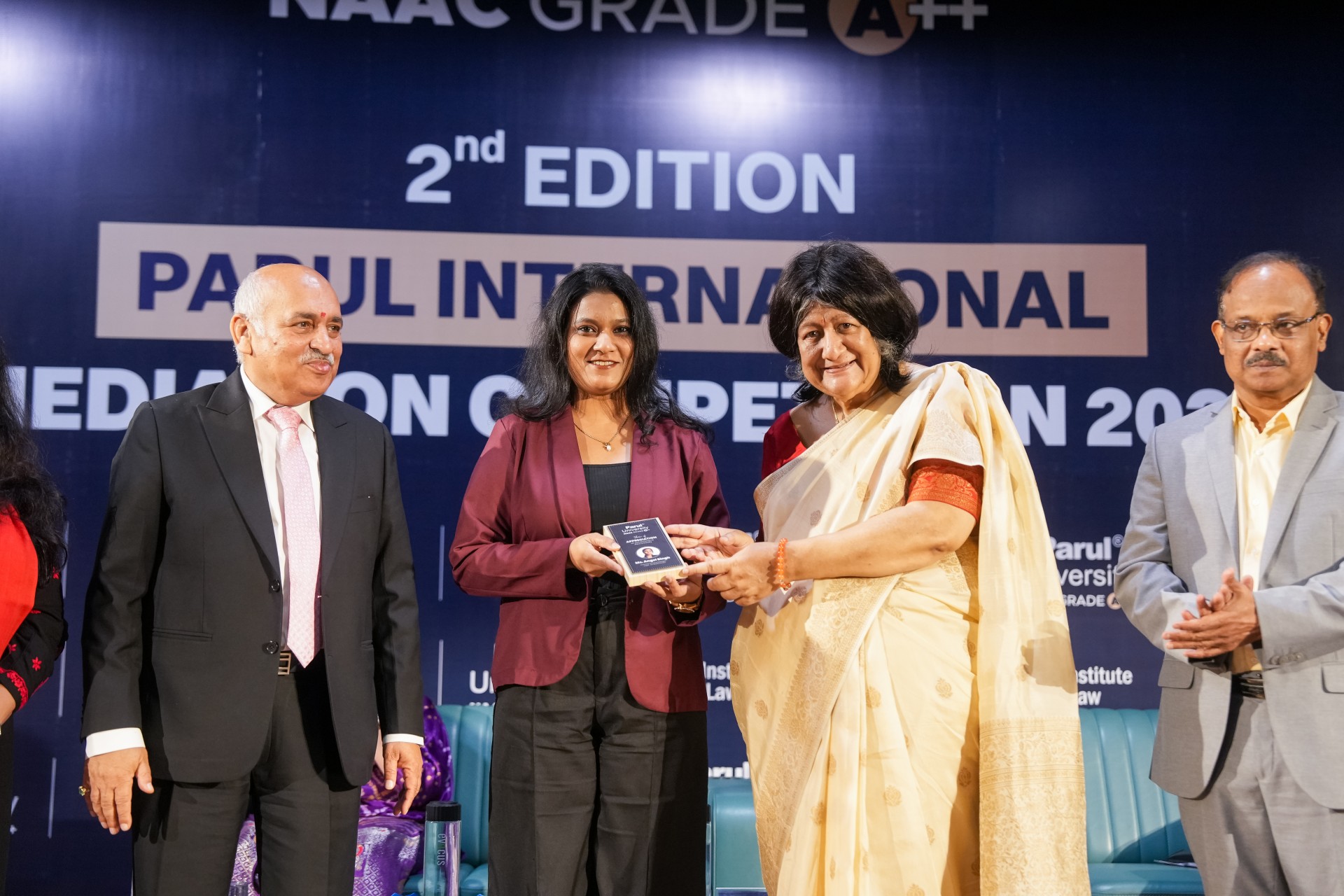
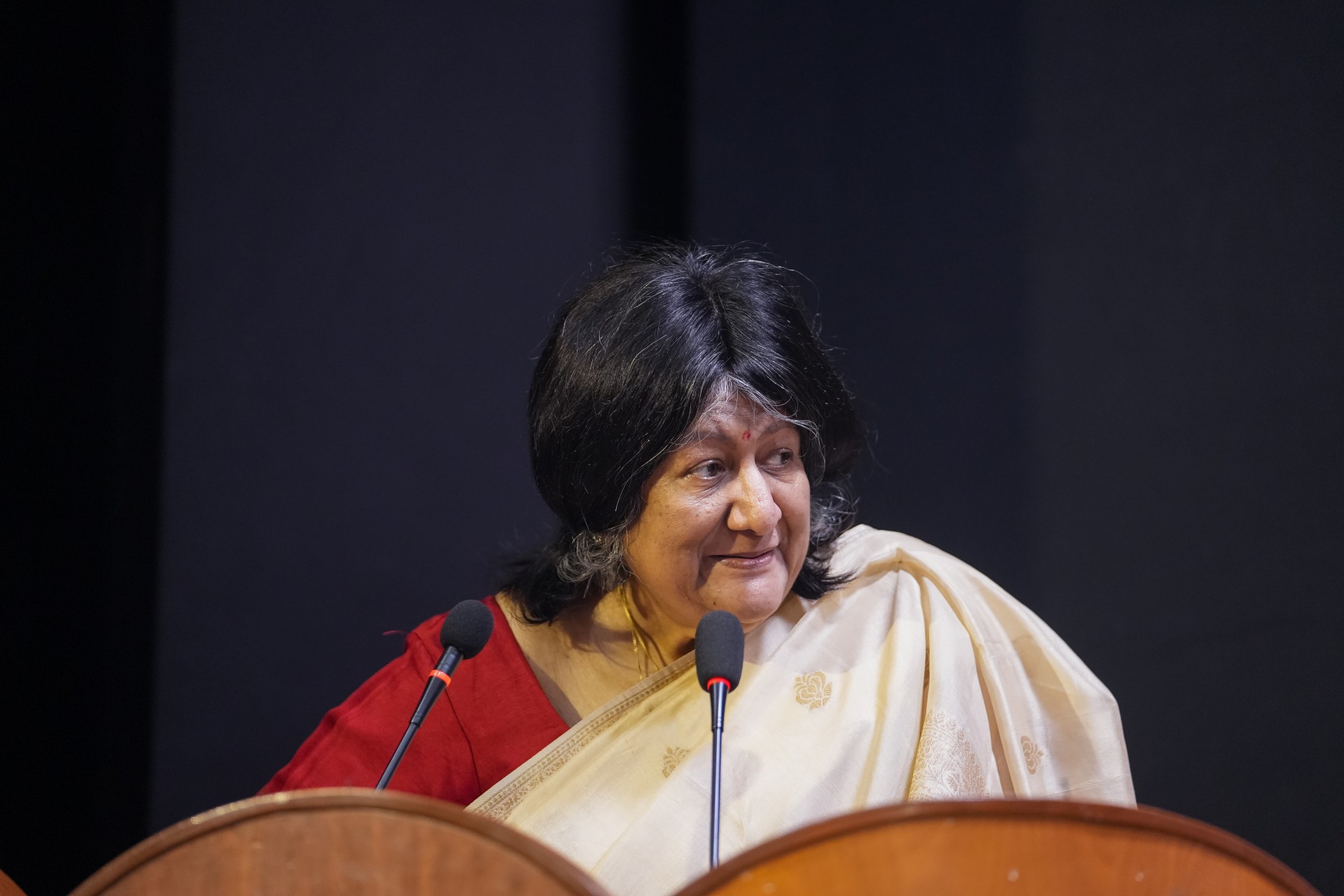
The former Supreme Court judge happily addressed the students. She reminded them that the Indian Constitution promises to serve justice on all grounds, be it economic, social, or political, regardless of gender, caste, colour and ability. Her main focus was on Article 21, which is about how no person should be deprived of life or personal liberty except according to procedure established by law. She pointed out how the Supreme Court has widened the scope of the article, which includes the right to food, shelter, clean air, and, critically, the right to speedy justice. And it also mentions equal justice regardless of economic status.
She connected this directly to mediation. If justice must be accessible, affordable, and timely, and if the current court system has people waiting 15 to 17 years as undertrials because judges are overwhelmed with backlogs, then mediation is not an optional supplement. It is constitutionally aligned justice delivery.
Mediation is a way of solving the issue without structural litigation. It supports affordability, accessibility, and inclusivity.
Study B.A. LL.B. (Hons.) at Parul University and dig deep into the Indian judicial system.
The Orange Dispute: Positions vs Interests
Justice Banerjee told the audience a parable that is now one of the most widely used teaching examples in mediation training worldwide. Two parties are fighting over a single orange. In court, the judge would likely cut the orange in half. Neither party would be fully satisfied. In mediation, the mediator asks each party why they want the orange. One wants the pulp to make juice. The other wants the peel to make a cream.
The mediator gives all the pulp to one and all the peel to the other. Both get 100% of what they actually need. This is the distinction between positions (I want the orange) and interests (I want the pulp / I want the peel). Litigation divides loss. Mediation creates value. This result, Justice Banerjee emphasised, is simply not achievable in a courtroom. Courts are designed to determine who is right. Mediation is designed to determine what each party actually needs.
Mediation Is Not Second-Class Justice
Justice Banerjee explicitly rejected the perception that ADR is inferior to court proceedings. Mediation is not second-class justice. It is often a superior form of justice because it is participatory. In court, a judge decides and usually one party wins and the other loses. In mediation, the goal is a win-win outcome. Litigation is rigid, formal, and produces imposed outcomes. Mediation is flexible, participatory, and produces outcomes created by the parties themselves. She distinguished between arbitration (adjudicatory, decision-imposed, bound by strict legal frameworks) and mediation (voluntary, interest-based, not restricted by rigid legal procedure). Arbitration belongs to the decision model. Mediation belongs to the resolution model.
Gender, Judicial and Future of Legal Careers
Justice Indira Banerjee, giving a glimpse of her journey, shared that she was the 8th woman to sit on India’s Supreme Court and the first as the chief justice of the Madras High Court. She addressed the female students, saying progress is there, but it is slow, and the participation of women at the highest levels in the judicial system needs to be accelerated. She told students that, apart from courtroom litigation, the future lies in mediation. She said that for cases that take years to reach a conclusion, mediation comes into the picture. People get frustrated with the trials and expenses.
A young lawyer who can resolve a client’s problem quickly through mediation will build a practice faster and more sustainably than one who relies solely on adversarial litigation. She noted that family and matrimonial disputes are among the hardest to mediate because emotional involvement and desire for revenge complicate resolution. A mediator who combines patience with neutrality can still find pathways through even these cases.
LL.M. in Constitutional and Administrative Law teaches you the Indian law system.
FAQ: Justice Indira Banerjee at PIMC 2026
What is the Orange Dispute in mediation?
A teaching parable about interest-based negotiation. Two parties fight over one orange. Court would split it. Mediation discovers one wants pulp (juice), the other wants peel (cream). Both get 100% of what they need. Demonstrates that mediation creates value instead of dividing loss. Shared by Justice Indira Banerjee at PIMC 2026.
How does Article 21 connect to mediation?
Article 21 of the Indian Constitution protects life and personal liberty. The Supreme Court has expanded it to include the right to speedy justice. With undertrials waiting 15-17 years, mediation provides constitutionally aligned justice delivery that is affordable, accessible, and timely.


