The Human Touch: Why Mediation Saves Relationships
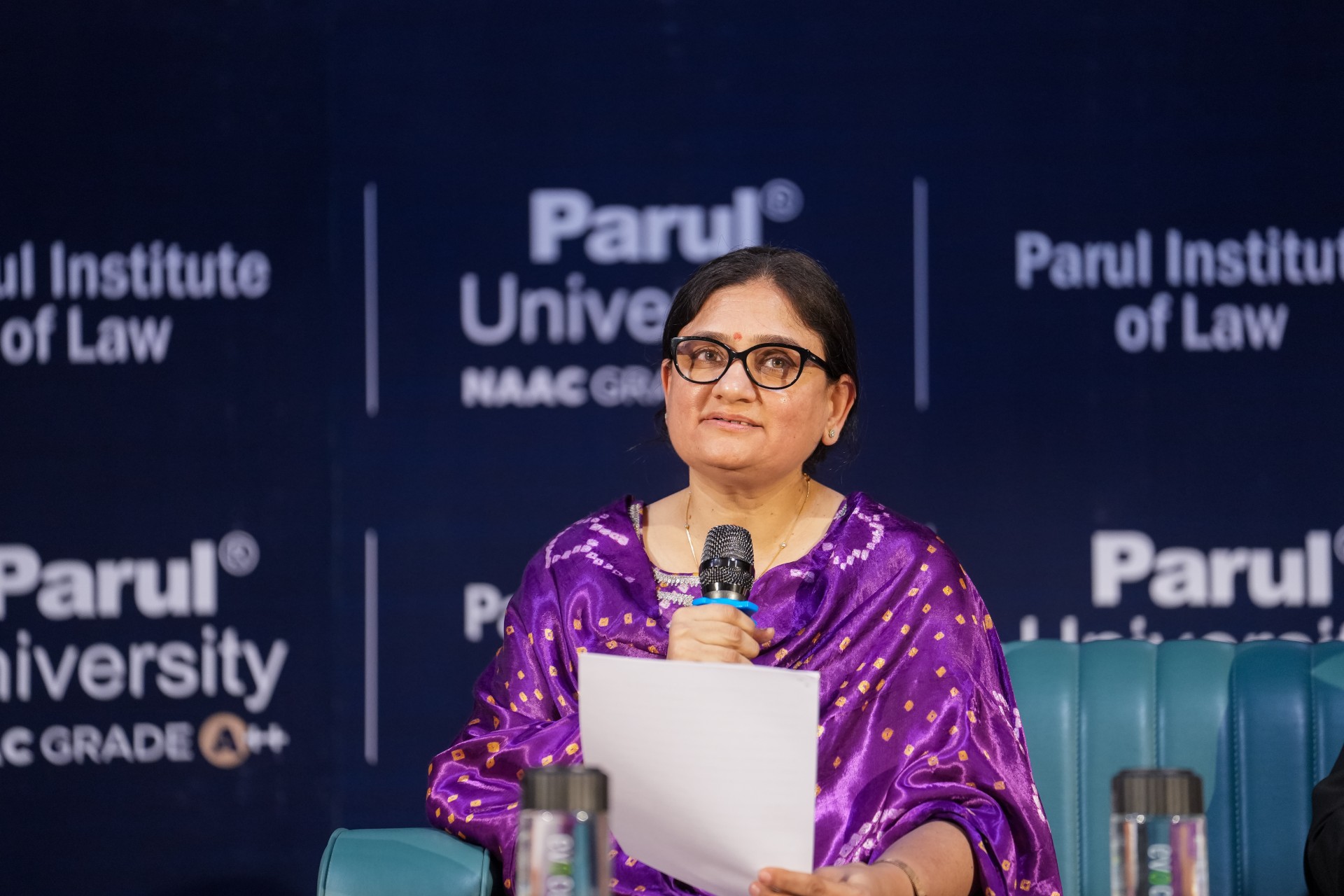
Justice Thakker framed the problem directly. The traditional approach to justice, going to court and having a judge decide, is under strain that the system was not designed to handle. With the capacity that India holds, it is not possible to give a verdict in all the cases on a timely basis. The number of cases and disputes is higher than the number of judges we have. Hence, years and years pass, but we can’t conclude.
She told students that law students need to think about this structural problem, not just study legal theory. Mediation, arbitration, and conciliation are tools that take work away from overwhelmed courts. They are not alternatives in the sense of being lesser. They are necessary relief mechanisms for a system at capacity.
The Human Touch: Why Mediation Saves Relationships
Justice Thakkar feels mediation is better than courtroom judgments because in court proceedings, one wins and the other loses, leading to hostility between the parties. Whereas the mediation demands that the parties try to resolve it through discussions and talking by sitting in front of each other.
In mediation, no judge imposes a rule. Because the outcome is self-determined, relationships are preserved and trust can be rebuilt.
She articulated the mediator’s defining quality: a good mediator listens more than they speak, and helps parties discover the solution that they themselves can accept. This is not passive facilitation. It requires neutrality (no side-taking), empathy (understanding both parties’ feelings and concerns), and patience (allowing the process to unfold at the parties’ pace). These are skills that courtroom training alone does not develop, which is precisely why competitions like PIMC exist.
Real-World Training: Contracts, Maritime Law, Healthcare, Investments
Justice Thakker praised PIMC’s competition structure for using real-world dispute scenarios. Students mediate conflicts involving business contracts, maritime and transport law, healthcare and medical businesses, and financial investments. This multi-domain format builds skills that classroom instruction cannot: patience under pressure, adaptive reasoning across unfamiliar legal territories, and the professional behaviour required when stakes are high and emotions run deep. She concluded by noting that modern lawyers need both skills: the ability to argue in court and the ability to resolve outside it.
Join B.Com. LL.B. (Hons.) at Parul University after 12th and study new law of India
FAQ: Justice M.K. Thakker at PIMC 2026
Who is Justice M.K. Thakker?
Judge of the Gujarat High Court specialising in civil law and government services cases. A physically challenged jurist whose career demonstrates that physical limitations cannot prevent reaching the highest levels of the legal profession. Spoke at PIMC 2026, Parul University.


