Mediation in the Mahabharata: Krishna Asks for Five Villages
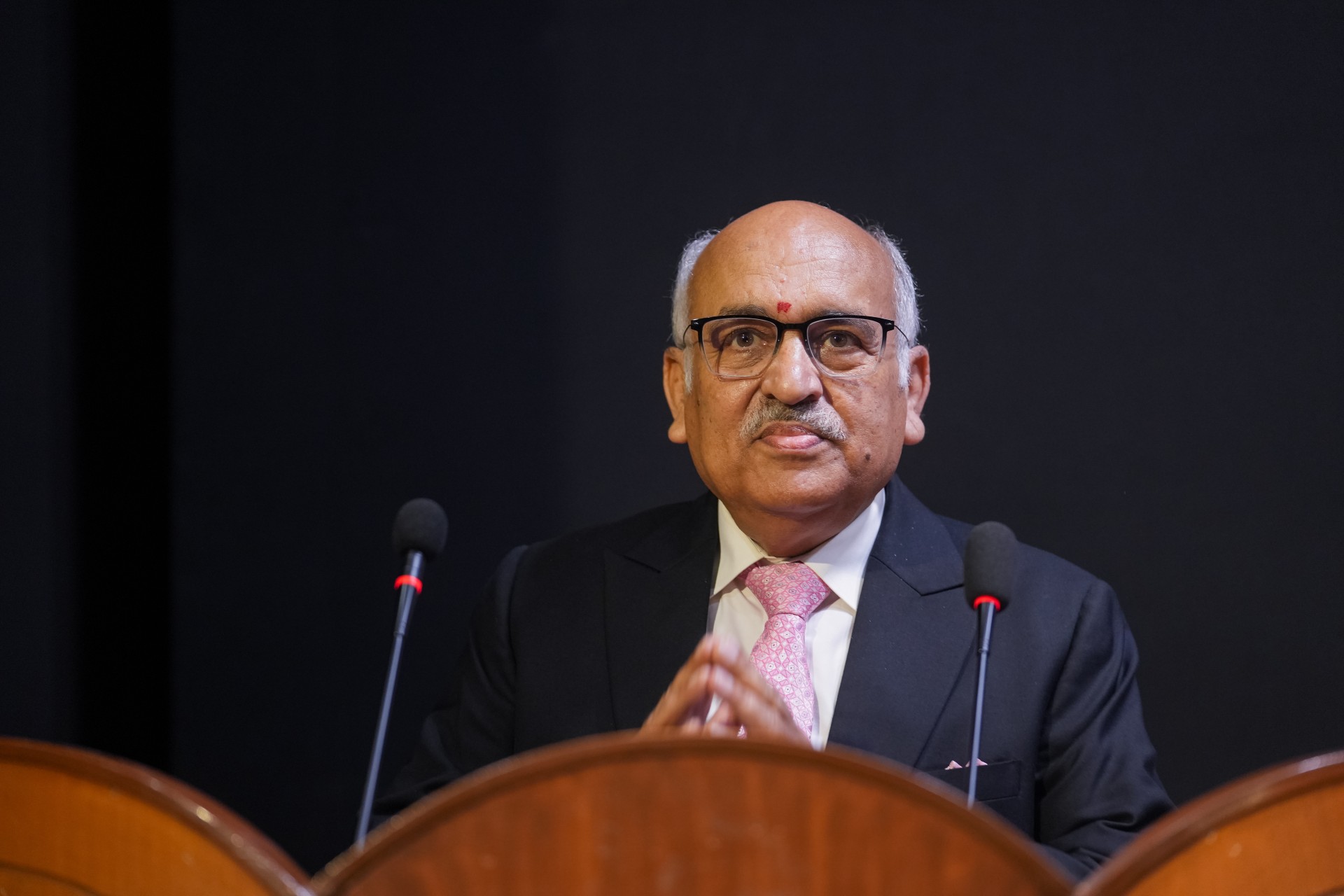
Justice Mithal opened with the Ramayana. Before the war, Lord Ram sent Angad to Ravan’s court. The message was clear: return Sita, accept peace, and destruction will be avoided. The messenger carried a negotiated alternative to war. Ravan refused. Everything that followed was destruction. This, Justice Mithal argued, was mediation in its earliest documented Indian form. Not a Western import. Not a modern invention. A tradition embedded in India’s foundational narratives.
Mediation in the Mahabharata: Krishna Asks for Five Villages
The Mahabharata example was even more pointed. Lord Krishna himself went to the Kauravas as a mediator. The Pandavas deserved half the kingdom. Krishna asked for just five villages. The terms were extraordinary in their restraint. Justice Mithal quoted Ramdhari Singh Dinkar’s poem: give us justice, give us half, if that creates difficulty, give us only five villages. Keep the rest. We will eat there happily and not raise a sword against our own family.
Duryodhan refused. The war followed. The Pandavas won but were left devastated. Justice Mithal connected this to modern litigation: by the time you win a court case that has been going on for twenty years, you have lost years of your life, enormous money, and your peace of mind. Gandhi’s warning applies: an eye for an eye leaves the whole world blind. Mediation heals instead of embittering. It is a different kind of justice.
Start your career in law with B.B.A. LL.B. (Hons.) at Parul University.
The Mediation Act 2023: Why It Needs Reform
Justice Mithal offered a candid critique of the Mediation Act 2023. His concern: it mirrors the Arbitration Act too closely, which was slow and expensive. More fundamentally, the Act requires a pre-existing written agreement for mediation to apply. But the disputes that most urgently need mediation, family conflicts, neighbourhood disputes, matrimonial breakdowns, almost never begin with signed agreements. This structural limitation means the Act cannot reach the cases where mediation would help most.
His suggestion was bold: Family Courts should mandate mediation before any divorce can be filed. This would reduce public embarrassment, resolve ancillary matters (custody, property, police cases) simultaneously, and reduce the Supreme Court’s burden of transfer petitions. He revealed that the Supreme Court already uses this approach informally: when a wife petitions to transfer her divorce case to another city, the Court often seats both parties in a room to talk. Many times, they agree on a peaceful resolution. The Court then uses its powers to close 6 or 7 connected cases at once.
Kabir, Self-Reflection, and the Lawyer as Peacemaker
Justice Mithal quoted Kabir: Bura jo dekhan main chala, bura na milia koye. Jo dil khoja aapna, mujhse bura na koye. When you go looking for faults in others, you find none. When you look inside your own heart, you find that nobody is worse than you. Applied to mediation: when both parties examine their own contributions to the conflict instead of blaming the other, resolution becomes possible.
He challenged students directly. A typical lawyer sees a fight and tries to make it bigger to charge more money. A true lawyer solves problems and creates peace. Moot courts teach argument. Mediation competitions teach listening. Both skills are necessary. But listening with empathy, understanding a client’s pain, and guiding them toward peace is what builds a lasting career. Law is not a trade, not a brief, not merchandise. It is a service.
He closed with a Vedic blessing: let us all walk together, communicate together, and have a common mind. And a final principle: Nyay wahi jo sarv sulabh ho, aur samadhan wahi jo sthayi ho. Justice is that which is accessible to all, and a solution is that which is permanent.
Help businesses and corporates with LL.M. in Business and Corporate Law.
FAQ: Justice Pankaj Mithal at PIMC 2026
What is the Ramayana mediation example?
Lord Ram sent Angad to Ravan's court before the war with a peace offer: return Sita and avoid destruction. Ravan refused. Justice Pankaj Mithal cited this at PIMC 2026 as proof that mediation is an ancient Indian tradition, not a modern or Western concept.
What is wrong with the Mediation Act 2023?
Justice Mithal's critique: it mirrors the slow, expensive Arbitration Act and requires pre-existing written agreements. Family and neighbourhood disputes, which most urgently need mediation, rarely have signed agreements. The Act cannot reach the cases where it would help most. He proposes mandatory pre-filing mediation in Family Courts.


