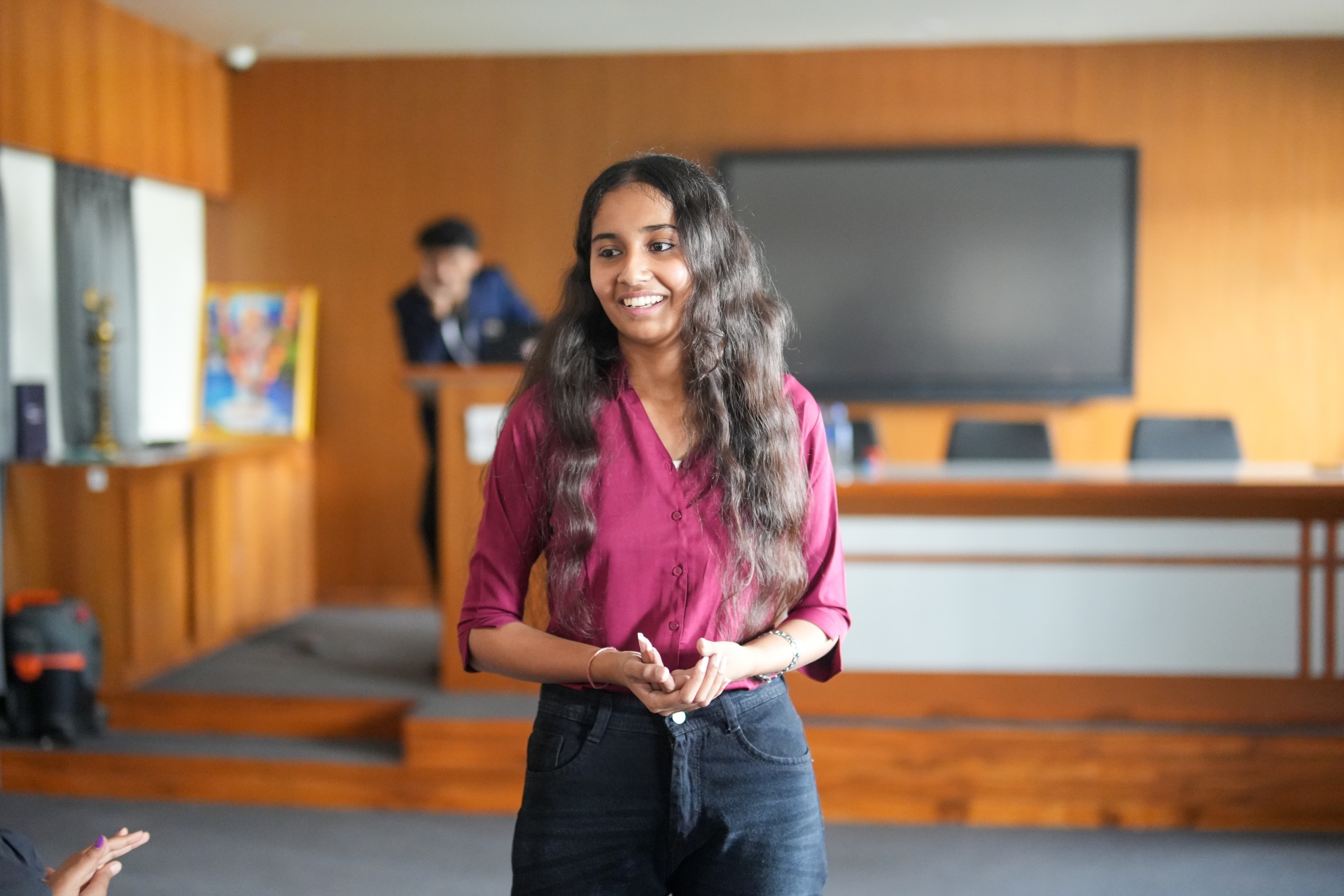

Priyanshi Rathod’s startup journey started at the Smart India Hackathon (SIH) organised by PIERC during her first semester in August 2025. The problem statement: build a mental health platform. Initial research revealed the scale of the crisis. WHO data shows that 4-6 out of every 10 students deal with stress, anxiety, or emotional overload. Approximately 75% of students never reach out for professional help because they fear judgment, stigma, and social consequences.
The deeper issue is cultural. In Indian families, psychologists still carry a stigma as doctors for the mentally unwell. Families often dismiss emotional distress with phrases like you just think too much, go play outside. Students do not know the difference between feeling sad, anxious, or clinically depressed. When they want advice, they pretend the problem belongs to a friend to avoid being judged.
Priyanshi validated this through creative market research. Her team distributed a Secret Diary and asked students to write one thing they had never talked about. Over a thousand sticky notes came back. One freshman admitted to having a ₹1 lakh loan but being too scared to tell friends. A young woman wrote that she had missed her periods for three months but stayed quiet because she knew people would jump to conclusions. The real problem, Priyanshi concluded, is not just mental health. It is the fear of losing your sense of self and getting judged. And if you too wish to execute your idea just like, save your seat for Parul University’s B.Tech CSE in AI and Data Science Program!
How Eternia Works: Anonymous Login, The Blackbox, and Real Support
Eternia is a secure, anonymous wellbeing platform designed specifically for students. The architecture has three core components. Anonymous Login: students scan a QR code and log in with their government ABC ID or student ID. The institution verifies identity, but inside the platform, nobody knows anyone’s real name. The Blackbox: an anonymous, voice-only room where students talk openly. No faces, no real names, no judgment. Tailored advice comes from an expert who remains anonymous too. Support Network: students can reach professionals or peers who understand their experience. If someone needs urgent help, the system connects them to additional support. To know more about student-founders of Parul University, explore this blog!
The technology stack is modern and mobile-first. Frontend built with Flutter, backend with Node.js and Express, PostgreSQL for the database, and Socket.IO for real-time voice communication. The product is at MVP stage, validated, and running paid pilots.
Priyanshi’s approach was deliberately different from existing mental health apps. Most platforms store student data permanently and charge ₹2,000-3,000 per therapy hour. Students cannot afford that. Eternia is completely free for students because the B2B model means the institution pays. This privacy-first, affordability-first design is what she calls her Blue Ocean Strategy, targeting a space where no competitor currently sits. If you too wish to give wings to your career story, enrol into Parul University’s MBA in Entrepreneurship and Innovation!
The Business Model: B2B, CBSE Mandate, and Revenue
Eternia uses a B2B (Business to Business) model. The platform partners with schools and universities. The institution pays Eternia, and students access the service for free. This removes the financial barrier that prevents most students from seeking help. Priyanshi also explained B2C (selling directly to individuals) and B2G (working with government) for the audience’s benefit.
The market opportunity expanded dramatically in January 2026 when the CBSE board announced that every school under its jurisdiction must have a mental health platform. Since Eternia is already built, validated, and running paid pilots with three universities and two schools (Amica School in Rajasthan, New Era, and ADV in Vadodara), this regulatory mandate opens a massive addressable market. Current pilot pricing covers costs at approximately ₹3 lakh per institution, with full licences expected to generate ₹7-8 lakh per school.
Priyanshi Rathore owns 70% of the company alongside co-founders Yash Kumar Khatik (CTO) and Gaurav Shah (CEO). The PIERC backed startup received ₹1.2 lakh from PIERC for platform development. She encouraged every student to get on LinkedIn for finding funding, collaborators, and business partners.
Breaking Society's Rules: A Rajasthan Girl Who Scored 96% and Chose Startups Over Safety
Priyanshi’s personal journey adds weight to her startup story. Growing up in Rajasthan, she earned a black belt in Karate but her family refused to let her compete at inter-state level. She captained her school’s girls’ cricket team, winning first prize three years running against 38 teams, but was denied district-level participation. She scored 96% in JEE and qualified for top colleges in Pune, but her family deemed them too far.
She arrived at Parul University with a deal she struck with her parents: give her four years and she would prove something. Her message to the audience: society will tell women to take the safe path. A steady 9-to-5. A bank job. But safety is an illusion. The only real security comes from building your own identity and capability.
Priyanshi maintained a 7.5 CGPA while building Eternia. When the room heard that, the reaction was immediate: the academic pressure most students fear is largely constructed in their own minds. What matters is what you build, not what grade you score. Inspired already? Delay not and save your seat for Parul University’s BBA Program!
FAQ: Priyanshi Rathod and Eternia
What is Eternia?
An anonymous, secure wellbeing platform for students built by second-semester Parul University student Priyanshi Rathod. Students log in anonymously, enter voice-only rooms (The Blackbox), and receive tailored advice without anyone knowing their identity. The platform is free for students (B2B model: institutions pay). Running paid pilots with 3 universities and 2 schools.
How was Eternia funded?
₹1.2 lakh from PIERC (Parul Innovation and Entrepreneurship Research Centre). PIERC provides government-backed grants that do not need to be repaid. The CBSE mandate requiring every school to have a mental health platform has expanded the market opportunity significantly.


