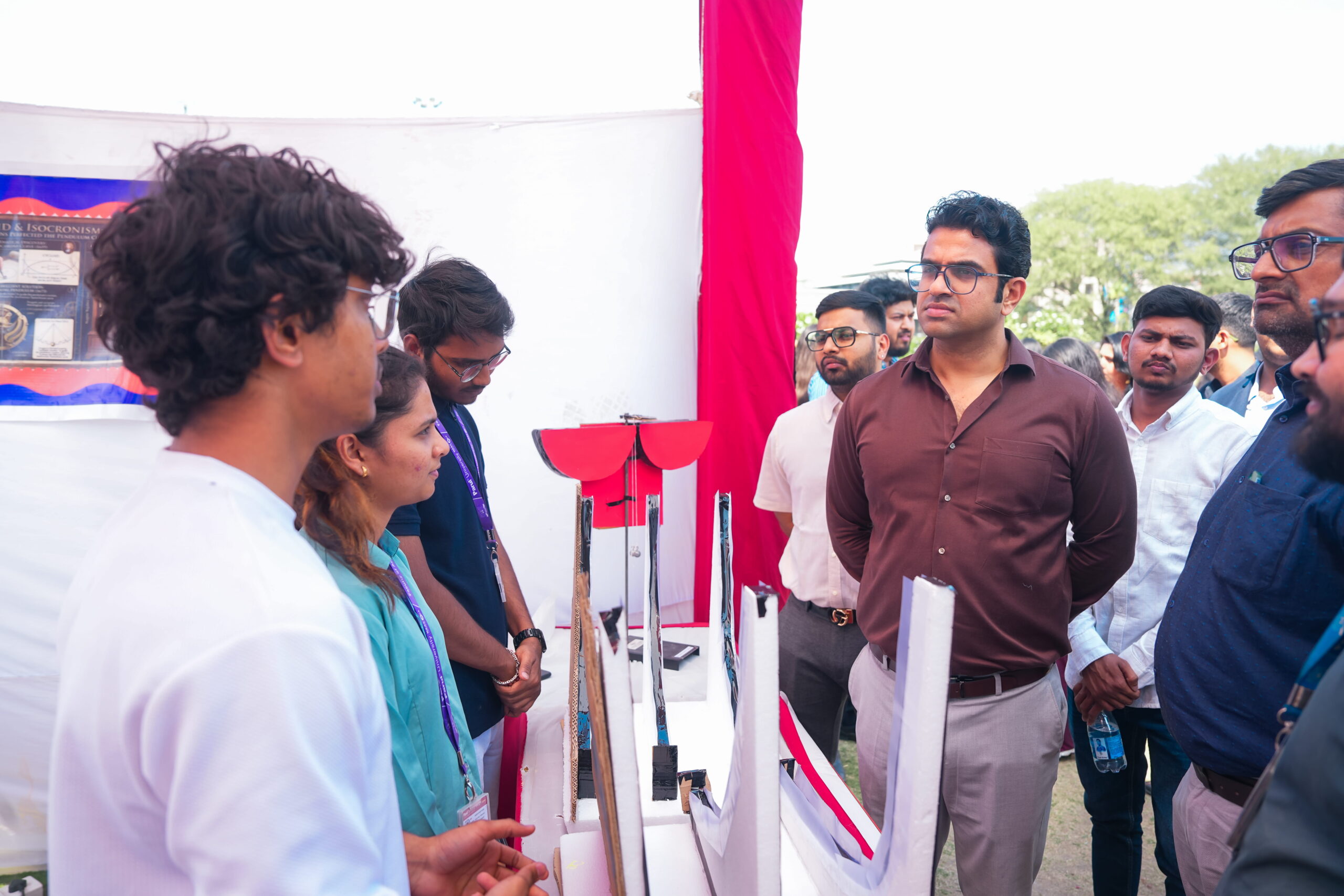
B.Sc. Food Technology students (Semester IV) demonstrated four simple tests that anyone can perform at home to check food purity. Black pepper adulterated with papaya seeds is detected by putting both in water – pure pepper sinks while papaya seeds float. Red chilli powder mixed with brick powder is identified when added to water – brick powder settles while pure chilli floats and releases natural colour. Turmeric adulterated with chalk powder is exposed by adding lemon juice – bubbles form if chalk is present. Green chillies coated with artificial dye are tested by rubbing a wet cotton ball – colour transfer indicates adulteration.
Visitors were surprised that common kitchen items could be tested so easily. Several attendees said they planned to try these tests at home – turning a student exhibit into practical food safety education.
Exhibit 2: Energy-Environment Nexus - Coral Bleaching Simulation
This exhibit presented a physical model divided into two sections: a healthy ocean with colourful corals containing algae, and an unhealthy ocean with white, bleached corals. The model demonstrated that when CO2 increases in water, it forms carbonic acid, lowers ocean pH, and causes corals to expel their algae – turning white in a process called coral bleaching. The visual comparison between vibrant and bleached corals made the impact of ocean acidification immediately understandable to non-science visitors.
Exhibit 3: Think Like a Detective - Psychological Testing
The most crowded exhibit featured three activities: a timed IQ test (six questions in one minute testing logical thinking), a personality test based on behavioural statements, and a tarot card personality interpretation using 17 cards. Students from the psychology discipline designed the activities to make psychological testing interactive and accessible. Participants compared results with friends, creating a social and educational experience simultaneously.
Exhibit 4: Identity Unmasked - Forensic Investigation Techniques
Forensic science students demonstrated three investigation techniques. Fingerprint analysis used fluorescent powder (low light), magnetic powder (delicate surfaces), and normal powder (common surfaces) to develop hidden prints – explaining that approximately 11-12 matching minutiae points confirm identity. Poison detection used simple chemical reactions to identify alcohol and heavy metals like mercury. Secret writing was demonstrated using lime juice or milk as invisible ink, with hidden messages appearing when heat was applied. Visitors reported feeling like real crime investigators.
Exhibit 5: Product Innovation - Biodegradable Bowls From Sugarcane Waste
Student innovation related to the utilization of waste can turn out to be a huge leap for the waste. They used sugarcane waste to make disposable bowls. First, they collect the leftover sugarcane fibre, clean and dry it, and then grind it into a powder. After that, they mix in cornstarch and a bit of gelatin agar to help everything stick together. They shape the dough, pop it into a hot air oven for about 20 minutes, and out come these sturdy, biodegradable bowls. Each one holds water for a couple of minutes and can carry up to 2 kilograms. Their project really got people thinking about how we can turn farm waste into something useful, and it sparked a bigger conversation about smarter ways to manage waste and build a circular economy.
Exhibit 6: Nourish and Relish - Millet-Based Healthy Breakfast Recipes
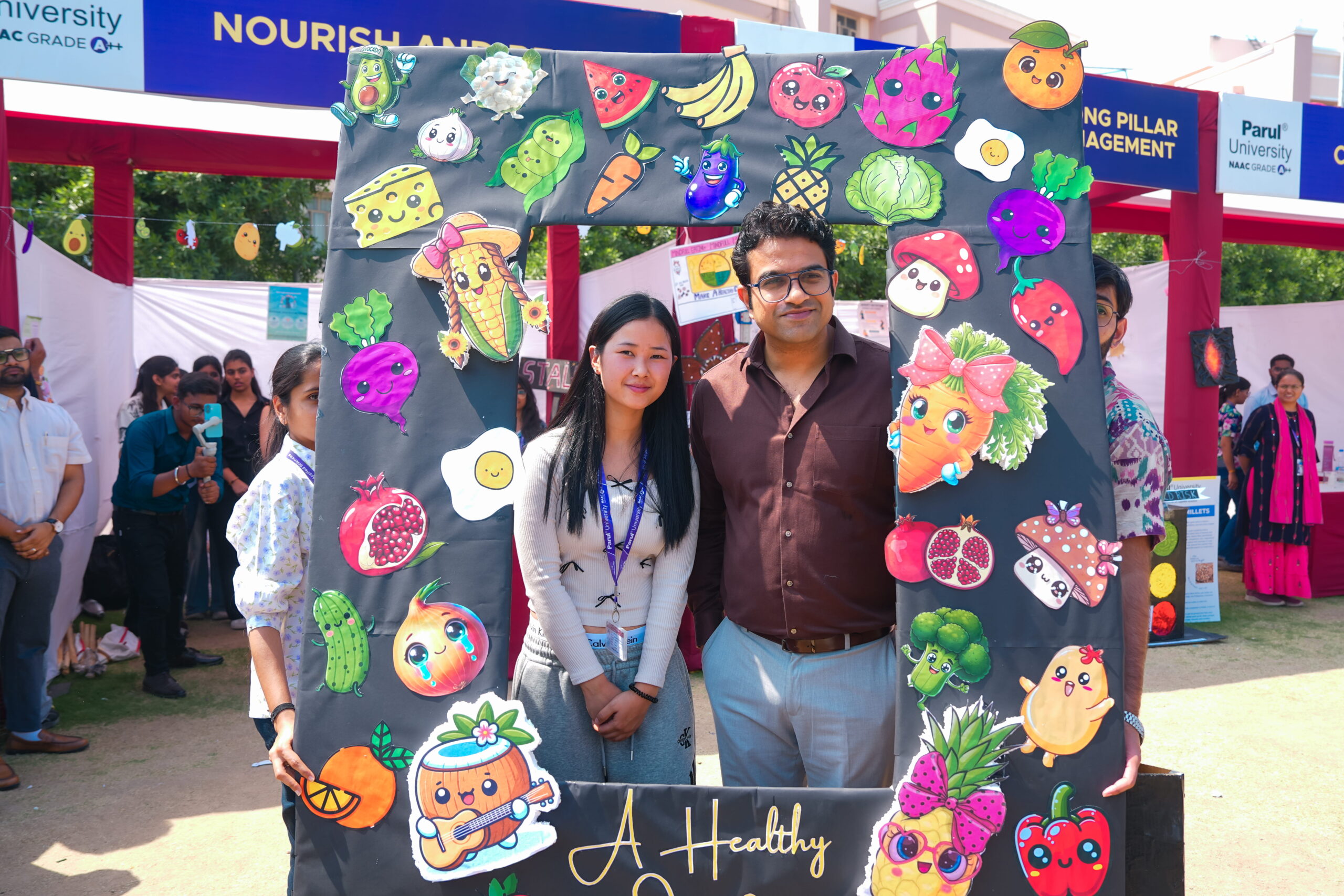
Second-semester Nutrition and Dietetics students got creative in the kitchen, putting together five different millet-based breakfast dishes. They made Millet Ragi Appe stuffed with veggies and paneer, and served it up with a peanut-coconut chutney. Then there were Beetroot Nachos with homemade salsa – way healthier than anything you’ll find in a bag. For women’s health issues like PCOD or PCOS, they came up with an Oats Nutty Bar that really caught the attention of the female students. The lineup also included a protein-and-fiber-packed Beetroot Falafel Wrap, and a Ragi Porridge mixed with buttermilk and roasted cumin powder, loaded with iron and calcium. Out of everything, that Oats Nutty Bar had everyone talking.
40 Research Papers: What Students Are Investigating
The event also had around 40 research papers covering topics like the human gut, microbiome, nanoparticle-based drug delivery, antibiotic-resistant bacteria, marine microorganisms for plastic degradation, dietary patterns and anthropometric measurements in athletes, mindful eating, and sustainable food technologies.
The papers reflected student research across biotechnology, microbiology, food technology, and environmental sustainability – demonstrating the breadth of the Faculty of Applied Science’s research culture.
FAQ - Science Exhibits at National Science Day 2026
What exhibits were shown at National Science Day 2026 at Parul University?
Six interactive exhibits: food adulteration testing, coral bleaching simulation, psychological testing (IQ and personality), forensic investigation techniques (fingerprinting, poison detection, secret writing), biodegradable bowls from sugarcane waste, and healthy millet-based recipes for PCOD/PCOS awareness.
How many research papers were presented?
Approximately 40 research papers were presented by applied science students covering topics from human gut microbiome and nanoparticle drug delivery to marine plastic degradation and sustainable food technologies


