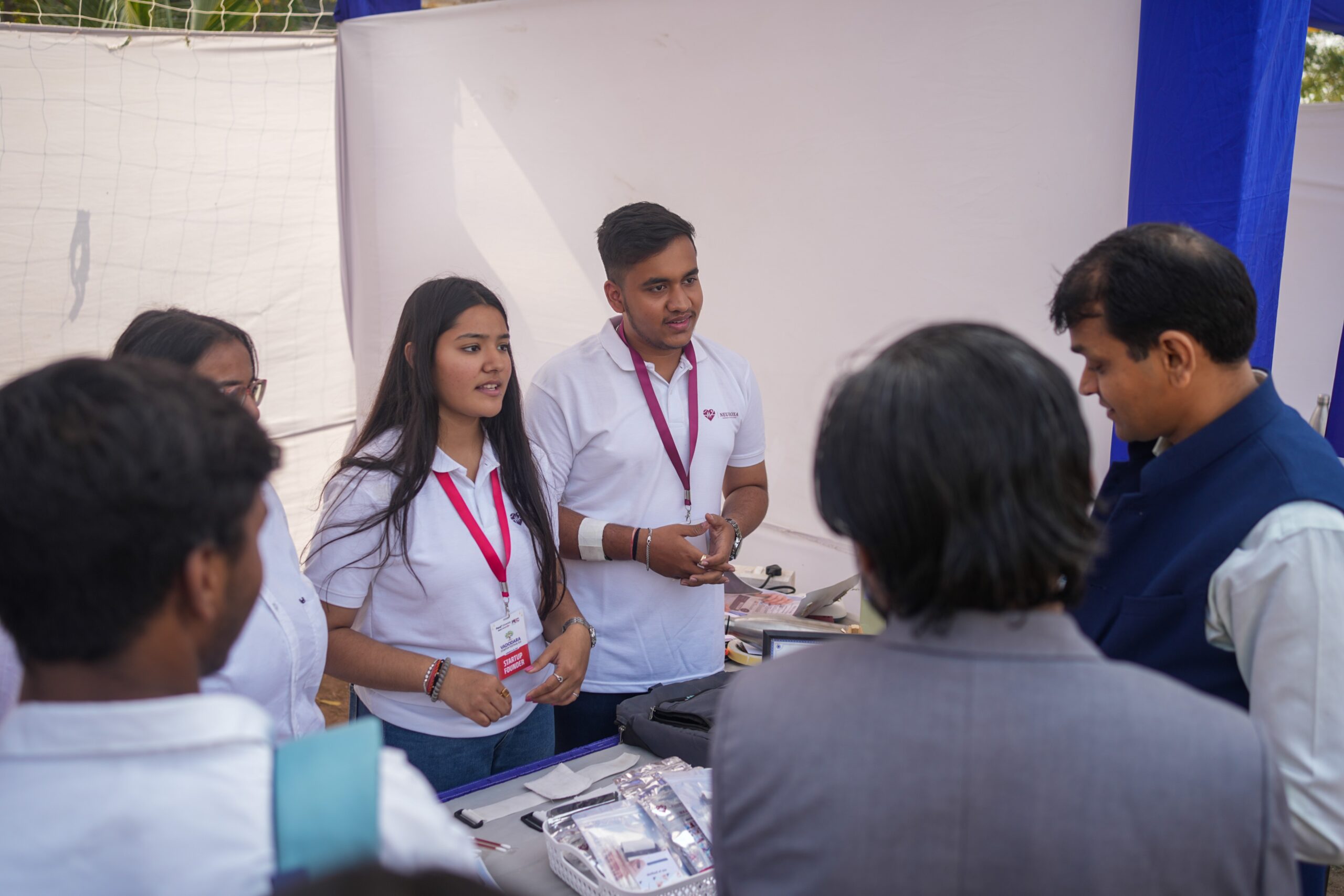
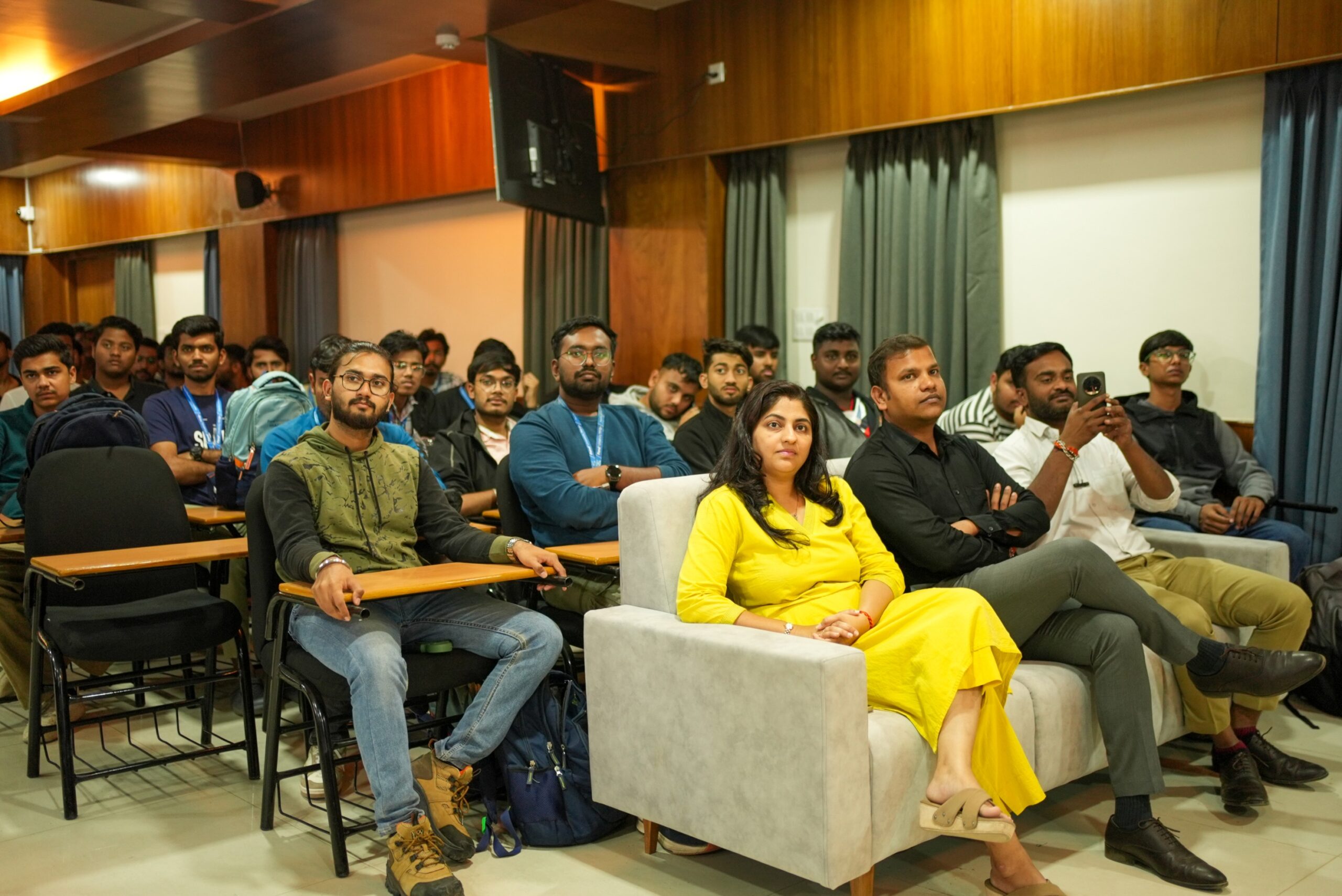
While their batchmates optimize resumes, these student founders are building healthcare solutions for rural India and AgriTech platforms farmers actually use. Here’s what happened when VSF – Vadodara Start-up Festival 6.0 asked: What if we let college kids solve billion-dollar problems?
Quick question: How many plants have you killed in the last year?
If you’re like 80% of people who receive plants as gifts, the answer is “at least one.” Probably more.
Most people shrug this off. It’s just a plant. Buy another one.</p.
Three students at VSF – Vadodara Start-up Festival 6.0 saw it differently. They didn’t see dead plants. They saw:
- Emotional guilt (you killed something someone gave you with love)
- Wasted money (₹500-2000 per plant, gone in weeks)
- Environmental impact (production resources wasted)
- Broken gifting culture (plants become symbols of failure, not growth)
Their solution? Giftreeng.
Smart biodegradable pots with QR codes linking to AI-powered plant care guidance. Database covering 4,000+ plant species. Each pot becomes a silent guide telling users exactly what their plant needs and when.
The validation:
- ₹5 lakh in revenue (before graduation)
- Featured on Shark Tank India
- Solving a problem most VCs wouldn’t fund (“too small,” they’d say)
The lesson: India’s hardest problems aren’t always the ones that make headlines. Sometimes they’re the quiet failures happening in millions of homes simultaneously.
When You Can't Afford College, You Build the Scholarship Platform That Should Exist
Mayank Pareek had the grades. Just not the bank balance.
Every scholarship was scattered across different websites. Each had different deadlines. Different eligibility criteria. Different application processes.
Translation: If you’re poor and smart, you spend more time hunting for scholarships than actually studying.
Pareek’s response at age 19: Build the platform that aggregates everything.
The result: Scholify.
Not just a search engine. An entire ecosystem connecting deserving students with:
- Scholarship opportunities
- Application guidance
- Mentorship programs
- Career placement support
The numbers that matter:
- ₹7-8 crores disbursed to students who couldn’t afford education
- Ranked above Byju’s, Unacademy, and Vedantu in scholarship category
- Thousands of students who would’ve dropped out, now completing degrees
The brutal honesty at VSF – Vadodara Start-up Festival 6.0: “This company exists because I personally experienced being talented but invisible to the system. I didn’t build Scholify to disrupt education. I built it because I was desperate.”
That’s how you solve hard problems. You don’t research them in libraries. You live them first.
The Pattern Nobody's Talking About: Students Solve Problems They're Currently Living
At VSF – Vadodara Start-up Festival 6.0, a pattern emerged across 50+ startup pitches:
The failed pitches:
- “AI-powered blockchain for supply chain transparency”
- “Uber for X”
- “Social media platform for Gen Z”
Why they failed: Borrowed problems. Solutions looking for problems. Buzzword salad.
The funded pitches:
- “I couldn’t find scholarships, so I built aggregation platform”
- “My gifted plants kept dying, so I built care guidance system”
- “My farmer uncle couldn’t get fair prices, so I built direct-to-consumer platform”
Why they succeeded: Personal pain → Deep understanding → Real solution.
VSF – Vadodara Start-up Festival 6.0’s most controversial insight: The best problem-solvers are the ones still experiencing the problem. Not the ones who graduated 5 years ago and forgot what it felt like.
What "India's Hardest Problems" Actually Look Like
What VCs think India’s hard problems are:
- Unicorn-scale opportunities
- Tech disruption plays
- Markets worth ₹1000+ crore
What student founders at VSF – Vadodara Start-up Festival discovered:
- Access to education for students who can’t navigate bureaucracy
- Plant care knowledge for urban millennials who kill everything
- Agricultural supply chains that don’t exploit farmers
- Healthcare information for tier-2/tier-3 city residents
- Affordable mental health support for college students
The difference? One set of problems gets funded because they’re “big enough.” The other set of problems affect millions but aren’t “venture-scale.”
Student founders don’t care about venture-scale. They care about solving the problem that kept them up last night.
And ironically, that’s exactly what makes some of them fundable.
The AgriTech Founder Who Actually Talked to Farmers
Here’s what most AgriTech startups do:
- Bangalore engineer decides farmers need an app
- Builds beautiful interface with ML models
- Tries to sell to farmers
- Farmers ignore it
- Startup dies
Here’s what one VSF – Vadodara Start-up Festival 6.0 founder did differently:
- Grew up in agricultural family, saw father struggle with middlemen
- Spent 6 months talking to 100+ farmers in Gujarat
- Realized they don’t need fancy tech they need fair prices
- Built simple WhatsApp-based system connecting farmers to buyers
- Generated ₹2.3 lakh monthly GMV with 47 active farmers
The difference: One founder built for farmers. The other founder IS a farmer.
Investors noticed.
Quote from VSF – Vadodara Start-up Festival investor: “I’ve seen 50 AgriTech pitches this year. This is the first one where the founder spoke in agricultural terms, not tech terms. That’s how I know they understand the problem.”
Why Healthcare Is Different When You Can't Afford to Be Sick
Urban privilege: Get sick → Go to good hospital → Get treatment → Pay with insurance
Rural/tier-3 reality: Get sick → Don’t know which hospital to trust → Can’t afford specialists → Rely on local chemist’s advice → Hope for the best
The gap isn’t just money. It’s information, access, and trust.
Student founders at VSF – Vadodara Start-up Festival aren’t building hospital chains or medical devices. They’re building:
- Telemedicine platforms connecting tier-3 residents to certified doctors
- Health information apps in regional languages
- Affordable diagnostic test aggregators
- Medical second opinion services via WhatsApp
These aren’t billion-dollar ideas. They’re life-saving ideas.
And for student founders who grew up watching relatives suffer because they didn’t know better? That’s motivation no VC pitch can manufacture.
The Five Types of "Hard Problems" Student Founders Actually Solve
Based on VSF – Vadodara Start-up Festival 6.0 pitches, here’s the taxonomy:
Type 1: Access Problems
Example: Scholify (scholarship access), healthcare information platforms
Core insight: Information exists but is impossible to find/navigate
Student advantage: Recently experienced the frustration firsthand
Type 2: Affordability Problems
Example: Affordable diagnostic tests, budget EdTech
Core insight: Solutions exist but are priced for urban rich
Student advantage: Currently broke, deeply understand budget constraints
Type 3: Knowledge Gap Problems
Example: Giftreeng (plant care), agricultural best practices
Core insight: People want to do right thing but don’t know how
Student advantage: Can simplify complex knowledge into accessible formats
Type 4: Trust Problems
Example: Direct farmer-to-consumer platforms, verified service providers
Core insight: Middlemen exploit information asymmetry
Student advantage: Can build transparent systems from scratch
Type 5: Neglected Problems
Example: Mental health for students, waste management in hostels
Core insight: Problems affect millions but aren’t “sexy” enough for big companies
Student advantage: Will solve it even if not venture-scale
What these have in common: They’re all ignored by people chasing unicorns.
The Uncomfortable Truth About "Impact" vs. "Returns"
VC-backed founder: “We’ll disrupt healthcare and become ₹1000 crore company”
Student founder: “We’ll help 10,000 tier-3 residents find affordable doctors”
Who gets funded? Usually the first one.
Who actually helps people? Often the second one.
VSF – Vadodara Start-up Festival 6.0 exposed this tension. Multiple investors had to choose between:
- Startups with huge TAM but no real traction
- Startups with modest TAM but clear customer love
Surprising outcome: Some investors chose the second type.
Why? Quote from family office investor: “I’d rather invest in a business doing ₹50 lakh annual revenue serving 5,000 customers really well than a business projecting ₹50 crore revenue with zero customers today.”
Translation: Real problems with real solutions beat imaginary markets with imaginary products.
What Student Founders Understand That Experienced Founders Forget
Experienced founder pitching AgriTech: “India has 150 million farmers. If we capture just 1%, that’s 1.5 million users. At ₹100/month ARPU, that’s ₹180 crore ARR.”
Student founder pitching AgriTech: “My uncle farms 3 acres in Anand district. He told me his three biggest problems. I built solutions for those three problems. Now 47 farmers in his village use my platform because it actually helps them.”
Guess which pitch is more credible?
What students understand:
- Start with one person’s problem, solved perfectly
- Scale by word-of-mouth from happy users
- Revenue follows actual value creation
- You can’t fake product-market fit with projections
What experienced founders sometimes forget:
- That solving one person’s problem deeply is better than solving everyone’s problem shallowly
- That 47 happy users beat 0 users + big TAM slide
- That conviction comes from personal experience, not market research
The "Small" Problems That Aren't Small At All
Giftreeng’s problem: People killing gifted plants
Sounds small, right?
Do the math:
- India’s gifting market: ₹40,000+ crore annually
- Plants are 5-10% of premium gifting
- That’s ₹2,000-4,000 crore just in plant gifts
- 80% die within a year
- That’s ₹1,600-3,200 crore in wasted gifting
Suddenly “small” problem = ₹3,000 crore market.
The pattern at VSF – Vadodara Start-up Festival 6.0: Every “small” problem, when you calculate the cumulative impact, affects millions and wastes billions.
Dead plants. Missed scholarships. Farmers cheated by middlemen. Tier-3 residents misdiagnosed.
These aren’t small problems. They’re problems rich people don’t experience, so they seem small.
Why Student Founders Win at "Boring" Problems
Silicon Valley wisdom: Solve exciting problems in sexy markets.
Student founder wisdom: Solve boring problems that actually help people.
Examples of “boring” problems student founders are crushing:
- Hostel mess management systems (₹3 lakh MRR)
- College event ticketing platforms (₹5 lakh annual revenue)
- Local language learning apps for students (₹8 lakh ARR)
- Campus ride-sharing coordination (₹2 lakh monthly GMV)
None of these will become unicorns.
All of them are profitable. All of them help real people. All of them taught founders how business actually works.
And when these founders pivot to their next idea? They’ll have customer understanding, revenue generation skills, and operational experience.
That’s worth more than a failed attempt at the “next big thing.”
H2 – The Healthcare Access Problem Only Students Can Solve
Why big healthcare companies can’t fix tier-2/tier-3 access:
- Unit economics don’t work (too expensive to serve)
- Talent doesn’t want to relocate (doctors prefer metros)
- Infrastructure requires huge upfront investment
- Returns take 5-10 years minimum
Why student founders can:
- They’re FROM tier-2/tier-3 cities, understand local needs
- They’ll use technology to bridge talent gap (telemedicine)
- They’ll start with WhatsApp, not fancy apps
- They don’t need VC returns, just sustainable revenue
Real example from VSF – Vadodara Start-up Festival 6.0 (category, not specific company):
Students built telemedicine platforms connecting rural patients to doctors via video calls. ₹100 per consultation. Doctors volunteer 2 hours weekly for social impact.
- Revenue: ₹1.2 lakh monthly
- Patients served: 1,200/month
- Doctor satisfaction: High (feel they’re giving back)
- Patient satisfaction: Life-changing (first time seeing specialist)
Is this venture-scale? No.
Is this life-saving? Literally yes.
What "Solving Hard Problems" Actually Requires
Not required:
- IIT degree
- Silicon Valley experience
- ₹50 lakh funding
- Revolutionary technology
Actually required:
- Personal experience with the problem
- Willingness to talk to 100+ potential users
- Ability to build simple solution quickly
- Persistence when first version fails
- Honesty about what you don’t know
VSF – Vadodara Start-up Festival 6.0’s most funded founder quote: “I’m not the smartest person working on this problem. But I’m the only one who spent 6 months actually living with the people who have this problem.”
That’s the unfair advantage education can’t teach.
The AgriTech Founder's Three Questions
Every AgriTech pitch at VSF – Vadodara Start-up Festival 6.0 got asked:
Q1: “How many farmers have you personally spoken to?”
Winning answer: “137, across 5 districts in Gujarat”
Losing answer: “We’ve done extensive market research”
Q2: “What do farmers actually want?”
Winning answer: “Fair prices, faster payment, less dependence on middlemen”
Losing answer: “AI-powered crop monitoring and predictive analytics”
Q3: “Why will farmers trust you?”
Winning answer: “Because my father is a farmer and vouched for me with his cooperative”
Losing answer: “Our user acquisition strategy includes Facebook ads”
See the pattern? Authenticity beats sophistication. Personal connection beats marketing.
Why Mental Health Is the Next Student-Solved Problem
The hidden crisis at every campus:
- 30-40% students experience anxiety/depression
- Most won’t seek professional help (stigma + cost)
- Campus counselors are overwhelmed (1 counselor per 2,000+ students)
- Parents don’t understand mental health needs
- Friends want to help but don’t know how
Student founders building solutions:
- Peer support platforms with anonymity
- Affordable online therapy connections
- Mental health check-in apps with simple interfaces
- Community building for students with similar struggles
Why students can solve this better than adults:
- They understand the language (adults say “stress,” students say “breakdown”)
- They know what actually helps (not 10-page PDFs on “managing anxiety”)
- They build for mobile-first, WhatsApp-native users
- They remove shame from the process
This isn’t a ₹100 crore opportunity yet. But it will save lives.
And for student founders who’ve been there? That’s enough.
The Five Hard Truths About Solving Hard Problems
- Truth #1: Most “Hard Problems” Don’t Need Hard Solutions
- Example: Farmers don’t need blockchain. They need a WhatsApp group connecting them to buyers.
- Truth #2: If You Haven’t Experienced the Problem, You Probably Don’t Understand It
- Example: Urban engineers building apps for farmers usually build wrong things.
- Truth #3: Unglamorous Problems Are Often More Fundable
- Example: Hostel management software > Another social network
- Truth #4: Revenue Validates Understanding, Not Slides
- Example: ₹2 lakh monthly GMV with farmers beats beautiful pitch deck
- Truth #5: Impact and Returns Aren’t Always Opposites
- Example: Scholify helps students AND generates sustainable revenue
How to Know If Your Problem Is Worth Solving
Bad test: “Is this a billion-dollar market?”
Good test: “Would 10 people pay me ₹100 to solve this for them?”
Better test: “Have I personally experienced painful versions of this problem multiple times?”
Best test: “When I describe this problem to strangers who have it, do they say ‘YES, EXACTLY!’ or do they say ‘huh, interesting’?”
VSF – Vadodara Start-up Festival 6.0 pattern: Every funded startup passed the “best test.”
What Happens When Students Stop Asking Permission
Traditional path:
- Identify problem
- Ask professor if it’s good thesis topic
- Research for 6 months
- Write paper
- Present findings
- Maybe someone reads it
- Problem remains unsolved
VSF – Vadodara Start-up Festival 6.0 path:
- Identify problem
- Talk to 10 people who have it
- Build basic solution in 2 weeks
- Get 5 people to try it
- Iterate based on feedback
- Get 50 people using it
- Problem is being solved, at scale, in real-time
The difference? Students stopped asking permission and started shipping solutions.
Why This Matters Beyond Startup Success Rates
Even if 90% of VSF – Vadodara Start-up Festival startups fail in 2 years, here’s what happens:
- Failed AgriTech founder joins agricultural cooperative, completely transforms their digital operations because they actually understand farmers.
- Failed healthcare founder joins hospital chain, fixes their tier-3 strategy because they know what those customers actually need.
- Failed EdTech founder becomes teacher, builds better curriculum because they remember what it’s like to struggle with access.
The pattern: Students who attempt to solve hard problems become adults who actually can.
That’s the real impact. Not unicorns. Capability.
What You Can Do Before This Semester Ends
- Week 1: Pick one problem you’ve personally faced at least 5 times in the last month.
- Week 2: Interview 10 people on campus. If the problem repeats, continue; if not, switch problems.
- Week 3: Build the simplest working fix Google Form, WhatsApp group, spreadsheet, or a basic landing page.
- Week 4: Get 5 real users to use it (not friends “being nice” people who genuinely have the problem).
- Weeks 5–8: Improve it every week based on feedback: add what users ask for, remove what nobody uses.
- Throughout the semester (PIERC layer): Attend PIERC sessions/events, use the co-working ecosystem if available, and take mentor feedback early so you don’t build in isolation.
- By semester end: You’ll either find a problem worth building for the next 2 years or you’ll learn early that it’s not, which saves time and is equally valuable.
Cost: ₹0
Time: 2–3 hours/week
Skills gained: Problem selection, customer discovery, rapid prototyping, iteration, pitching basics, and founder discipline.
The Final Question VSF - Vadodara Start-up Festival 6.0 Forces You to Answer
Not: “What startup should I build?”
But: “What problem do I understand better than anyone else because I’ve lived it?”
If you can’t answer that, you’re not ready to start.
If you can answer that, you’ve already started.
VSF – Vadodara Start-up Festival 6.0 happened at Parul University, Vadodara, January 2026. Student founders pitched solutions to problems that affect millions of scholarships, plant care, agricultural supply chains, healthcare access. Some got funded. Some didn’t. But all of them proved something important: You don’t need a degree to start solving problems. You just need to care enough to try.
PIERC (Parul Innovation and Entrepreneurship Research Centre) organized the festival with one controversial belief: Students can solve India’s hardest problems better than the experienced founders who forgot what those problems feel like.
Three days proved them right.
The question isn’t whether students CAN solve hard problems. They already are.
The question is: What problem are YOU going to solve?
Frequently Asked Questions (FAQs)
Q1: What was VSF – Vadodara Start-up Festival 6.0 and why was it significant?
VSF – Vadodara Start-up Festival 6.0 (Vadodara Startup Festival) was a startup showcase organized at Parul University where student founders pitched solutions to real-world problems in healthcare, AgriTech, education, sustainability, and more. It demonstrated that students can build scalable, revenue-generating solutions before graduating.
Q2: What types of problems were student founders solving?
Students addressed access to scholarships, farmer-to-buyer supply chains, affordable healthcare in tier-2 and tier-3 cities, mental health support for students, and sustainable consumer products. These were problems they personally experienced or witnessed in their communities.
Q3: How is PIERC supporting student entrepreneurs?
PIERC provides incubation, mentorship, networking, pitch opportunities, workspace access, and strategic guidance. It bridges the gap between idea and execution, allowing students to test and refine solutions within a supportive startup ecosystem.
Q4: Why are student founders uniquely positioned to solve hard problems?
Because they are currently living with those problems. Whether it’s struggling for scholarships, seeing healthcare gaps in smaller cities, or watching farmers face unfair pricing, their solutions are rooted in real experience rather than market speculation.
Q5: Does every startup at VSF – Vadodara Start-up Festival need to become a unicorn to succeed?
No. The goal is impact and sustainability. Even if a startup doesn’t scale nationally, the founder gains real-world skills in customer discovery, revenue generation, and problem-solving, creating long-term entrepreneurial capability.


