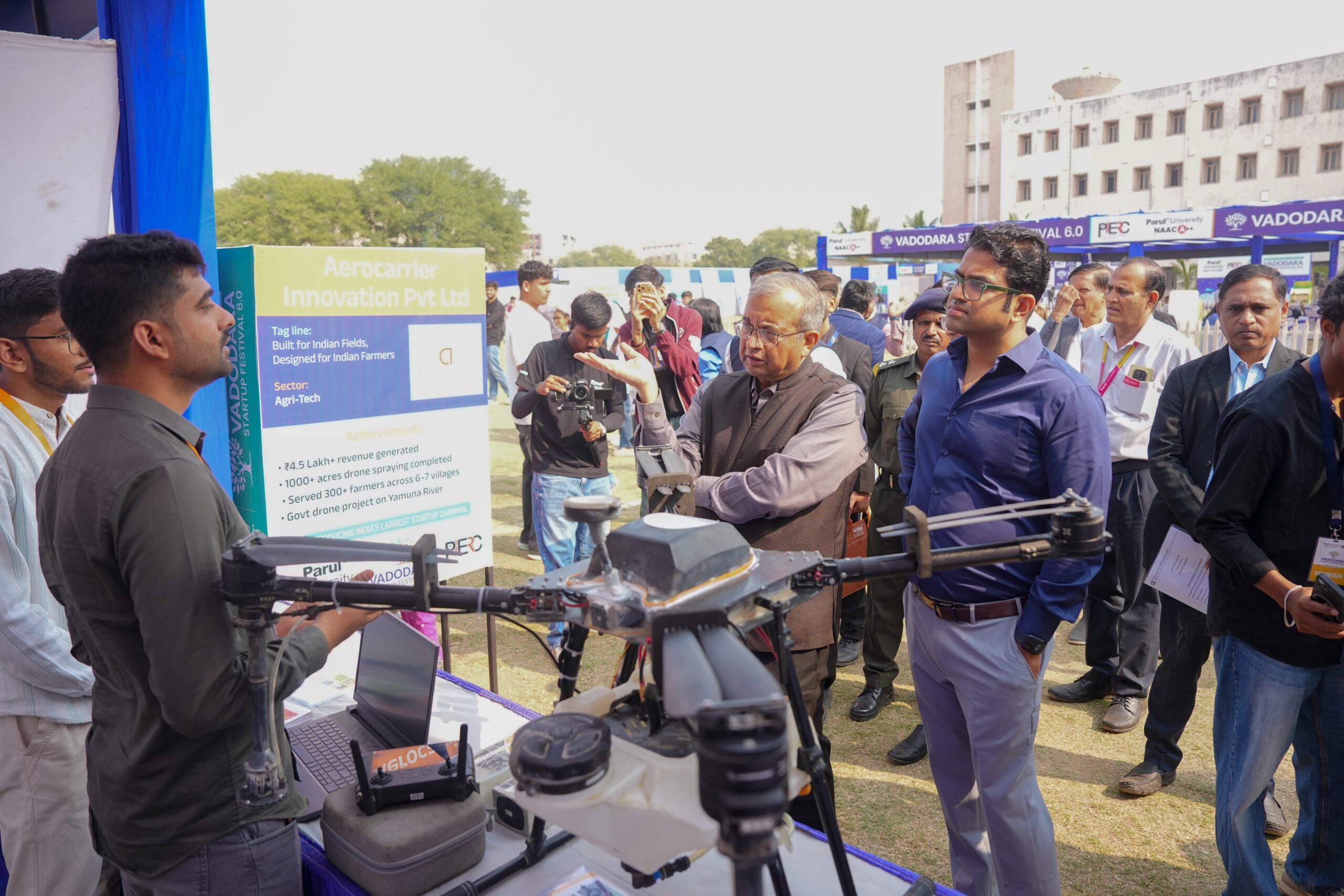
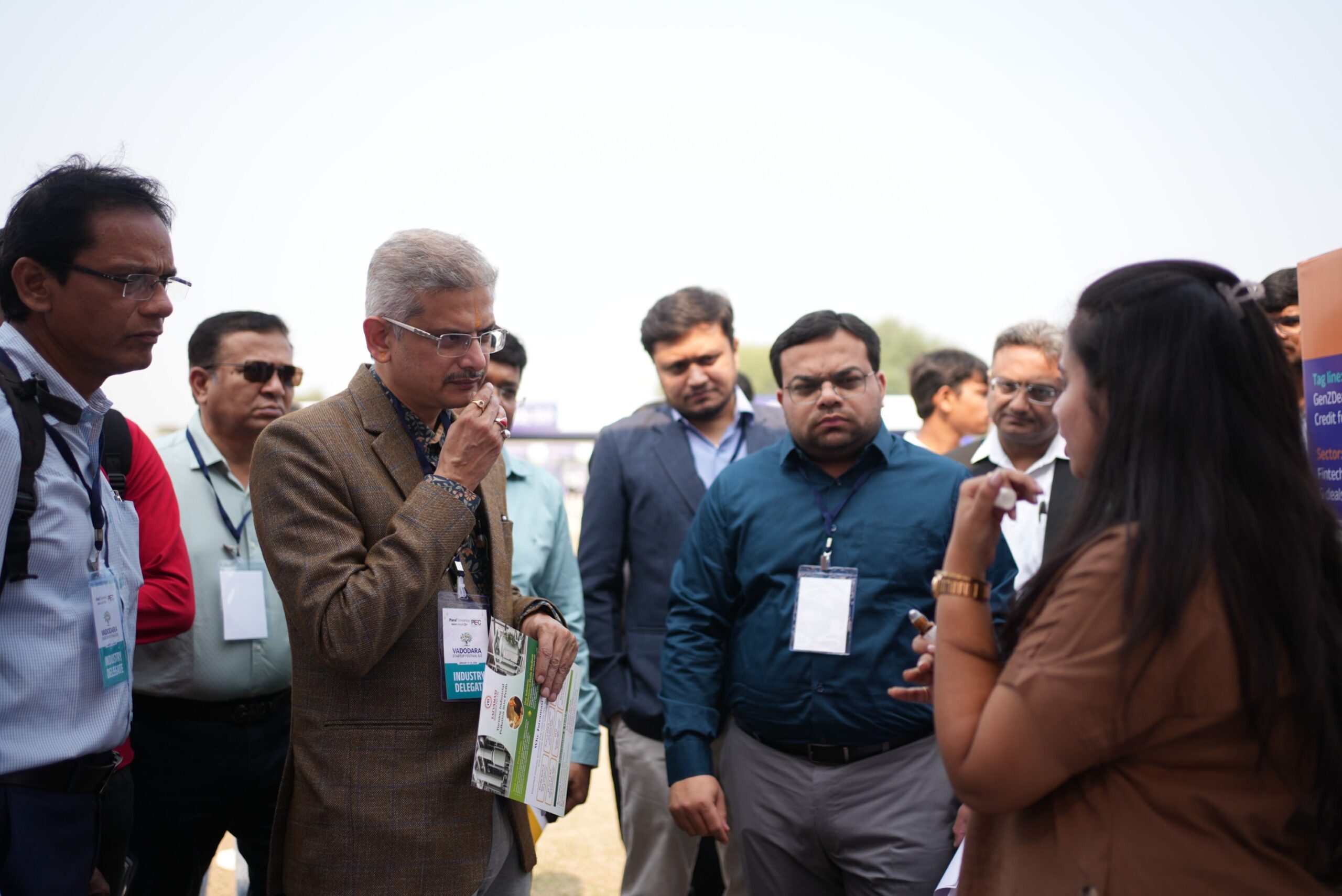
At Parul University, final-year students are choosing startup cap tables over placement offers and investors are fighting to fund them.
Scene: Final year. Placement season. Everyone’s polishing resumes.
Expected:
“I got placed at TCS!”
“Congrats! I’m joining Infosys!”
What actually happened at Parul, January 2026:
“I got placed at Accenture.”
“Nice. I just hit ₹8 lakh ARR.”
“Wait, what?”
This isn’t one student. This is a pattern. And it’s breaking everything we thought we knew about campus success metrics.
H2 - When ₹30,000/Month Salary Loses to ₹0 Salary + Equity
Let’s talk numbers because that’s what matters.
Traditional campus success story:
- Graduate with 8.5 CGPA
- Get placed at ₹6 lakh package
- Join MNC in July
- Steady income, stable life
VSF – Vadodara Start-up Festival 6.0 campus success story:
- Graduate with 7.8 CGPA
- Generated ₹5 lakh revenue while studying
- Raised ₹15 lakh seed round from VSF – Vadodara Start-up Festival investor
- Zero salary, 100% equity, infinite upside
Which is better? Wrong question.
Right question: Which teaches you more about how the world actually works?
Traditional path teaches: Follow instructions. Meet deadlines. Optimize for stability.
Startup path teaches: Create value from nothing. Handle rejection daily. Optimize for learning.
Both are valid. But only one of them is rewarded in the placement brochure.
The ₹7 Crore Scholarship Nobody Put on Their Resume
Mayank Pareek‘s resume, if he followed traditional advice:
- Education: [Generic college name]
- GPA: 7.something
- Internships: Maybe one or two
- Skills: The usual buzzwords
- Achievements: Won some competitions
Mayank Pareek’s actual resume after VSF – Vadodara Start-up Festival 6.0:
- Founded: Scholify
- Impact: Disbursed ₹7-8 crores in scholarships to students
- Market position: Ranked above Byju’s, Unacademy, Vedantu in scholarship category
- Personal story: Built the scholarship platform he needed because it didn’t exist
Which resume gets the callback?
Which resume gets you funded?
Which resume makes you unforgettable?
The second one. Every single time.
But here’s the twist: Traditional placement systems don’t have a column for “built something real that helped thousands of people.” They have columns for GPA, internships, certifications.
So students optimize for the wrong metrics.
Until they don’t.
What Investors See That Placement Offices Miss
At VSF – Vadodara Start-up Festival 6.0, something unprecedented happened: Investors treated student pitches like Series A rounds.
Not metaphorically. Literally. Same scrutiny. Same questions. Same decision-making frameworks.
Why? Because students showed up with what actual companies show:
Giftreeng Team:
❌ “We’re planning to build smart plant pots”
✅ “Giftreeng has sold 150 units, generated ₹5 lakh revenue, featured on Shark Tank, and here’s our month-over-month growth”
Scholify:
❌ “We want to solve the scholarship problem”
✅ “We’ve disbursed ₹7 crores, served 10,000+ students, and here’s our retention data”
See the difference?
Resumes talk about potential. “I can do this if given the opportunity.”
Revenue talks about reality. “I already did this. Want to help me scale?”
Investors bet on reality. Placement offices bet on potential.
That’s why the metrics are misaligned.
The Student Who Said No to ₹12 Lakh Package
Real story from VSF – Vadodara Start-up Festival 6.0 (name withheld for privacy):
Student profile:
- Final year, Computer Science
- 8.2 CGPA
- Placed at ₹12 lakh at Bangalore-based product company
- Running a B2B SaaS startup on the side
- Current ARR: ₹6 lakh
- Burn rate: ₹25,000/month (living at home, minimal expenses)
The decision:
Join the company (guaranteed ₹12 lakh/year)
OR full-time startup (current ₹6 lakh ARR, potential 3x growth in 12 months)
The math:
Option A (Job):
- ₹12 lakh salary
- ₹8 lakh post-tax
- Learn corporate systems
- Stable trajectory
- Cap at senior engineer in 5-7 years
Option B (Startup):
- ₹6 lakh current revenue
- ₹4.5 lakh take-home (after minimal expenses)
- Own 100% of company
- If 3x growth: ₹18 lakh revenue, ₹12+ lakh take-home
- If 5x growth: ₹30 lakh revenue, ₹20+ lakh take-home
- Upside: Infinite (if company becomes valuable)
- Downside: Can always get a job (skills don’t expire)
The student chose: Startup.
Placement office reaction: “Are you sure? Think about stability.”
Investor reaction at VSF – Vadodara Start-up Festival 6.0: “Let’s talk about funding on Monday.”
Why B2B SaaS Students Are Outearning Placement Offers
Here’s a pattern that emerged at VSF – Vadodara Start-up Festival 6.0: Students building B2B SaaS are generating more monthly income than some placement packages offer annually.
Example scenario:
Student A: Traditional placement path
- Package: ₹6 lakh/year
- Monthly: ₹50,000
- Growth: 10-15% annual raises
- Cap: ₹15-20 lakh in 5-7 years
Student B: B2B SaaS founder path
- MRR: ₹3 lakh (15 customers at ₹20,000/month)
- Annual: ₹36 lakh
- Growth: 20-30% monthly (in early stage)
- Cap: None (if product-market fit achieved)
Real numbers from VSF – Vadodara Start-up Festival 6.0:
- One student SaaS: ₹2.5 lakh MRR from 8 customers
- Another: ₹4 lakh MRR from 12 customers
- Another: ₹1.5 lakh MRR from 20 customers
These aren’t projections. These are actual, verified, recurring revenue numbers.
And none of them appeared in placement statistics.
The Ownership Mentality That Changes Everything
At VSF – Vadodara Start-up Festival 6.0, Manan Vasavda (AV DEVS Solutions) said something that rewired every student’s thinking:
“Work as if the organization belongs to you.”
But here’s the advanced version: What if it actually did?
In a job:
- You own 0% of the outcome
- You earn salary regardless of company performance
- Your upside is capped at promotions/bonuses
- Company sells for ₹100 crore? You get nothing.
In your startup:
- You own 100% (or significant equity)
- Your earning is directly tied to value created
- Your upside is theoretically infinite
- Company sells for ₹10 crore? Life-changing money.
The VSF – Vadodara Start-up Festival 6.0 realization: Students who build an ownership mentality in jobs are practicing. Students who build actual ownership in startups are playing for real.
Both are valuable. But one has an asymmetric upside.
The Five Types of Students at Campus Startup Festivals
After analyzing VSF – Vadodara Start-up Festival 6.0, five distinct patterns emerged:
Type 1: The Resume Builder
- Motivation: “Startup founder” looks good on LinkedIn
- Behavior: Shows up with slide deck, no product
- Outcome: Gets rejected by all investors, joins campus placement
- Percentage: 40%
Type 2: The Curious Explorer
- Motivation: “I want to see if this is for me”
- Behavior: Attends talks, asks questions, takes notes
- Outcome: Doesn’t pitch, gains clarity, makes informed choice
- Percentage: 30%
Type 3: The Side Hustler
- Motivation: “I’m building something, but also keeping options open”
- Behavior: Has working product, considering full-time commitment
- Outcome: Uses festival to validate if startup is worth going all-in
- Percentage: 20%
Type 4: The Committed Founder
- Motivation: “This is my path, period”
- Behavior: Revenue-generating business, seeking scaling capital/mentorship
- Outcome: Gets funded or finds strategic partners
- Percentage: 8%
Type 5: The Future Unicorn (Maybe)
- Motivation: “We’re solving something massive”
- Behavior: Traction, team, vision, execution all clicking
- Outcome: Multiple investor offers, hard choices ahead
- Percentage: 2%
Here’s what matters: The festival served all five types. Types 1-2 learned what they don’t want. Types 3-5 got what they needed to level up.
That’s success. Even if only 10% got funded.
When Traction Beats Pedigree
Traditional investor question: “Where did you study?”
VSF – Vadodara Start-up Festival 6.0 investor question: “How much revenue are you doing?”
This shift is MASSIVE.
Before:
- IIT/IIM founders got meetings by default
- Others struggled to get investor attention
- Pedigree was proxy for capability
Now (at VSF – Vadodara Start-up Festival 6.0):
- Parul student with ₹5 lakh revenue gets 10 investor meetings
- IIT student with just an idea gets 2 polite rejections
- Traction is the new pedigree
Why this matters: It levels the playing field. You don’t need a JEE rank. You need customers.
Real example from festival:
Student A:
- Top engineering college
- 9.1 CGPA
- Great idea for fintech app
- No users yet
- Investor interest: Low
Student B:
- Tier-2 college
- 7.4 CGPA
- Built agricultural supply chain platform
- 47 farmers using it daily, ₹2.3 lakh monthly GMV
- Investor interest: Three term sheets discussed
The marketplace doesn’t care about CGPA. It cares about value creation.
The Revenue Milestones That Actually Impress Investors
Based on VSF – Vadodara Start-up Festival 6.0 investor conversations, here’s what gets attention:
₹1 Lakh Total Revenue
- Investor reaction: “Okay, someone paid you. That’s validation.”
- What it proves: Product-market fit exists at some level
- Next question: “Can you repeat this monthly?”
₹3 Lakh MRR (Monthly Recurring Revenue)
- Investor reaction: “You’ve figured out a repeatable sales process.”
- What it proves: Unit economics work
- Next question: “What’s your CAC and LTV?”
₹10 Lakh ARR (Annual Recurring Revenue)
- Investor reaction: “This is a real business.”
- What it proves: Sustainability beyond initial traction
- Next question: “How do you plan to get 10x this?”
₹50 Lakh ARR
- Investor reaction: “We need to invest before someone else does.”
- What it proves: You’ve crossed the chasm
- Next question: “How much equity are you offering?”
Students at VSF – Vadodara Start-up Festival 6.0 spanned this entire range. Some had ₹0 revenue (ideas only). Some had ₹6 lakh ARR (real businesses).
Both got value from the festival. But only one got funded.
The Dark Truth About Placement Statistics
Campus placement report says:
- Average package: ₹6.5 lakh
- Highest package: ₹18 lakh
- Placement percentage: 94%
What it doesn’t say:
- How many students built revenue-generating businesses instead of placements
- How much revenue those students generated
- How many of those businesses will outlast the “highest package” career
VSF – Vadodara Start-up Festival 6.0 revealed an invisible economy on campus:
Student startup collective revenue (estimated from pitches):
- 50 startups pitched
- Average revenue per startup (for those with revenue): ₹3-4 lakh
- Roughly 30 startups had some revenue
- Total: ₹90 lakh+ student-generated revenue
That’s more than some companies’ total fresher hiring budget.
And it’s completely invisible in official statistics.
Why "Job Security" Is the Biggest Lie We Tell Students
VSF – Vadodara Start-up Festival 6.0 speakers systematically destroyed the “job security” myth:
Kavish Gadia (Stones2Milestones):
“I had 14 job offers from top firms. Know what I have now? A company with 600 employees and schools being built. The ‘secure’ path would’ve capped me as a senior manager.”
Mayank Pareek (Scholify):
“Financial security is important. But I’m more financially secure now, after building Scholify, than I would’ve been climbing a corporate ladder.”
Manan Vasavda (AV DEVS Solutions):
“The only real security is owning valuable skills and relationships. Jobs give you a salary. Startups give you both if you build right.”
Translation: Job security is a myth. Skill security is real. Relationship security is real. Value creation security is real.
Startups force you to develop all three. Jobs let you avoid them.
The ₹15 Lakh Seed Round That Happened in the Cafeteria
Unverified but widely circulated story from VSF – Vadodara Start-up Festival 6.0:
Student pitches to investors. Pitch goes well. The investor says, “Let’s talk about the details over coffee.”
They go to the campus cafeteria. Student explains:
- Unit economics
- Customer acquisition strategy
- 12-month roadmap
- Funding utilization plan
Investor pulls out laptop. Opens term sheet template. Fills in ₹15 lakh. Says, “Acceptable?”
The student says yes.
Deal done. In a cafeteria. Over chai.
Is this typical? No. Is it possible at campus festivals? Absolutely.
Why it happens:
- Low stakes (₹15 lakh is “small check” for investors)
- High potential (student has years of runway ahead)
- Clear traction (revenue proves execution capability)
- Speed (no bureaucracy, no corporate decision-making)
Campus deals move fast because everyone has less to lose and more to gain.
The Five Questions Investors Asked at Every Pitch
After attending 20+ pitches at VSF – Vadodara Start-up Festival 6.0, pattern recognition kicked in. Every investor asked variants of these five:
Q1: “How much have you made so far?”
What they’re really asking: Do you know how to monetize?
Q2: “How did you acquire your first 10 customers?”
What they’re really asking: Do you understand your customer?
Q3: “What’s your unfair advantage?”
What they’re really asking: Why you, why now, why would this work?
Q4: “What happens if [competitor] enters your space?”
What they’re really asking: Have you thought this through?
Q5: “What do you need funding for, specifically?”
What they’re really asking: Do you know how to deploy capital efficiently?
Students who answered with revenue data, customer names, competitive moats, and detailed budgets got second meetings.
Students who answered with vague vision statements got polite nods.
When Your CGPA Doesn't Matter Anymore
Harsh truth: After your first ₹5 lakh in revenue, nobody asks your CGPA ever again.
Evidence from VSF – Vadodara Start-up Festival 6.0:
Student with 6.8 CGPA but ₹8 lakh ARR:
- Investors didn’t mention grades once. The entire conversation was about growth metrics, margins, and CAC.
Student with 9.2 CGPA but no revenue:
- “Impressive grades! So, have you talked to any potential customers?”
The market is a harsh equalizer. It doesn’t care about:
- Your college ranking
- Your GPA
- Your competition wins
- Your certificates
It only cares:
- Can you create value?
- Can you capture value?
- Can you scale value?
Revenue is proof. Everything else is potential.
The Breakdown of Traditional vs. Startup Path Economics
Let’s model this over 5 years to see where paths diverge:
Traditional Path (₹6 lakh starting package)
- Year 1: ₹6L salary → ₹4.5L post-tax
- Year 2: ₹6.6L salary → ₹5L post-tax
- Year 3: ₹7.3L salary → ₹5.5L post-tax
- Year 4: ₹8L salary → ₹6L post-tax
- Year 5: ₹9L salary → ₹6.7L post-tax
Total 5-year take-home: ₹27.7L
Equity value: ₹0
Startup Path (₹2 lakh ARR starting, 3x annual growth)
- Year 1: ₹2L revenue → ₹1.5L take-home
- Year 2: ₹6L revenue → ₹4.5L take-home
- Year 3: ₹18L revenue → ₹13.5L take-home
- Year 4: ₹54L revenue → ₹40.5L take-home
- Year 5: ₹162L revenue → ₹121.5L take-home
Total 5-year take-home: ₹181.5L
Equity value: If company sells at 5x revenue = ₹810L
The catch: This assumes 3x growth every year, which is NOT guaranteed.
If startup fails in Year 3:
- Total take-home: ₹19.5L
- Equity value: ₹0
But you learned more than 10 years in corporate.
The VSF – Vadodara Start-up Festival 6.0 insight: Both paths have risk. Corporate risk is slower (layoffs, stagnation). Startup risk is faster (failure, bankruptcy). Pick your poison.
Why Student Founders Have an Unfair Advantage
Unfair advantage #1: Lower burn rate
Living at home/hostel? Your burn is ₹20-30k/month. Bangalore founder? ₹2L/month minimum.
Unfair advantage #2: Time abundance
No kids. No EMIs. No spouse expecting income. You can go 18 months without salary if needed.
Unfair advantage #3: Talent access
Your co-founders are sitting in the next classroom. Your first 10 employees are in your hostel wing.
Unfair advantage #4: Risk tolerance
You have 40+ working years ahead. You can afford to fail now and recover.
Unfair advantage #5: Energy
You can code/sell/build for 16 hours daily. Try that at 35 with kids.
Investors at VSF – Vadodara Start-up Festival 6.0 understood this. That’s why they showed up. They’re betting on the advantages of that compound.
The Question Every Student Should Ask Before Placement Season
Not: “What package should I target?”
But: “If I had 24 months of full focus on one problem I deeply care about, what could I build?”
Follow-up: “If that fails, can I get a job then?”
Answer: Yes. Always. Skills don’t expire. Companies always need talent.
But the reverse question:
“If I take a job now, can I start a startup later?”
Answer: Technically yes. Realistically harder. Because:
- You’ll get used to stable income
- You’ll have more financial obligations
- You’ll have less risk tolerance
- You’ll have less time and energy
The VSF – Vadodara Start-up Festival 6.0 pattern: Students who started companies in final year had higher success rates than alumni who started 5 years post-graduation.
Why? Because college is the last time you have nothing to lose.
What Placement Offices Should Measure (But Don't)
Current metrics:
- Average package
- Highest package
- Placement percentage
What they should measure:
- Students who built revenue-generating businesses
- Total revenue generated by student startups
- Students who got funded
- Student businesses still operating after 2 years
- Average revenue per student founder
Why this matters: Because it reveals the invisible economy. The value creation that happens outside formal systems.
VSF – Vadodara Start-up Festival 6.0 proved: Some students are creating more value through startups than they would capture in placements.
But since it doesn’t fit the placement report format, it’s invisible.
Changing the metrics changes the incentives. Which changes what students optimize for.
The One Advantage a Resume Will Never Have
A resume is a request: “Please give me the opportunity to create value.”
A revenue-generating business is proof: “I already created value. Want to help me scale?”
Investors choose proof over potential. Every time.
But here’s the thing: You can have both.
The smart play (observed at VSF – Vadodara Start-up Festival 6.0):
- Build startup in college
- Generate ₹3-5 lakh revenue minimum
- Also sit for placements
- Get offer from good company
Now you have options:
- Option A: Take the job, keep startup as side project
- Option B: Decline job, go full-time startup with safety net (you CAN get hired)
- Option C: Negotiate with company: “I’ll join if I can keep building this”
Having options is power.
Revenue gives you options. Resumes give you permission to interview.
What Actually Happened 6 Months After VSF - Vadodara Start-up Festival 6.0
This is speculative (festival was in January 2026), but based on typical patterns:
Of the 50 startups that pitched:
- 10 got funded (₹10-30 lakh seed rounds)
- 5 joined accelerators
- 8 pivoted to different problems
- 12 shut down, founders took jobs
- 15 are still building, generating ₹1-5 lakh monthly revenue
Of the students who attended but didn’t pitch:
- 30% started building something inspired by talks
- 50% got clarity that startup path isn’t for them (yet)
- 20% are still thinking about it
The funded startups:
- 2 will fail within 12 months
- 3 will plateau at ₹10-20 lakh ARR (sustainable lifestyle businesses)
- 2 will raise Series A in 18-24 months
- 3 will get acquired
That’s realistic math. Not everyone becomes a unicorn. But everyone who tries becomes more capable.
Why This Entire Article Matters (Even If You Never Start a Company)
You might read this and think: “I don’t want to be a founder. I want a stable job.”
That’s completely valid.
But here’s what you should steal from the VSF – Vadodara Start-up Festival 6.0 playbook:
- Ownership mentality → Makes you better employee
- Revenue focus → Makes you better at any role
- Customer understanding → Makes you indispensable
- Execution over planning → Makes you promotable
- Risk management → Makes you antifragile
The students who built startups at Parul aren’t just becoming founders. They’re becoming the employees every company wants to hire.
Because they learned to:
- Create value from nothing
- Handle uncertainty daily
- Make decisions with incomplete information
- Persist through rejection
- Focus on outcomes over activity
That’s not entrepreneurship education. That’s life education.
And you can get it whether you take the placement or build the startup.
The choice isn’t binary. It’s strategic.
The Final Question VSF - Vadodara Start-up Festival 6.0 Forces You to Answer
Not: “Should I do a startup or take a job?”
But: “What do I want to be capable of in 5 years?”
If your answer is:
- Deep expertise in one domain → Job
- Ability to build businesses from scratch → Startup
- Financial security → Job first, startup later
- Maximum learning → Startup
- Both → Build on side, then choose
There’s no right answer. There’s only your answer.
What VSF – Vadodara Start-up Festival 6.0 proved: Both paths are valid. Both paths are valuable. But only one path is invisible in placement statistics.
And that invisibility is dangerous because it makes students think the only success metric is package size.
Revenue is a success metric too.
Impact is a success metric too.
Capability is a success metric too.
Maybe it’s time we measured all three.
FAQs
Q1: What made VSF – Vadodara Start-up Festival 6.0 different from a typical campus event?
Unlike traditional placement-driven metrics, VSF – Vadodara Start-up Festival 6.0 focused on real traction. Students pitched revenue-generating startups, discussed ARR, unit economics, and customer acquisition strategies directly with active investors.
Q2: Are students really choosing startups over placement offers?
Yes. Several students at Parul University chose to pursue full-time entrepreneurship despite securing competitive placement packages, prioritizing ownership, scalability, and long-term upside over immediate salary.
Q3: Why are investors interested in student founders?
Student founders typically have lower burn rates, higher risk tolerance, and direct access to early users within campus ecosystems. When backed by real revenue, they become highly attractive early-stage investment opportunities.
Q4: Does choosing a startup mean giving up job security?
Not necessarily. Many students build startups while keeping placement options open. The ability to generate revenue and demonstrate execution skills often increases employability, providing greater optionality rather than reducing security.
Q5: What role does PIERC (Parul Innovation and Entrepreneurship Research Centre) play in this shift?
PIERC provides mentorship, incubation, investor access, and structured support to help students build sustainable businesses alongside academics, enabling them to choose between placements and entrepreneurship from a position of strength.
VSF – Vadodara Start-up Festival 6.0 happened at Parul University, Vadodara, in January 2026. Students with revenue-generating businesses got more investor attention than students with perfect GPAs. That’s not a bug. That’s a feature. That’s the market telling us something important: Value creation matters more than credential collection.
PIERC (Parul Innovation and Entrepreneurship Research Centre) organized the festival. They didn’t ask students to choose between placements and startups. They asked students to think bigger than either/or.
Because the best students will do both. Build something real. Get great offers. Then choose.
That’s not hedging. That’s optional. And optionality is power.
The question isn’t what you’ll do. The question is: What are you capable of?
VSF – Vadodara Start-up Festival 6.0 showed that Parul students are capable of more than resumes reveal. Much more.
Maybe it’s time other campuses checked what their students are building when nobody’s watching the placement board.


