
Here’s something nobody tells you about entrepreneurship: knowing when to walk away is just as important as knowing when to double down.
At Vadodara Startup Festival 6.0, Rajat Singhania founder of HyLyt and a serial entrepreneur managing six startups shared something most founders won’t admit: he’s failed. Multiple times. And he’s walked away from businesses that were actually making money.
But here’s the twist: those exits weren’t failures. They were strategic decisions that led him to build a cement business that revolutionized an entire industry’s payment cycle.
So how do you know when to persist and when to exit? Let’s break down Singhania’s framework built from 35 years and six different ventures.
The Satisfaction Litmus Test: Your First Decision Filter
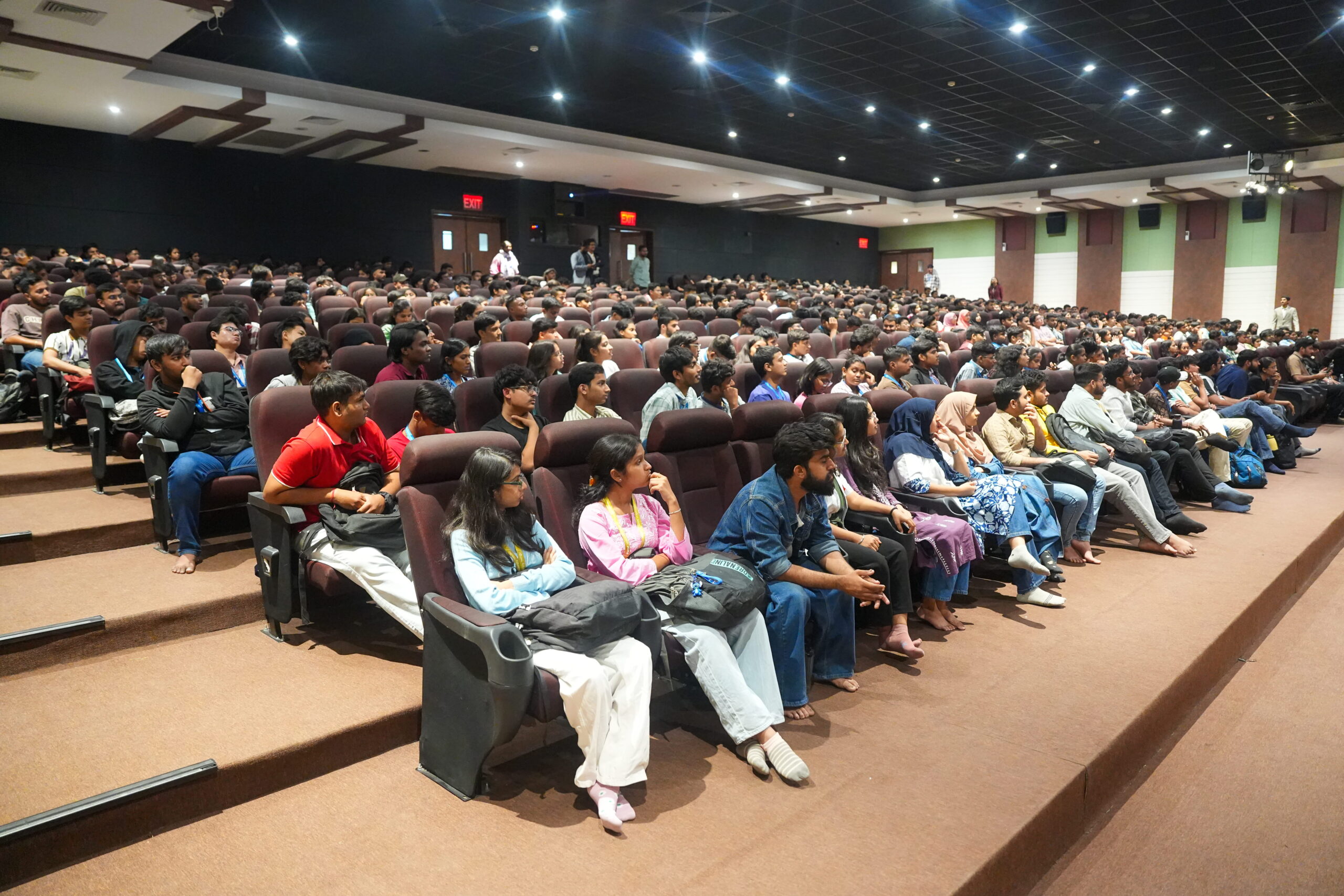
During his talk at Parul University’s Central Auditorium, Singhania asked the audience a simple question:
“How many of you would be satisfied with where you are today, 10-20 years from now?”
Only one hand went up. An elderly person in the crowd. Singhania paused, looked at those weathered hands, and said something profound:
“Look at these hands. These hands have lived through life, and that’s why they are raised for satisfaction. Because 10-20 years down the line, money and fame will not be the top priority.”
His first business? A transport company. It was scaling. Making money. By conventional metrics, it was a success.
But Singhania felt a disconnect. The trucking industry’s mindset didn’t align with his vision. So he exited.
No regrets. The business was profitable, but his soul wasn’t in it.
The Framework:
- Ask yourself: Am I satisfied doing this 5 years from now?
- If the answer creates discomfort, exit is an option
- Money without satisfaction = future resentment
The Co-Founder Conflict Test: When Partnership Politics Override Progress
Singhania’s second venture was a synthetic yarn business. Again, it performed well initially. Revenue was coming in. Market response was positive.
Then came the co-founder conflicts.
Instead of trying to force alignment or compromise endlessly, he made a clean exit. Again, no regrets. Because he recognized something critical: unresolved co-founder tensions don’t heal with time they metastasize.
This aligns perfectly with what Poyni Bhatt emphasized in her VSF – Vadodara Start-up Festival 6.0 masterclass: choosing a co-founder is an almost irreversible decision.
At Parul University’s Founder’s Studio, Bhatt explained that when a co-founder exits, they take their strengths with them and potentially your intellectual property to a competing venture.
The Framework:
- Are conflicts about vision (solvable) or values (fundamental)?
- Is the partnership draining more energy than the business problem?
- Test: Can you honestly have a tough conversation?
- If trust is broken, the business timeline becomes a countdown to collapse
The Technology Mismatch Test: When the Foundation Is Wrong
Now we get to Singhania’s third venture and his first major financial loss. Ribbons for electric typewriters. The 1990s.
The concept made sense on paper. But the technology designed for London’s climate couldn’t handle India’s harsh environmental conditions. They tried modifications. Attempted workarounds. Invested in fixes.
Nothing worked.
This is where Singhania’s advice gets crucial for student entrepreneurs. He stated clearly: “Initially, such failures do not define you as an entrepreneur.”
They cut their losses and moved on. No years wasted trying to make a fundamentally flawed premise work.
The Framework:
- Is the problem execution (fixable) or core premise (fatal)?
- Have you tested all reasonable pivots?
- Are you throwing good money after bad?
- Student advantage: You can fail fast without major consequences
The Persistence Payoff: When Doubling Down Changes Everything
After three exits and one significant failure, Singhania was at a crossroads. Two businesses exited by choice. One failed despite effort. The pressure was on to get the next one right.
Enter the cement business. Built from scratch in a region where no cement distribution chain existed. And here’s where he chose to persist.
Not just persist, revolutionize.
The industry standard was a 90-day payment cycle. Singhania saw this as inefficiency that cascaded through the entire supply chain. So he implemented a 9-day cycle instead.
Within nine months, the company exploded. This became known as the “999 Incident” 9-day payments, 9-month transformation, reaching position #3 in the region.
But here’s the even bigger win: his innovation eventually transformed payment cycles across the entire cement industry. Today, the industry average is 7-10 days.
Twenty-nine years later, this business is still running.
So why persist here after exiting everywhere else?
- The satisfaction test: ✓ (solving real inefficiency)
- Partnership alignment: ✓ (clear roles, shared vision)
- Solvable challenges: ✓ (industry norm, not tech impossibility)
- Personal conviction: ✓ (saw the opportunity others missed)
Why This Matters for Student Entrepreneurs at Parul
Here’s what makes Singhania’s framework particularly relevant for students in PIERC’s ecosystem:
1. College is your cheap failure window
Multiple speakers at VSF – Vadodara Start-up Festival 6.0 echoed this. Mayank Pareek (CEO, Scholify) hammered it home: “Start early, fail early.” Anurag Sundarka (ZebraLearn) emphasized that college offers maximum freedom with minimum pressure, no money constraints, flexible time, and no life deadlines.
Your first venture failed? Great. You learned the exit signals. Your second idea has fundamental tech issues? Perfect. You identified unsolvable problems. Now you’re calibrated for the one that’ll work.
2. PIERC gives you the safety net Singhania didn’t have
With 250+ startups incubated, ₹14.53 crores in funding distributed, and comprehensive mentorship through expert guidance Parul’s innovation ecosystem lets you test Singhania’s framework without betting your financial future.
The SSIP grants showcased at VSF – Vadodara Start-up Festival 6.0? Those are literal permission slips to experiment. Rideaway Solutions, Eternia, Destinofy.ai, Mastiskya Yantra all got support to test their premises.
3. The four-stage journey applies to everyone
Singhania outlined the universal entrepreneur path:
- Stage 1: They ignore you
- Stage 2: They laugh and demotivate you
- Stage 3: They resist you
- Stage 4: They claim they encouraged you from the start
Knowing this pattern helps you separate signal from noise. External skepticism isn’t a decision factor. Internal misalignment is.
The Decision Matrix: Persist or Exit?
Exit signals:
- ✗ Lack of personal satisfaction/alignment
- ✗ Fundamental co-founder conflicts (values, not tactics)
- ✗ Core premise/technology that can’t be fixed
- ✗ Chasing someone else’s dream, not yours
- ✗ Draining energy on the wrong problem
Persist signals:
- ✓ Deep personal conviction in the mission
- ✓ Solvable problems (execution, not existential)
- ✓ Aligned team pulling in same direction
- ✓ Market validation through real metrics
- ✓ Energized by solving this specific problem
The Ultimate Lesson from Singhania's 35-Year Journey
Walking away isn’t a weakness. It’s data.
Singhania’s cement revolution happened because he exited ventures that didn’t align. Each exit refined his understanding of what satisfied him, what partnerships worked, what challenges were worth solving.
As Kavish Gadia (CEO of ExcelOne and founder of Stones2Milestones) emphasized at VSF – Vadodara Start-up Festival 6.0: “The one quality every entrepreneur must possess is the willingness to try ‘just one more time.'”
But here’s the nuance Singhania adds: that ‘one more time’ should be the right problem.
Not persistence for ego. Not quitting for comfort. Strategic decisions based on satisfaction, alignment, and solvability.
That’s the framework. That’s how you build something that lasts 29 years and transforms an industry.
Your Action Steps This Week
- Run your current idea through the three tests: satisfaction, partnership, solvability
- If you’re in PIERC’s ecosystem, schedule a session to pressure-test your premise
- Don’t chase the glamour of ‘never giving up’ chase alignment and impact
- Remember: You’re a student. This is your time to learn exit signals AND persistence metrics
Because the goal isn’t to avoid failure. The goal is to fail forward and recognize when forward means a new direction.
FAQs
1. Why is knowing when to exit a startup important?
Exiting at the right time prevents entrepreneurs from wasting resources on unsustainable ideas and allows them to redirect energy toward better opportunities.
2. What is Rajat Singhania’s framework for deciding whether to persist or exit?
His framework focuses on three key tests: personal satisfaction with the mission, alignment with co-founders, and whether the problem being solved is fundamentally solvable.
3. How can student entrepreneurs apply this framework?
Students can evaluate their ideas based on satisfaction, team alignment, and technological feasibility before committing long-term resources.
4. What are common signals that a startup idea should be reconsidered?
Persistent co-founder conflicts, lack of market validation, technological limitations, and declining motivation can signal the need to pivot or exit.
5. How does PIERC help students test their startup ideas?
PIERC provides mentorship, SSIP funding, incubation support, prototyping labs, and a network of founders and investors to help students test ideas safely.
About Vadodara Startup Festival 6.0
India’s Largest Startup Carnival brought together entrepreneurs, investors, students, and innovators at Parul University from January 21-23, 2026. Through signature talks, masterclasses, pitch sessions, and real startup exhibitions, VSF – Vadodara Start-up Festival 6.0 created outcome-driven innovation opportunities for Gujarat’s entrepreneurial ecosystem.
Learn more about PIERC’s incubation programs at www.pierc.org


