The most expensive mistake student entrepreneurs make? Waiting until failure is expensive.
At Vadodara Startup Festival 6.0, a pattern emerged from every success story on stage: the winners failed first. Not despite their failures—because of them.
Rajat Singhania’s cement empire came after the typewriter ribbon disaster. Anurag Sundarka’s ₹10.7 crore ZebraLearn emerged from a ₹20,000 vegetable delivery flop. Yash Tarwadi’s solar business rose from desalination project ashes.
But here’s what makes Parul University’s approach different: they’ve institutionalized early failure as a feature, not a bug.
Through PIERC (Parul Innovation & Entrepreneurship Research Centre), students get permission to fail when failure costs nothing and teaches everything. The evidence? 250+ startups incubated, with the understanding that not all 250 became unicorns—and that’s exactly the point.
Let’s examine why early failure at Parul works, using real data from VSF – Vadodara Start-up Festival 6.0 and the broader ecosystem.
The Failure Economics of Student Entrepreneurshi
Start with math. Because if you can’t quantify the value of failure, it’s just motivational fluff.
Cost-Benefit Analysis: Fail at 20 vs. Fail at 30
Scenario A: Student Failure at Parul (Age 20–22)
Costs:
- Time invested: 6–12 months (overlapping with coursework)
- Financial: ₹50,000–2 lakhs (often SSIP grant money, not personal savings)
- Opportunity cost: Minimal (still graduating on schedule)
- Reputation risk: Low (expected experimentation)
Benefits:
- Deep understanding of market validation
- Co-founder selection experience
- Customer discovery skills
- Pitch and storytelling ability
- Failure pattern recognition
- Network in startup ecosystem
- Credential boost (shows initiative)
Recovery timeline: Immediate. Back to campus life, placements unaffected.
Scenario B: Post-Job Failure (Age 28–30)
Costs:
- Time invested: 1–2 years (full-time commitment)
- Financial: ₹10–50 lakhs (life savings + opportunity cost of salary)
- Opportunity cost: Massive (₹12–25 LPA salary × time)
- Reputation risk: High (family pressure, peer comparison, résumé gap)
Benefits:
- Same learnings as Scenario A
Recovery timeline: 6 months to 2 years professionally, longer emotionally.
The data from VSF – Vadodara Start-up Festival 6.0 speakers proves this:
Anurag Sundarka failed at vegetables (Saralife.com, ₹20k revenue) at age ~25. Because he failed before major financial commitments, he could afford to try crackers (aatisbazi.in, also failed), then pivot to books (ZebraLearn, now ₹10.7 crore revenue).
Had he waited to “get established first”? He’d be starting from zero in his 30s with mortgage and family obligations making each iteration impossibly expensive.
The PIERC Model: Institutionalized Learning Through Failure
Most universities treat student startup failure as embarrassing. Parul treats it as a curriculum.
The Numbers Tell the Story
PIERC Impact (as of 2026):
- 250+ startups incubated
- ₹14.53 crores in funding distributed
- ₹100+ crores in investments raised
- 1400+ jobs created
- ₹40+ crores in revenue generated
- 110+ intellectual properties
Critical insight: Not all 250 startups became revenue-generating machines. Many failed. And that’s precisely why the ones that succeeded could succeed.
The VSF - Vadodara Start-up Festival 6.0 SSIP Grant Recipients: A Case Study in Risk-Taking
At the closing of VSF – Vadodara Start-up Festival 6.0, SSIP grants were distributed to student startups. Let’s examine what these grants actually represent:
Rideaway Solutions (Founder: Dipesh Lokare)
- Concept: Affordable two-wheeler rentals for students
- Status: Early stage, testing product-market fit
- Grant purpose: Validate if students will actually rent vs. borrow from friends
Eternia (Founder: Priyanshi Rathore)
- Concept: Anonymous mental health discussion platform
- Status: Building trust mechanisms and privacy infrastructure
- Grant purpose: Test if anonymity removes barriers to mental health discussion
Destinofy.ai (Founder: Ved Sanghani)
- Concept: AI room scanning for construction measurements
- Status: Proving accuracy matches or beats manual measurements
- Grant purpose: Validate technology works in real construction scenarios
Mastiskya Yantra
- Concept: Dementia early detection through practice tests
- Status: Medical validation phase
- Grant purpose: Prove clinical efficacy before scaling
Here’s What These Grants Actually Fund
Not guaranteed success. They fund cheap learning.
Each of these ventures might fail. The scanning might not be accurate enough. The mental health platform might not gain trust. The rental model might not have unit economics that work.
But the failure—if it comes—will cost:
- ₹2–5 lakhs (grant money designed for this purpose)
- 6–12 months of student time (while still completing degrees)
- Zero family savings
- Zero career trajectory damage
And the learning will be permanent:
- Does this market actually exist?
- Will customers pay what we need to charge?
- Can we build this technology?
- Does unit economics work at scale?
The Failure Patterns Parul Students Learn to Recognize
Based on VSF – Vadodara Start-up Festival 6.0 insights and PIERC ecosystem patterns, here are the failure types students encounter and learn to diagnose early.
Type 1: The Satisfaction Mismatch (Rajat Singhania’s Transport Business)
What it looks like:
- Revenue is coming in
- Business is scaling
- Market validation exists
- But you wake up dreading it
Why it fails: Personal misalignment. The problem you’re solving doesn’t energize you long-term.
Student advantage in recognizing this: You haven’t sunk 5 years into the venture. You can pivot after 6 months of “this doesn’t feel right.”
Example from Parul ecosystem: Students start tutoring platforms because “EdTech is worth it.” It gains traction. Then they realize they hate creating educational content and pivot to something they actually care about.
Cost of late recognition: 3–5 years in the wrong business
Cost of early recognition: 6–9 months testing hypothesis
Type 2: The Co-Founder Conflict (Rajat Singhania's Yarn Business)
Type 2: The Co-Founder Conflict
What it looks like:
- Product works
- Market responds
- But partnership is toxic
Why it fails: Value misalignment, communication breakdown, or incompatible working styles.
Student advantage in recognizing this: Poyni Bhatt’s masterclass emphasized that campus is the perfect place to test co-founder compatibility through smaller projects before committing to a startup.
Example from Parul ecosystem: Two friends start a venture. One wants to scale fast and take risks. The other wants sustainable growth with minimal debt. Conflicts emerge early during PIERC incubation.
With early detection: Clean exit or role redefinition before significant IP or capital is at stake.
With late detection: Lawsuits, destroyed friendships, and business implosion.
Type 3: The Technology Mismatch (Rajat Singhania's Typewriter Ribbons, Yash Tarwadi's Desalination)
Type 3: The Fundamental Premise Failure
What it looks like:
- Concept makes sense theoretically
- Technology exists elsewhere
- But it won’t work in your context
Why it fails: Fundamental premise flaw—technology, market, or timing mismatch.
Student advantage in recognizing this: Access to prototyping labs (like Parul University’s FabLab) lets students test technology viability early.
Yash Tarwadi’s example:
- Built desalination prototype with ₹2 lakh SSIP grant
- Produced 20 liters/day recycled water
- Realized: Technology works, but unit economics don’t scale for commercial viability in India
- Pivot: Moved to solar energy where technology + economics align
Cost if recognized early: ₹2 lakhs grant + 6 months
Cost if recognized late: ₹20 lakhs investment + 2 years + team salaries
Type 4: The Execution Failure (Anurag Sundarka's Saralife.com)
Type 4: The Execution Failure
What it looks like:
- Good idea
- Real market need
- But execution is wrong
Why it fails: Wrong channel, wrong messaging, wrong pricing, or wrong timing—issues that are fixable but often misdiagnosed.
Student advantage in recognizing this: Smaller scale makes pivots cheaper. Vegetables don’t work? Try plays. Plays don’t monetize? Try books.
Anurag Sundarka’s journey:
- Saralife.com (vegetables): Wrong logistics model, made ₹20k
- Aatisbazi.in (crackers): Wrong market timing
- Theater plays: Wrong monetization strategy
- ZebraLearn (books): Right execution, ₹10.7 crore
Key insight: Same founder, four different executions. Early failures were data collection, not career-ending mistakes.
Why Campus Amplifies Learning from Failure
The VSF – Vadodara Start-up Festival 6.0 speakers kept circling back to one truth: college is the perfect failure laboratory. Here’s why that’s structurally true at Parul:
1. Built-In Support Infrastructure
PIERC provides:
- Co-working space (fail without paying rent)
- Mentorship (learn from others’ failures)
- Legal support (avoid expensive mistakes)
- Prototyping labs (test before investing heavily)
- Peer community (normalize failure, share lessons)
What this means practically: When Destinofy.ai’s scanning technology doesn’t work perfectly, they have:
- Lab space to iterate without monthly burn rate
- Mentors who’ve solved similar technical challenges
- Peer startups testing complementary tech
- No investor pressure demanding immediate profitability
Traditional startup failure:
- Paying ₹50k/month rent on office space
- No expert guidance, Googling everything
- Isolated, assuming your problems are unique
- Investors breathing down your neck
2. Low-Stakes Environment for High-Stakes Lessons
Mayank Pareek (Scholify) emphasized the brutal truth: startup life involves sacrifices. Family time, personal comfort, and financial security often get compromised.
But in student life, those stakes are naturally lower:
- Family time: Already limited (campus life)
- Personal comfort: Already minimal (hostel/student housing)
- Financial security: Not yet established (no dependents)
This creates perfect conditions to learn:
- Can you handle stress without institutional safety nets?
- Do you make good decisions under uncertainty?
- Can you persist when progress is invisible?
If the answer is “no”: Better to discover this at 21 (when pivoting to placement track is easy) than at 31 (when you’ve burned bridges and savings).
3. Compressed Feedback Loops
Samrath Singh Nagpal (EasyRugs) shared: “The first 100 orders are always difficult.”
At Parul, students can:
- Get to 100 orders in a semester
- Learn what reviews teach
- Iterate on feedback quickly
- Test new approaches immediately
Outside campus:
- Getting to 100 orders takes longer (less concentrated customer base)
- Feedback cycles are slower (day jobs interfere)
- Iteration is expensive (each pivot has overhead)
- Testing requires significant setup (no institutional infrastructure)
The Data from Parul's Ecosystem: What Actually Happens
Let’s look at real patterns from PIERC’s 250+ incubated startups:
Pattern 1: The Pivot Success Rate
Observable trend from VSF – Vadodara Start-up Festival 6.0 exhibitors:
- Many successful startups aren’t doing their first idea
- Pivots happened quickly (months, not years)
- Institutional support enabled fast iteration
Example: Yash Tarwadi: Desalination → Solar energy
Both required technical expertise. Both addressed real needs. One had sustainable economics, the other didn’t.
What made the pivot possible: Recognizing the failure fast and having the support system to try again.
Pattern 2: The Co-Founder Formation Rate
Pattern 2: Co-Founder Compatibility Testing
From Poyni Bhatt’s masterclass insights: Campus enables testing these co-founder compatibility factors:
- Commitment: Who shows up semester after semester?
- Compatibility: Whose work style matches yours?
- Chemistry: Who can you fight with and recover?
- Common vision: Who cares about the same outcomes?
Parul advantage: Multiple student startups at VSF – Vadodara Start-up Festival 6.0 had co-founding teams formed through:
- Class projects that revealed working compatibility
- Hackathons that tested stress response
- Student clubs that showed long-term commitment
- Failed ventures that screened for resilience
Post-graduation co-founder search:
- LinkedIn networking (surface-level assessment)
- Startup events (optimistic self-presentation)
- Accelerator matching (compressed timeline)
- No stress-testing before commitment
Pattern 3: The Failure Recovery Speed
Student startup failure at Parul:
- Venture doesn’t work → Back to coursework the same semester
- Relationships intact (everyone’s failing at something)
- Placement unaffected (often enhanced by startup experience)
- Network preserved (stay connected to the PIERC ecosystem)
Post-graduation failure:
- Venture doesn’t work → Unemployment gap on résumé
- Relationships strained (family invested emotionally/financially)
- Next opportunity harder (explaining the gap)
- Network may fracture (perceived failure stigma)
The Counterintuitive Success Metrics
Here’s where Parul’s approach gets sophisticated. The success metrics aren’t just about the startups that scale—they’re about the students who learn.
Metric 1: How Many Students Built Something?
Traditional metric: How many startups got funded?
Parul metric: How many students got hands-on startup experience?
Why this matters: Even the “failed” ventures at PIERC taught:
- Customer discovery
- Product iteration
- Team dynamics
- Pitch creation
- Financial modeling
These students now enter the job market—or future ventures—with real operational knowledge.
Metric 2: How Fast Were Bad Ideas Killed?
Traditional metric: How long did startups survive?
Parul metric: How quickly were unviable ideas recognized and pivoted?
Why this matters: Keeping a bad idea alive for 2 years teaches persistence. Killing it in 4 months and trying something new teaches discernment.
Example: Rajat Singhania’s ribbon manufacturing business. He tried to make it work, realized the technology couldn’t adapt to Indian environmental conditions, shut it down, and moved on.
No years wasted chasing an unsolvable problem—just a faster path to the next opportunity.
Metric 3: How Many Learned Failure Literacy?
Traditional metric: Revenue, profit, growth rates
Parul metric: Can students now distinguish:
- Fixable problems from fatal flaws?
- Execution issues from premise issues?
- Personal misalignment from market rejection?
Why this matters: This skill compounds. The next venture (or corporate job, or research position) benefits from this diagnostic ability.
The Real Evidence: Who Succeeded After Failing at Parul
Let’s get specific about failure → success paths from the VSF – Vadodara Start-up Festival 6.0 ecosystem:
Case Study 1: Technical Validation Failures
Pattern: Technology doesn’t work as expected
Yash Tarwadi’s path:
- Desalination project: Technical success, economic failure
- Learning: Viability requires both technical AND unit economics validation
- Pivot: Solar energy (both boxes checked)
- Current status: Growing renewable energy business
What he gained from early failure: Understanding that “technically possible” ≠ “commercially viable.”
Case Study 2: Market Validation Failures
Pattern: Product exists, but market doesn’t care enough
Anurag Sundarka’s path:
- Saralife.com: Built product, market didn’t value it enough (₹20k total)
- Learning: Distribution and demand validation matter more than product perfection
- Pivot: Multiple attempts at finding product-market fit
- Final success: ZebraLearn – visual books with proven demand
What he gained from early failures: Recognition that markets vote with money, not compliments
Case Study 3: Personal Alignment Failures
Pattern: Business works but doesn’t fulfill founder
Rajat Singhania’s path:
- Transport company: Profitable, but unsatisfying
- Learning: Long-term success requires personal conviction
- Exit: Clean break when satisfaction test failed
- Later success: Cement business aligned with his vision
What he gained from early exit: Permission to pursue satisfaction over “safe” revenue
The Structural Advantages Parul Provides
Why does early failure work better at Parul than random solo attempts? Infrastructure.
Advantage 1: Failure Normalization
In broader society: Startup failure = personal failure
At PIERC: Startup failure = learning milestone
VSF – Vadodara Start-up Festival 6.0 featured speakers who openly discussed failures:
- Rajat: Multiple exits and one major loss
- Anurag: Two complete flops before success
- Yash: Technical project that didn’t commercialize
Message to students: Failure is part of the path, not deviation from it.
Advantage 2: Soft Landing Resources
Advantage 2: Institutional Safety Net
When a student startup fails at Parul:
- Coursework continues (not a gap year)
- Placement services available (campus recruitment unaffected)
- PIERC mentorship continues (relationships persist)
- Learning documented (can be articulated in interviews)
When a random startup fails:
- Full-time commitment wasted
- No institutional fallback
- Network may dissolve
- Learning is implicit, not certified
Advantage 3: Iterative Support
PIERC’s model:
- Pre-incubation support (test ideas)
- Incubation program (validate models)
- Growth acceleration (scale what works)
- Need-based support (custom assistance)
Translation: You can fail at pre-incubation, learn, and re-enter at incubation. The door doesn’t close.
Traditional startup world: One shot with investors. Burn that bridge, you’re starting from zero with new investors.
What the Speakers Wished They'd Known Earlier
Across VSF – Vadodara Start-up Festival 6.0, a theme emerged: “I wish I’d started in college.”
Kavish Gadia’s Reflection
Despite his success (CEO of ExcelOne, founder of Stones2Milestones Group helping 3.1 million children), Gadia emphasized: “The world responds when individuals take the first step.”
His journey involved:
- Struggling with English despite academic excellence
- Getting into IIM Lucknow (massive breakthrough)
- Still feeling unprepared (first trimester was brutal)
- Pushing through and delivering presentations despite Rajasthani accent mockery
Key insight: Starting is messy. But the earlier you start being messy, the earlier you get good.
Mayank Pareek's Honesty
Pareek didn’t romanticize entrepreneurship. He specifically warned students:
- Stress is constant
- Uncertainty is the norm
- Financial security is compromised
- Family time suffers
But he also emphasized: “Start early, fail early.”
Why the paradox? Because learning to handle those realities at 22 (when stakes are low) prepares you for handling them at 32 (when stakes are high).
The Action Framework for Students
Reading about early failure’s benefits changes nothing. Here’s the actual process Parul’s ecosystem enables:
Phase 1: Problem Discovery (Weeks 1-4)
Campus-specific advantage:
- Observe inefficiencies in real-time (hostel, mess, library, transport)
- Talk to potential customers without cold outreach (classmates are everywhere)
- Validate quickly (sample size living in your building)
Action steps:
- List 10 campus problems you’ve complained about
- Talk to 20 people: Do they share the frustration?
- Ask: “Would you pay ₹X to solve this?”
- If 10+ say yes, move to Phase 2
Phase 2: Quick Validation (Weeks 5-12)
Campus-specific advantage:
- PIERC provides mentorship for free (no hourly consulting fees)
- Prototyping labs let you build without investment (FabLab access)
- Student interest forms create institutional support (official backing)
Action steps:
- Build absolute minimum testable version (not perfect, just testable)
- Get it in front of 10 paying customers (use campus network)
- Document what breaks (this is the learning)
- Decide: Iterate or kill?
Phase 3: Informed Iteration (Months 3-6)
Campus-specific advantage:
- SSIP grants fund proper tests (₹2-5 lakhs for validation)
- Peer community provides feedback (other founders testing similar ideas)
- Faculty expertise available (domain knowledge access)
Action steps:
- If Phase 2 showed promise → Apply for SSIP grant
- Use funding to test the scaling hypothesis (does this work beyond 10 customers?)
- Measure real metrics (not vanity numbers)
- Assess: Viable business or valuable learning?
Phase 4: Decision Point (Month 6-12)
Campus-specific advantage:
- Still graduating (not a gap year)
- Placement option remains (corporate track still open)
- Network intact (relationships preserved regardless of outcome)
Decision options:
- A) It’s working: Apply for full incubation, pursue post-graduation
- B) It’s not working: Document learnings, pivot to new idea or placement
- C) Unclear: Keep testing with need-based PIERC support
Critical insight: B and C are not failures. They’re data collection.
The Compounding Effect of Early Failure
Here’s what makes early failure at Parul specifically valuable: it compounds.
Year 1 failure teaches:
- How to validate customer problems
- How to build minimum testable versions
- How to interpret market feedback
Year 2 attempt teaches:
- How to apply those lessons
- How to avoid Year 1 mistakes
- How to recognize patterns faster
Year 3 success builds on:
- Two years of compressed learning
- Network developed through PIERC
- Credibility from documented iterations
Compare to:
Age 28 first attempt:
- Learning from zero
- No institutional support
- High stakes slow down learning (can’t afford rapid iteration)
Age 30 second attempt (if you recover fast):
- Two years behind the student who started at 20
- Higher financial pressure
- Less risk tolerance
The Ultimate Metric: Student Confidence
Beyond revenue and funding, PIERC’s real success metric is this:
How many students graduate believing “I could build a company if I wanted to”?
Not everyone will. Not everyone should. But knowing you could changes how you approach employment, side projects, and future opportunities.
VSF – Vadodara Start-up Festival 6.0 demonstrated this through:
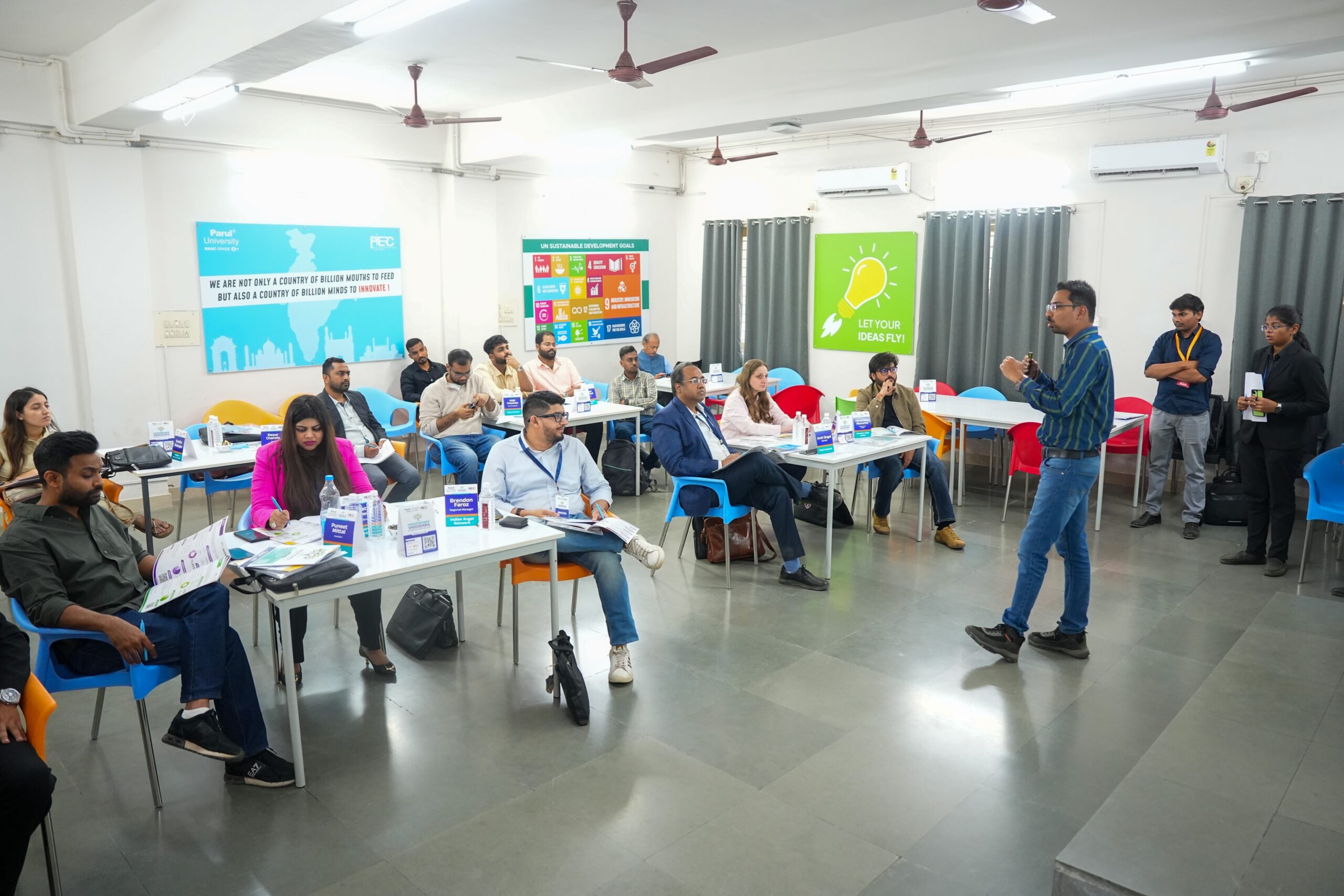
- Packed auditoriums for signature talks (students curious about entrepreneurship)
- Active participation in pitch sessions (students testing ideas)
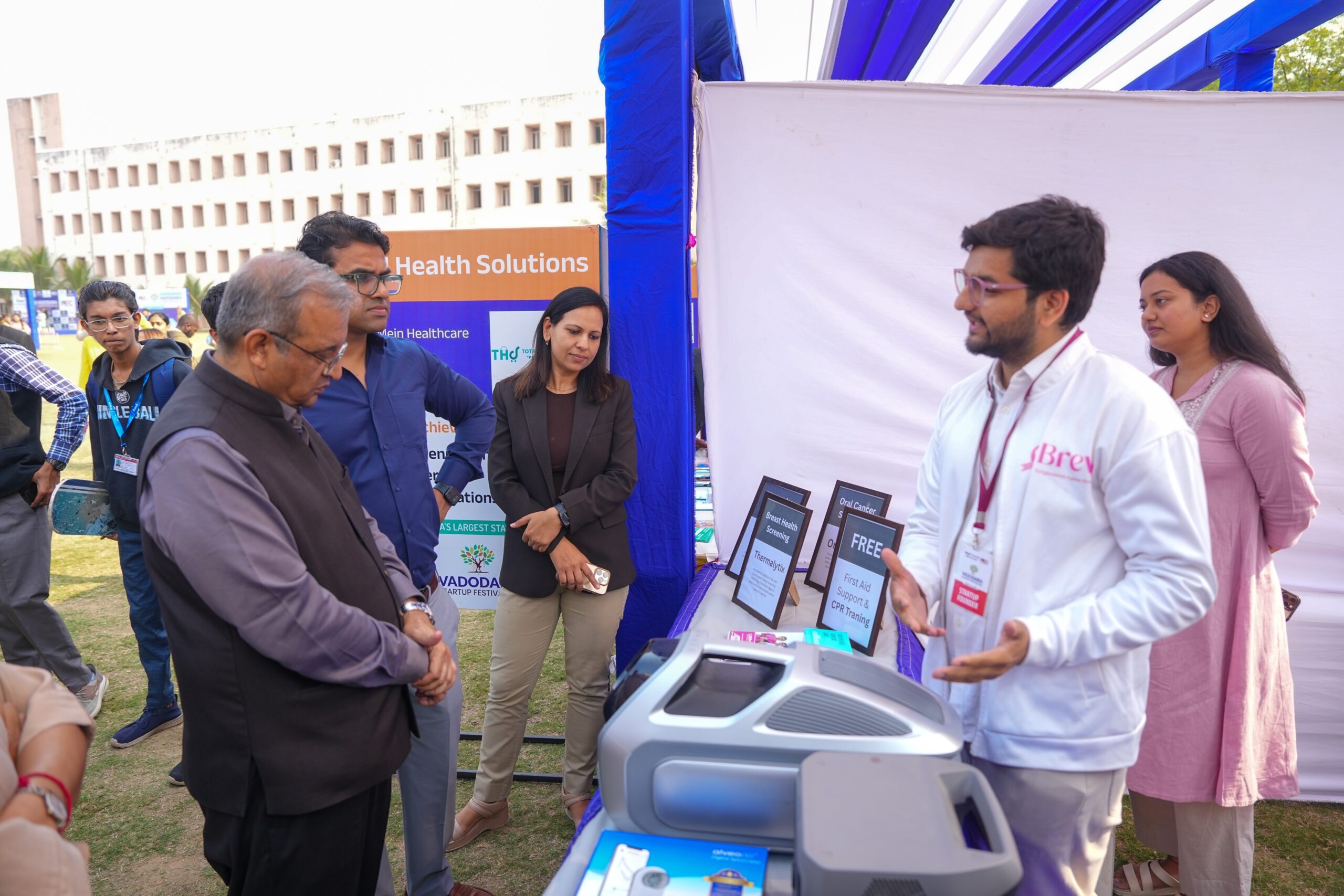
- Engagement with exhibitors (students seeing paths forward)
- Questions during panels (students thinking seriously about the startup track)
This confidence doesn’t come from reading. It comes from doing and surviving the doing, whether it succeeds or fails.
Your Immediate Next Step
If this article convinced you early failure is valuable, prove it.
This week:
- Identify one small campus problem
- Ask 10 people if they experience it
- Ask if they’d pay ₹50–500 to solve it
- Actually ask. Actually count the responses.
This month:
- If 5+ said yes → Build the cheapest possible solution
- Connect with PIERC → Get mentorship
- Test with real users → Learn what breaks
This semester:
- Document everything → What worked, what didn’t, why
- Apply learnings → Iterate or pivot
- Either way → You’ll graduate with operational knowledge
Because the real failure isn’t trying and learning.
The real failure is graduating without ever testing if you could.
FAQs
1. Why is early failure important for student entrepreneurs?
Early failure helps students understand market validation, customer needs, team dynamics, and product development while the financial and career risks are still low.
2. How does Parul University support student entrepreneurship?
Through PIERC, students receive mentorship, incubation support, prototyping facilities, SSIP grants, networking opportunities, and access to investors.
3. What is the advantage of starting a startup during college?
Students can experiment freely, access institutional support, collaborate with peers, and recover quickly if ideas don’t work, making college an ideal environment for innovation.
4. What role did Vadodara Startup Festival 6.0 play in promoting entrepreneurship?
VSF 6.0 showcased real startup journeys, connected students with founders and investors, and highlighted successful ventures emerging from Parul’s innovation ecosystem.
5. Can students recover from startup failure during college?
Yes. Since students still continue their academic journey and have access to institutional support, they can pivot ideas, learn from mistakes, and explore new opportunities without long-term setbacks.
About Vadodara Startup Festival 6.0
India’s Largest Startup Carnival brought together entrepreneurs, investors, students, and innovators at Parul University from January 21–23, 2026.
Through signature talks, masterclasses, pitch sessions, and real startup exhibitions, VSF – Vadodara Start-up Festival 6.0 created outcome-driven innovation opportunities for Gujarat’s entrepreneurial ecosystem.
Learn more about PIERC’s incubation programs at
www.pierc.org.


