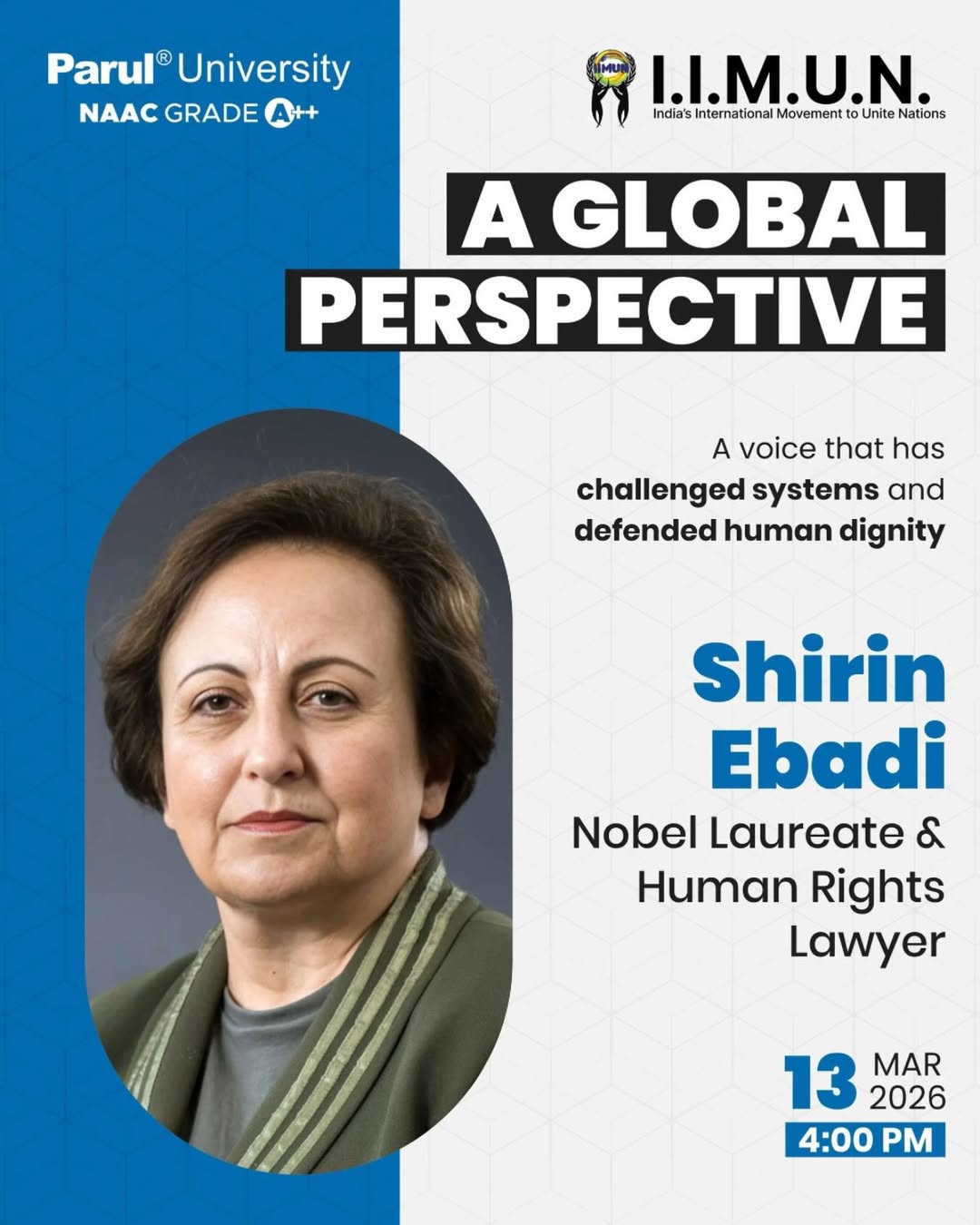
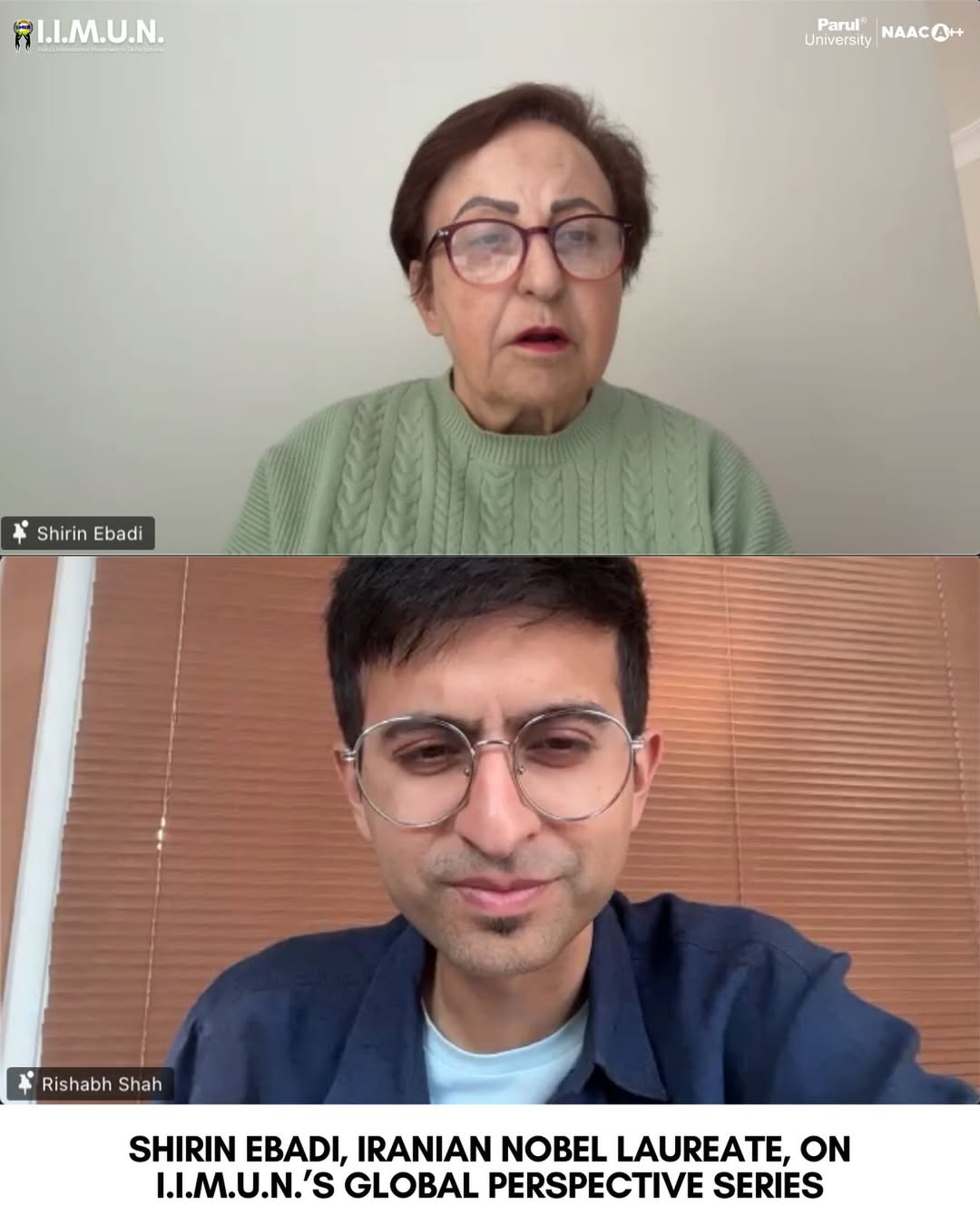
Who Is Shirin Ebadi: She Won the Nobel Peace Prize
Shirin Ebadi – Iranian lawyer, author, human rights activist, former judge. She won the Nobel Peace Prize in 2003. The reason? Decades of sustained work promoting democracy and human rights, with a sharp focus on women and children. No Iranian had ever received it before her. No Muslim woman had either. She was the first on both counts.
Born 1947, Hamadan, Iran. She got her law degree from the University of Tehran, and by 1975 she’d become the first woman to preside as a judge in the country. Then came the 1979 Islamic Revolution, she went and built a private legal practice from scratch – and deliberately took on cases nobody else wanted to touch. Political dissidents. Marginalised communities. People the system had written off.
She’s written over 70 articles and 13 books (some published by UNICEF), and every piece of her international advocacy circles back to one conviction: that education, fairness, and dialogue – those three things – are what actually hold a progressive society together.
In 2004, Forbes put her on its list of the 100 most powerful women in the world. By 2006, she’d co-founded the Nobel Women’s Initiative alongside five other Peace Prize laureates, with one clear mission: advance peace, justice, and equality for women globally. On top of all that, she’s a university professor. Her human rights training courses pull students from every corner of the world. Back in Iran, she set up the Defenders of Human Rights Centre.
The PU x IIMUN Global Perspective Series: What It Is and Why It Matters
Parul University and India’s International Movement to Unite Nations (IIMUN) built this together. It’s a platform – and a pretty unusual one – where students actually get to sit down with internationally respected thinkers, leaders, and changemakers. They hear these people talk about leadership, social responsibility, education, and cross-border cooperation, and they get to ask questions and push back.
So what do students actually take away from this? Quite a lot. They engage directly with people who’ve moved the needle on global conversations. They start understanding – not theoretically, but in concrete terms – how education can drive social development. Critical thinking gets sharper. What they believe is possible gets bigger. And they’re hearing perspectives that would simply never come up in a regular lecture.
These aren’t passive sit-and-listen sessions either. The conversations go deep, the format is interactive, and students leave with a worldview that’s genuinely wider than what they walked in with. They feel more ready to hold their own in global conversations. One more thing that matters: this is not a one-time event they can put on a poster and forget. It’s ongoing. Global personalities keep coming to Parul University across the year. So students aren’t riding on one moment of inspiration, they’re getting repeated, sustained exposure to international ideas and how real leaders actually think.
What Students Learn From Shirin Ebadi’s Journey
There are specific, real lessons in it – and they cut across every discipline:
- Determination despite institutional barriers – The 1979 revolution took away her judgeship. She rebuilt from scratch as a private lawyer, and eventually became one of the most recognised international advocates alive.
- Education as the foundation of change – If there’s one message she keeps returning to, it’s this: education, fairness, and dialogue create the conditions for justice. Not slogans. Not force. Education. She’s said it a hundred different ways and she means it every time.
- Building institutions, not just arguments – Plenty of people write papers. Ebadi built things. The Defenders of Human Rights Centre in Iran. The Nobel Women’s Initiative. Organisations that keep doing the work long after any one person leaves the room.
- Global thinking with local action – She deals in universal principles, yes. But her work has always been rooted in specific cultural and political ground. That’s exactly why people take it seriously.
Parul University’s Commitment to Global Learning
Education at Parul University doesn’t end where the classroom walls do. The university keeps building opportunities – deliberately, consistently – that connect students with global ideas, unconventional thinking, and leaders who’ve actually been in the trenches. And this isn’t happening in isolation. There’s a whole international ecosystem around it: 5,500+ international students from 75+ countries are on campus.
PU has partnerships with universities in the USA, UK, Australia, and Switzerland. International Week alone pulls in 70+ global academic leaders from 22+ countries every year. A COIL credit course runs with BFH – that’s Bern University of Applied Sciences in Switzerland. And the credentials speak for themselves: NAAC A++ accreditation, NIRF Top 50 Innovation Ranking, QS Diamond Rating.
What the Global Perspective Series really does – and this is the part that sticks – is it gets students thinking about the kind of impact they can make when they go back to their own communities. You sit across from someone like Shirin Ebadi, and something shifts. You start to absorb values like fairness and social responsibility in a way no textbook can deliver. You begin to feel the weight that education actually carries. That kind of exposure? It’s what turns students into future leaders who are globally aware and locally grounded at the same time.
FAQ – PU x IIMUN Global Perspective Series
What is the PU x IIMUN Global Perspective Series?
Parul University and IIMUN run this together. They bring Nobel laureates, global leaders, and changemakers straight to campus so students can interact with them directly. Leadership, justice, education, social responsibility – that’s the terrain these conversations cover.
Who is Shirin Ebadi?
Shirin Ebadi is Iranian lawyer, human rights activist, and former judge. Won the Nobel Peace Prize in 2003 – first Iranian and first Muslim woman to receive it, ever. She went on to co-found the Nobel Women’s Initiative and has 13 published books on human rights to her name.
Does Parul University have international exposure?
Absolutely. 5,500+ international students from 75+ countries. The IIMUN Global Perspective Series. A COIL course with BFH Switzerland. International Week with 70+ leaders from 22+ countries. Pathway programmes with universities across the USA, UK, and Australia. So yes, the exposure is real and it’s deep.


