
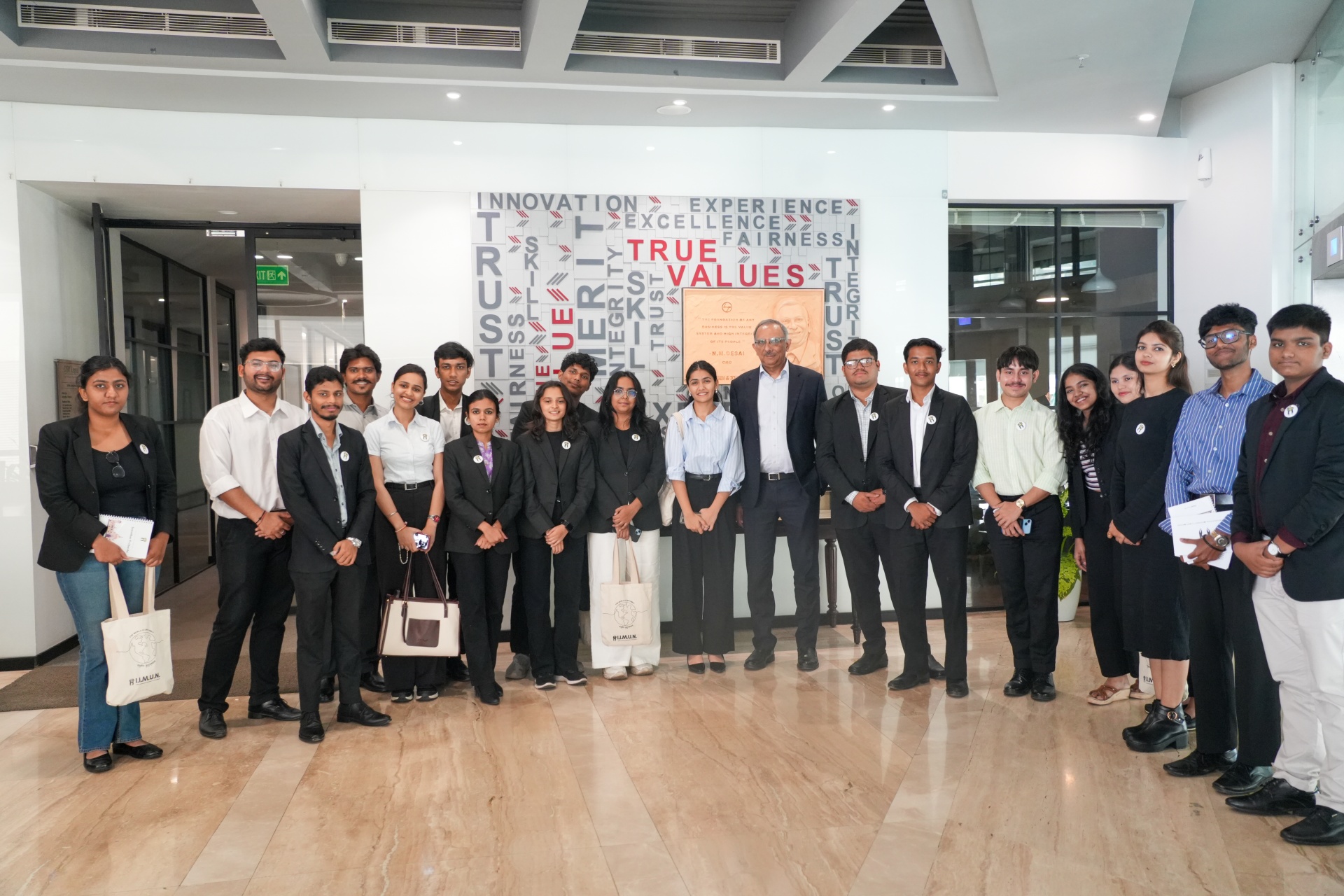
Three speakers held the title of General Counsel at major corporations. Their combined advice maps the route from junior lawyer to corporate legal head. Shape your legal career with Parul University’s Law Courses after 12th
Sandeep Rathod, Global General Counsel, Piramal Pharma
- Do what others will not do. Proactively handle tasks others avoid.
- Never over-promise. Reputation is built on delivering exactly what is committed.
- Key quote: At the start of your career, lawyers are paid more for their knowledge and less for their skills, but in corporate it is the opposite.
Ritesh Khosla, General Counsel & Executive Director, Sony Pictures Networks
- Preventive legal checks are essential. In the media, stopping a problem before broadcast is more valuable than winning a lawsuit after.
- Ambition must be paired with physical well-being. A sustainable career requires health.
- Learning about IP in the age of AI is a growing field. Who owns content made by AI is a question that is being asked in business.
Ananya Sharma, Group General Counsel, JSW Steel
- A lawyer’s task is not just to identify risk but to take risk and turn it into your favour.
- Without passion for law, maintaining the balance between ethics and practice becomes nearly impossible.
- Study The Art of War. Strategic thinking is a required skill in corporate legal departments.
This GC path requires a mindset that outshines the rest – proactiveness, strategic, risk-converting instead of being a risk-avoider. These GCs focuses more on that role as its about protecting and advancing the company, not just reviewing contracts. GC is a business partner with legal expertise, not a legal department that works in a business. Build a future in law with Parul University’s Bachelor of Arts Bachelor of Laws (Hons.)!
Route 2: Law Firm / Corporate Practice
The senior partners and founders of law firms offered a different career map:
Bahram N Vakil, Founder, AZB & Partners
- Read business and international papers. Solutions for inequality, climate change, and intolerance require global literacy beyond legal textbooks.
- Master Section 8 (non-profits). Understand the social dimension of corporate law.
- The legal industry transformed from small 1980s firms to today’s scale. Understanding this trajectory is essential.
Anand Desai, Managing Partner, DSK Legal
- Build expertise like an athlete. Constant reading and problem-solving, daily.
- Get over your fears. Speak without hesitation. Fearless communication determines success.
Rajarshi Chakrabarti, Senior Resident Partner, Kochhar & Co
- In-house counsel must prioritise protecting the company’s reputation.
- Use internships for self-discovery. Find your specific legal interests through practice, not theory.
- Communication bridges the gap between speed and precision.
Ranjit Shetty, Senior Partner, Argus Partners
- Know a little bit of everything. Generalist knowledge handles diverse challenges.
- Networking is as critical as legal knowledge for career growth.
- Document drafting cannot be mastered without real-world court exposure.
AI in law: what all 16 speakers said
Route 3: Litigation
Litigation lawyers delivered advice that corporate-focused speakers did not:
Ruchi Khatlawala, Partner, Little & Co
- Litigation remains the core of the profession regardless of speciality.
- Experiencing, not experimenting. Treat early career as deep immersion, not dabbling.
- Drafting is the most essential skill in legal practice.
- Never compromise on values, ethics, or client interests despite criticism.
Karan Kalra, Founder, Bombay Law Chambers
- Communication has no substitute. The way a lawyer speaks to a judge is the ultimate differentiator.
- Continuously assess if law is your true path. Not everyone who enters should stay.
- Balance passion, self-awareness of limits, and a strong team.
Bindiya Raichura, Partner, Juris Corp (First-Generation Lawyer)
- Transitioned from commerce to M&A without a legal family background. The entry point does not determine the ceiling.
- Finding a quality senior is a foundational step. Mentorship shapes trajectory.
- Create your own guide based on updated laws. You can rely on search engines, but it is better to use existing articles as a primary lead.
- If you’re practising in corporate law, never ever give up litigation. Understanding court expectation is vital.
The Ethical Framework: Justice Srikrishna's 3C's
Justice BN Srikrishna, a former Supreme Court of India judge, laid the moral foundation for all three paths: The 3C’s that a lawyer is responsible to are the Client, the Court, and the Constitution. You can’t have professional success without honesty and integrity. The practice of law is not a business. It is an obligation.
This framework solves the problem that all law students have: when the interests of the client and the court or the Constitution’s principles are at odds, which one should come first? His answer is clear: all three at once. The lawyer’s job is to find a way that works for all three. If a lawyer only works for the client and not the court or the Constitution, they are not practicing law. They are offering a business service without any moral limits. You too can become a successful lawyer by enrolling in Parul University’s LLB Program, admissions are live, book your seat right away!
Parul University BA LLB alumnus: Supreme Court Law Clerk
The Five Skills Every Speaker Mentioned
Across 16 sessions, five skills appeared repeatedly regardless of whether the speaker was a litigator, a corporate partner, or a GC:
- Drafting: Ruchi Khatlawala (most essential skill), Rukmini Roychowdhury (study old agreements), Ranjit Shetty (cannot master without court exposure). Every route requires it.
- Communication: Karan Kalra (no substitute), Anand Desai (fearless, without hesitation), Rajarshi Chakrabarti (bridges speed and precision). Not soft skills. Core skill.
- Networking: Ranjit Shetty (as critical as knowledge), Nitin Jain (approach seniors directly), Bindiya Raichura (find a quality senior). Relationships determine access.
- Reading beyond curriculum: Bahram Vakil (international papers), Dr Richa Pathak (global fellowships and think tanks), Ananya Sharma (The Art of War). Legal knowledge alone is insufficient.
- Ethics: Justice Srikrishna (3C’s), Ruchi Khatlawala (never compromise), Amit Tungare (never compromise honesty for gain). Without an ethical foundation, nothing else matters.
Parul University Programme Mapping
The Law Tour is part of Parul University’s practical learning infrastructure for law students:
- BA LLB (5-year integrated) and LLM programmes with moot court, mediation competitions, and clinical practice
- Practical Learning Tours: Law Tour Mumbai firms, Hyderabad Leadership Tour, Parliament of India visit
FAQ
How do you become a General Counsel in India?
Three GCs at the Law Tour (Piramal, Sony Pictures, JSW Steel) shared the path: prioritise skills over academic credentials, do what others avoid, build reputation through consistent delivery, pair ambition with strategic risk-taking. Corporate GC roles value the ability to convert risk into advantage, not just identify it. Passion for law is prerequisite for sustaining ethical balance.
What skills do law firms want in new lawyers?
Five skills from 16 speakers: drafting (the most important), communication (there's no substitute), networking (as important as knowledge), reading beyond the curriculum (international papers, policy), and ethics (3C framework: Client, Court, Constitution). Internships help you learn more about yourself and what you like. A first-generation lawyer at Juris Corp showed that where you start doesn't determine where you can go.
Which is better for a career: litigation or corporate law?
Not a choice between two things. Bindiya Raichura (Juris Corp): In corporate law, you should never stop suing. Ruchi Khatlawala (Little & Co): No matter what your specialty is, litigation is still the most important thing. Corporate partners at AZB, DSK, and Kochhar said that corporate lawyers are better when they know how courts work. The IIMUN Law Tour showed students the two paths and where they meet.