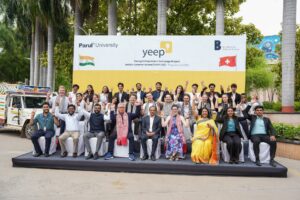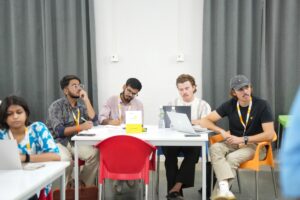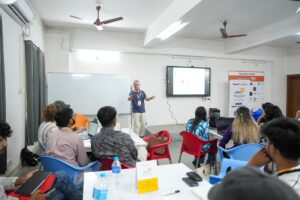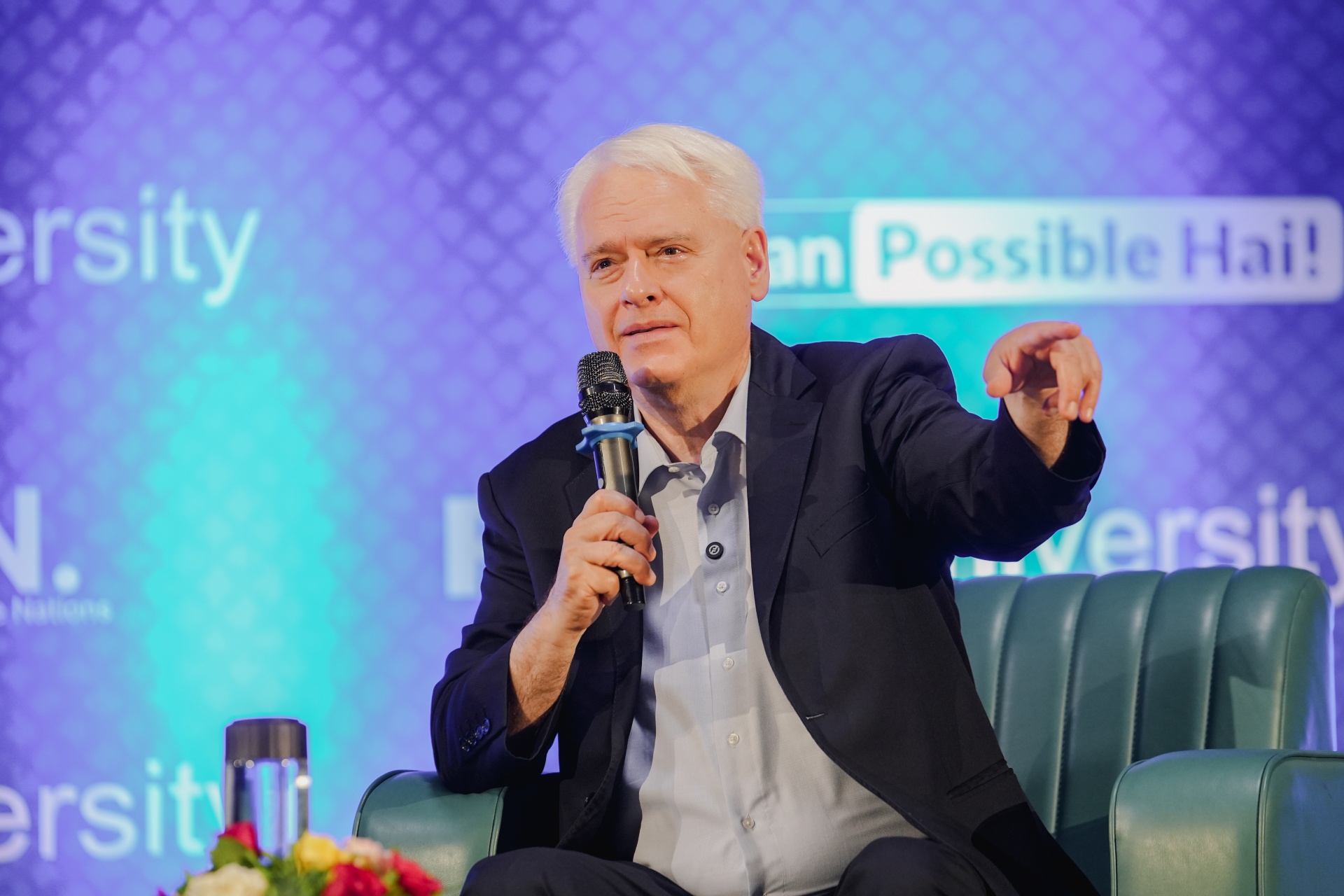
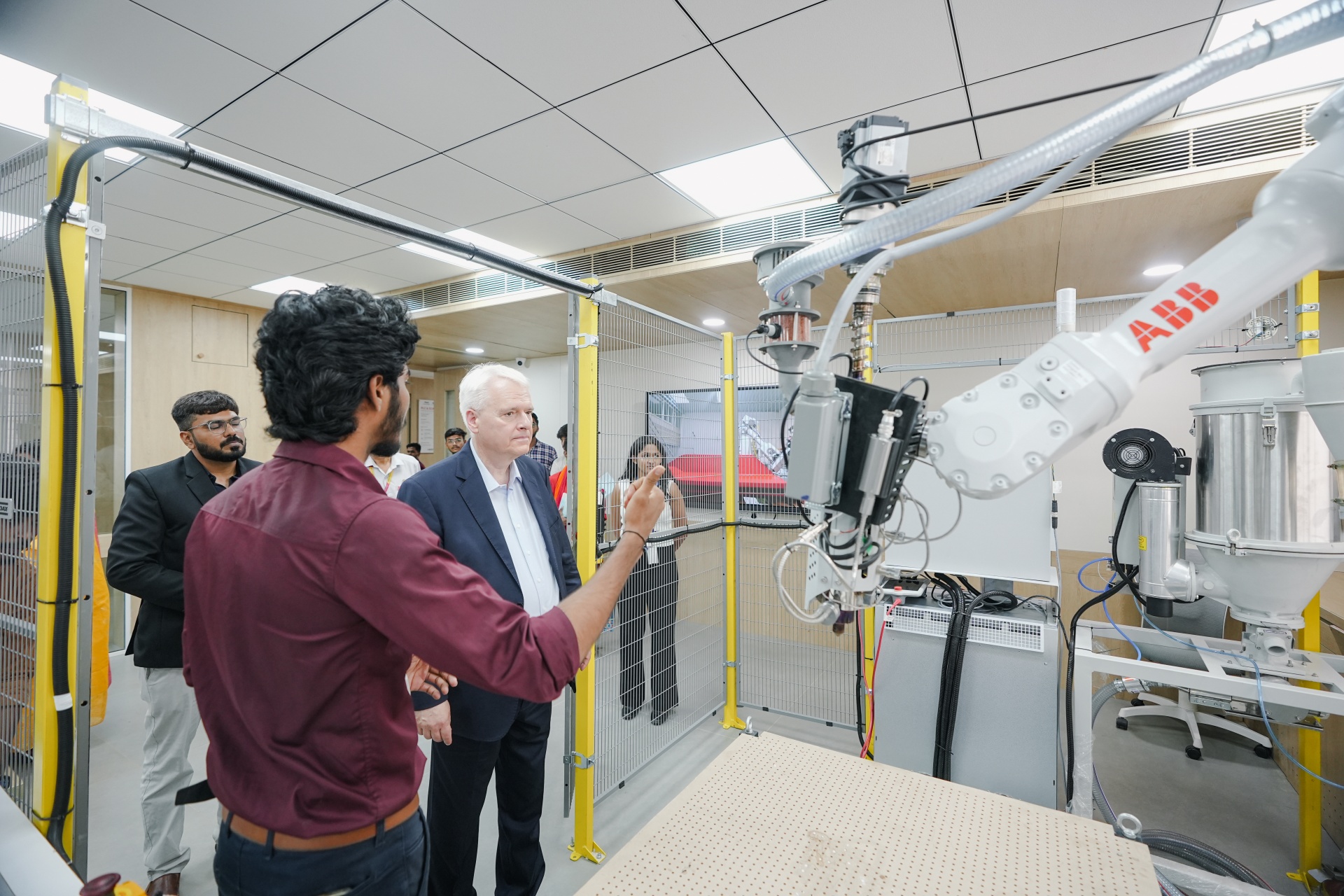
Parul University organised the Global Perspective Series session on 25 June 2026 in association with IIMUN (India’s International Movement to Unite Nations). The theme of the session was “Celebrating Inclusion and Diversity”, and the guest speaker was H.E. Ivo Josipović, former President of Croatia.
For the event overview, Josipović’s profile as a jurist and composer, and his account of Croatia’s path from Yugoslavia to the European Union, see the main event article on the Global Perspective Series session. The session was organised with IIMUN as part of the international engagement framework at Parul University. Students interested in the governance, law, and management pathways connected to these themes can explore Law at Parul Institute of Law and MBA programs at Parul Institute of Business Administration, along
Leadership is based on values
The former president began the session by reflecting on his experiences in leadership. He argued that leadership is fundamentally a question of values. While technical competence, charisma, and strategic intelligence are necessary, they are not sufficient. Above all, he emphasised that the moral character of a leader’s goals matters most because history has repeatedly shown that great leadership without good values can become an instrument of catastrophe.
- On charisma without values. The former Croatian president observed that morality is more important than charisma. Looking back at history, he noted that many charismatic leaders led societies towards destruction rather than progress. He expressed his hope that future leaders would be guided by love, compassion, and a commitment to creating positive change.
- Mahatma Gandhi as the standard. He cited Mahatma Gandhi as an example of a leader who transformed society through nonviolence despite enormous personal sacrifice. According to him, Gandhi represents one of the highest standards of leadership because his influence was rooted in moral conviction and an unwavering commitment to peaceful change.
- Intellectual humility. He stressed that leaders should remain lifelong learners because public life is constantly evolving. Relying only on existing knowledge makes it difficult to respond to changing realities. He credited universities with playing a vital role not only in imparting education but also in cultivating values and developing diverse professional and personal qualities.
- Against populism and nationalism. He warned that populism and nationalism are among the most significant challenges facing contemporary Western democracies. Describing simplistic answers to complex problems and the deliberate use of fear and resentment as political tools, he argued that such approaches stand in opposition to genuine leadership. He encouraged students to develop the intellectual and moral capacity to recognise and resist these tendencies.
Diversity and inclusion: minorities as a resource
The central focus of the session was the theme, “Celebrating Inclusion and Diversity.” Drawing on Croatia’s experience, Josipović explained how the country has managed a multicultural and multi-religious society in the years following conflict. He noted that Croatia officially recognises 22 ethnic minorities within a population of approximately four million people, including Serbian, Hungarian, Italian, Romanian, and Romani communities. Managing this diversity, he said, involves respecting different traditions, languages, and the historical connections these communities have with Croatia.
He argued that governing a diverse society requires more than tolerance. It demands strong constitutional and institutional frameworks that ensure meaningful representation and legal protection for minority communities.
According to the former Croatian president, Croatia’s constitutional framework reflects this commitment by guaranteeing representation for minority communities in Parliament and local assemblies, regardless of their numerical size. In several municipalities, minority languages such as Serbian, Italian, and Hungarian enjoy co-official status alongside Croatian. Emphasising the value of inclusion, he remarked, “We are not impaired by minorities; we are in need of them.”
He described diversity as a national resource that enriches intellectual, cultural, and social life rather than a challenge to be managed. In his view, effective leaders create environments in which diversity can flourish and become an asset. At the same time, he cautioned that recognising minority rights alone does not automatically create social harmony. Referring to the lingering effects of war memories and nationalism, he acknowledged that inter-ethnic tensions can continue even within inclusive institutional systems.
To illustrate how easily hatred can influence society, he used a striking analogy: “It is like ink. If you put just two drops of ink in the bottle, it will be coloured. That is the same situation with nationalism and hate. A very small amount of hate can spoil society.”
He also spoke about Croatia’s growing migrant workforce from South and Southeast Asia, including India, Sri Lanka, Nepal, and the Philippines, many of whom are employed in the country’s tourism sector. He expressed the view that these individuals should have the opportunity to belong, be treated as Croatians, and be recognised as contributors who deserve acceptance and friendship.
Also Read: Former President of Croatia at Parul University for Global Perspective Series.
Cultural diplomacy as an instrument of statecraft
Among the most distinctive contributions of the session was Josipović’s articulation of cultural diplomacy as a serious and effective instrument of statecraft. He explained that building trust and confidence through arts, music, and cultural exchange is well established in scholarship, but is rarely understood in practice from the perspective of a head of state. Drawing from his experience, he described how he applied these ideas during Croatia’s EU accession process, presenting Croatia as a nation rich in art, music, education, theatre, and cultural heritage.
He argued that while Croatia could not match the material or economic weight of larger European Union member states, it could contribute meaningfully through its cultural heritage, artistic traditions, literary achievements, and intellectual contributions. In his own words: “My idea was that, as president, I was in a position to present Croatia through art, through music, through education, through theatre. My mission was to convince European countries that we are going to contribute to Europe with our culture.”
Following this approach, cultural initiatives such as exhibitions and concerts were introduced to showcase a softer dimension of Croatia and Europe, moving beyond conventional diplomatic and legislative channels. He emphasised that this strategy was not about replacing institutional reforms, but about complementing them by combining cultural identity with formal negotiations in ways that traditional diplomacy alone could not achieve.
He noted that this approach serves as an inspiration for students across disciplines such as arts, humanities, and business, where cultural understanding intersects with global engagement. His own career reflects this philosophy, as he is both a lawyer and composer of operas, and a former president who engaged directly in cultural curation and expression.
Youth, global citizenship, and the responsibility to engage
The session’s closing passages focused on how young people, and particularly Parul University students, can cultivate the qualities of genuine global citizens. Josipović observed that younger Europeans, especially those who have grown up within the European Union, increasingly identify as Europeans alongside their national identities. He described this broader sense of belonging as an evolution of patriotism rather than its replacement, arguing that national, European, and global identities can coexist as complementary rather than competing loyalties.
When asked what single message he would leave with students, he responded with clarity: “If you want to be world citizens, you have to have many contacts. You have to travel, to learn about other cultures, to listen to different music, to visit even small places far from your home, and to have regular contacts. To exchange emails, to exchange visits, to have friends. And then you can be heard. It is really worth it.”
His emphasis on reciprocity and sustained engagement stood out. He argued that regular, meaningful, and mutual interactions transform strangers into dialogue partners and, ultimately, into lasting collaborators. For a university with more than 6,000 international students from over 75 countries, this message aligned closely with the multicultural environment students already experience on campus.
He also cautioned against insularity and the appeal of nationalist sentiment, particularly among young people facing economic uncertainty or social change. According to him, the most effective response is an education that develops not only knowledge but also the values, openness, and habits of mind needed to engage confidently with people from different cultures and perspectives.
Student Q&A: representation, conflict prevention, and multilateralism
The moderated dialogue was followed by an open student Q&A that reflected the intellectual seriousness of the audience. The questions spanned leadership, minority representation, cultural understanding as conflict prevention, and the lessons of a career across multiple professional domains.
- Rushi (BBA, Parul Institute of Business Administration). Asked what qualities future leaders need to genuinely celebrate diversity rather than merely acknowledge it. Josipovic grounded his answer in humanity, empathy, and the principle that all human beings are equal in dignity and deserving of respect, adding that education systems and universities bear a special responsibility for instilling these values.
- Unnati (Journalism). Asked how he ensured all people felt genuinely represented in decision-making during his presidency. He described the constitutional and legal architecture of minority representation in Croatia, including guaranteed parliamentary seats for major minorities, official status for minority languages in relevant regions, and the representation of minority communities in local assemblies, alongside diverse representation among his own presidential advisers and staff.
- Saloni Jajan (International Business). Asked whether cultural understanding can serve as a preventive force against conflict. At the interpersonal and intercommunal level he was emphatic that exposure to other cultures, sustained contact with people of different backgrounds, and genuine listening counter the fear and ignorance that fuel conflict. At the level of international governance he offered a more sombre assessment, noting the strain on the multilateral order built since the Second World War.
- Asked what single lesson Josipovic carried from his cross-cultural career. He returned to multilateralism, arguing that no nation, however powerful, is best served by unilateral action in a world of interdependent challenges, and that for small countries, international law and institutions are essential guarantees of security and dignity rather than abstract niceties.
On multilateralism specifically, Josipovic was unequivocal: “Multilateralism is the only possible approach. Decisions in the international community should not be taken by force. They should be taken by dialogue, by international law, and by institutions that represent all nations equitably.”
How the themes connect to education at Parul University
Josipović’s central arguments—that leadership is grounded in values, that diversity is a resource, that culture is an instrument of trust, and that global citizenship is built through sustained contact—align closely with the educational model Parul University operates. The university’s 6,000+ international students from 75+ countries, 120+ foreign university partnerships, and global programmes including semester exchanges and the Young Entrepreneur Exchange Project (YEEP) with Bern University of Applied Sciences, Switzerland, create the sustained cross-cultural contact Josipović identified as the foundation of global citizenship. Parul University is also the first private university in India to establish a Centre of Excellence with 7 New Zealand universities under Inspire New Zealand.
The Times Higher Education Sustainability Impact Ratings 2026 place Parul University at Top 20 in India for SDG 17 (Partnerships for the Goals), 7th in India and joint 46th worldwide for SDG 4 (Quality Education) with a Quality Education score of 81.1, and 7th in India and joint 60th worldwide for SDG 5 (Gender Equality). The session’s themes of inclusion, diversity, and global citizenship connect directly to the SDG framework the rankings measure, particularly SDG 5 on gender equality and SDG 17 on partnerships.
FAQs
What are the views of the former Croatian President on leadership?
The former Croatian president addressed the question of leadership by saying that it is fundamentally about the question of values, technical competence, charisma, and street smartness or strategic intelligence. The abilities of charisma and competence are necessary but not sufficient. What matters the most is having values and moral character of a leader’s goal, because the past has always shown that great leaders are those who have good values and can handle catastrophic situations with patience and mindfulness. He said the history has shown that charismatic leaders have led to destruction, but leaders who have handled the position with love, compassion, and success have achieved great results, like Mahatma Gandhi.
What were the views of the former Croatian president on diversity?
Josipović drew on Croatia's experience managing a multi-ethnic society, noting that Croatia recognises 22 ethnic minorities in a country of roughly four million people, including Serbs, Hungarians, Italians, Romanians, and Romani communities. He argued that managing diversity requires more than tolerance: the constitutional and institutional framework must provide full representation and protection for minority communities. He described Croatia's approach where minority communities are represented in parliament and local assemblies regardless of numerical size and where minority languages such as Serbian, Italian, and Hungarian hold co-official status in certain municipalities. His central formulation was that a country is not impaired by its minorities but in need of them, framing diversity as a resource that adds richness to intellectual, cultural, and social life rather than a burden. He was candid that formal frameworks do not automatically produce harmony, using the image of two drops of ink colouring an entire bottle to illustrate how a small amount of hate can spoil relations across a society.
What is cultural diplomacy and how did Josipovic use it as President?
Cultural diplomacy is the use of arts, music, education, and cultural exchange to convey a country's principles, build trust, and strengthen international relationships. Josipovic described using it as a serious instrument of statecraft during Croatia's EU accession campaign. As President, he presented Croatia through art, music, education, and theatre, arguing that while Croatia could not match the material or economic contributions of larger EU countries, it could contribute through its cultural heritage, artistic and literary accomplishments, and intellectual advancement. The result was a programme of cultural exhibitions and concerts in major European cities, an exercise in soft power that complemented Croatia's conventional diplomatic and legislative efforts. His point was not that culture substitutes for institutional reform, but that it accelerates trust-building in ways formal negotiation alone cannot achieve. As both a jurist and a working classical composer who has written an opera and directed a music festival, Josipovic embodies the argument that creative and cultural skills sit at the core of public life rather than at its margins.
What advice did Josipovic give students about becoming global citizens?
Josipovic advised students that becoming world citizens requires many contacts, sustained over time. His specific guidance was to travel, learn about other cultures, listen to different music, visit even small places far from home, and maintain regular contact through exchanging emails, exchanging visits, and building friendships. His emphasis on reciprocity and regularity stood out: sustained, mutual, personal contact converts strangers into interlocutors and interlocutors into partners. He framed global citizenship as compatible with national and regional identity, arguing that a person can hold national, European or regional, and global-citizen identities simultaneously as complementary rather than competing loyalties. He observed that younger generations increasingly hold this broadened identity, which he framed as the maturation of patriotism rather than its dilution. He also warned against insularity and the seductiveness of nationalist sentiment for young people facing economic uncertainty, arguing that the antidote is education that instills not only knowledge but the values and habits of mind to navigate difference without fear.
What did Josipovic say about multilateralism and international relations?
Josipovic was unequivocal that multilateralism is the only workable approach to international relations, arguing that decisions in the international community should be taken by dialogue, by international law, and by institutions that represent all nations equitably, rather than by force. Responding to a student question on the lessons of his cross-cultural career, he argued that no nation, however powerful, is best served by unilateral action in a world of interdependent challenges. He noted that small countries like Croatia understand this from lived necessity: international law and international institutions are not abstract niceties but essential guarantees of their security and dignity. On cultural understanding as a preventive force against conflict, he offered a two-level assessment: at the interpersonal and intercommunal level he was emphatic that exposure to other cultures and genuine listening counter the fear and ignorance that fuel conflict, while at the level of international governance he offered a more sombre assessment, noting the strain on the multilateral order built since the Second World War.