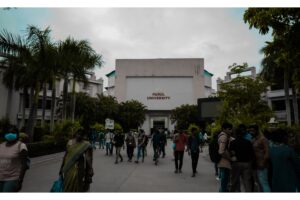
A diploma in automation and control can help students build the practical skills needed to manage machines, sensors, robotics, and Industrial IoT systems that keep smart factories running every day.
A 2026 report on India’s industrial automation market estimated the sector at around $19.19 billion in 2026, showing how quickly industries are investing in automation, connected machines, and smart manufacturing systems. (Mordor Intelligence)
Because of this shift, industries need technicians who can understand both machines and digital systems.
This is where a diploma in automation and control becomes valuable. It helps students develop the practical skills required to work in modern manufacturing environments where the Industrial Internet of Things (IIoT), automation, robotics, and data-driven maintenance have become increasingly important.
Why Do Smart Factories Need New Technical Skills?
Earlier, factory technicians mainly handled electrical systems, motors, and machine maintenance.
Today, many factories operate using connected systems. Machines communicate with each other. Sensors send information to control rooms. Production data is monitored in real time. Predictive maintenance is becoming common across industries. (TOI)
Because of this change, companies want technicians who can:
- Monitor automated systems
- Understand industrial sensors
- Troubleshoot control panels
- Handle Industrial IoT devices
- Support robotics and smart machines
These responsibilities make technicians an important part of daily factory operations.
What Does an Industrial IoT Technician Actually Do?
An Industrial IoT technician helps ensure that automated equipment works properly.
Their work usually includes checking sensors, monitoring machine performance, identifying faults, and supporting maintenance teams.
In many industries, technicians are responsible for keeping production lines running without unnecessary downtime.
A technician may work with:
- PLC systems
- Industrial networks
- Control panels
- Robotics equipment
- Smart sensors
- Monitoring software
Since manufacturing relies heavily on uninterrupted operations, these professionals often become mission-critical members of factory teams.
How Does a Diploma in Automation and Control Build Technical Skills?
A diploma in automation and control combines classroom learning with practical exposure.
Students learn how automation systems function and how industrial processes are controlled. They also understand how machines, sensors, and control systems work together.
Some important learning areas include:
- Industrial automation
- Process optimisation
- Electrical systems
- Instrumentation
- Mechatronics
- Control systems
- Industrial safety
This foundation is important because Industrial IoT systems still depend on strong automation fundamentals.
Without understanding control systems, it becomes difficult to manage connected manufacturing environments.
Why Is Industrial IoT So Important in Manufacturing?
Factories generate huge amounts of operational data. Industrial IoT allows companies to collect this information from sensors, machines, and production systems. The data helps industries make faster decisions and improve productivity.
For example, connected systems can alert maintenance teams before a machine fails completely. This reduces downtime and saves money.
Many industries are also moving towards predictive maintenance, where AI and data analysis help predict equipment problems before breakdowns occur. (Economic Times)
As more companies adopt these technologies, knowledge of Industrial IoT can become increasingly valuable for technicians.
How Does Parul University Prepare Students for Industry 4.0?
Parul University offers learning opportunities that align with modern manufacturing requirements through its Diploma in Automation and Robotics Engineering program.
Students gain exposure to areas such as industrial automation, process optimisation, control systems, and mechatronics. The program also introduces learners to technologies connected with smart manufacturing environments.
Practical exposure plays an important role. Students can work with IoT-based learning environments where sensors, devices, and networks are integrated for real-time monitoring and communication. They also gain understanding of AI and machine learning applications that support predictive maintenance and intelligent manufacturing systems.
The university further supports advanced technical learning through specialised research and innovation infrastructure, including facilities dedicated to automation, advanced manufacturing, and emerging technologies.
Why Does Hands-On Training Matter More Than Theory?
Industrial employers usually look for people who can solve practical problems.
When a robotic arm stops working, or a sensor sends incorrect readings, industries need technicians who can quickly identify the issue.
Hands-on learning helps students understand real industrial situations.
Exposure to advanced robotics labs, industrial machines, digital prototyping tools, 3D printing facilities, CNC systems, and automation equipment can improve practical confidence.
Working directly with industrial hardware also helps students become familiar with the technologies they may encounter after graduation.
Which Industries Need Automation and Industrial IoT Technicians?
Smart manufacturing technologies are used across many industries. Some common sectors include:
- Automotive manufacturing
- Electronics production
- Pharmaceutical manufacturing
- Food processing
- Oil and gas operations
- Renewable energy
- Chemical industries
- Aerospace manufacturing
As factories become more connected, technicians with automation and Industrial IoT skills can find opportunities across multiple sectors.
Where Can a Diploma in Automation Lead in the Future?
A diploma can serve as the starting point for many technical careers.
After gaining experience, professionals may move into specialised positions such as Industrial Automation Specialist, Control Systems Engineer, Smart Manufacturing Consultant, or Robotics Engineer.
Many technicians also continue upgrading their skills through certifications, advanced diplomas, and industry training programs.
As smart factories continue expanding, professionals who understand automation, data, sensors, and connected systems are likely to remain important contributors to industrial growth.
Instead of simply operating machines, future technicians can manage intelligent systems that connect equipment, data, and production processes. Those who develop these capabilities can find themselves working at the centre of a future automated manufacturing ecosystem.
FAQs
Can a diploma in automation and control be pursued after Class 10?
Yes, many diploma programs allow admission after successful completion of Class 10.
Is coding mandatory for Industrial IoT technician roles?
Basic programming knowledge helps, but many technician roles focus more on automation systems and equipment operation.
Do Industrial IoT technicians work only in factories?
No, they can also work in sectors such as energy, oil and gas, infrastructure, and industrial maintenance services.