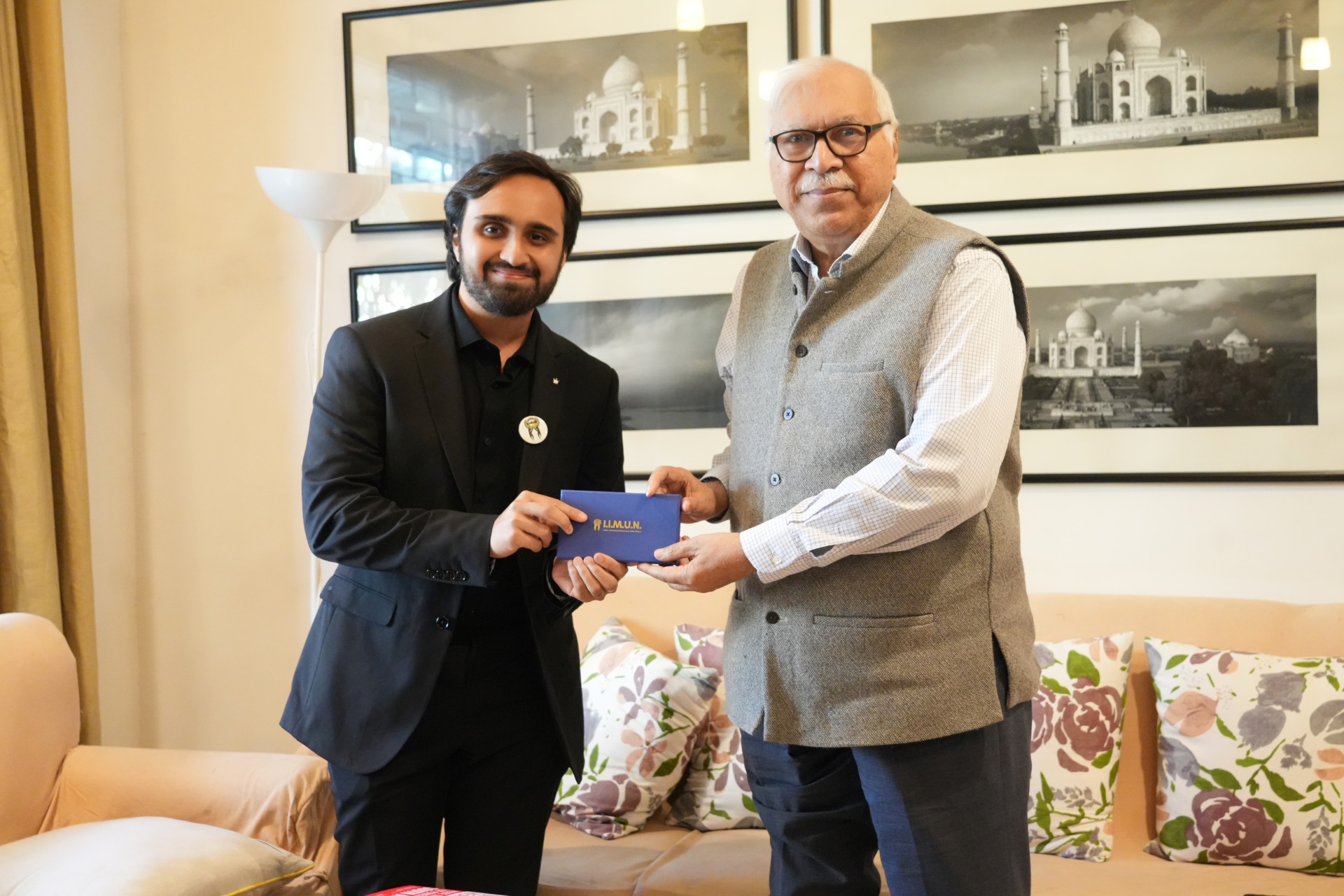
Dr S.Y. Quraishi oversaw elections for 900 million voters as India’s Chief Election Commissioner. His session was held at Gurugram Residence, this was not a celebration of Indian democracy.
He deliberated, “Great elections do not equal a great democracy”. India conducts the largest electoral exercise in the world. The logistics are what he calls an undocumented wonder. He created IIDEM (India International Institute of Democracy and Election Management) specifically for zero-error elections. But he pointed to India’s slipping ranks in global democracy indices like V-Dem despite a growing economy. The economy grows. The democratic quality does not automatically grow with it.
He urged students to exercise their Right to Question, because hard questions bring out the best in leaders. He addressed unemployment directly but reframed youth as the power of the present, not just the future. Brain drain, he clarified, actually benefits India through remittances. His career framework: work hard for 5 years, enjoy for the next 50. Delay immediate gratification.
“Great elections do not equal great democracy. Work hard for 5 years, enjoy for the next 50.”
Read more on Delhi Leadership Tour – PU Students Met Leaders from PepsiCo, RBI, Google & Ducati!
On Diplomacy: Reassurance, Not Dominance
Ambassador Shyam Saran served as India’s Foreign Secretary and as the Prime Minister‘s Special Envoy on Climate Change. His session provided the geopolitical architecture that most students never encounter in a classroom.
His core framework: India must practice a Diplomacy of Reassurance. The US views India as a powerful country in South Asia. But neighbouring countries often feel overshadowed by India’s dominance. India’s role as a transit country (Bhutan’s heavy dependence, for example) means that physical and software connectivity at borders is critical for economic interests and relationships.
On climate: climate change and security are two sides of the same coin. India is number 3 in global emissions at approximately 7 percent. The core challenge is energy consumption. To achieve energy security, India must transition from imported coal and fossil fuels to clean, renewable, and nuclear energy. But reaching zero percent emissions is impossible unless it is a collaborative global effort. Pandemics do not respect borders. You cannot make your country great by harming or refusing to collaborate with others. If you wish to learn economic landscape, delay not and enrol into Parul University’s BA in Economics.
On the global economic landscape: the era of China’s massive advantages (cheap rates, simulated technology) is over. The modern focus is risk reduction in the face of economic crises and pandemics.
“Climate change and security are two sides of the same coin. Pandemics do not respect borders.”
Read more on 15 Leaders, 15 Frameworks – Delhi Leadership Tour!
On Conflict: 25 Years Returning Dignity to Kashmir
Lt General Sayed commanded the 15 Corps (Chinar Corps) in Kashmir. He earned the title People’s General not through military victories but through a people-centric approach to a region that lived with conflict for over two decades (1990-2011). His frameworks are deceptively simple but operationally profound:
- Public is the king. Not the army, not the government, not the media. The public
- Human right is dignity. Not a legal concept. A lived experience that must be restored
- Listen, do not speak. Reach out to people if you want to know what is going on
- In conflict, there is no right or wrong. There are people, and they need their dignity back
- A leader is someone who puts his own mind to it, takes inputs, analyses the situation, then acts
He stressed that the media has a responsibility to show correct news. Clarity, he said, comes from experience. Students described the session as profoundly moving, particularly his philosophy that leadership in conflict zones is about restoring human dignity above all else.
On Digital Warfare and Global Unity
Ambassador Vijay Nambiar served as Chef de Cabinet to the UN Secretary-General. He opened by reflecting on serving as a diplomat in Afghanistan during the tumultuous 1990s, then traced how conflict has evolved from ground diplomacy to digital warfare. AI-driven drones have actively altered the landscape of modern warfare. The digital war is fought today with tools that did not exist a generation ago.
He discussed ethical moralism, cybersecurity at the geopolitical level, and the critical intersection of AI and national security. He concluded with Vasudhaiva Kutumbakam: the world is one family, a place where you include everybody. The Indian philosophy, filtered through decades of UN experience, became his call to the next generation: carry ethical frameworks into the future. If you are passionate about philosophy then enrol into Parul University’s online BA degree program.
On Economic Architecture: The RBI Governor
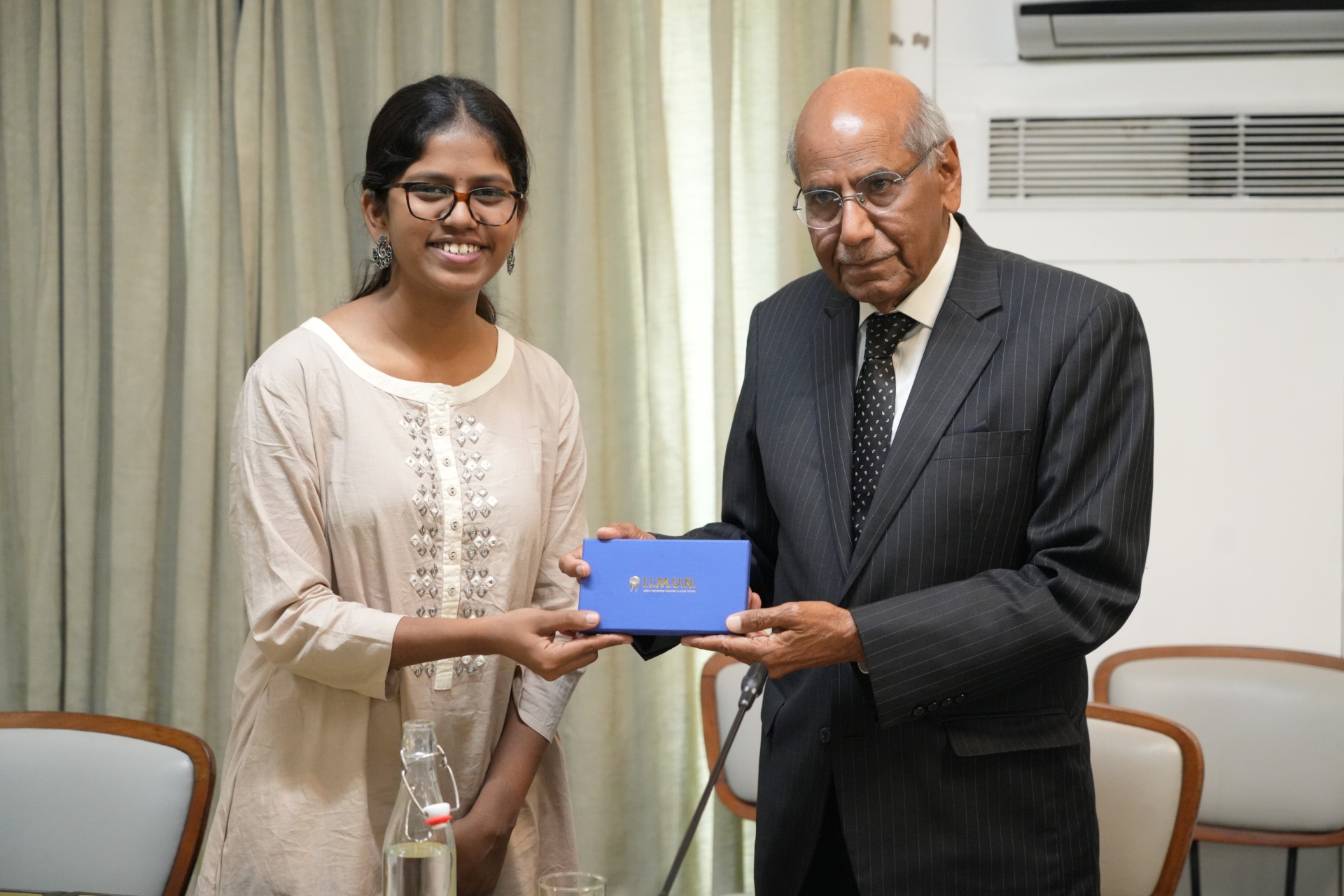
Shaktikanta Das, the 25th Governor of the Reserve Bank of India, spoke at the Prime Minister’s Office. His session demystified how government decisions are made: they are not made in isolation but involve wide consultation with multiple ministries, NITI Aayog, and the public.
His Cobra Effect warning is the most structurally useful framework from the entire tour: sometimes the solution creates more problems than the original problem. Using the shifting of the capital from Kolkata to Delhi as an analogy, he demonstrated that the design of a scheme matters more than the intention. While India has invested heavily in infrastructure, he argued for parallel investment in R&D. His three pillars of research: Knowledge, Intelligence, and Wisdom.
Anurag Singh Thakur (Former Union Minister, Youth and Sports) complemented this with the action-oriented perspective: he built the HP Stadium, created the My Bharat App, and captained the HP cricket team. His framework: assess your capacity and capability, think like a strategist, do not take pressure but share it with those you trust.
Frequently Asked Questions
What did the Former Foreign Secretary say about India's diplomacy?
Ambassador Shyam Saran said India must practice a Diplomacy of Reassurance toward its neighbours. India is number 3 in global emissions at 7 percent. Climate change and security are two sides of the same coin. The era of China's massive economic advantages is over. The modern focus is risk reduction. Pandemics do not respect borders. A diplomat is a negotiator whose job is to bring as much as you can to the table.
What is the Cobra Effect?
A framework shared by RBI Governor Shaktikanta Das: sometimes the solution creates more problems than the original problem. He used the shifting of India's capital from Kolkata to Delhi as an analogy. The design of any policy or scheme matters more than the intention behind it. He stressed that government decisions involve wide consultation with ministries, NITI Aayog, and the public, not isolation.


