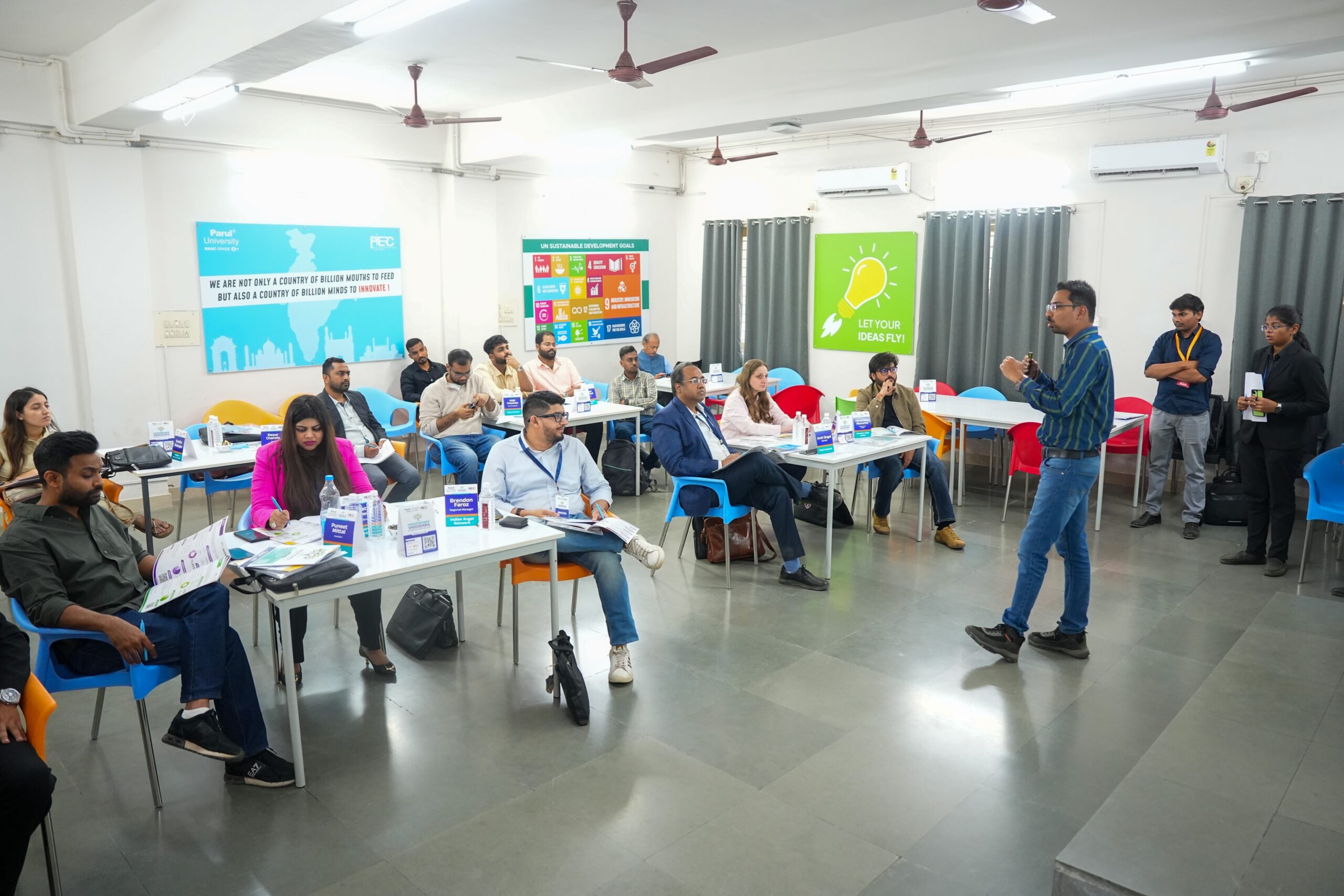
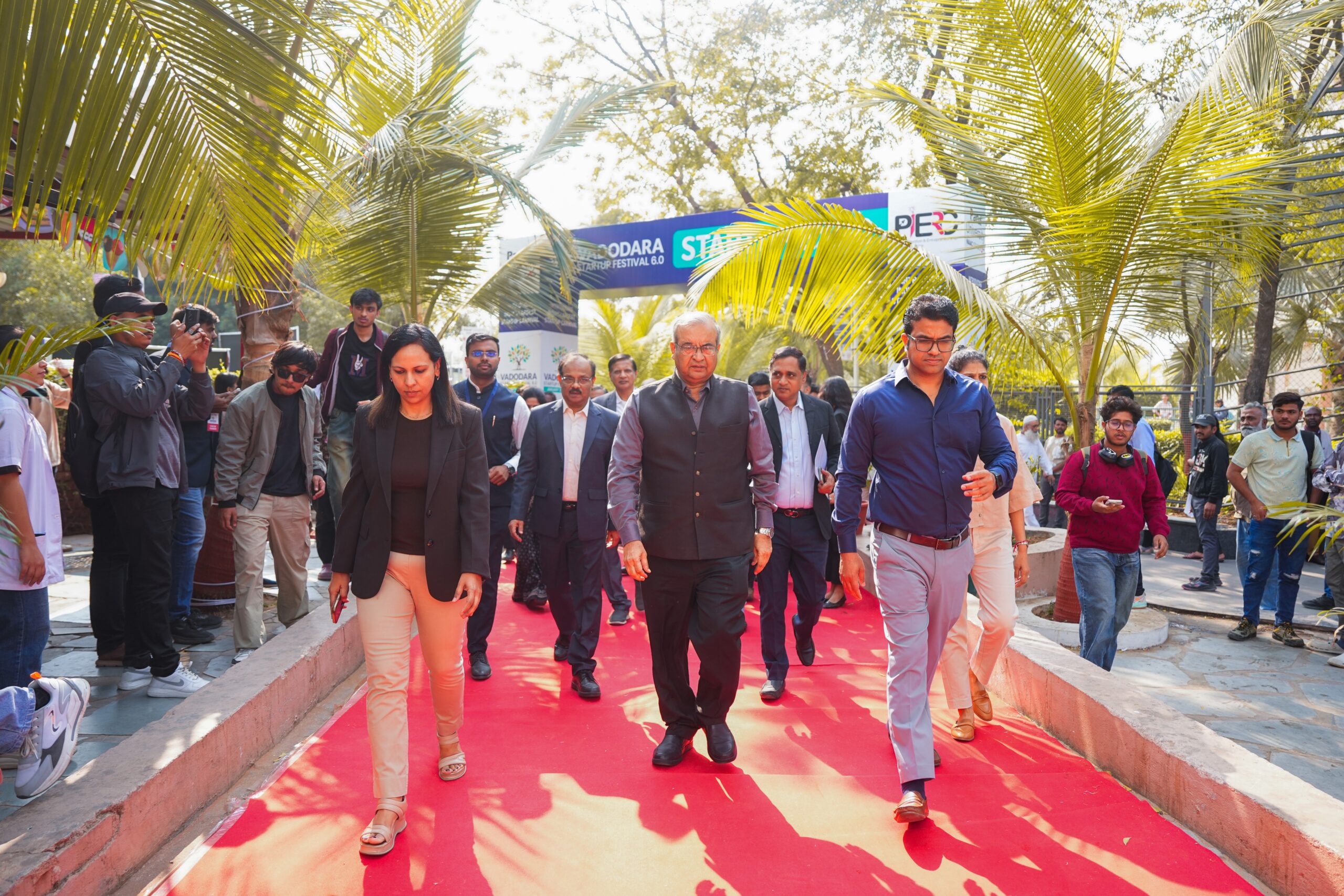
How Parul University went from engineering college to startup factory and why 20+ investors now show up to recruit founders before they graduate.
Here’s the premise: Take a university in Vadodara. Not Delhi. Not Bangalore. Not even Ahmedabad proper but in Vadodara.
Host a startup festival. Invite investors from Mumbai angel networks, Bangalore VCs, family offices from Rajkot. Ask them to fly in, spend three days reviewing pitches from college students.
Reasonable expectation: Maybe 5 investors show up out of pity. Students pitch half-baked ideas. Everyone goes home disappointed.
Actual result at VSF – Vadodara Start-up Festival 6.0:
- 20+ investors attended
- 50+ startups pitched
- Investors from Fluid Ventures, A Square Capital, Indian Angel Network, 247VC
- Students with revenue-generating businesses, not just slide decks
- Follow-up meetings scheduled before the festival even ended
Question: How does a university in Gujarat convince serious investors to treat student pitches like Series A rounds?
Answer: By stopping pretending campus entrepreneurship is practice and starting treating it like production.
PIERC: The Engine Nobody’s Talking About
Full name: Parul Innovation and Entrepreneurship Research Centre (PIERC)
What it sounds like: Another university initiative with a fancy acronym and zero impact.
What it actually is: A startup factory disguised as an academic center.
Here’s what makes PIERC different from every other “entrepreneurship cell” collecting dust in Indian universities:
Why Investors Actually Show Up to Campus Events Now
Let’s be honest: Five years ago, investors laughed at the idea of finding deals on college campuses.
The old logic:
- Students lack experience
- Campus ideas are derivative
- No skin in the game
- Too early stage
What changed?
1. Students Are Solving Real Problems Earlier
Before: College projects were academic exercises.
Now: College projects are beta products with actual users.
Example from VSF – Vadodara Start-up Festival: A student startup solving scholarship discovery because the founder couldn’t afford tuition. That’s not theoretical. That’s lived experience with product-market fit baked in.
2. Technology Lowered Barriers to Production
Before: You needed capital to build anything.
Now: You need a laptop and YouTube tutorials.
Students at VSF – Vadodara Start-up Festival 6.0 had:
- Working apps (not prototypes)
- Paying customers (not hypothetical users)
- Revenue data (not revenue projections)
Investors can evaluate this the same way they evaluate any seed-stage startup.
3. Campus Startups Have Lower Burn Rates
A 23-year-old living at home needs ₹30,000/month to survive.
A 35-year-old with a family needs ₹2 lakh/month minimum.
Same product. Same market. 85% lower burn rate.
For early-stage investors, this math is irresistible. Your ₹20 lakh investment buys 20 months of runway on campus. It lasts 8 months in Bangalore.
4. Talent Density Is Crazy High
In Bangalore: Founders poach talent from each other. Salaries inflate. Team stability suffers.
On campus: You’re surrounded by 10,000 smart people who’ll work for equity, learning, and pizza. Your first 5 hires are sitting in the adjacent hostel room.
Investors noticed this. Campus is the most talent-dense environment in India. If you can build a culture there, you can build anywhere.
The 20+ Investors Who Showed Up (And What They Were Actually Looking For)
Let’s profile the investor mix at VSF – Vadodara Start-up Festival 6.0, because it reveals something important about campus startup ecosystems:
Tier 1: Institutional VCs
- Fluid Ventures (partner level)
- A Square Capital (managing director)
What they want: Companies that can scale to ₹100 crore revenue in 5 years. Campus is a deal flow pipeline.
Tier 2: Angel Networks
- Indian Angel Network (regional manager)
- 247VC (investment analyst)
What they want: Founders worth betting on. Products can change. Founder quality can’t.
Tier 3: Family Offices
- Single family offices from Gujarat/Rajasthan
- HNI investors
What they want: Profitable businesses in 24 months. Don’t care about unicorn potential. Care about sustainable revenue.
Tier 4: Ecosystem Builders
- TiE Surat (President)
- GVFL (investment associate)
What they want: Support local entrepreneurship. Less about returns, more about community building.
Why this mix matters: It means startups at every stage found relevant investors. Pre-revenue ideation? Talk to angels. ₹50 lakh ARR? Talk to family offices. Ready to scale? Talk to VCs.
Most startup festivals have one type of investor. Parul had the entire stack.
What Makes Parul Different from IIT Bombay's Model
Full disclosure: IIT Bombay has SINE, the gold standard for campus incubation. Parul isn’t competing with that.
But here’s what Parul does differently:
1. Accessibility Over Prestige
IIT Bombay: Only IIT students and alumni can access SINE programs.
Parul: Anyone solving real problems can participate in the PIERC ecosystem.
Why this matters: The next big founder might not have cracked JEE. Parul gives them a shot anyway.
2. Regional Problems Get Priority
IIT Bombay: Startups solving India-wide or global problems.
Parul: Startups solving Gujarat-specific, even Vadodara-specific problems.
Example: A student startup optimizing agricultural supply chains in rural Gujarat. Won’t become a unicorn. Will help 50,000 farmers. That’s the impact.
3. Commercial Viability Over Innovation Theater
IIT Bombay: Cutting-edge tech, deep tech, patents.
Parul: Revenue-generating profitable businesses solving known problems efficiently.
Translation: IIT builds the future. Parul builds profitable businesses today.
Both are valuable. India needs both.
The Infrastructure That Makes This Work
You can’t fake a startup ecosystem. You need infrastructure. Here’s what PIERC built:
Physical Infrastructure
- Central Auditorium (for signature talks)
- Dedicated incubation space
- Co-working areas for student startups
- Meeting rooms for investor pitches
Why this matters: Students need professional spaces to practice being professional. A canteen table doesn’t cut it when you’re pitching ₹20 lakhs.
Intellectual Infrastructure
- Masterclass series (monthly, not just during festivals)
- Mentorship programs with active founders
- Investor office hours
- Legal/accounting support for incorporation
Why this matters: Most student startups die from ignorance, not lack of ideas. GST filing. Cap tables. Founder agreements. Students need guides.
Network Infrastructure
- 20+ investor relationships (actively maintained)
- Alumni founder network
- Industry partnerships
- Cross-campus collaboration with other universities
Why this matters: Networks compound. Every batch adds connections. By Year 5, the ecosystem is self-sustaining.
The Masterclass Speakers Who Actually Taught Something Useful
Most guest lectures: “Follow your passion. Take risks. Believe in yourself.”
Students leave inspired and clueless.
VSF – Vadodara Start-up Festival 6.0 masterclasses: Operational knowledge you can implement tomorrow.
-
Saurabh Jain (Ex-VP Paytm, Founder Fun2Do Labs)
What he taught: How Paytm scaled payment infrastructure during demonetization
Actual takeaway: Operational scaling under crisis conditions
-
Poyni Bhatt (Former CEO SINE IIT Bombay, Independent Director)
What she taught: How incubators actually select startups
Actual takeaway: The 10 things SINE looks for in applications
-
Anurag Sundarka (Co-Founder ZebraLearn)
What he taught: Visual learning app monetization strategies
Actual takeaway: How to price EdTech products parents will actually buy
See the difference? Not “here’s my inspiring story.” But “here’s the operational decision-making that made my story possible.”
Why Gujarat Is Quietly Becoming India's New Startup Corridor
Everyone talks about: Bangalore. Delhi-NCR. Hyderabad. Nobody talks about: Gujarat’s Emerging Ecosystem.
But look at the data:
VSF – Vadodara Start-up Festival 6.0 investor distribution:
- 40% from Gujarat (Ahmedabad, Surat, Rajkot, Vadodara)
- 30% from Mumbai/Maharashtra
- 20% from Bangalore
- 10% from Delhi
What this reveals: Gujarat has capital. Gujarat has talent. Gujarat just needed infrastructure to connect them.
Parul is building that infrastructure.
Why Gujarat makes sense for campus startups:
- Lower cost of living = longer runway
- Strong local business community = mentorship network
- Manufacturing heritage = operational excellence mindset
- Family office capital = patient money for profitable businesses
- Less competition for talent = easier team building
Bangalore is great for unicorn hunting. Gujarat is great for building sustainable businesses.
Both models work. One just gets more press.
The Student Startups That Prove This Model Works
Let’s look at outcomes, because that’s what matters:
- Problem: 80% of gifted plants die
- Solution: Smart pots with AI plant care guidance
- Revenue: ₹5 lakh (pre-graduation)
- Validation: Shark Tank feature
What this proves: Students can build revenue-generating hardware+software businesses on campus.
- Problem: Talented students can’t afford/access education
- Solution: Scholarship discovery and disbursement platform
- Impact: ₹7-8 crore disbursed
- Market position: Ranked above Byju’s/Unacademy in category
What this proves: Students can build platforms that outperform billion-dollar competitors in specific niches.
Multiple B2B SaaS Startups (Names not disclosed)
- Revenue range: ₹2-15 lakh ARR
- Customer base: 10-50 paying businesses
- Team: All current students
What this proves: Students can sell to businesses, not just consumers.
What Actually Happens When Investors Meet Student Founders
Investor question 1: “How much have you raised?”
Expected answer: “We’re pre-funding.”
Actual student answer at VSF – Vadodara Start-up Festival: “We haven’t raised anything. We’re ₹8 lakh revenue run-rate. We’re profitable. We’re here to find mentors, not just money.”
Investor reaction: Instant attention.
Why? Because 90% of startups pitching investors are burning cash and begging for runway. A college student with positive unit economics is rare.
Investor question 2: “What happens if this doesn’t work?”
Expected answer: “I’m all in. No backup plan.”
Actual student answer at VSF – Vadodara Start-up Festival: “I graduate in 6 months. I’ll get a job if needed. But I’m giving this 24 months of full effort first.”
Investor reaction: Respect.
Why? Because maturity about risk is rarer than passion. Knowing when to pivot or pause is founder quality.
Investor question 3: “Why should I invest in students over experienced founders?”
Actual student answer at VSF – Vadodara Start-up Festival:
“Because we’re solving problems we’re currently experiencing, not problems we heard about. Our users are our batchmates. We test features in real-time. We iterate daily. And our burn rate is 80% lower than Bangalore.”
Investor reaction: Checkbook comes out.
The Dark Side Nobody Talks About
Not every student startup at VSF – Vadodara Start-up Festival 6.0 will succeed. Let’s be brutally honest:
Of 50 startups:
- 10 will get funded
- 5 will generate sustainable revenue
- 3 will survive 3 years
- 1 might become significant
So 49 founders “fail”?
No. Here’s what the other 47 gain:
- Understanding of business fundamentals (can’t learn from textbooks)
- Pitch skills (valuable in any corporate role)
- Network of investors and founders (compounds over decades)
- Proof they can build from zero (differentiator in job market)
- Stories that make them memorable (every interview becomes easier)
- Confidence that they CAN start if they want (removes future fear)
Students who “failed” at VSF – Vadodara Start-up Festival 6.0 got placed at:
- Management consulting firms (pitching skills translate)
- Product management roles (understanding customer problems translates)
- Strategy roles (systems thinking translates)
- Business development roles (networking translates)
And they got higher offers than their peers because they could tell stories about building real things, not just scoring well in exams.
That’s not failure. That’s a strategic advantage.
How Your Campus Can Copy This (Even Without Parul's Budget)
You don’t need ₹50 lakh to build a startup ecosystem. You need:
Month 1: Find 10 Students with Real Problems They Want to Solve
- Not “I want to start a startup”
- But “I’m personally frustrated by X and want to fix it”
Action: Run a problem-discovery workshop. No business plans required. Just: What pisses you off enough to fix it?
Month 2: Help Them Build MVPs (Not Business Plans)
- Google Forms for data collection
- WhatsApp groups for communities
- Shared Google Sheets for tracking
- No-code tools for basic apps
Action: 48-hour build sprint. Ship something. Anything. Get it in users’ hands.
Month 3: Invite 1 Local Entrepreneur
- Not for inspiration
- For tactical feedback on MVPs
Action: 2-hour session. Students demo. The entrepreneur tears apart. Students iterate.
Month 4: Invite 1 Local Angel Investor
- Not for funding
- For learning what’s fundable vs. what’s not
Action: Students pitch. The investor explains why yes/no. Pattern recognition develops.
Month 6: Host Mini-Demo Day
- Invite 5 investors
- Students pitch MVPs with actual user data
- Even if no funding, students get feedback loop
Cost: ₹20,000 (venue, snacks, small honorarium)
Value: Students learn in 6 months what MBAs learn in 2 years.
Repeat this twice a year. In 3 years, you have an ecosystem.
Why This Matters Beyond One University
The Parul model is replicable. Here’s why it works anywhere:
1. It Doesn’t Require Elite Students. PIERC doesn’t need IIT-level talent. They need students willing to solve real problems. Those exist everywhere.
2. It Doesn’t Require Bangalore-Level Funding. Gujarat investors are deploying ₹10-50 lakh tickets, not ₹2-5 crore rounds. That capital exists in every state.
3. It Doesn’t Require Government Support. PIERC is university-driven, not DPIIT-dependent. Any private/autonomous college can do this.
4. It Doesn’t Require New Curriculum. Students build startups alongside regular studies. No regulatory changes needed.
5. The barrier isn’t resources. It’s the belief that students can build real businesses. Parul proved they can.
Now the question is: Who’s next?
The One Thing Every Campus Needs to Steal from VSF - Vadodara Start-up Festival 6.0
Not the budget. Not the investor network. Not the infrastructure.
The philosophy:
“Students don’t need permission to solve problems. They need platforms to showcase solutions.”
VSF – Vadodara Start-up Festival 6.0 didn’t ask students for business plans. They asked: What did you build?
Not: “What will you build if funded?”
But: “What have you already shipped?”
This shift changes everything:
- Students become builders, not dreamers
- Investors see traction, not slides
- Universities measure outcomes, not attendance
- Campus becomes production, not practice
You can implement this tomorrow. No budget required.
Just ask your students: What real problem can you solve this weekend?
Then get out of their way.
FAQs
Q1: What was VSF – Vadodara Start-up Festival 6.0 and why was it significant?
VSF – Vadodara Start-up Festival 6.0 (Vadodara Startup Festival) was a three-day startup festival at Parul University where 50+ student startups pitched to 20+ investors. Unlike typical college events, investors actively scheduled follow-ups and evaluated founders like early-stage companies.
Q2: What makes PIERC different from other college entrepreneurship cells?
PIERC focuses on outcomes, not events. It tracks startups funded, revenue generated, and companies sustained beyond graduation. It encourages students to build real businesses alongside academics instead of waiting until after graduation.
Q3: Why are investors now interested in campus startups?
Students today build revenue-generating products early, have lower burn rates, and operate in talent-dense environments. For investors, this means a longer runway, faster iteration, and lower operational risk compared to metro-based startups.
Q4: What kind of investors attended VSF – Vadodara Start-up Festival 6.0?
The festival hosted venture capital partners, angel network representatives, family offices, and ecosystem leaders. This multi-tier investor stack ensured that startups at various stages found relevant capital and mentorship opportunities.
Q5: Can other colleges replicate this model?
Yes. The model doesn’t require massive funding. It requires problem-first thinking, MVP building, consistent mentorship, and access to at least a few active investors. The philosophy is simple: measure traction, not attendance.
VSF – Vadodara Start-up Festival 6.0 happened January 20-22, 2026, at Parul University, Vadodara. Over 50 student startups participated. 20+ investors attended. Multiple funding conversations started. But the real outcome wasn’t deals closed; it was proof that college campuses can be startup factories, not just placement centers.
What they have: Belief that students can build real businesses before graduation. Infrastructure to support that belief. And results that prove it’s working.
That’s replicable. That’s scalable. That’s the future of campus entrepreneurship in India.
The question isn’t whether your campus can do this. The question is: Why haven’t you started yet?


