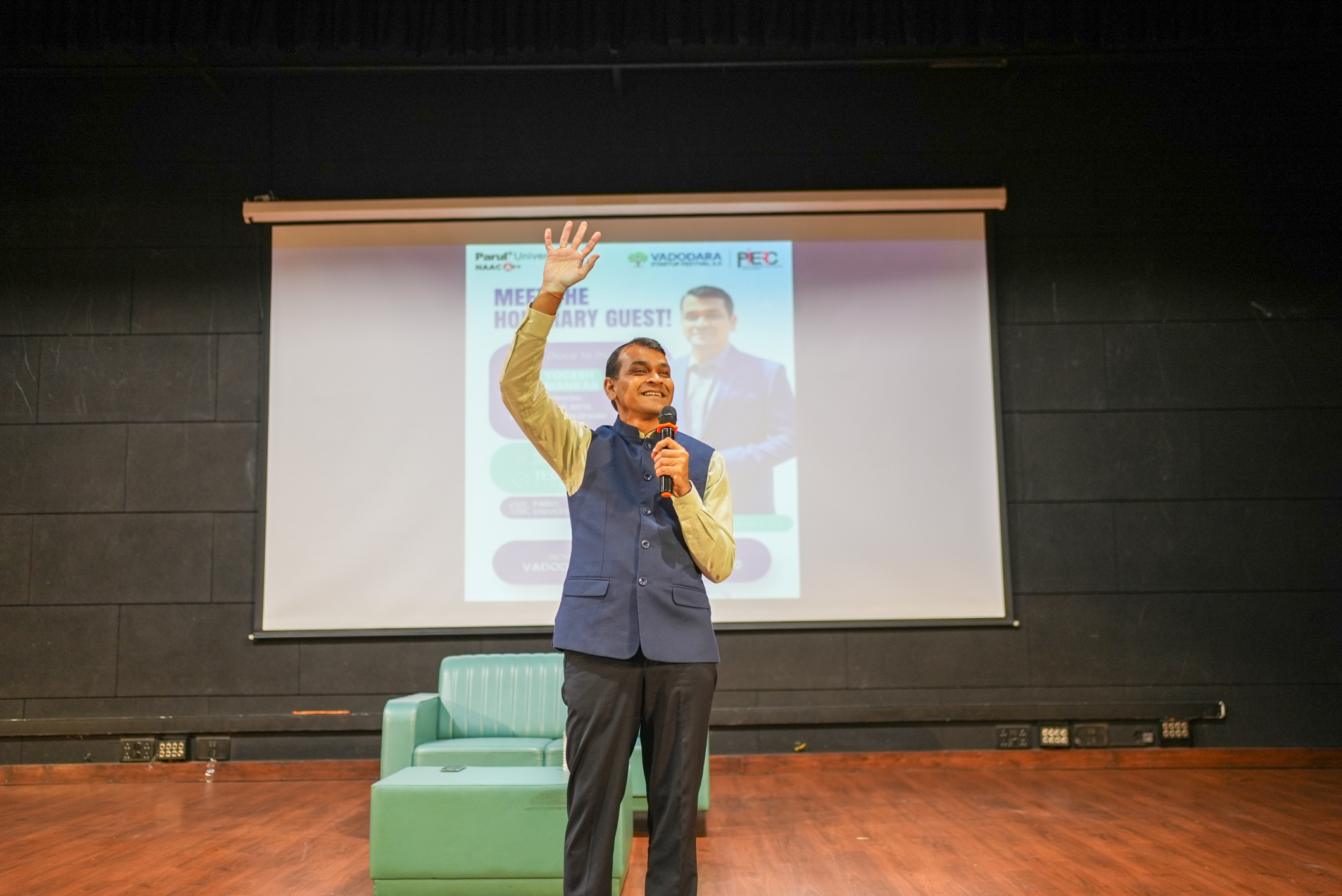
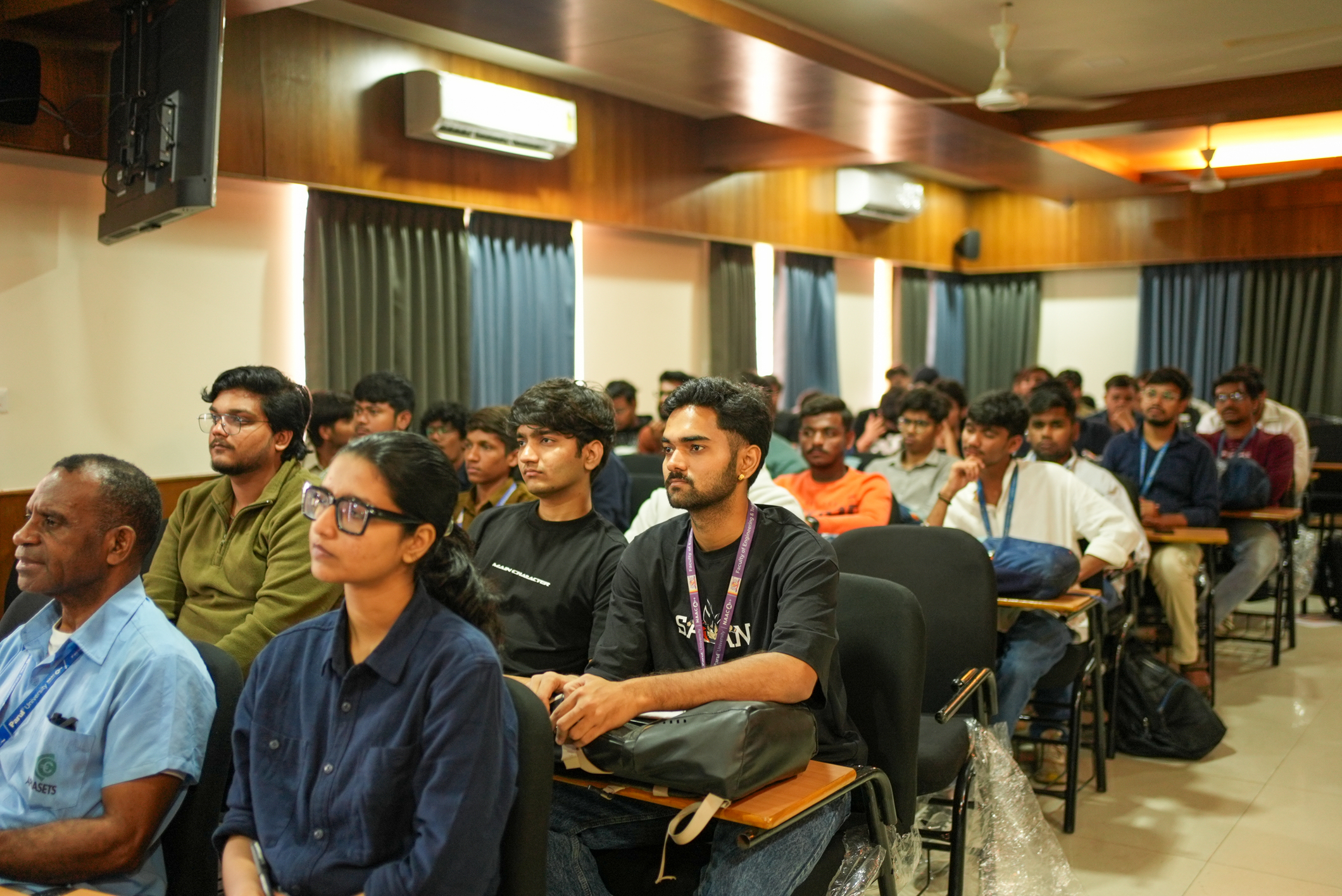
Talent opens doors. Persistence keeps them open. At VSF – Vadodara Start-up Festival 6.0, founders who succeeded didn’t have the most talent. They just refused to stop trying.
The most dangerous lie in entrepreneurship: talent determines success.
It doesn’t. Persistence does.
At Vadodara Startup Festival 6.0, Kavish Gadia CEO of ExcelOne and founder of Stones2Milestones distilled this truth into five words:
“Just one more time.”
That’s the quality every entrepreneur must possess. Not a genius. Not connections. Not perfect timing. Just the willingness to try one more time when everyone else quits.
The ₹20,000 Vegetable Business That Taught Everything
Anurag Sundarka’s first venture generated exactly ₹20,000 in total sales.
Saralife.com a vegetable delivery service. Complete failure by any metric.
Most people would have stopped there. Returned to campus placement. Secured a corporate job. Told themselves entrepreneurship “wasn’t for them.”
Anurag tried one more time.
Then again. And again.
ZebraLearn now generates ₹10.7 crore annually. Appeared on Shark Tank Season 4. Secured ₹1 crore from Ritesh Agarwal.
The difference between ₹20,000 total and ₹10.7 crore annual? “Just one more time.”
The Introverted Student Who Couldn't Speak
Rajat Singhania described himself as “a very big introvert” during school.
Public speaking terrified him. Conversations drained him. Eye contact felt impossible.
Most introverts accept this limitation. They choose careers that minimize social interaction. They avoid leadership roles. They let personality define boundaries.
Rajat tried one more time. Then another. For 35 years.
At VSF – Vadodara Start-up Festival 6.0, he spoke confidently to hundreds. Managed six simultaneous startups. Built HyLyt and five other ventures.
Talent didn’t change his personality. Persistence changed his capabilities.
English Was Miserable. So He Tried Again.
Kavish Gadia aced academics. But his English? “Miserable.”
His sisters mocked his pronunciation. Simple words felt impossible. IIM Lucknow’s curriculum seemed beyond reach.
He could have chosen a different path. Something that didn’t require English mastery. Something safer.
Instead, he tried one more time.
Forced himself to learn. Practiced presentations obsessively. Endured bullying for his Rajasthani accent. Delivered anyway.
Result: 14 job offers from companies like KPMG. Eventually, CEO of ExcelOne. Founder of Stones2Milestones, employing 600 people and helping 3.1 million children develop reading habits.
Natural talent for English? Zero. Willingness to try one more time? Infinite.
Why Talent Is Overrated
Society worships talent:
- “You’re a natural leader”
- “She has a gift for sales”
- “He’s naturally charismatic”
This language is dangerous. It implies skills are innate rather than developed. That some people have unfair advantages others can’t overcome.
The founders at VSF – Vadodara Start-up Festival 6.0 destroy this myth:
Kavish wasn’t naturally eloquent. He practiced until eloquence emerged.
Rajat wasn’t naturally confident. He forced himself into uncomfortable situations for 35 years.
Anurag wasn’t naturally entrepreneurial. He failed, learned, and tried again.
Mayank didn’t have natural access to opportunities. He built Scholify to create access for others.
Talent provides an initial advantage. Persistence creates lasting success.
The Kavish Gadia Formula: Just One More Time
Kavish’s closing message at VSF – Vadodara Start-up Festival 6.0 deserves full attention:
“One quality every entrepreneur must possess is the willingness to try ‘just one more time.’ Entrepreneurship is not defined by uninterrupted success, but by the ability to continue despite setbacks, rejection, and uncertainty.”
This reframes everything.
Success isn’t avoiding failure. It’s surviving enough failures to eventually succeed.
Entrepreneurship isn’t smooth upward progress. It’s chaotic attempts that occasionally work.
Persistence isn’t stubbornness. It’s strategic repetition with incremental improvement.
What 'Just One More Time' Actually Requires
The phrase sounds simple. Implementation is brutal.
It requires psychological resilience. Every failure hurts. Every rejection stings. Trying again means voluntarily exposing yourself to more pain.
It requires an economic buffer. You need survival resources while attempts fail. This is why starting in college with housing, food, and low costs provides an unfair advantage.
It requires social support. Family, friends, mentors who don’t abandon you after failure number three, four, or five.
It requires learning capacity. Trying the same thing repeatedly without adjustment is insanity. Each attempt must incorporate lessons from the previous.
It requires time. Kavish’s 35-year timeline. Rajat’s six ventures. Anurag’s progression from ₹20K to ₹10.7 crore. None happened overnight.
The Difference Between Persistence and Stubbornness
Critics confuse persistence with stubbornness:
Stubbornness: Repeating the same failed approach expecting different results.
Persistence: Maintaining the goal while adjusting tactics based on feedback.
Anurag didn’t keep building vegetable delivery services. He maintained the goal of building a successful venture but pivoted to visual learning.
Kavish didn’t keep struggling with English. He learned it through deliberate practice.
Rajat didn’t force himself into transport forever. He exited when satisfaction disappeared and built other ventures.
Persistent people adjust methods. Stubborn people defend them.
Why Most People Quit Too Early
The pattern repeats across industries:
Attempt 1: Fail. “That didn’t work, but I learned something.”
Attempt 2: Fail. “Maybe I need a different approach.”
Attempt 3: Fail. “Is this even viable?”
Attempt 4: Fail. “I’m probably not cut out for this.”
Attempt 5: Quit. Return to the safe option.
Success often arrives at attempt 6, 7, or 15.
The people who quit at attempt 5 never know how close they were.
Kavish’s message: “Persistence often determines long-term outcomes more than talent or background.”
Not sometimes. Not occasionally. Often.
The Role of Institutional Support: PIERC's Safety Net
Persistence is easier with infrastructure.
PIERC provides:
- Funding for multiple attempts
- Mentorship when attempts fail
- Workspace to keep building
- Community of others persisting
This support structure makes “just one more time” financially and emotionally viable.
Without it, many founders quit not because they lack persistence, but because they can’t afford another attempt.
Parul students have an unfair advantage: institutional permission to fail repeatedly while learning.
The Compound Effect of Repeated Attempts
Each attempt teaches:
Attempt 1: Customer acquisition is harder than expected.
Attempt 2: Pricing models matter more than features.
Attempt 3: Cash flow management determines survival.
Attempt 4: Team dynamics make or break execution.
Attempt 5: Market timing beats perfect products.
By attempt 6, you’ve accumulated lessons attempts 1-5 never had.
This is why experienced founders move faster. They’re not smarter. They’ve just paid tuition through previous failures.
The Psychological Battle Nobody Warns You About
Trying one more time after failure requires defeating internal voices:
“You’re wasting time.” Maybe. Or maybe you’re one attempt away from breakthrough.
“Everyone else has moved on.” Irrelevant. Their timeline isn’t yours.
“You’re too old/young/poor/inexperienced.” Kavish, Rajat, Anurag, Mayank all had limiting circumstances. All succeeded anyway.
“This is embarrassing.” Only if you let it be. Reframe failure as data collection.
Persistence requires silencing these voices daily. Sometimes hourly.
When to Quit vs. When to Persist
The hardest question: when is persistence wisdom and when is it delusion?
Persist when:
- You’re learning and improving with each attempt
- Market feedback suggests demand exists
- You have runway for multiple more attempts
- The problem genuinely matters to you
- Adjusting tactics shows promise
Quit when:
- You’re repeating the same mistakes
- No market validation after extensive testing
- It’s destroying your health or relationships
- You’ve lost intrinsic motivation
- Better opportunities clearly exist elsewhere
Rajat quit his transport business not from lack of persistence, but because satisfaction disappeared. That’s strategic quitting.
The Space for Everyone Philosophy
Kavish ended his VSF – Vadodara Start-up Festival talk with reassurance:
“There is space for everyone in the world.”
This matters because competition anxiety kills persistence.
“Someone else is already doing this.”
“The market is saturated.”
“I’m too late.”
These thoughts stop people from trying one more time.
But markets are vast. Needs are diverse. Execution matters more than timing.
Multiple mental health platforms exist. Eternia still found users.
Multiple educational platforms exist. Scholify still ranks above Byju’s for specific services.
Multiple data management tools exist. HyLyt still solves problems competitors miss.
Space exists. Persistence finds it.
Practical Strategies for Sustaining Persistence
How to actually keep trying when everything says stop:
- Reduce attempt cost. Make each try cheaper time, money, emotional investment. Lower cost enables more attempts.
- Celebrate small wins. Don’t wait for ultimate success. Mark progress: first customer, first dollar, first positive feedback.
- Document learning. After each attempt, write what you learned. Visible progress combats feeling stuck.
- Find persistence peers. Surround yourself with people also trying repeatedly. PIERC provides this community.
- Set attempt quotas, not timelines. “I’ll try 10 different approaches” beats “I’ll succeed by December.” You control attempts, not outcomes.
- Separate identity from results. You’re not a failure. Your attempt failed. Different things.
Why Student Entrepreneurs Have Persistence Advantage
College provides unique conditions for persistence:
Low living costs. Campus housing and meals cost less than supporting yourself post-graduation.
Flexible schedules. Semester breaks. The lighter course loads some terms. Time to attempt and recover.
Social safety net. Family still supports you. Less pressure to succeed immediately.
Institutional backing. PIERC exists to enable multiple attempts through funding and mentorship.
Peer community. Others attempt simultaneously. Shared struggles normalize persistence.
Post-graduation, these advantages disappear. Rent, bills, family expectations all compress the timeline and increase cost per attempt.
Student entrepreneurs who leverage college years to fail repeatedly, cheaply, and instructively build unfair advantages.
The Bottom Line: Just One More Time
Talent gets you started. Persistence gets you finished.
Every founder who succeeded at VSF – Vadodara Start-up Festival 6.0 shared this trait: they tried one more time when quitting made sense.
Kavish could have accepted language limitations. Tried one more time.
Rajat could have stayed introverted. Tried one more time.
Anurag could have quit at ₹20,000. Tried one more time.
Mayank could have accepted financial constraints. Tried one more time.
The pattern is clear. The lesson is simple. The execution is brutal.
Just. One. More. Time.
Not because it feels comfortable. Not because success is guaranteed. But because persistence compounds and talent doesn’t.
If you’re a student at Parul University, you have infrastructure supporting repeated attempts. PIERC provides funding, mentorship, workspace, and community.
Use it. Fail fast. Learn faster. Try again.
Your first attempt probably won’t work. Your second might not either. Maybe not your fifth.
But if you keep trying adjusting, learning, and improving eventually one will.
The founders at VSF – Vadodara Start-up Festival 6.0 proved it. 250+ PIERC startups proved it. ₹40+ crores in revenue proved it.
Talent matters. Background matters. Timing matters.
But persistence matters more.
So when you fail and you will remember Kavish’s words:
“Just one more time.”
That’s the quality every entrepreneur must possess.
Everything else is negotiable.
FAQs
1. What is the Vadodara Startup Festival?
The Vadodara Startup Festival is one of India’s largest startup events hosted by Parul University, bringing together founders, investors, students, and innovators.
2. Why is persistence important in entrepreneurship?
Persistence allows founders to learn from failures, improve strategies, and continue building despite challenges, which is often the key factor behind long-term success.
3. What lessons did founders share at VSF - Vadodara Start-up Festival about persistence?
Founders emphasized trying repeatedly, learning from failure, adapting strategies, and staying committed to solving meaningful problems.
4. How does Parul University support student entrepreneurs?
Parul University supports founders through incubation programs like PIERC, mentorship from industry experts, funding opportunities, and startup events.
5. Can students build startups while studying?
Yes. Many students at Parul University build startups while studying by leveraging campus resources, mentorship, and flexible academic opportunities.
6. Why do startup founders talk openly about failure?
Failure provides valuable lessons about markets, execution, and strategy that help founders build stronger businesses in the future.


