Stephen Hawking, Jeff Bezos, and Dr. APJ Abdul Kalam walked into a framework here’s the entrepreneurship model that explains why most people quit before they start.
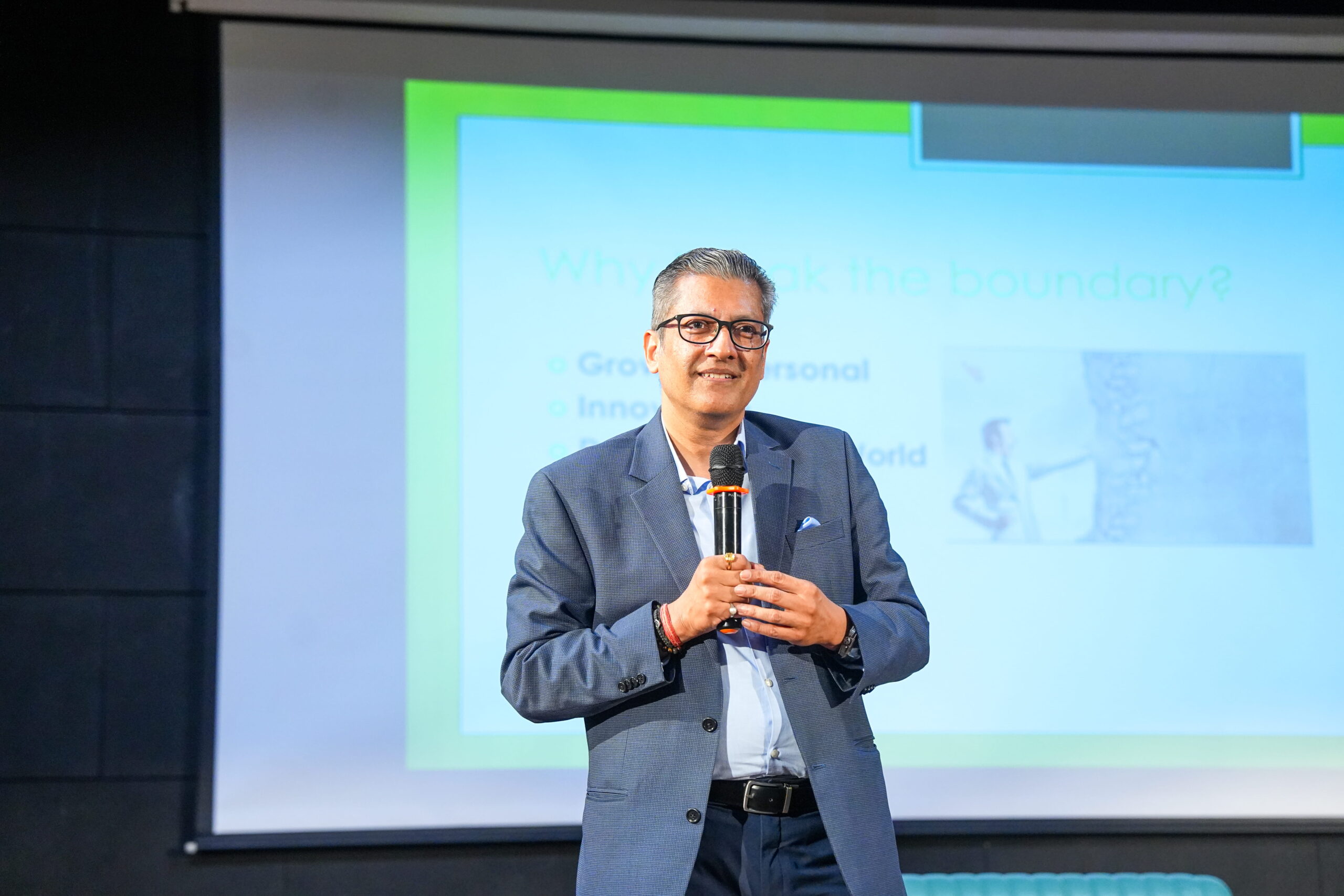
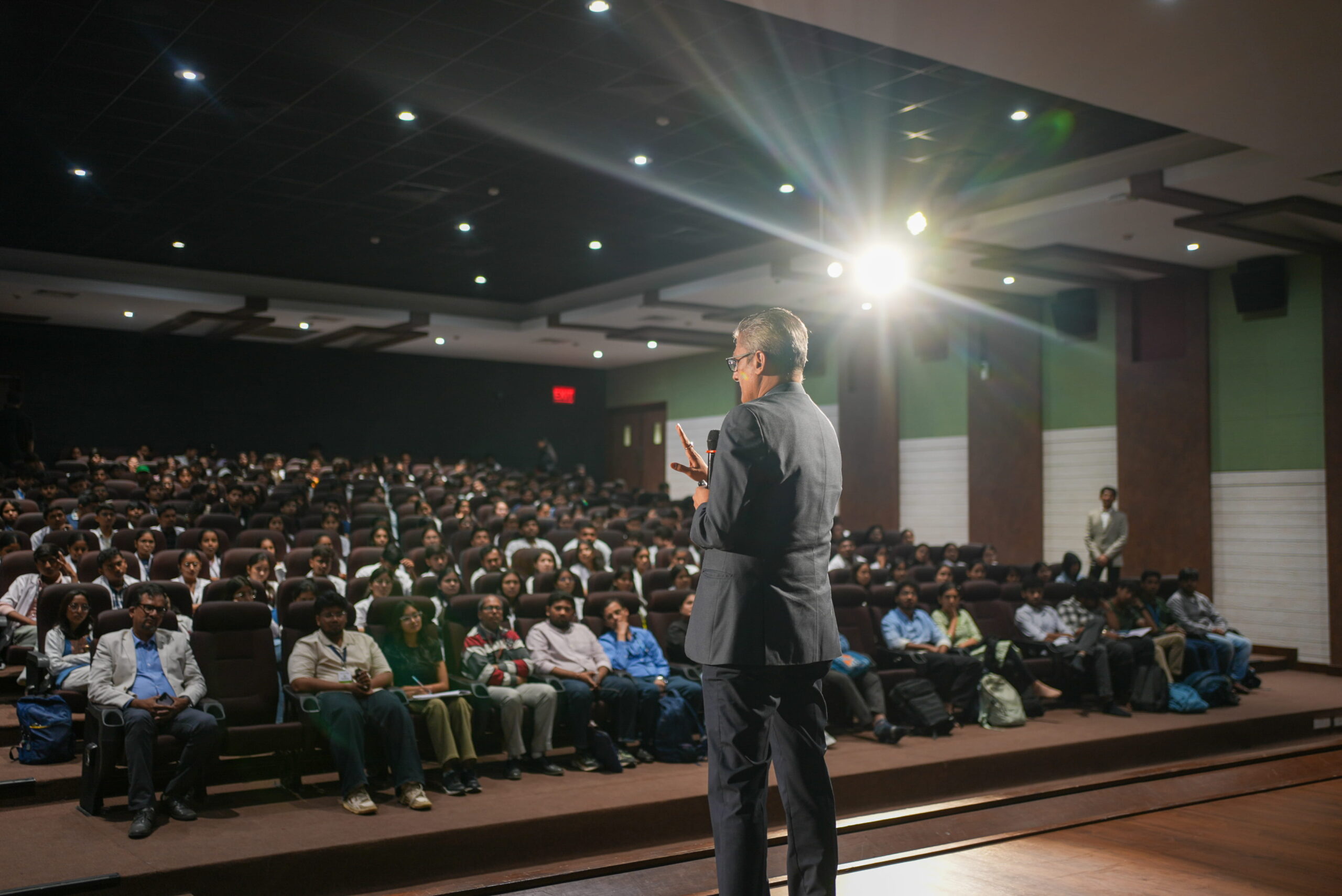
Rajat Singhania stood before hundreds of students at Vadodara Startup Festival 6.0 and asked a deceptively simple question:
“What do you understand by boundaries?”
Answers came flooding: limits, personal space, constraints on ideas, physical restrictions.
“All correct,” he said. “And all incomplete.”
Then he introduced what might be the most practical framework for understanding entrepreneurial success and failure: the 3-Boundary Model.
Every entrepreneur hell, every person operates within three primary types of boundaries:
- Physical Boundaries (limitations related to physical ability or circumstances)
- Economic Boundaries (financial constraints and resource limitations)
- Mental Boundaries (self-imposed limits shaped by beliefs, fear, or conditioning)
Here’s what makes this framework powerful: It doesn’t deny that boundaries exist. It just reframes them from permanent walls into temporary obstacles.
And it uses real stories not motivational poster platitudes to prove the point.
Physical Boundaries: When Your Body Says No
Let’s start with the boundary that feels most insurmountable.
Stephen Hawking couldn’t move. Couldn’t speak without assistance. Couldn’t perform basic functions most people take for granted.
ALS is one of the cruelest physical limitations imaginable.
His contribution: Revolutionized our understanding of black holes, time, and the universe itself. Became one of the most influential scientists in history.
The boundary existed. He broke it anyway.
The lesson Rajat emphasized: Physical challenges don’t limit ambition or achievement. They limit certain approaches, forcing innovation in others.
This isn’t inspiration porn. It’s pattern recognition.
When physical boundaries exist, successful entrepreneurs don’t pretend they don’t. They find workarounds, build systems, leverage technology, or redefine what success looks like within those constraints.
At PIERC (Parul Innovation & Entrepreneurship Research Centre), several startups exemplify this:
- BREVA (breast cancer screening startup) exists specifically to overcome the physical boundary of difficult healthcare access. They’re building instant, accessible screening solutions because traditional methods involve physical infrastructure many people can’t reach.
- Neuroxa Products provides affordable first-aid solutions, recognizing that physical emergencies shouldn’t be limited by financial access to care.
Physical boundaries create opportunities for those willing to solve them.
Economic Boundaries: When Your Wallet Says No
This boundary is different because it feels more definitive than it actually is.
Dr. A.P.J. Abdul Kalam’s story demolishes that perception.
The reality: His scholarship was discontinued. He had to study under a street lamp because he couldn’t afford better lighting.
The outcome: President of India. Father of India’s missile program. One of the most respected scientists and leaders globally.
Rajat highlighted this deliberately: “Economic constraints can be overcome through hard work and discipline.”
But let’s be honest, that sounds like bootstrapper mythology unless you understand the mechanics.
How economic boundaries actually get broken:
- Resourcefulness Over Resources You can’t always get what you need. You can always figure out an alternative.
- Strategic Sequencing Dr. Kalam didn’t try to do everything at once. He focused on what was immediately achievable with available resources.
- Discipline That Compounds Small sacrifices daily creates opportunities yearly. There’s no shortcut version.
- Ecosystem Support This is where institutions like PIERC matter. They provide:
- ₹14.53 crores+ in startup funding
- Co-working spaces reducing overhead
- Mentorship eliminating expensive mistakes
- Access to networks that would otherwise require capital to enter
Student entrepreneurs at Parul University get something rare: the ability to test ideas without financial ruin.
The economic boundary still exists; they’re still students without unlimited capital. But it’s lowered enough to be crossable.
Examples from VSF – Vadodara Start-up Festival 6.0:
Mayank Pareek (Scholify founder) faced economic boundaries trying to pursue his MBA. Couldn’t afford admissions, internships, or proper guidance.
His response: Build a platform that’s disbursed ₹7-8 crores in scholarships to students facing identical barriers.
Anurag Sundarka (ZebraLearn) started with ₹20,000 in vegetable sales. Eventually built a company doing ₹10.7 crores in revenue.
The pattern: Economic boundaries aren’t permanent. They’re just current constraints requiring creative navigation.
Mental Boundaries: When Your Mind Says No
This is the boundary that kills more startups than the other two combined.
Why? Because mental boundaries are invisible, self-imposed, and reinforced by everyone around you telling you “that’s just how things are.”
Jeff Bezos broke one of the biggest mental boundaries in retail history.
The prevailing belief in the 1990s: People need to touch books, flip through pages, smell the paper before buying. Online book sales would never work.
Jeff’s counterargument: “What if convenience matters more than tactility?”
He challenged a mental model everyone accepted as truth. The result: Amazon.
The PIERC advantage for boundary-breaking:
- 250+ startups incubated (each representing boundaries broken)
- ₹₹100 crores+ investment raised (economic boundaries lowered)
- 1400+ jobs created (mental boundary of “startups don’t create real employment” demolished)
- 110+ intellectual properties (innovation as tangible output, not just aspiration)
These numbers represent systematic boundary reduction.
The Jar Model: Managing Boundaries Simultaneously
Kavish Gadia (CEO of ExcelOne, Founder of Stones2Milestones) introduced a complementary framework during his VSF – Vadodara Start-up Festival 6.0 talk:
Life as a jar containing:
Rocks: Non-negotiable priorities (health, family)
Pebbles: Important commitments (work, responsibilities)
Sand: Personal growth and hobbies
Water: Distractions
The rule: Rocks must go in first.
Why this matters for the 3-Boundary Framework:
You can’t break all three boundaries simultaneously without destroying the rocks. Physical health, mental well-being, family stability these need protection even while you’re challenging limits.
Kavish outlined five aspects entrepreneurs must manage:
- Physical fitness
- Emotional well-being
- Mental well-being
- Material wealth
- Personal peace
Break boundaries in some areas. Protect them from others.
Four Stages of Boundary-Breaking (The Uncomfortable Truth)
Yogesh Brahmankar (Innovation Director, AICTE) outlined the emotional journey you’ll experience:
- Stage 1: People ignore you (Your boundary-breaking isn’t threatening enough to matter yet)
- Stage 2: They laugh at you and demotivate you (Now you’re visible enough to mock. Your concept challenges their worldview)
- Stage 3: They resist you (You’re threatening enough that people actively try to stop you)
- Stage 4: They take credit for your success (Same people who laughed now claim they supported you from the beginning)
This isn’t pessimism, it’s pattern recognition.
Knowing these stages in advance doesn’t make them easier. But it makes them expected rather than shocking.
When people laugh at your boundary-breaking attempt, you’re in Stage 2. Progress, not setback.
The Closing Framework
Rajat ended his VSF – Vadodara Start-up Festival 6.0 talk with specific directives:
“Do the right thing even if you are the only one doing it and even if it takes longer.”
“If you’re not stubborn, you’ll give up on experiments too soon. And if you’re not flexible, you’ll pound your head against the wall and won’t see a different solution to a problem you’re trying to solve.” (Jeff Bezos quote)
“Prepare yourself to achieve your goals and win even in the toughest situations.”
“When you are driven by vision, passion, and purpose, all boundaries physical, economic, locational, and mental can be broken.”
This is the framework condensed:
Boundaries exist. Denying them is delusional.
Boundaries are breakable. Accepting them as permanent is defeatist.
Breaking boundaries requires vision (knowing where you want to go), passion (fuel for the journey), and purpose (reason beyond yourself).
The 3-Boundary Framework isn’t motivational theory. It’s operational reality.
Student entrepreneurs at Parul University, supported by PIERC’s ecosystem, have specific advantages:
- Economic boundaries lowered through funding and resources
- Physical boundaries reduced through infrastructure and prototyping facilities
- Mental boundaries challenged through exposure to founders who’ve already broken them
The framework gives you language for your limitations and roadmap for your breakthroughs.
Whether you’re studying under a street lamp like Abdul Kalam, challenging payment cycles like Rajat, or building in a market “too saturated” like Canva’s founder, the boundaries you face have been broken before.
Your job: Break them again, in your specific context, for your specific problem.
That’s not inspiration. That’s instruction.
Frequently Asked Questions
1. What is the 3-Boundary Framework introduced at the Vadodara Startup Festival?
The 3-Boundary Framework explains that every entrepreneur operates within three types of limitations: physical, economic, and mental. Introduced by Rajat Singhania at the Vadodara Startup Festival 6.0, the framework teaches that these boundaries are not permanent barriers but challenges that can be overcome through innovation, discipline, and the right support systems.
2. Why are mental boundaries considered the biggest obstacle for entrepreneurs?
Mental boundaries are self-imposed limits created by fear, social conditioning, and doubt. Unlike physical or economic barriers, they are invisible but powerful. Many startup ideas fail not because resources are unavailable, but because founders believe something cannot be done.
3. How do startup ecosystems help entrepreneurs overcome economic boundaries?
Startup ecosystems such as incubation centers provide mentorship, funding, infrastructure, and networking opportunities. At PIERC (Parul Innovation & Entrepreneurship Research Centre), student entrepreneurs receive access to co-working spaces, funding support, and industry mentors that significantly reduce financial barriers when building startups.
4. Can physical limitations really lead to innovation?
Yes. Physical limitations often force entrepreneurs to think creatively and build alternative solutions. For example, startups working in healthcare or accessibility frequently emerge from the need to solve real physical challenges faced by people or communities.
5. What is the key takeaway from the 3-Boundary Framework for aspiring founders?
The core message is that boundaries are not permanent walls. With vision, persistence, and the right environment, entrepreneurs can transform limitations into opportunities and build impactful ventures despite constraints.
This article is based on signature talks from Vadodara Startup Festival 6.0, organized by PIERC (Parul Innovation & Entrepreneurship Research Centre) at Parul University, with specific focus on Rajat Singhania’s “Breaking Boundaries” framework and supporting examples from other speakers.


