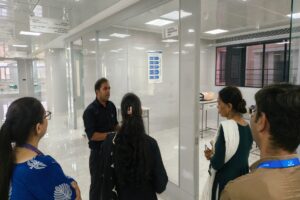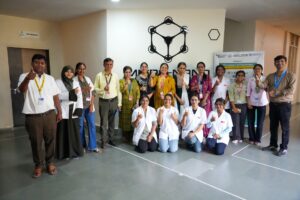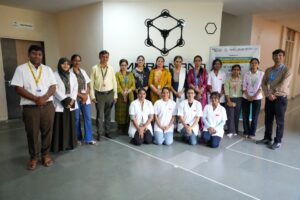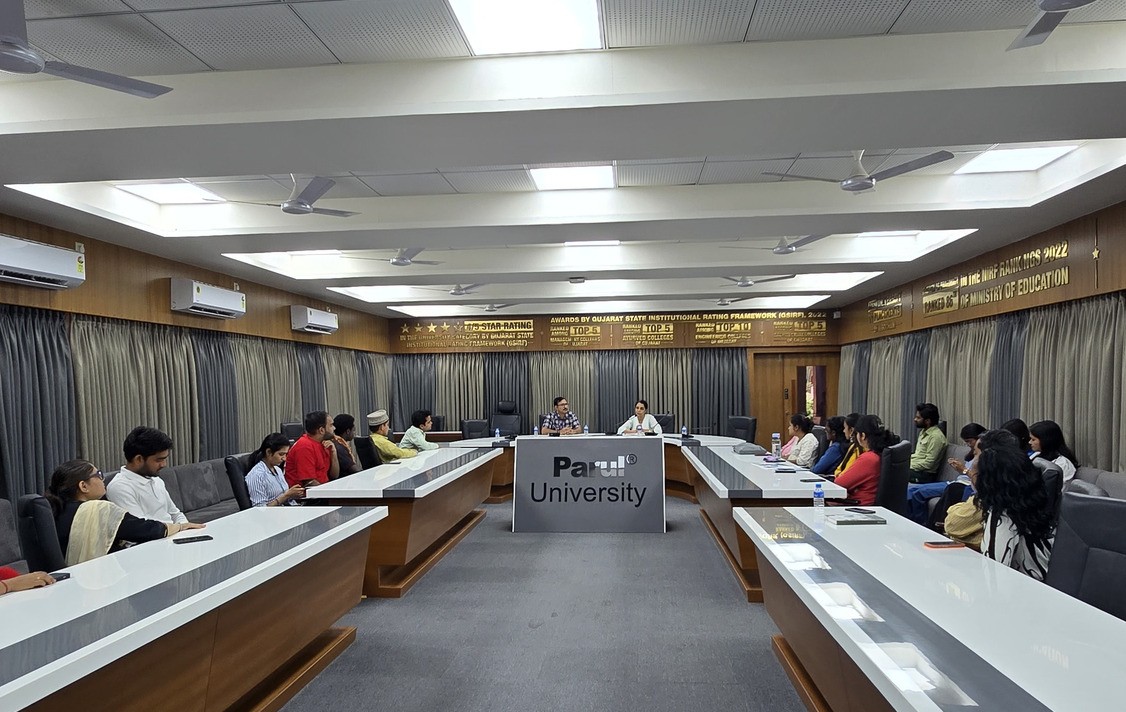
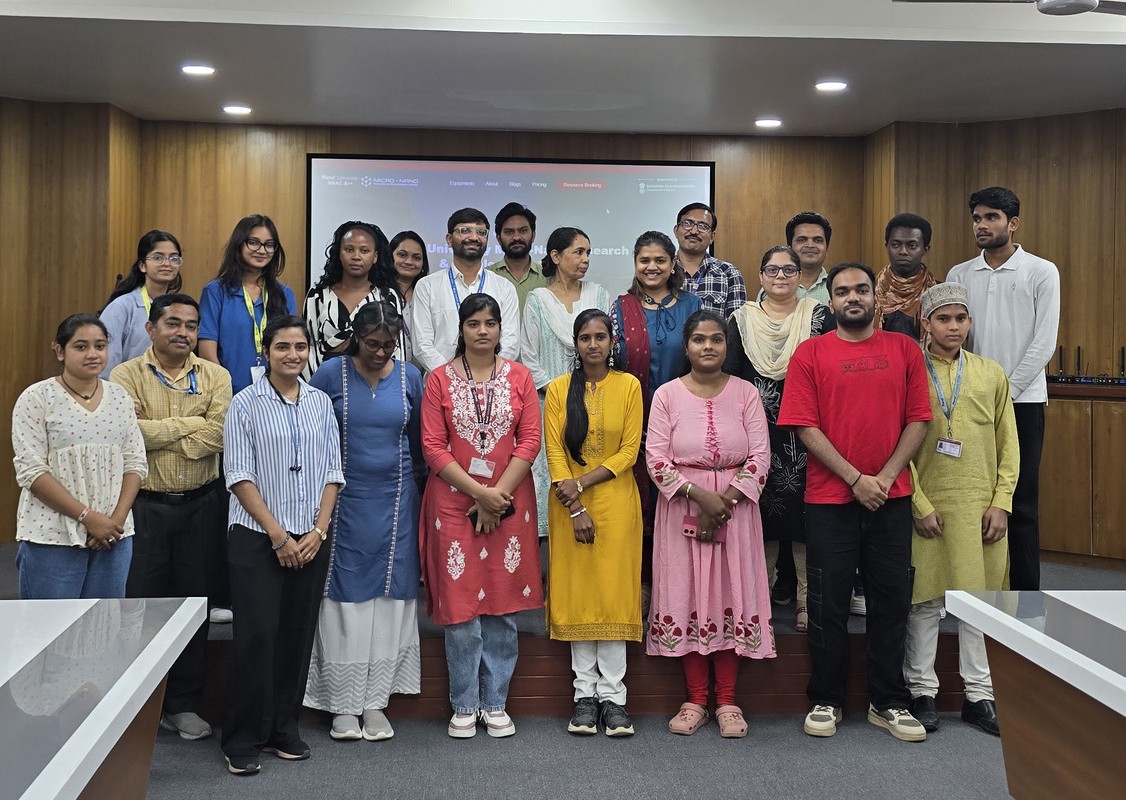
Parul University’s MNRDC conducted a 3-day hands-on training on Electron and Probe Microscopy from February 25-27, 2026. 17 participants from pharmacy, Ayurveda, biotechnology, civil engineering, mechanical engineering, food technology, electronics, and genetics were trained!
Parul University’s Micro-Nano Research & Development Center (MNRDC) is one of India’s most comprehensively equipped university-level material characterisation facilities. Established in 2023 under Gujarat Industrial Policy 2020 and formally inaugurated on 5 March 2025, the center received Rs.1.49 crore from the Industries Commissionerate, Government of Gujarat. Led by Sr. Prof. Dr. Anand Joshi and Prof. Dr. Unnati Joshi – both PhD graduates from IIT Roorkee – and supported by a 17-member full-time research team, the MNRDC was built to solve a critical gap in Gujarat’s research ecosystem: the absence of a single, comprehensive advanced testing facility in the region.
Before the MNRDC, Gujarat researchers sent samples to facilities in Mumbai, facing turnaround times of up to three months. The MNRDC delivers standard results within 10 working days and urgent results within one day, with a 99.9% instrument uptime record across its 10-instrument portfolio. If you wish to grow your career in the same domain, explore Bachelors of Science in Biotechnology at Parul University.
Why This Workshop Was Significant
The 3-Day Hands-On Training on Electron and Probe Microscopy for Surface Analysis in Health Sciences, Nanotechnology, and Materials Research was remarkable for its disciplinary breadth. Most microscopy training events in India target materials science or physics. This workshop deliberately included pharmacy, Ayurveda, civil engineering, food technology, and genetics researchers. The resulting cross-disciplinary exchange created connections and insights that no single-department training could have produced. Explore Admissions for 2026 and start building your future in innovation and technology.
The workshop was supported by the Shri B. V. Patel Education Trust, whose Deputy Director Dr. Neeta Shrivastava was personally present throughout the final day’s review session. Founded in 1974, the Trust has championed practical, hands-on learning over passive instruction – a philosophy that shaped every element of this programme. Dr. Shrivastava described the workshop as a direct reflection of the Trust’s mission: bridging the gap between knowledge and capability.
Day 1 Morning - Prof. Dr. V. Ganesan on Surface Characterisation
The workshop opened with a landmark session by Prof. Dr. V. Ganesan, Dean of Research Affairs at Medicaps University, Indore, and former Centre Director of the UGC-DAE Consortium for Scientific Research. With nearly 40 years of research experience, over 500 published papers, and more than 10,000 citations, and recipient of the CSR Scientific Excellence Award (2010), Prof. Ganesan delivered a masterclass on Introduction to Surface Characterisation in Material Science.
He moved from the role of imagination in scientific discovery – invoking Srinivasa Ramanujan and Shakuntala Devi – to Scanning Probe Microscopy (SPM), Scanning Tunneling Microscopy (STM), Atomic Force Microscopy (AFM), Magnetic Force Microscopy (MFM), quantum dots, superconductors, and ion irradiation effects. Every participant named this session the highlight of the three days. Dr. Dnyaneshwari Vyawahare of the Parul Institute of Ayurved and Research called meeting Prof. Ganesan professionally refreshing. Dr. Tularam Barot of pharmacy registered for the workshop overnight specifically because Prof. Ganesan was presenting.
Day 1 Afternoon - Dr. Mahendra Singh Rathore on SEM Image Interpretation
Dr. Mahendra Singh Rathore, Associate Professor (Research Cadre) at the MNRDC, delivered the afternoon session on Surface Analysis Techniques: Image Interpretation. His systematic coverage of SEM components, imaging modes (SE and BSE), five critical operating parameters (accelerating voltage, working distance, spot size, astigmatism, aperture), and AFM measurements prepared participants for the following day’s hands-on lab. His image analysis content was so valuable that Neha Kulshreshtha from chemical engineering recorded it for personal reference. If you’re passionate about Chemical Engineering, apply now!
Day 2 - Hands-On SEM-EDS with Dr. Vidhi Pathak and Mr. Piyush Panchal
Day 2 moved from boardroom to laboratory. Dr. Vidhi Pathak, Technical Assistant and Mr. Piyush Panchal, Project Associate at the MNRDC, led the complete SEM-EDS workflow on the Hitachi SU3800 – from sample preparation (tape selection, drying, powder spreading, contamination prevention) through sputter gold coating, chamber loading, vacuum pump-down, beam activation, image capture, and EDS elemental mapping. Three samples – micro algae (liquid), nano fibre (solid), ZnO + polyether ketone (powder) – were prepared and analysed live. The central lesson she returned to throughout: sample preparation determines everything.
Day 3 - Dr. Piyush Solanki's AFM Masterclass and WSxM Tutorial
Dr. Piyush Solanki, Assistant Professor in Physics at Saurashtra University and member of the Functional Oxides Research Group, delivered Day 3’s morning session on Atomic Force Microscopy: A Versatile Tool for Nanoscale Surface Analysis. He covered AFM history, operating principles, imaging modes (Contact, Non-Contact, Tapping), and an extended live WSxM 5.0 Develop software tutorial using data from his own research – demonstrating roughness extraction, grain size analysis, 3D visualisation, and export for publication. He also covered AFM applications specifically relevant to the health science participants: cell surface imaging, cancer cell mechanics, and drug-cell interaction studies.
The final hands-on session was led by Mr. Vijay Bhaskar of Inkarp Instruments Private Limited, bringing an industry perspective on real-world surface analysis applications and closing the three days with a practical, forward-looking conclusion.
Participant Impact - 12 Reviews Across 10 Disciplines
The Day 3 review session produced testimony that crossed every disciplinary boundary. Mohammad Zaheer (Mechanical Engineering) admitted not knowing what SEM or AFM stood for when he registered – and left having learned from pharmacy, biotech, civil, and food technology researchers in the same room. Sandip Basu (Food and Dairy Technology) came away fascinated by cancer cell imaging. Aaftabsha Diwan (Electronics and Communication Engineering, Diploma) connected nanoscale precision directly to electronics manufacturing quality control. Namrata Vishwakarma and Jahnavi Kondapalli travelled from VIT Bhopal specifically for the hands-on experience. If you’re passionate about the impact of engineering, explore Engineering Programmes and start building your career today!
PhD scholars Srishti Rawal (Chemical Sciences) and Moutughimou Ben Ali (Genetics), both active researchers who needed SEM and AFM for their doctoral work, described the workshop as filling critical gaps in their instrument knowledge. Dr. Dnyaneshwari Vyawahare (Ayurveda) articulated why these instruments matter even in traditional medicine: in an evidence-based research world, characterising grain size and morphology of Ayurvedic preparations is essential for scientific validation.
FAQs
Who can attend MNRDC workshops at Parul University?
MNRDC workshops are open to faculty members, PhD and Master's students, research scholars, and industry professionals from any discipline. The 3-day microscopy workshop included participants from pharmacy, Ayurveda, biotechnology, civil engineering, mechanical engineering, food technology, electronics, and genetics from institutions including Parul University and Vellore Institute of Technology.
What instruments are available at the MNRDC?
The MNRDC houses a Hitachi SU3800 SEM with EDS, Bruker D6 PHASER XRD, Nanosurf Core AFM, Pin-on-Disc Tribometer, LCR Meter ZM2376, RF/DC Magnetron Sputtering System, Piezo-based Dynamometer, CNC Micro Machine Tool, Stir Casting Machine, and Compression Molding Machine. A Differential Scanning Calorimeter and Simultaneous Thermal Analyzer (both Hitachi Japan) are in procurement.
How long does sample testing take at the MNRDC?
Standard sample testing at the MNRDC is completed within 10 working days. Urgent samples can be processed within a single day (4 SEM images for urgent vs 8 standard). This compares to the up-to-3-month turnaround Gujarat researchers previously faced when sending samples to Mumbai facilities.
What is the MNRDC's connection to ISRO and the Royal Academy of Engineering?
The MNRDC runs an ISRO-funded project on Shape Memory Alloy components for space applications. Its Royal Academy of Engineering UK-funded project focuses on green hydrogen production through electrolysis. The center's most significant publication - in Renewable Energy journal, Impact Factor 9.1 (Q1, 2025) - emerges from this green hydrogen research.
What disciplines benefited from the MNRDC microscopy workshop?
The 3-day workshop served pharmacy, chemical engineering, civil engineering, biotechnology, mechanical engineering, food technology, electronics and communication engineering, Ayurveda, genetics, and bioengineering - an unusually broad interdisciplinary spread. Participants included PhD scholars, faculty, diploma students, and international students from institutions across India.