The Nocturnal City: Why Cities Glitter and What They Hide
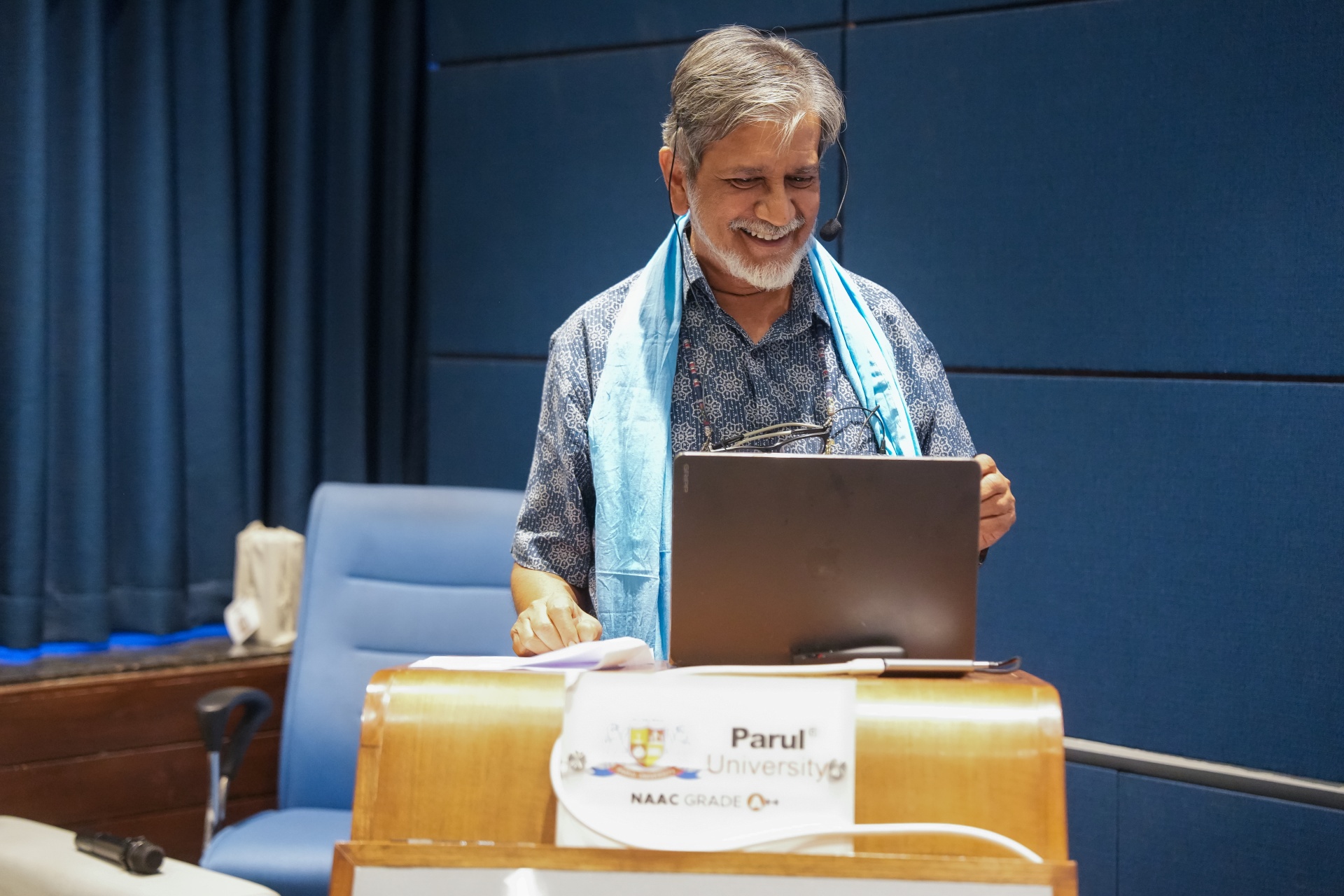
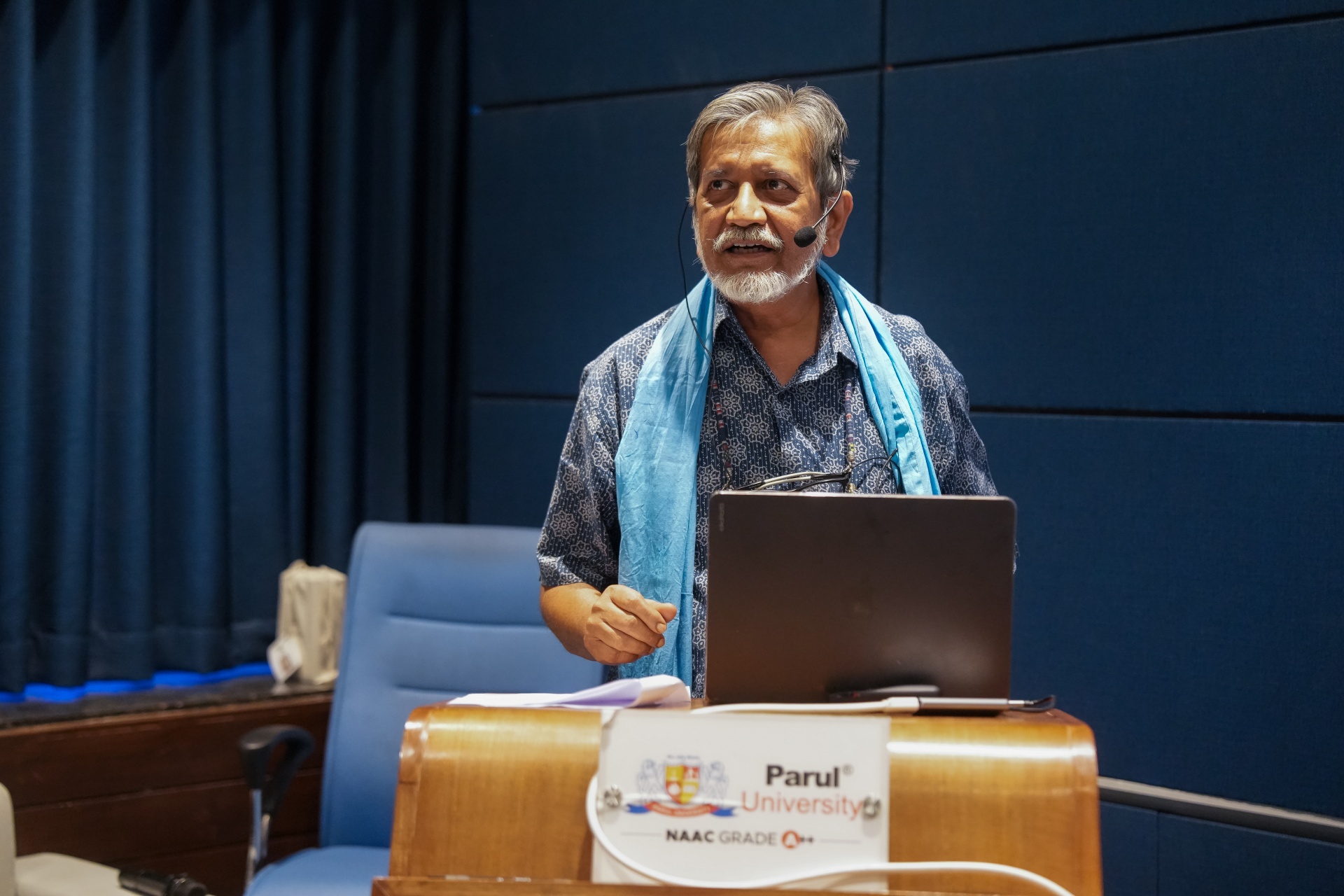
Indrapramit Roy introduced himself with six words: an artist and a teacher. His artistic persona, he said, is divided like Dr Jekyll and Mr Hyde. The day job takes the day: vocal, engaged, present. His best work happens at night, in silence, sometimes until 3 or 4 AM. Almost 95% of his practice is nocturnal. The work he presented was titled 3AM, marking nothing more than the hour he finished it. That silence, he said, has always been a guiding force in his practice.
The pandemic changed everything briefly. For the first time in years, he had uninterrupted studio hours from morning to late at night. He acknowledged the guilt of it plainly: terrible news, waves of death, the tragedy of migrant workers. On the other hand, two months of unbroken studio time. He called it the best of times and the worst of times, and said it was majorly the worst. But for his practice, it was transformative. Most of the work he presented came from that period.
His studio, he said, is a private space he rarely opens. Not from secrecy but because every visit requires cleaning, and cleaning disrupts the order hidden within the chaos. Something disappears every time. He prefers the mess. His sketchbooks are the same: not really sketchbooks but notebooks containing sketches, drawings, writings, collected images, newspaper clippings, novel excerpts, film subtitles, and calculations. A complete mess, he said. Like my head. Everything starts with drawing. He draws constantly, sometimes in the dark when ideas arrive at night, and by morning the handwriting is barely legible. Bring your imagination to life through a Bachelor of Visual Arts in Painting.
The Nocturnal City: Why Cities Glitter and What They Hide
This strand has stayed with Indrapramit Roy for a very long time. He is an urban person. Cities seen from a height glitter like scattered light on dark water. It looks like fantasy. The glitter hides something harsh. As a painter, his quest always begins with something imminently paintable. He does not paint ideas. Painting starts with something that presents itself as a visual problem, something that makes him want to pick up a brush. Cityscapes at night provide exactly that: the drama of artificial and natural light together, the theatre of twilight that exists for a moment and then vanishes.
A large painting appeared during his presentation: eight feet wide, ten feet tall, done in 2010. Night covers the city like a shadow. The theatre of light. His key insight for students: the search for an image to fit a pre-existing idea almost never works. The ideas that stay are long-term relationships. The others are one-night stands. You wake up the next morning and realise it was not what you thought.
The Windows: Hitchcock, Fulbright, and Spaces Before the Actor Arrives
The Windows series came from two sources. First: Hitchcock’s Rear Window, a man stuck indoors watching neighbours through long-range glass. The window as a border, what happens behind it seen only in fragments. Second: during his Fulbright in 2004, he was given studio space on the 19th or 23rd floor of a building that looked into many others. Something clicked.
The windows interest him because they have framing built in like a stage, they are well-lit, and they have a grid. Grid simultaneously imposes order and breaks the illusion of depth, flattening the space. What you see through a window is always charged. His paintings show no people at all. He explained: he deals most often with spaces that carry tension. He is more interested in the space than the occupant. The stage before the actor arrives. The theatre habit runs through everything because it runs through everything he is. His father was in Bohuroopi from 1949. The genuine dilemma before art college was whether to be a theatre artist or a visual artist. Explore a world of creativity, expression, and artistic learning at the Faculty of Fine Arts at Parul University.
The Mumbai Airport Mural: Bombay as a Global City at 12 by 26 Feet
The window idea arrived at its largest scale in 2013 for Terminal 2 of Mumbai International Airport. A 12 by 26 feet mural. The theme: Bombay as a global city. He built references to the Queen’s Necklace, every layer of Bombay’s life from the chawl to the high rise to the religious neighbourhood, the city at night and its relationship with water. On the right side, a raised panel sits about a foot and a half forward from the main surface showing close-up windows. He said he had real fun painting those windows. The mural is visible from the level above when arriving on an international flight.
Cactus, Noli Me Tangere, and Construction Scaffolding
Before the pandemic, he contributed to a mural at a cactus garden near the Sardar statue. The drawings and photographs of cacti stayed with him. One day, going through a drawer, he saw it. Cacti are geometrically beautiful, patterned, and they attract touch. Touch them and they spike back. Dangerous beauty. That connects directly to Noli Me Tangere, the Latin phrase from scripture meaning touch me not, spoken by Jesus to Mary Magdalene after the resurrection.
In the pandemic context, the phrase needed nothing added. Everyone was living in cubicles. Not seeing, not touching. The charged, humanly absent spaces he had been painting for years as an aesthetic proposition had suddenly become the literal condition of the world. He also noticed construction scaffoldings left standing, empty and spiky, after workers vanished in the lockdown. He looked at them and saw the cactus. Same shape. Same quality of being structured and hostile, present and abandoned. The two images connected before he quite knew it.
Clouds, Shaped Canvases, and Text in Painting
Clouds have been a persistent interest. Shape-shifters that change completely in five minutes. He got drawn to them through Paul Klee initially, then started thinking about what a cloud actually is. Clouds can be romantic (from Kalidasa onwards), but they can also be radioactive and cause acid rain. The same thing that is beautiful can be dangerous. Even the word cloud now means data storage to young people. Words accrete meaning, shed it, and pick up new meaning.
Shaped canvases were an earlier experiment. The driving question: why should painting be on a square or rectangular surface? If you accept what is given without questioning, there is no creativity. He tried unstretched canvas, India boards, shape-corrected cardboard. The shape itself was meant to suggest spatial recession, with the image responding to it.
Text in paintings arrived during the pandemic. Before that, he had not felt strongly about text inside an image. But the complexity of contradictory experience, relief and guilt simultaneously, meant the image alone was not enough. The texts come from his sketchbooks, paraphrased from newspapers, novels, essays, film subtitles. A Gertrude Stein paraphrase in one large watercolour reads: you carry your roots wherever you go and they take care of you. When you start looking for them, you admit that your roots are dying. The text does not explain the image. It sits alongside it. The intention is a third element, somewhere between looking and reading.
FAQ: Indrapramit Roy
What is the Mumbai Airport Terminal 2 mural?
A 12 by 26 feet mural by Indrapramit Roy (2013) depicting Bombay as a global city. References the Queen's Necklace, chawls, high-rises, religious neighbourhoods, and the city's relationship with water. A raised panel extends forward showing close-up window scenes. Visible from the international arrivals level.
Why does Indrapramit Roy paint at night?
Teaching takes the day. Almost 95% of his practice happens at night, sometimes until 3 or 4 AM. He compares his split identity to Dr Jekyll and Mr Hyde: vocal and engaged during the day, needing complete silence in the studio. The work titled 3AM marks the hour it was finished.
What is the Windows series inspired by?
Two sources: Hitchcock's Rear Window (a man watching neighbours through glass, the window as border) and his Fulbright studio on the 19th floor looking into other buildings. The paintings show no people. He is interested in the space before the actor arrives, carrying the theatricality of his father's career in Bohuroopi.


