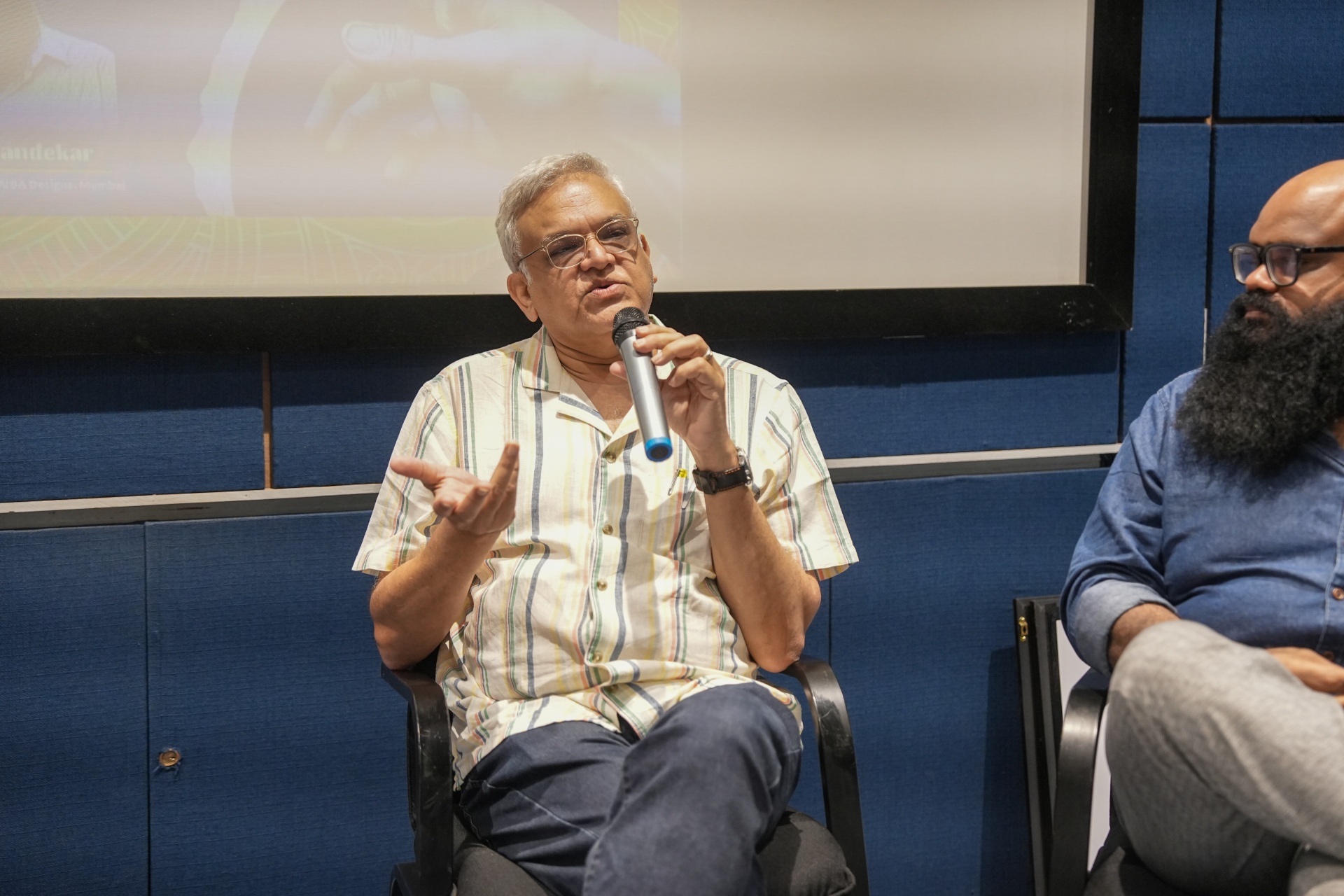
During college in Baroda, and Debojyoti Purkayastha, his friends would go to the railway station at night. They would sit and draw. One thousand sketches per day. Each took approximately three seconds. Not finished drawings. Captures. A posture. The direction of light. A shadow portrait. Over time, they could capture the essence of a person in a moment. This daily practice built a deep understanding of proportion, space, and form that stayed with them permanently. The act of looking closely enough to draw something changes the internal state in a way nothing else replicates. Debojyoti has maintained daily sketching for over twenty years. Not as a throwaway habit. As the foundation of everything else.
5 Newspapers, 17 Diaries, and a 45-Minute Nap
Every morning, Debojyoti reads five physical newspapers for forty minutes. No phone. He said reading newspapers is good for the eyes and brain in a way that screens are not. He maintains 17 separate diaries, each filled at different points during the day. Not full paragraphs. Just the essence of what he felt, observed, or thought. Small moments. A fleeting impression. A contradiction was noticed. The diaries are the raw material from which ideas eventually emerge.
He takes a 45-minute afternoon nap every day and considers rest to be work. Not indulgence. A creative practice. He also goes on road trips with six friends, with no fixed route and no destination decided in advance. The spontaneity and observation during these trips feed back into work in ways that planned research cannot replicate. He consumes content deliberately outside his own field: different music, different genres, different cultures. He shares rough ideas with his wife and son. The practice is not isolated. It is embedded in daily life. Shape your future in fine arts with hands-on creative learning in BVA Painting at Parul University!
Hold Your Breath Before You Photograph
Debojyoti asked who in the room were photographers. Not many raised hands. He joked that everyone thinks they are a photographer because they have a phone. Then he delivered the lesson that landed hardest. A generation ago, cameras could only take 36 pictures per roll. The film was expensive. You could not waste shots. You had to hold your breath before pressing the shutter. That physical discipline forced attention, intention, and selectivity into every frame.
With phones, photography has lost that discipline. His advice: if you are a photographer, hold your breath before you take a picture. Not literally (though also literally). Conceptually. Make every frame count. Think before you shoot. That pause between impulse and action is where craft lives. Without it, you are collecting images, not making photographs. If you wish to grow your career as a photographer or cinematographer, explore the Certificate Program in Photography and Cinematography at Parul University!
Dark Times and 27 Ganesha Word Drawings
Debojyoti did not only talk about success. He talked about the worst period of his life with complete honesty. After the 26/11 attacks in Mumbai, he was in Hong Kong. He lost his job. He came back to India feeling completely lost. Depression followed. He also shared a story about a friend who did not sleep for seven days after Sushant Singh Rajput’s death. The distress was so complete that he had to find something to do with it.
Debojyoti’s own recovery took a similar path. He started drawing in his diary. He made 27 pictures of Lord Ganesha using only words. When friends saw them, they were surprised by the beauty. They did not see the pain behind the drawings. But the drawings were the exit from that pain. Creative people, he said, function simultaneously with logic and emotion. The studio is the space where both have somewhere to go. Anxiety, grief, and darkness do not have a rational exit. Art is the outlet. Not therapy, not suppression, not distraction. Expression. Inspired already? Cultivate creativity and craft masterpieces by enrolling into a Bachelor of Visual Arts in Applied Arts.
What Kills Inspiration and What Feeds It
What kills inspiration, according to Debojyoti:
- Instagram feeds controlled by algorithms. The algorithm shows you what it thinks you want, not what you need.
- Staying in routine without anyone to shake you out of it.
- Fear of doing something that might not work. He once did 52 layouts of a single advertisement before he was satisfied.
- Copying references without understanding why they work.
- Waiting for inspiration to strike. It never arrives that way. It is built through daily practice.
What feeds inspiration:
- Observing real life. People crossing roads, traffic, a cow in the street. Life is full of material if you pay attention.
- Making friends outside your field: chefs, musicians, writers. Cross-pollination of ideas creates unexpected connections.
- College experiments. Debojyoti did beatboxing, played ghatam, tabla, and dholak, and performed theatre. Peers said nothing would come of it. Now he traces a direct line from those experiments to his professional work.
- Sketching daily. The act of sustained attention to something outside yourself changes the internal state.
- Reading physical materials. He referenced a past website called StumbleUpon that showed random interesting web pages. The modern equivalent: reading widely and randomly, not algorithmically.
Homework for Every Design Student
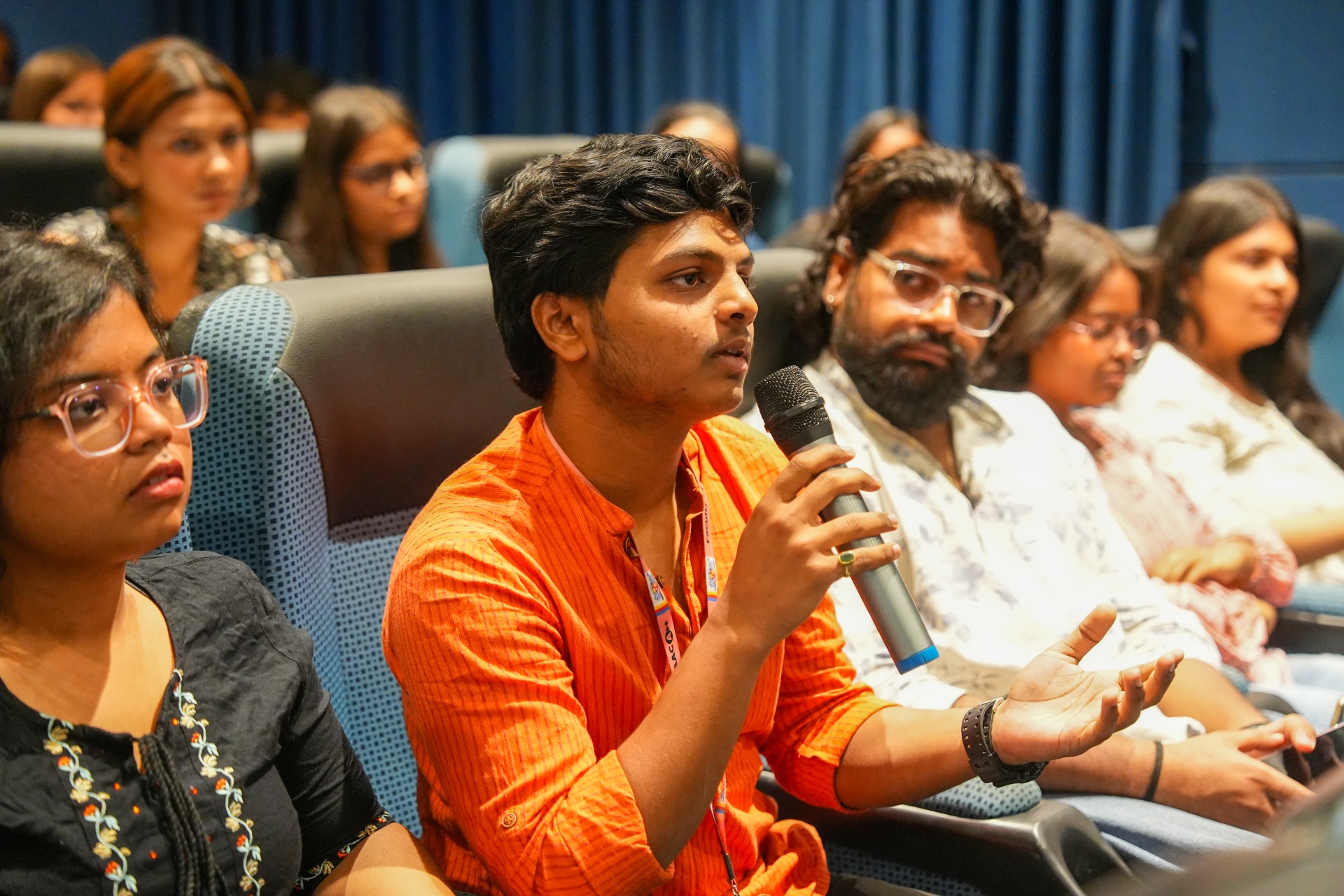
Debojyoti assigned three pieces of homework to the VVF 2026 audience:
- Helvetica (available on YouTube): a 45-minute documentary about one of the world’s most iconic fonts. Shows how difficult it is to create something simple and how one font can have many different voices.
- Exit Through the Gift Shop: a documentary about street artist Banksy. Bold, topical, cutting-edge, and deeply relevant to understanding how art operates outside institutions.
- The Secret Life of Walter Mitty – a film especially for photographers and visual storytellers. About living the moment rather than just capturing it.
He also challenged students to observe strangers. He and his son play a game in restaurants: look at a couple and make up a detailed story about their lives, their relationship, their mood. This habit of observing people and constructing narratives made their minds extraordinarily fertile and directly influenced creative work. The greatest source of ideas is real life, consumed with attention and curiosity. Explore the power of design thinking and creative expression with the Master of Visual Arts in Applied Arts at Parul University.
FAQ: Creative Practice for Designers
How did Debojyoti Purkayastha practise sketching?
1,000 sketches per day at Baroda railway station during college, each taking about 3 seconds. Capturing posture, light, and shadow in moments. He has maintained daily sketching for over 20 years. This builds a deep understanding of proportion, space, and form that screens cannot replicate.
What documentaries should design students watch?
Helvetica (about creating iconic fonts), Exit Through the Gift Shop (Banksy street art documentary), and The Secret Life of Walter Mitty (living moments vs capturing them). Assigned as homework by Grand Prix Cannes winner Debojyoti Purkayastha at VVF 2026, Parul University.


