Prof Deepak Nayyar, former Chief Economic Adviser, did not defend the classroom by arguing that teachers are better than algorithms. He defended it by redefining what a university is. Learning, he argued, is not simply about the classroom. There is so much learned outside the classroom from the community of students.
The essential functions of a university, according to Prof Deepak Nayyar:
- Academic freedom is primary. Universities are places for raising doubts and asking questions about everything
- Exploring ideas, debating issues, and thinking independently are essential in every discipline, from social sciences to medicine to engineering
- Knowledge develops only when existing knowledge is questioned
- Students must have the freedom to ask questions. Faculty must have the freedom to question received wisdom
- The ability to ask relevant questions, the capacity to critique conventional wisdom, and the confidence to resist the authority of the spoken word and the printed word are successive steps in learning
This framing matters because it places the value of a university not in information delivery (which AI can do) but in the development of critical capacity (which AI cannot). A student who learns to question a textbook, disagree with a professor, and defend a position against peers has developed something that no language model can replicate.
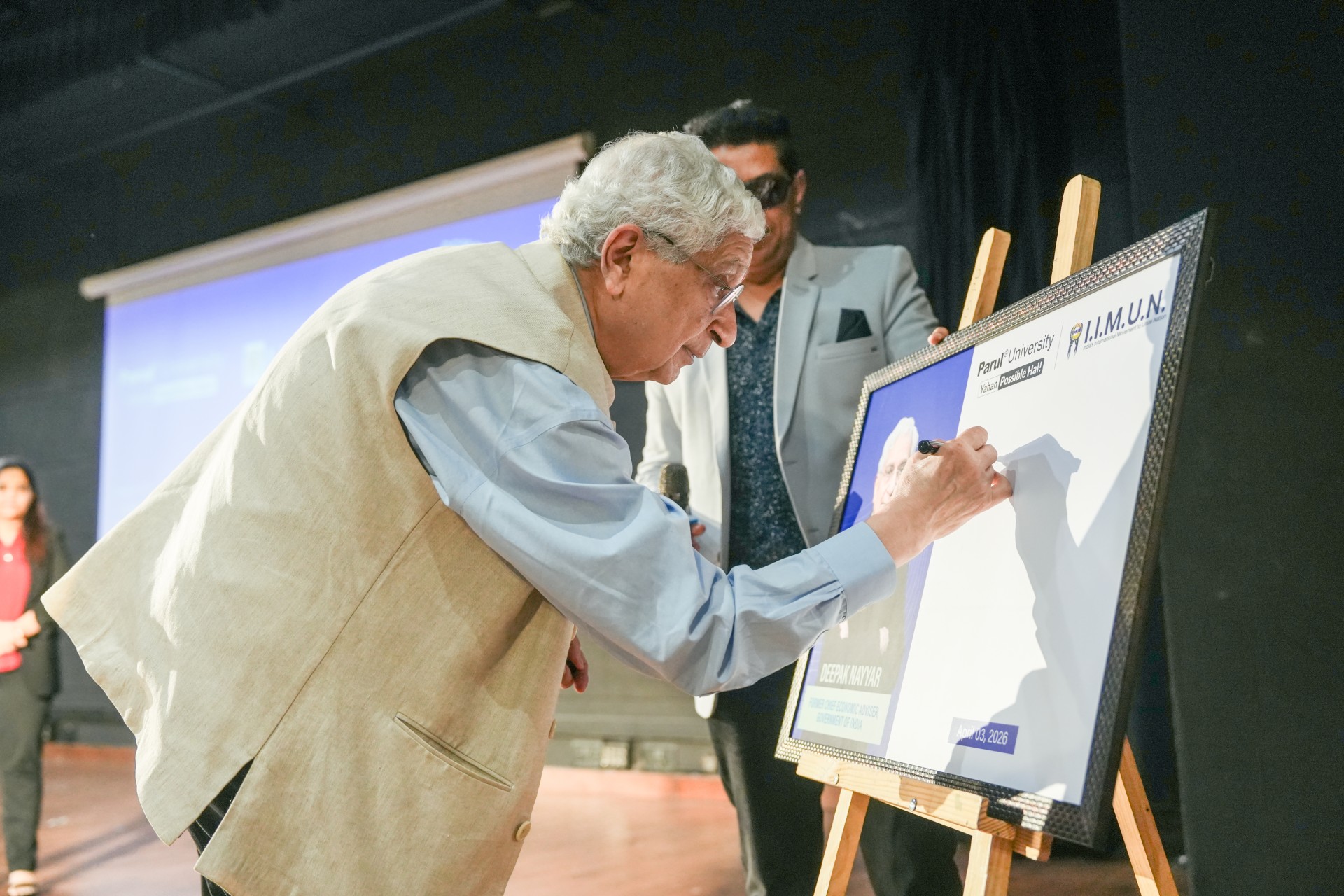
Prof Deepak Nayyar at Parul University: full overview of the session at Parul University.
The Oxford Story About Courage That Explains Everything
Prof Deepak Nayyar, former Chief Economic Adviser and Oxford Rhodes Scholar, illustrated his argument with a story from the PPE (Politics, Philosophy, and Economics) examination board at Oxford. The question on the paper was: What is courage? Most students wrote extensive essays. One student wrote two words: This is courage. That student was awarded a first.
It is that kind of innovation, Prof Deepak Nayyar said, that actually produces brilliant minds. The student who wrote two words understood something that the others, despite writing more, did not: the answer to the question was not in the content but in the act of answering it differently. That kind of thinking cannot be trained through a textbook or an AI prompt. It is trained in an environment where questioning and risk-taking are rewarded, not penalised.
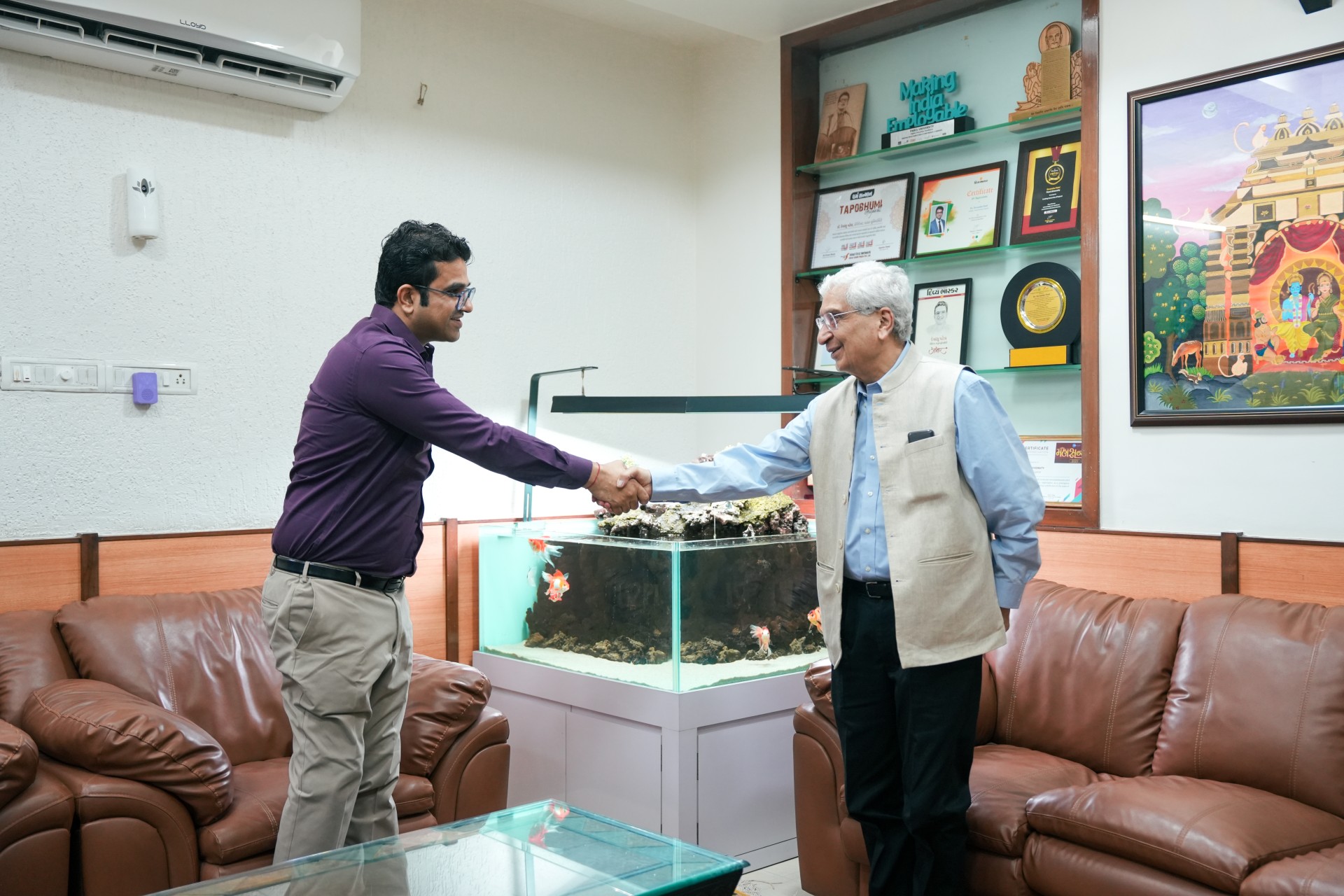
When Prof Deepak Nayyar himself went to Oxford, Nobel laureate John Hicks asked him: But why have you come to Oxford? His answer: I wanted to learn to resist the authority of the spoken word and the printed word. A Rhodes Scholar from India going to Oxford not to absorb knowledge but to learn how to question it. That is the purpose of a university.
Indian Education vs Global Standards: Where the Gap Is
Prof Deepak Nayyar, former Chief Economic Adviser, was asked how the Indian education system compares to global standards. His assessment was direct:
- The peaks are comparable everywhere. The top students at an average Indian university are as capable as top students at average universities abroad
- The difference is at the average level, not at the peaks
- Indian higher education institutions tend to stress learning by rote
- Students are trained to write answers that examiners or teachers expect
- They are not taught how to think for themselves or how to think differently
This diagnosis connects directly to what the Parul University placement cell has built. When 459 students receive multiple offers from different companies, it means they can perform across multiple evaluation frameworks, not just answer one type of question the way one examiner expects. The training infrastructure, which includes IBM certifications, NPTEL courses, SAP SuccessFactors programmes, IIT Bombay SWAYAM validation, and HackerRank testing, prepares students to think and perform across contexts, not to memorise and reproduce. Mr. Gurcharan Singh, Director of Training and Placement, articulates this as making students into the kind of people that companies genuinely want, which is precisely the shift from rote to capability that Prof Deepak Nayyar described.
459 multi-offer students : what companies competing for the same student reveals
AI Will Help the Top 10 Percent. What About the Other 90?
Prof Deepak Nayyar, former Chief Economic Adviser, offered a direct assessment of AI’s impact on India’s workforce:
- Technology is a double-edged sword. It increases productivity but can lead to jobless growth if not managed correctly
- AI will help the top 10 percent, but what about the other 90 percent?
- The education system needs a complete overhaul to move from rote learning to problem-solving
- If the skill gap is not fixed, the demographic dividend will become a demographic disaster
The demographic dividend refers to the economic advantage India holds because of its young population. But a young population that is not skilled, not employable, and not creating value is not a dividend. It is a burden. Prof Deepak Nayyar’s point is that AI accelerates this problem: it makes skilled people more productive while leaving unskilled people further behind. The fix is not less technology but better education.
This is where institutions like Parul University play a structural role. The university’s 3,500+ placements in a single season, with 1,337 offers above 5 LPA and 23 marquee offers at 20 LPA and above, demonstrate that its graduates are entering the productive economy, not the informal sector. The 230+ PIERC startups generating Rs 30 Cr+ in revenue show that some graduates are creating employment, not just seeking it. The 14 international hotel placements at 23-28 LPA show global employability. The university is operationalising the shift from demographic risk to demographic productivity that Prof Deepak Nayyar described as essential.
Find out the success stories with Placement Day: 3,500 offers across 8+ faculties.
What Parul University's Own Ecosystem Demonstrates
The arguments Prof Deepak Nayyar made about education, questioning, and learning by doing are visible in how Parul University operates:
- PIMC (Parul International Mediation Competition): law students organise a competition judged by Supreme Court and High Court justices. Students learn mediation not from a textbook but by mediating cases in front of the judiciary.
- VFF (Vadodara Food Festival): students build and run 40 restaurants from scratch, managing menus, pricing, supply chains, P&L. That is economics learned by doing.
- PIERC (230+ startups): students build businesses, face real markets, and some appear on Shark Tank India. That is entrepreneurship learned through execution.
- Practical learning tours: 280 companies, 19 cities, including Tata, Google, Microsoft, Parliament of India, ISRO
- Jaydeep Findoria (BA LLB at PU) is now Law Clerk at the Supreme Court of India. That trajectory required the kind of critical thinking Prof Deepak Nayyar describes.
When a former Chief Economic Adviser tells students that classrooms cannot be replaced, and the university those students attend operates an ecosystem built around learning by doing and questioning, the alignment is not accidental.
FAQ
What did Prof Deepak Nayyar say about AI replacing education?
Prof Deepak Nayyar, former Chief Economic Adviser and Oxford Rhodes Scholar, said there can be no substitute for a university education. Universities exist for raising doubts and asking questions. AI will help the top 10%, but the other 90% risk being left behind. The demographic dividend will become a demographic disaster if the skill gap is not fixed.
What is the Oxford courage story?
On the PPE exam at Oxford, the question was 'What is courage?' Most students wrote extensive essays. One student wrote 'This is courage.' That student was awarded a first. Prof Deepak Nayyar cited this as the kind of innovation that produces brilliant minds, something that cannot be taught through rote learning or AI.