India’s Chip Push Is Real Now
The semiconductor market is growing very fast in India. It was around $38 billion in 2023. It is expected to reach almost $100–110 billion by 2030. That is a very big jump.
This growth is not random. It is because chips are used everywhere, be it phones, cars, AI, defence, and even simple home devices, for that matter.
So, this is not just about technology. It is about control also. Whoever manufactures chips controls the future also.
What Does this Silicon Sovereignty Mean?
Silicon sovereignty means that a country can design and produce its own semiconductor chips, without depending on others.
Earlier, what happened was that most of the chip production was controlled by very few countries. So that made the global supply chain very weak. Even during the pandemic, the shortage of chips affected everything, ranging from cars to laptops.
Now that is what India is trying to change.
- Building fabrication plants
- Supporting chip design startups
- Creating a full supply chain from materials to testing
- Investing in research and training
The government has already confirmed multiple semiconductor projects worth over ₹1.6 lakh crore across different states. This shows India is serious.
Why Does Manufacturing of Chips Need Skilled Engineers?
Making a chip is not easy at all. It needs deep knowledge of electronics, circuits, materials, and design.
The semiconductor ecosystem has a lot of parts:
Design Level (VLSI)
- Creating chip architecture
- Writing logic and circuits
- Testing simulations
Manufacturing Level
- Fabrication of wafers
- Packaging and testing
Research Level
- New materials and nanoelectronics
- AI-based chip design
That is why the government is focusing on industry-led research and training centres to create a skilled workforce. This mission cannot work at all without engineers.
Why is B.Tech ECE (VLSI) the Core?
If someone wants to enter this industry, a B.Tech degree in Electronics and Communication Engineering (ECE) with VLSI specialisation is one of the strongest paths. Because VLSI (Very Large Scale Integration) is directly connected to chip design.
What can students learn?
- Digital electronics
- Semiconductor physics
- Integrated circuit design
- Chip fabrication basics
- Embedded systems
This is not like general coding. This is hardware-level thinking. Also, students from B.Tech in Mechatronics, electronics, or allied branches also support industries like robotics, automation, and chip-enabled systems.
So, the entire ecosystem needs multiple engineering roles, but VLSI is the core.
India’s Focus on Design + Manufacturing
Earlier, India was strong in chip design but weak in manufacturing. Now both are growing.
India Semiconductor Mission 2.0 is focusing on:
- Full-stack chip design (Indian IP creation)
- Equipment and material production
- Strong domestic supply chain
- Advanced manufacturing capabilities
That means students will not just work on the software side. They will also work in real hardware factories.
Even advanced chip design, like the 3-nanometer level, is already being explored in India
How Education Connects to This Shift
To support this huge industry, learning must also change. Students now need:
- Hands-on lab exposure
- Understanding of nano-scale devices
- Research mindset
- Industry-level tools
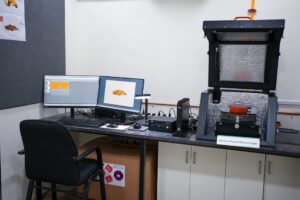
Facilities like micro-nano research labs are helping students to understand how chips are actually made and tested. These labs work on nanoelectronics, MEMS, and semiconductor materials.
Some institutions like Parul University are already building such advanced research environments to support future engineers in micro and nano technologies. This type of exposure makes a big difference.
Career Opportunities Are Expanding Fast
Because of this semiconductor push, job roles are also increasing.
Some roles students can go for:
- VLSI Design Engineer
- Chip Verification Engineer
- Semiconductor Process Engineer
- Embedded Systems Engineer
- Nanoelectronics Researcher
And these jobs are not limited to India. Since India is becoming part of the global semiconductor supply chain, opportunities are global.
Also, the semiconductor industry supports many sectors:
- AI and data centres
- Electric vehicles
- Defence systems
- Telecom and 5G/6G
- Consumer electronics
So, one degree opens many doors.
Why is this moment important for Students?
This is a rare kind of timing. India is moving from the policy stage to the production stage in semiconductors. That means actual factories, actual chips, and actual jobs.
Students who enter B.Tech ECE (VLSI Design) now will be ready when this ecosystem becomes fully active. It is like entering the IT sector in the early 2000s.
The only difference is that this time it is hardware, not just software.
The Road Ahead Is Already Being Built
India is not just trying to catch up. It is trying to lead. New plants are starting production, global companies are investing, and supply chains are expanding. This is being called India’s “Techade,” where technology will define the country’s growth. And chips are at the centre of it.
So, the future is not just about using technology. It is about building it. And that journey, for many students, will quietly begin with a B.Tech degree in ECE, especially VLSI design, where they start learning how the smallest things in the world can power the biggest changes.
FAQs:
1. What is silicon sovereignty?
It means a country can design and manufacture its own semiconductor chips independently.
2. Why is India investing in semiconductors?
To reduce dependency, strengthen supply chains, and support growing tech industries.
3. How does B.Tech ECE (VLSI) help?
It teaches chip design, electronics, and semiconductor fundamentals needed in the industry.
4. What careers are available in VLSI?
Roles like VLSI Design Engineer, Chip Verification Engineer, and Process Engineer.
5. Why is this a good time to study VLSI?
India’s semiconductor industry is growing rapidly, creating strong future job opportunities.