The Tour: Inside the Buildings Where India Is Governed
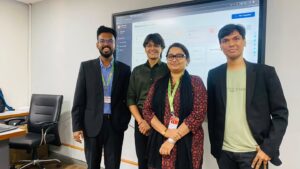
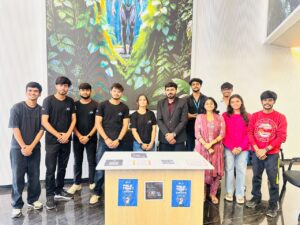
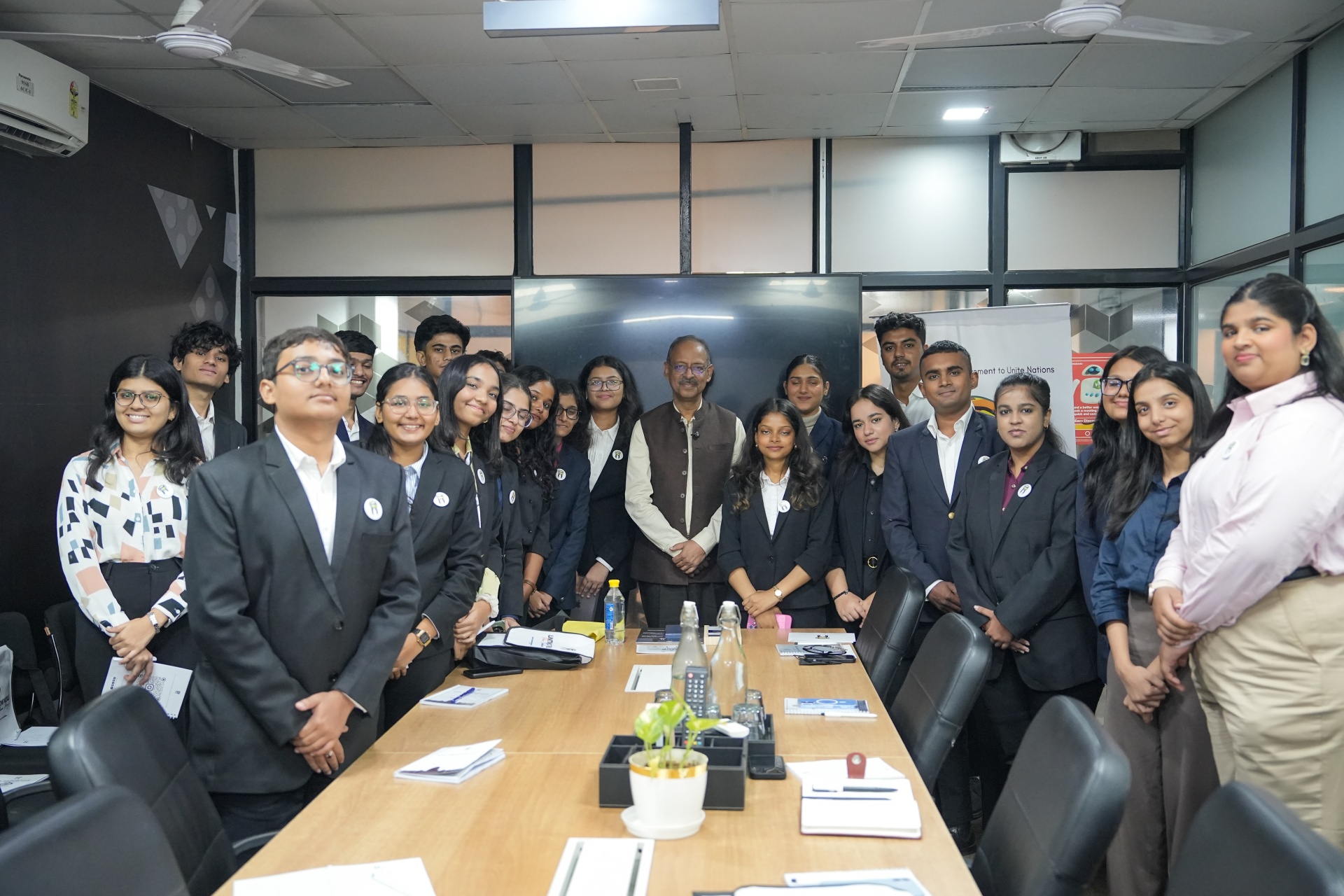
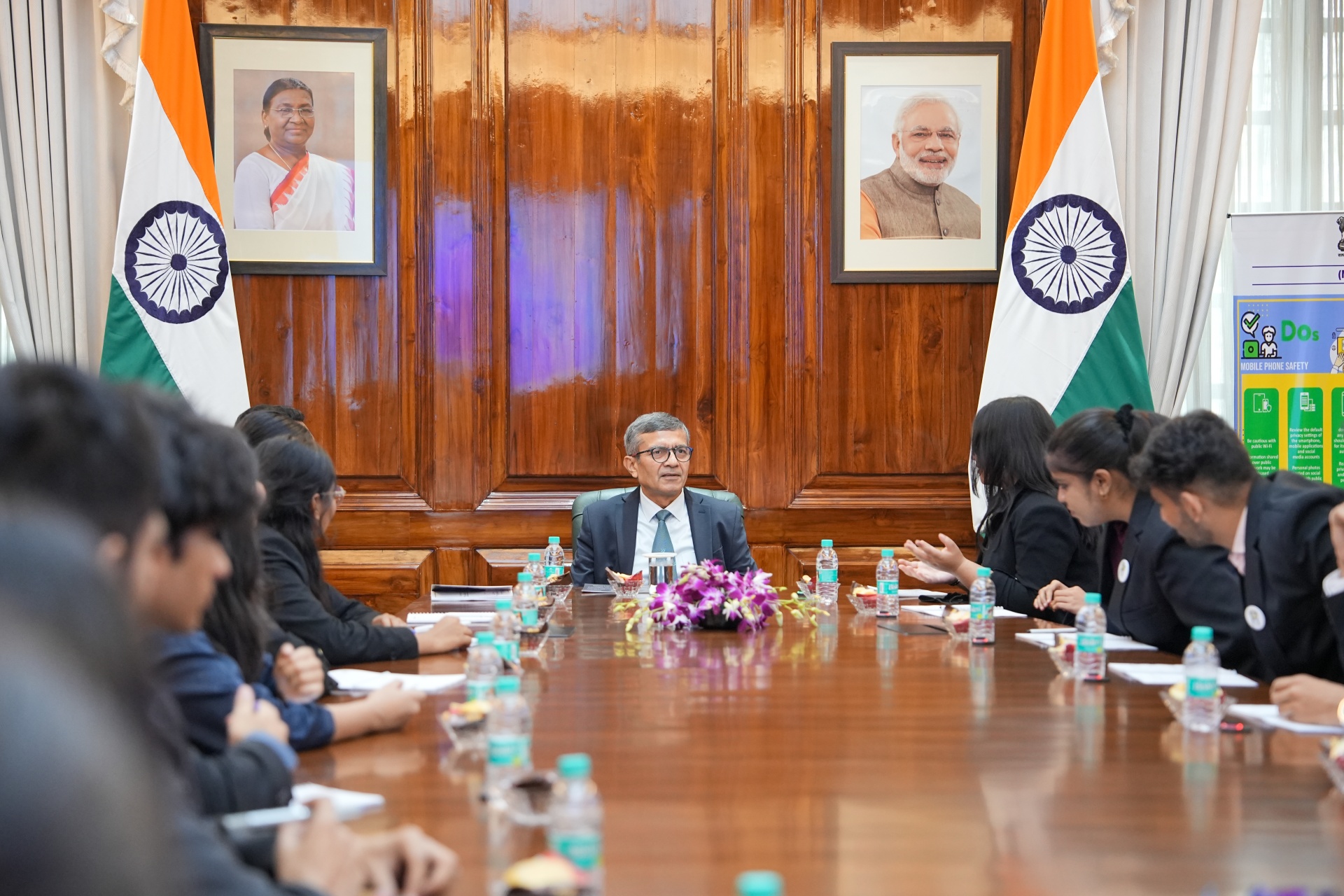
Delhi is not a textbook. It is the operational centre of Indian governance. South Block houses the Ministry of Defence and the Ministry of External Affairs. NITI Aayog formulates India’s development strategy. The Ministry of Finance prepares the Union Budget. The Cabinet Secretariat coordinates policy between ministries. For Parul University students studying law and humanities with aspirations of joining the civil services, spending four days inside these buildings with the people who run India’s governance machinery was learning that connects constitutional principles to administrative reality.
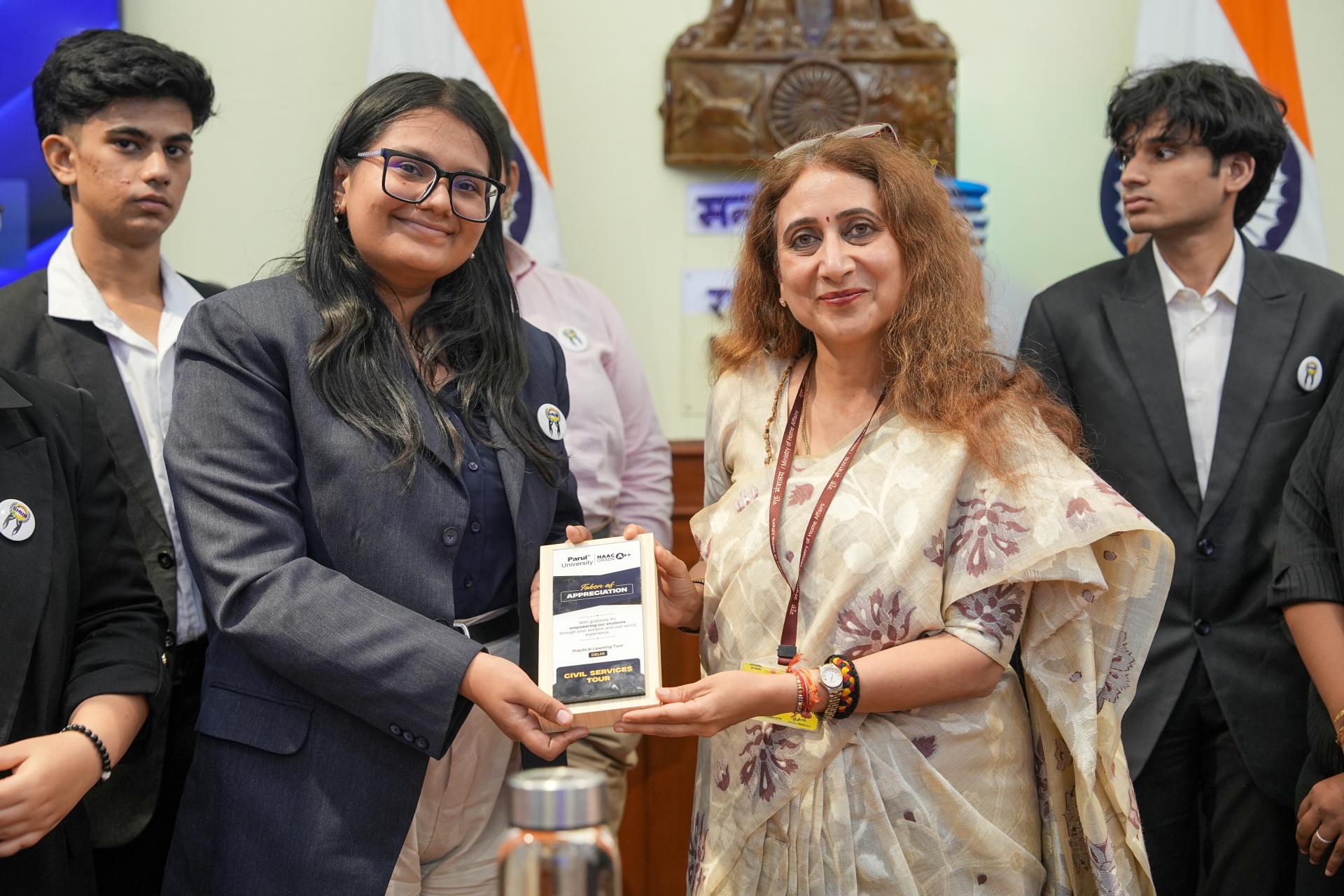
The tour was organised by IIMUN as part of Parul University’s Practical Learning Tour programme (146 tours, 19 cities, 280 companies). The university’s Beyond Academics programmes include Civil Services Coaching for UPSC and GPSC preparation, Armed Forces Motivation and Training, and Competitive Examinations Coaching for higher studies at IITs and NITs.
Session 1: Mr Anil Swarup, Former Education and Coal Secretary
Three decades in the IAS and Mr Anil Swarup had seen enough to write a book, which he did. The Harvey Specter nickname came from colleagues inside North Block who watched him go into the coal ministry after the scam had blown up and actually sort it out. RSBY did not build itself either, and the people who benefited from that health insurance programme probably never knew his name. Head here to read the entire story of Anil Swarup: Coal Scam to Surplus in 2 Years!
“When anything becomes your dream and you are passionate about it, then you move towards it.”
Session 2: Rajesh Kumar Singh, Union Defence Secretary
Mr Rajesh Kumar Singh did not speak in abstractions. Procurement in defence is where things go wrong most often, and he was specific about why transparency, consistency, and proper contract management are the only way to stop that. Staffing, cooperative federalism, the gap between policy and what actually gets procured, all of it came up. He also said, fairly casually, that sport is what keeps stress from winning
“Consistent decision-making is the key driver of capabilities.”
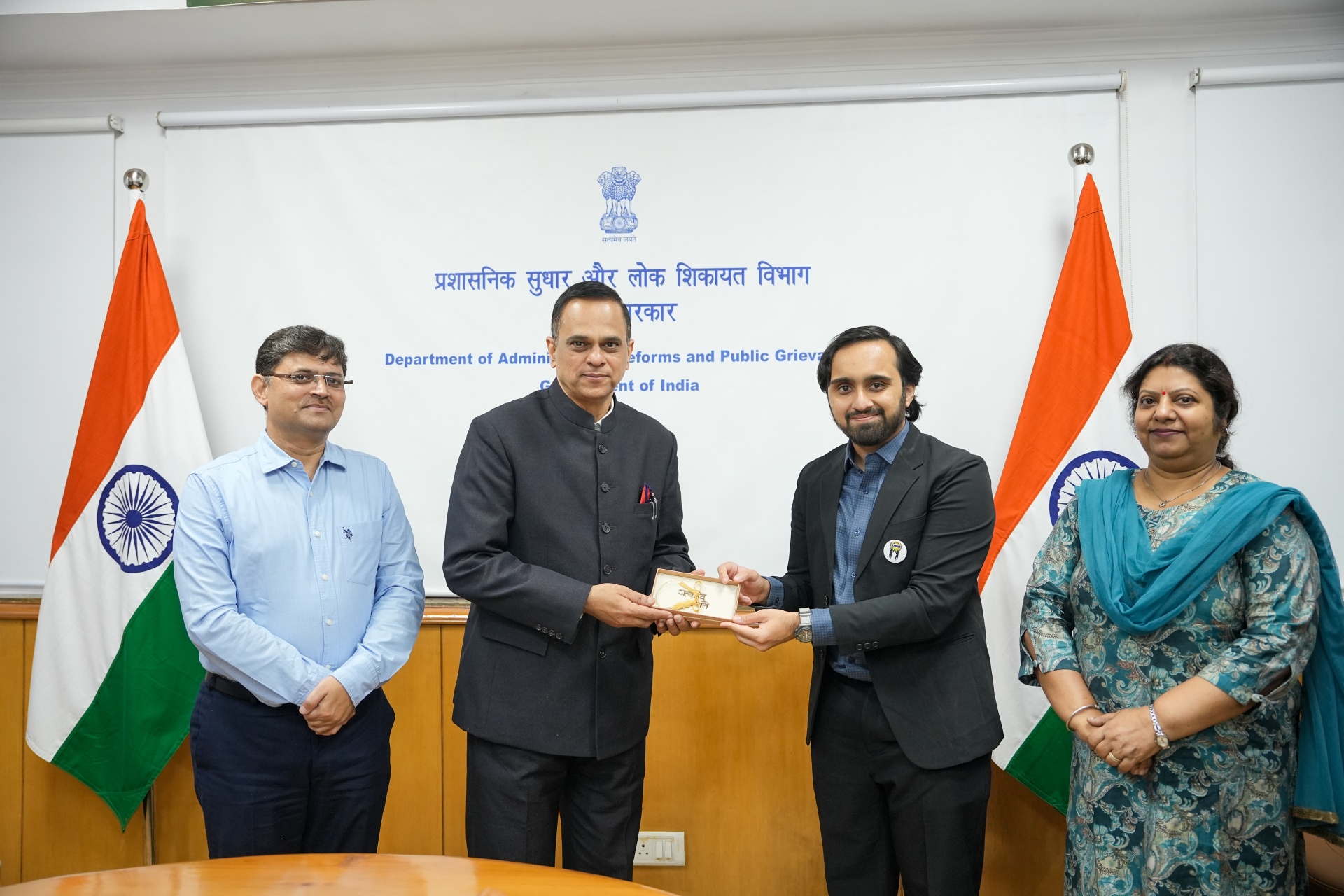
Session 3: S. Srinivas, Union Secretary for Personnel and Administration Sardar Bhawan.
Mr Srinivas had a simple enough argument. Small teams that know what they are doing beat large ones that do not. Reading widely, publishing, attending academic conferences, preparing for exams in a disciplined way, these are not extra activities, they are the work itself if you want to grow in the services.
“Focus on learning, teamwork, and research for professional growth.”
Session 4: Baldeo Purushartha, Joint Secretary, Department of Economic Affairs State Trading Corporation.
The budget does not appear from nowhere and Mr Baldeo Purushartha spent time explaining exactly how it gets built, who is involved, and what fiscal responsibility means when it is not just a phrase. FRBM exists for a reason and he explained that reason clearly.
“Integrity and insight are the true wealth of public service.”
Session 5: Dipti Mohil Chawla, Joint Secretary, Ministry of Defence South Block again
Dipti Mohit Chawla noticed that younger people are coming into civil services with more seriousness than before. Defence procurement has opened up to more scrutiny and she spoke about why that matters. Startups and private sector players are now genuinely part of defence capability building, not just on paper. The harder conversation is always about spending enough to stay secure without spending more than the country can sustain. Head here to read Inside the Civil Services Tour: Student Review !
“Find inspiration in real heroes and lead with purpose in public service.”
Session 6: B.V.R. Subrahmanyam, CEO, NITI Aayog
NITI Aayog Complex. Mr Subrahmanyam walked through Article 370 in a way that was more descriptive and grounded than most accounts of it. The leaders he respects most are not the ones who use their rank to get things done. They are the ones who understand people well enough that rank barely comes up. He made an interesting comparison between the old ICS officer who knew everything about one district and the modern IAS officer who needs to specialise while still learning across boundaries.
“Great leaders in the world work through personality.”
Session 7: Dr V. Anantha Nageswaran, Chief Economic Advisor
Dr Nageswaran is someone who reads seriously and it shows in how he thinks about policy. His point was that good officers do not wait to be briefed. They go and find the information themselves, and then they find the connections between pieces of information that other people missed. Excellence does not arrive, it accumulates.
“Excellence is nothing but a series of hard work.”
Session 8: Mr Dinesh Trivedi, Former Union Railway Minister Lodhi Estate
Sitting in someone’s home rather than an official building changes the conversation a little. Mr Dinesh Trivedi ranged widely, global technology, Indian railways and what it could become, how parliamentary democracy is supposed to function and where it sometimes falls short, and the kind of internal motivation that research either builds or reveals in a person.
“The journey of life is not necessarily planned.”
Session 9: Dr V. Anantha Nageswaran, Chief Economic Advisor
The second session went further into specifics. India’s economic framework, what sustainable inclusive growth actually requires in policy terms, fiscal discipline as a real constraint rather than a slogan, digital transformation, and the question of how you build an economy that does not fall apart when conditions change. Data is the tool that makes all of it more honest.
“India’s economic strength lies in balancing growth with inclusivity.”
Mr Anil Sooklal, Deputy Director
India-Africa Relations Mr Sooklal pushed back against the idea that South-South cooperation is just a softer version of aid. It works when it is built on genuine equality, shared cultural understanding, economic interest on both sides, and political relationships that treat partners as partners.
Shivshankar Menon, Former Foreign Secretary
Mr Shivshankar Menon has spent a career inside India’s foreign policy and he spoke about how it has changed, how national interest and soft power pull in different directions sometimes and have to be managed together, and how decisions made decades ago still shape what diplomats can and cannot do today.
“Foreign policy is not about power alone, it is about perception.”
Sourav Kumar Trivedi, Additional Secretary, Cabinet Secretariat
The government does not run from one ministry. Mr Sourav Trivedi explained the coordination that happens between ministries, what it takes to keep governance focused on the citizen rather than the department, and where accountability actually sits in that structure.
“Policy success depends on clear execution, not just vision.”
Mrs Rashmi Singh, Secretary, Women and Child Affairs
Mrs Rashmi Singh spoke about Beti Bachao Beti Padhao and POSHAN Abhiyaan not as schemes but as attempts to shift something deeper in communities. Social justice policy that does not bring communities along tends not to last. Inclusive development has to be built for the long term or it is not really inclusive.
“Empowering women empowers the entire society.”
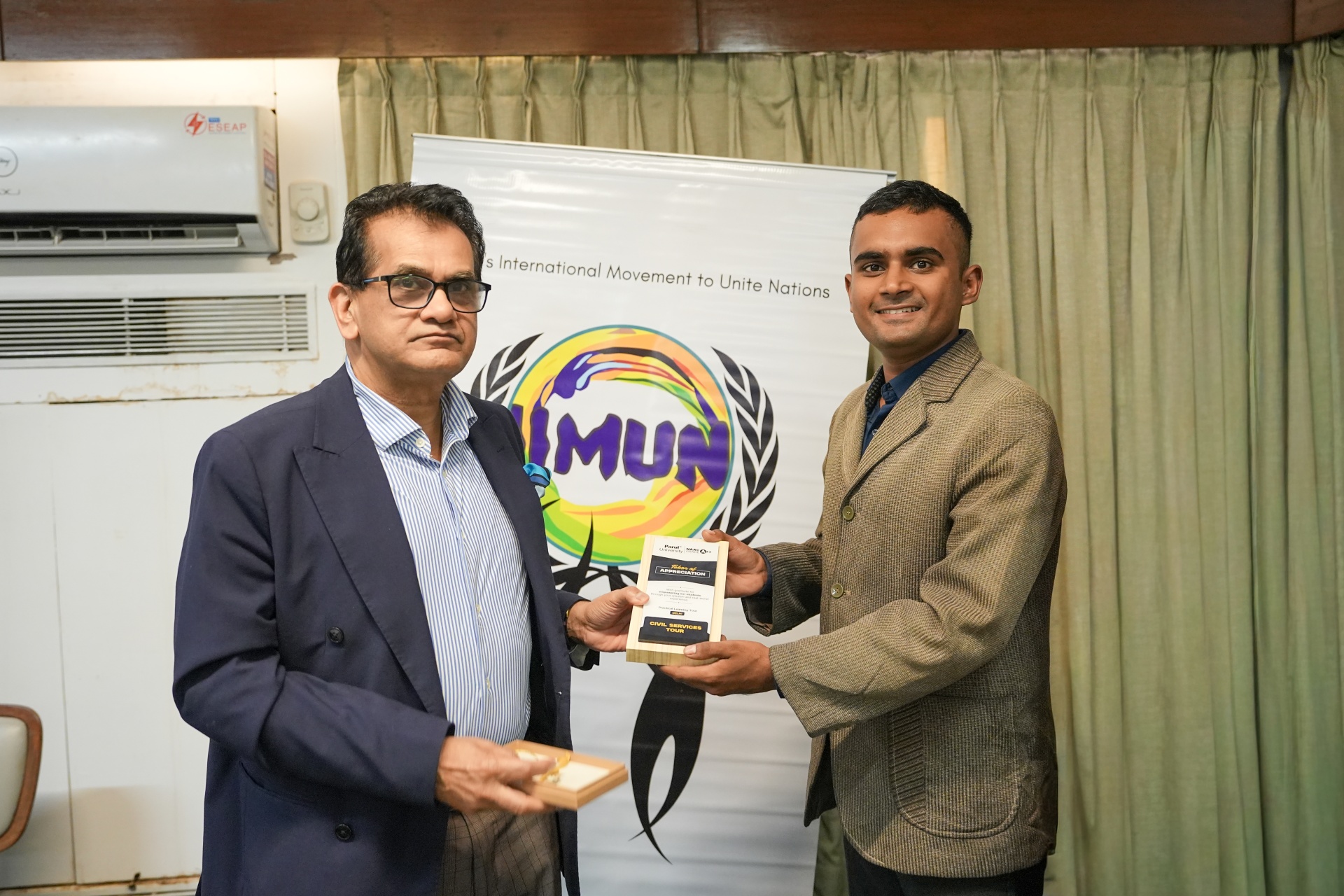
Mr Amitabh Kant, Former CEO, NITI Aayog
Mr Amitabh Kant has a particular energy when he talks about where India is going. Technology driven reform, what the G20 presidency meant for how the world sees India, sustainable development as an economic argument not just an environmental one, and entrepreneurship as the thing that ties it all together.
“Reform, perform, and transform. That is India’s story.”
S. Krishnan, Secretary, Ministry of Electronics and IT
Mr S. Krishnan laid out Digital India as a direction rather than a destination. AI, blockchain, and IoT are already inside governance in ways that are not always visible. He was serious about data ethics and cybersecurity, and his underlying argument was that technology only justifies itself if ordinary people end up with more agency because of it.
Ambassador Rajkumar Shrivastav, Dean.
Sushma Swaraj Institute of Foreign Services’ Ambassador, Mr Rajkumar Shrivastav has spent years preparing people to represent India abroad and he spoke from that experience. Diplomatic communication is not just language, negotiation is not just tactics, and cultural intelligence is not something that can be taught entirely in a classroom.
“Diplomacy begins with understanding people before nations.”
Programme Mapping - Parul University
Parul University’s Beyond Academics programme includes Civil Services Coaching for UPSC and GPSC preparation, Armed Forces Motivation and Training, and Competitive Examinations Coaching. The Civil Services Tour is the experiential complement to this academic preparation. It operates within a university holding NAAC A++ (CGPA 3.55), with a fully equipped Moot Court, Journalism Studio, Media Labs, and Creative Studios for law and humanities students.
Besides this, students can even choose varied engineering courses after 12th and can contribute to cutting-edge innovations, sustainable development, technological advancements, and solving real-world challenges across industries like healthcare, infrastructure, artificial intelligence, and environmental conservation.
FAQ
Does Parul University offer UPSC preparation support?
Yes. The Beyond Academics programme covers Civil Services Coaching for UPSC and GPSC, motivation and preparation support for students heading toward the Armed Forces, and coaching for other competitive examinations students are working toward.