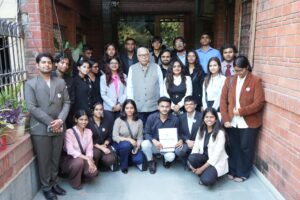
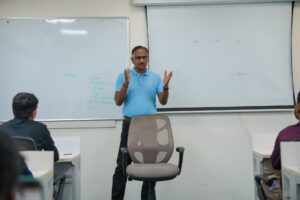
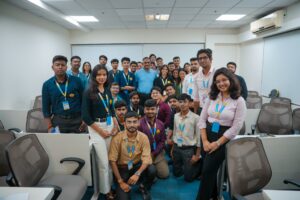
The CII International Auto Tech Conference, held in Chennai wasn’t just executed with slides and applause. It has covered 20 plus leaders from Renault Nissan, TVS Mobility Solutions, Bosch Global Software, MG Motors India, Uno Minda, Danfoss Industries, TCS, Tessolve Semiconductor, Aptiv, Electra EV, Lucas TVS, Hackers Era, and CAAR sat. As seated in a room and actually debated where India’s automotive industry is headed, and whether it’s moving fast enough to matter globally.
The conversation reflected more on Electrification isn’t a trend to watch, it’s already the direction and India either leads or follows. The bigger structural shift people kept circling back to was this: India has spent decades being a service nation and that can’t be the whole story going forward, product and platform thinking has to come in.
Besides this, connected vehicles, IoT on wheels, software-defined vehicles where the value sits in code rather than components, cybersecurity becoming a real concern as cars get more connected. Moreover, the need to globally scale TERA infrastructure, meaning test, evaluation, research and analysis capabilities, because without that, the mere ambition stays on paper. The major key take away that stays in our heads: the automotive industry isn’t just an industry, it’s the industry of industries and it’s massively progressing at all the levels.
A leader quoted – “not good to have, it is a must have”. In sync with the same conversation, another leader deliberated – India is well positioned to lead and transform a shift at a global level without any issues. Key frameworks that emerged: electrification is mandatory, not optional. India must shift from a service nation to a product and platform nation. IoT on wheels means connected vehicles that generate and respond to data in real time. Software-defined vehicles (SDV) move value from hardware to software, changing how cars are designed, updated, and monetised.
Cybersecurity in vehicles is a growing concern as connectivity increases. TERA (test, evaluation, research, and analysis) infrastructure must scale. The automotive industry is the industry of industries.
“Electrification is not good to have, it is a must have. India is in the right position to lead this transformation globally.”
What the Mercedes-Benz CIO Says About India's Gap
Abhinav Srivastava identified India’s core challenge: India focuses on things money can buy rather than things money cannot buy. This is why India is a technology hub but technology heads are in Japan, the US, and western countries. People with AI can replace people without AI, but AI cannot replace people.
“India should start focusing on things money cannot buy. That is why we have become a technology hub but technology head is still Japan, US, and western countries.”
Atma Nirbhar Manufacturing: From IIT Madras to FANUC to NIOT
IIT Madras Research Park’s CTO emphasised developing technology rather than taking it from others. Machine tools at the Centre of Excellence are manufactured across India supporting Atma Nirbhar Bharat. FANUC demonstrated that world-class automation requires precision that India is learning: their factories exist only in Japan, but their robots are operated by Indian students who will eventually build Indian equivalents. Stellantis framed it philosophically: Atma Nirbhar Bharat starts with Atma Vishwas (self-confidence) and transforms to Atma Shakti (self-strength).
NIOT added the frontier dimension: Matsya 6000 deep sea submersible, Samudrayan launching in 2026, ocean mining, and tsunami prediction systems. India’s manufacturing ambition is not limited to roads. It extends to the ocean floor.
India Motors‘s T Murli provided the data: India jumped from 4 to 6 in fuel power trail in under 1000 days. India can achieve far better mobility than anybody else in the world. The passion exists. It needs to be channelised. Reducing dependence on fossil fuels is both environmental necessity and strategic advantage.
This tour serves students across Parul University’s Faculty of Engineering and Technology: B.Tech Mechanical Engineering, B.Tech Robotics (students operated FANUC CRX collaborative robot and walked Schwing Stetter’s assembly plant), B.Tech Automobile Engineering, B.Tech Mechatronics, and B.Tech AI and ML. The faculty offers 250+ technology labs, NEP 2020-aligned programmes, and practical learning tours for real-time industry exposure.
Frequently Asked Questions
Will India become a global automotive powerhouse?
Based on the CII International Auto Tech Conference with 20+ leaders: electrification is mandatory. IoT on wheels, SDV, and cybersecurity are reshaping the industry. India is the only country to jump from 4 to 6 in fuel power in under 1000 days. India must become a product and platform nation.
What is the future of EV in India?
CII leaders declared electrification is not good to have, it is a must have. India's fuel power trail jumped from 4 to 6 in under 1000 days. Reducing fossil fuel dependence is both environmental and strategic. Companies like Electra EV, Lucas TVS, and Birds India EV Energy are building the EV ecosystem. The automotive industry is the industry of industries, and India is positioned to lead the global transformation.