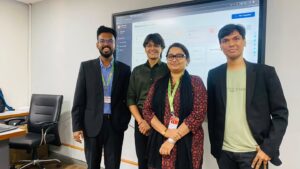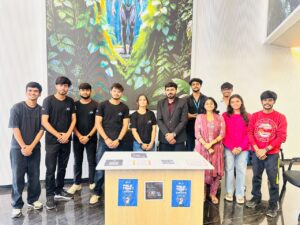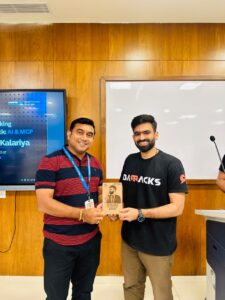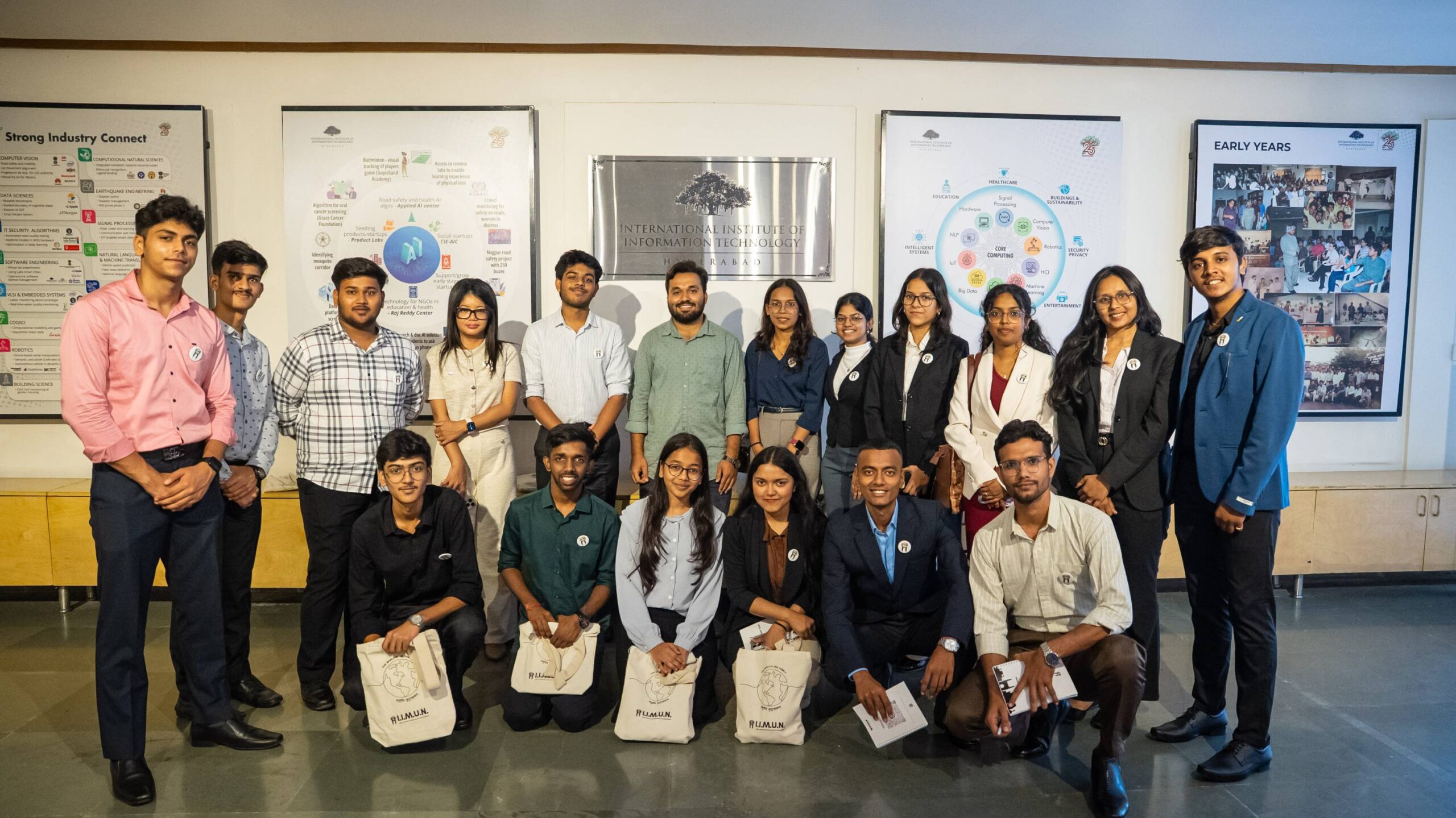
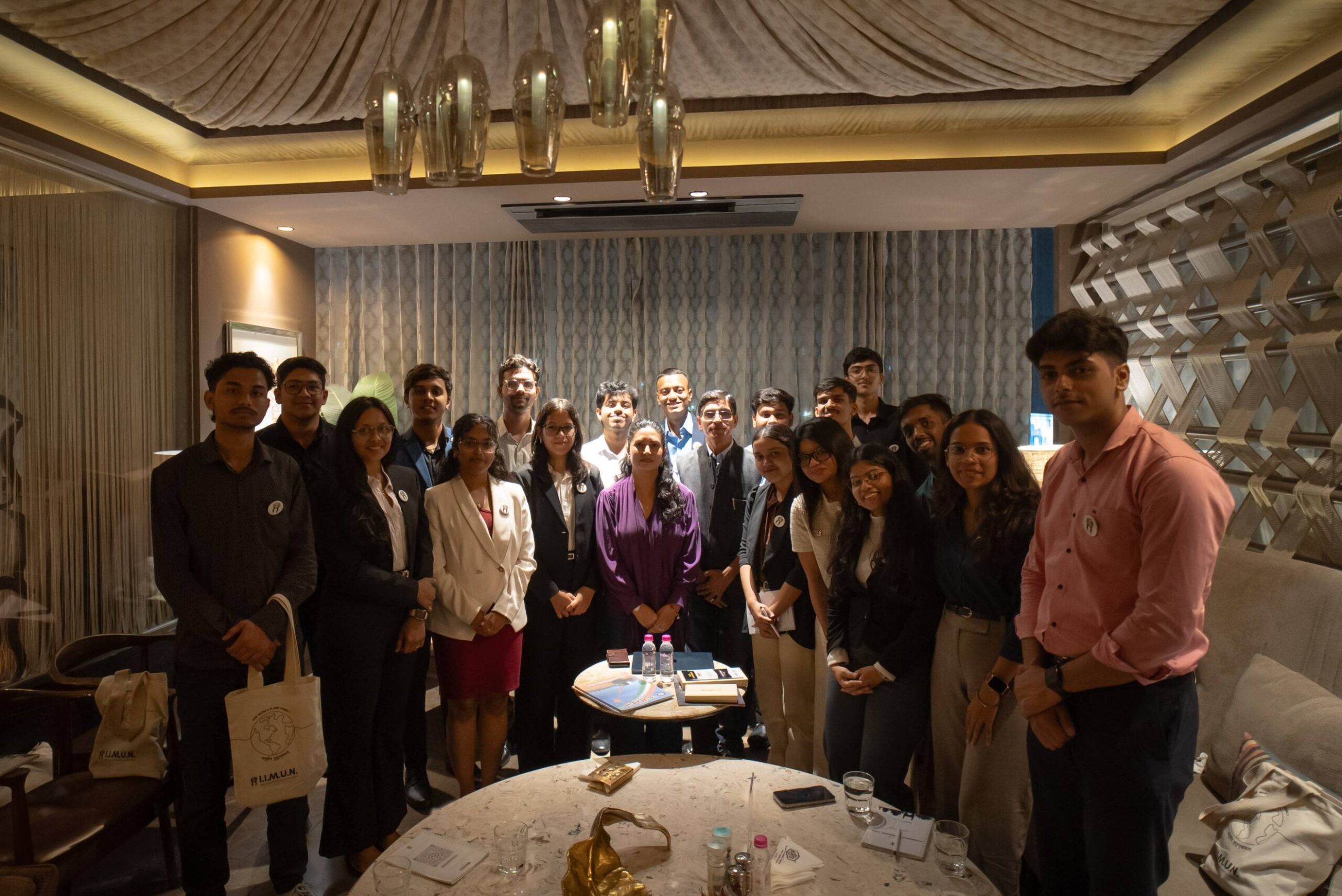
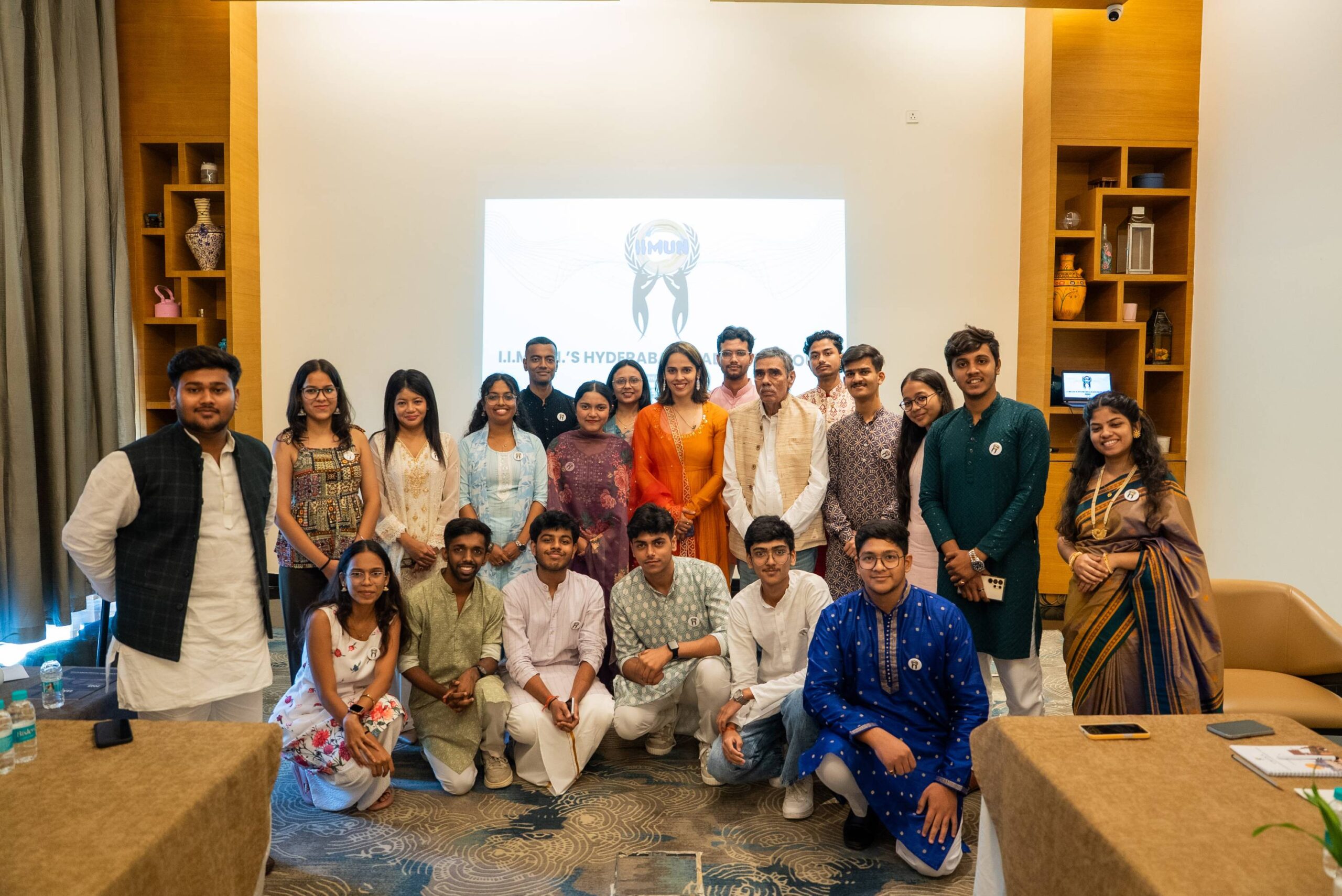
The IIIT Hyderabad session generated the highest volume of technical questions. The faculty member running the 300-node smart campus demonstrated live dashboards and sensor hardware before opening the floor.
How is VISEN different from normal WiFi?
The faculty explained that WiFi requires internet connectivity at every point. VISEN runs on RF (Radio Frequency) signals and connects nodes to each other directly without internet. Data passes from one node to the nearest node in a mesh pattern. If the internet goes down in an area, VISEN keeps data flowing. This makes it far more reliable for outdoor deployments where internet connectivity is inconsistent.
Can every VISEN node be traced and controlled remotely?
Yes. The faculty confirmed full remote control. Streetlights connected through VISEN turn on and off automatically based on sunset and sunrise timings. The same remote access applies to utility resources like water management systems across the campus.
What exactly do the weather monitoring devices measure?
The faculty listed humidity, noise levels, motion, airborne pollutants, and temperature as the core environmental parameters. She gave a practical example: during Diwali, these devices can check pollution levels in any specific area in real time. The team has also built a small robotic unit that rolls around campus, checks noise and pollution levels, and displays readings on a small LED screen attached to it.
Is AI being integrated into the smart city system?
The faculty confirmed that AI integration is already underway. They use chatbot technology combined with their sensor datasets to provide suggestions, for example whether a certain area is safe to visit based on real-time air quality data. One postgraduate student built a project similar to Google Maps where, if a route passes through an area with poor air quality, the system suggests an alternate route. The team is also working on waste management solutions using the same data infrastructure.
Are you manufacturing the sensor devices or buying them?
The faculty explained a hybrid approach. They buy low-cost sensors from the market, calibrate them in-house, then design and manufacture their own PCBs (Printed Circuit Boards) on campus. They assemble the complete unit, validate the readings through calibration testing to 97 percent accuracy, and only then deploy. The approach keeps costs at roughly 5,000 rupees per node while maintaining research-grade data quality.
Why monitor indoor and outdoor air quality separately?
The faculty explained that outdoor monitoring started during the COVID-19 pandemic, but indoor air quality proved equally important. When people work in the same room for hours, CO2 builds up without anyone realising. Poor indoor air affects focus, health, and comfort. The IIIT Hyderabad system handles this with automated responses: if occupants have been in a room for more than five minutes and CO2 is rising, the system turns off the AC and opens windows automatically to let fresh air circulate.
Can this data feed into carbon credit frameworks?
The faculty said the data they collect could absolutely feed into carbon credit frameworks, but it depends on finding the right collaboration partners. The Net Zero dashboard already tracks energy drawn from natural sources versus carbon emissions daily. Converting that tracking into tradable carbon credits requires institutional partnerships that are not yet in place.
Can this system help with crowd management at events like Kumbh Mela?
The faculty confirmed they are actively working on exactly that application. Using cameras and occupancy sensors, the system can monitor crowd density in real time. If one area gets too full, the system can help divert people to a different gate, send notifications to alert police, and give authorities the ability to manage flow before it becomes dangerous.
DRDO Session with Dr Anuj Kumar Varshney: Defence, Career, and National Development Q&A
The DRDO session at Niloufer Cafe generated the most wide-ranging Q&A of the tour. Dr Varshney’s openness encouraged students to ask questions they would normally hesitate to raise with a senior scientist.
Can management students contribute to DRDO or the defence ecosystem?
Dr Varshney explained that while direct scientific work at DRDO requires B.Tech or M.Tech qualifications, the ecosystem around DRDO is vast. Private companies that manufacture components, supply materials, manage logistics, or handle contracts for DRDO are equally important. He named Maces Paris Defence as one such Indian industry partner. A management professional who runs such a company well is directly supporting the defence ecosystem.
Are there internship opportunities at DRDO?
Dr Varshney confirmed that DRDO runs a Summer Internship Programme lasting four to six weeks. A student from Delhi studying at Parul University in Vadodara specifically asked about Hyderabad postings. Dr Varshney noted the student’s chemical engineering background would fit well in his laser technology research group, which involves significant surface morphology and materials science. He invited the student to sign up before leaving the session.
Why can India not build advanced fighter jets as fast as other countries?
Dr Varshney was direct. The problem is the gap in foundational technology and the brain drain. India educates its brightest at IIITs using taxpayer money, but many graduates leave for better opportunities abroad. India also lacks semiconductor manufacturing capability. Without the ability to build chips for mobile phones and laptops, leaping to advanced aerospace systems is structurally difficult.
Is DRDO working on exoskeletons for soldiers?
Dr Varshney confirmed enthusiastically. The DRDO laboratory in Gwalior is actively working on exoskeleton technology using graphene sheets, incredibly strong yet thin and flexible materials being developed into protective garments and body suits for soldiers that can protect against impact while remaining light enough for field use.
How do you stay grounded at success and find strength at your lowest?
Dr Varshney’s practical advice: set short-term goals, build resilience, avoid distraction. Whatever profession you choose, do it with full sincerity. A teacher who teaches with full dedication lifts the next generation. He noted that airports are crowded today, not bus stands, which shows how far India has risen. Parents today support careers in music, sports, art, and entrepreneurship rather than forcing only doctor or engineer paths.
Should talented Indians go abroad? How can they give back?
Dr Varshney refused to condemn those who leave. Going abroad is not wrong. Earn, gain respect, gain knowledge. But do not reach a point where you feel uncomfortable sweating in India. His own daughter participates in an NRI leadership programme that mentors young Indians from abroad. He referenced PM Modi sending aircraft to bring Indians home from Ukraine as evidence that the relationship between citizen and country runs both ways.
How does DRDO balance budgets across Army, Navy, and Air Force?
Requirements from the three services share a common logic. The Army needs weapons and ammunition. The Air Force needs radars and fighter systems. The Navy needs ship-based systems and underwater technologies. DRDO identifies requirements through interaction with the armed services, assesses what India currently lacks, and allocates projects based on strategic priority: what India needs most, what is within reach, and what will give the most significant capability improvement.
Saina Nehwal Session at Hyatt Hyderabad: Sports, Discipline, and Career Q&A
The Saina Nehwal session produced audience exchanges that went beyond typical motivational Q&A into practical territory around sports infrastructure, technology, and the economics of professional sport.
If you could change one thing about sports infrastructure in India, what would it be?
Saina Nehwal answered without hesitation: stadiums and the best coaches everywhere. She pointed to China and Korea where academies exist in every government area with the best coaches available. India has improved, seven medals have come, but reaching thirty or forty medals requires infrastructure that does not yet exist across the country.
Can players from tier-3 and tier-4 cities really make it?
A student from Firozabad near Agra noted his city now has four proper courts with coaching available from early morning until midnight. Saina responded directly: players from smaller cities often have the strongest desire to prove themselves. Once you become a state or national champion, the academies come looking for you.
China had 8 of the top 10 world rankings. How did you face that?
Saina described seeing eight Chinese players in the top ten, with only herself and Tine Baun from Denmark outside China. She started winning step by step in Indonesia, at the China Open, in Hong Kong. Then Carolina Marin and Viktor Axelsen changed the picture further. India’s proper breakthrough started around 2006-2007, and another twenty to thirty years across every sport is realistic before India becomes a true sporting powerhouse.
How is technology changing sports for athletes?
Technology shows you your mistakes: how many times an opponent catches you on your backhand, forehand, or net game. Wearable bands help with recovery, sleep patterns, sugar levels, and physical readiness. But on the court during the actual match, you still have to do the work yourself. Saina referenced Virat Kohli who rewards himself with a burger after winning a great match and then goes to the gym for six hours.
What is Khelo India actually doing for grassroots development?
Saina praised Khelo India but identified a structural gap: school sports periods are still just 30 minutes, which is a fun period, not a development period. Real progress happens in academies where players train eight to nine hours daily. She wants more academies across the country. Badminton is the second most popular sport in India after cricket, but cricket has academies everywhere. Academies have opened in Assam and Odisha, and Virat Kohli has also opened one, but India needs many more.
What These Questions Reveal About Parul University's Learning Culture
The questions document a learning culture where students engage rather than observe. The IIIT Hyderabad Q&A shows students processing technical content in real time and connecting it to applications beyond the demonstration, from carbon credits to Kumbh Mela crowd management. The DRDO Q&A went into territory most students would hesitate to raise with a senior scientist: brain drain, semiconductor gaps, and military budget allocation. The Saina Nehwal exchanges moved beyond inspiration into structural analysis of Indian sports economics.
This engagement culture is what Parul University’s ecosystem, including 146 Practical Learning Tours across 19 cities, 150 plus PU Talks speakers, Leadership Conclaves, and the PIERC entrepreneurship centre with 254 incubated startups, is designed to build. The Parul University mission goes beyond securing dream placements: it aims to build a business-ready mindset that empowers students to carve their own path and scale at their own pace. The Q&A content from the IIMUN Hyderabad Tour is evidence that the approach produces students who ask the right questions.
Frequently Asked Questions
Did Parul University students actually ask questions during the IIMUN Hyderabad sessions?
Yes. The sessions included dedicated Q&A rounds. Students asked technical questions about VISEN networking, carbon credits, and AI integration at IIIT Hyderabad. They asked about brain drain, exoskeletons, and military budgets at DRDO. They asked Saina Nehwal about Khelo India, China's dominance, and technology in sports.
Who prepared the session notes for the IIMUN Hyderabad Tour?
The session notes were prepared from video assignments by Diya Das, one of the students who attended the tour.
What was Dr Varshney's view on India's brain drain?
Dr Varshney acknowledged the problem directly. India educates its brightest at IIITs using taxpayer money, but graduates leave for better opportunities abroad. He did not condemn those who leave but called for maintaining connection to India, noting that going abroad is not wrong but reaching a point where you feel uncomfortable sweating in India is.
What did Saina Nehwal say about Khelo India?
She praised the scheme but identified a structural limitation: school sports periods of 30 minutes are not enough for serious development. Real progress requires 8-9 hours of daily training in dedicated academies. The number of academies across India needs to multiply for grassroots talent to convert into international results.