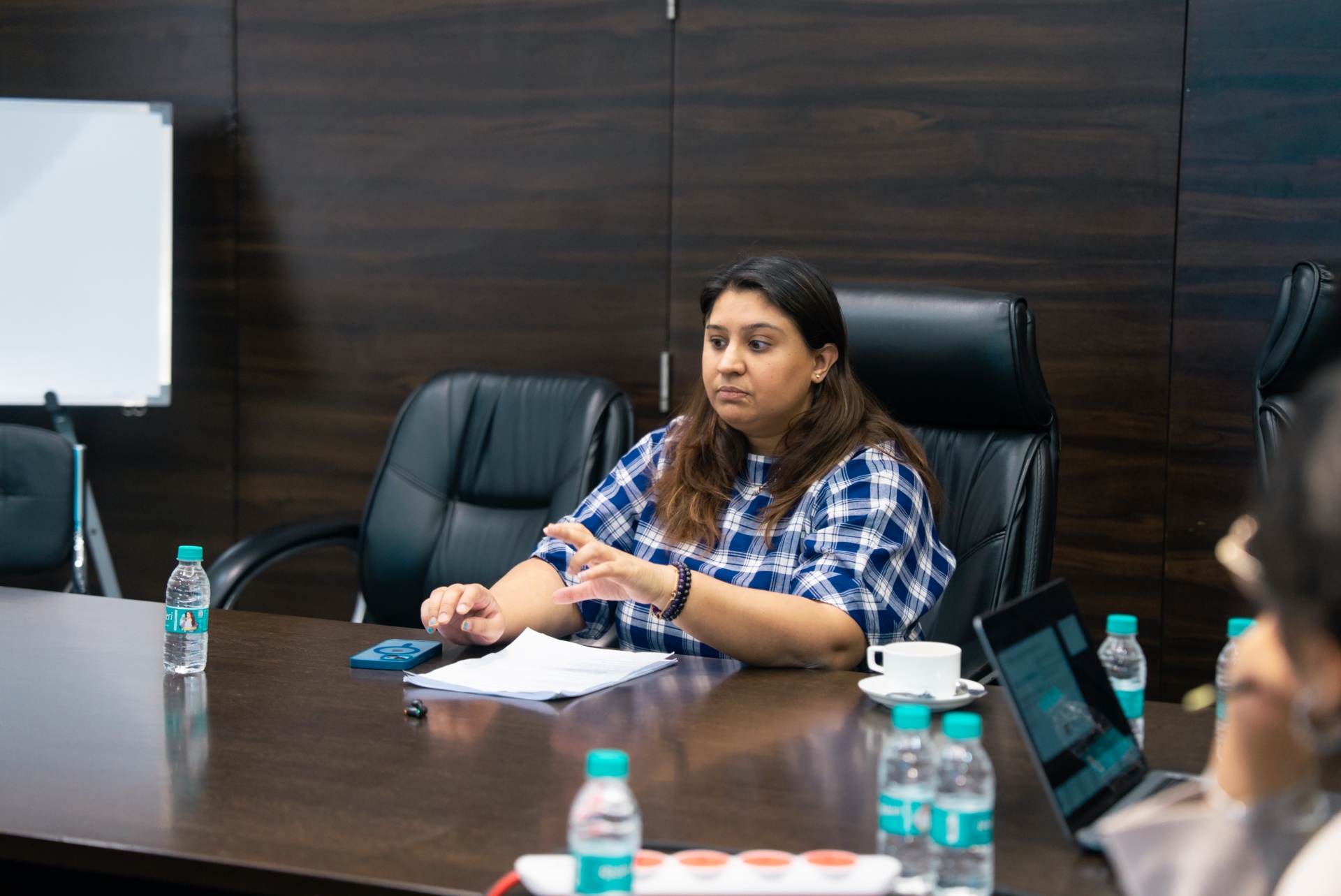
Shiv Tandan did not start as a writer. Hindustani classical music for the first ten to fifteen years. College mentors redirected him to theatre. Fifteen years later, they are still his mentors.
Moving from Singapore to India after college, he found a country where emails went unanswered and Google Calendar was alien. Theatre was the one thing he could do. Fistful of Rupees was written with constraints as creative decisions:
- Four actors only (no budget for more)
- Experimental, minimalist staging
- 50-60 shows, prestigious Singapore festival, a pay packet that does not usually happen in theatre
300+ songs written. His most famous, Part Fire (performed by Hitesh Parajpura), released straight onto a Netflix series. He runs Center for Education on YouTube (40,000+ subscribers) about improving education through critical thinking. His social impact work earned him the Davis Projects for Peace Award for the Clicking Together workshop. Dooro Dooro took 3 years to find its audience.
His feedback process – chai pe charcha – is the most practical thing the students heard. Every time he finishes a draft, same day, 25 friends get a message: Saturday, my place. About 6 show up. He prints the draft. Snacks. They read the entire thing aloud. Every person talks about what they felt. He writes it all down. A month later: redraft. Another message. He warned about India-specific feedback culture: people send rewrites instead of feedback. Feedback is a science with real literature behind it.
On relatability: a dangerous word, mostly created by MBAs who have no idea about art. He referenced Sahir Ludhianvi‘s Jashne-Ghalib (government celebrating Ghalib after decades of distancing from Urdu after Partition) and Ted Lasso (nothing relatable: no football, no culture, no context – global favourite). Art connects through spirit, not demographic targeting.
He is currently touring The Chattan, an Indian superhero universe where the powers are completely useless. Telescope Tambey lives in densely populated Bombay but has long-distance vision. He sees smog from above and neighbours from the front. He can also talk to pigeons, which is even more useless because pigeons are dumb.
On inspiration: ideas arrive like a river. Every culture has a word for it – shareer kasna in Urdu (tightening the body to receive), the genie in Latin languages, ancestors talking in Indigenous American traditions. Ideas are impatient. They do not hang around. He has had ideas he did not write down, and three days later someone else released the exact same thing.
On idea theft: referenced The Lean Startup by Eric Ries. First chapter addresses this exact fear. Call your competitors, tell them your idea, wait six months. Nothing will happen. On book marketing: referenced Ankur Warikoo, who sits in every room saying read this book. The process is the same at every scale. Focus on marketing. It will grow over ten years.
He quoted Bhagat Singh: my thoughts will live on in the winds, this handful of dust is all that fades. Do not worry about credits. Leave the art.
He recommended acting workshops for all writers: studying body language and character motivations opens vocabulary in ways nothing else can. His challenge to the room: take away at least 6 collaborations from these 4 days. If you too wish to write, create and aspire to become a journalist, then enrol into BA in Journalism & Communication program of Parul University!
Student feedback: the session felt raw and real. It showed that writing is not glamorous, it is hard work from deep inside. It inspired us to embrace the struggle, stay humble, and keep creating even when no one notices.
Karina Pandya: Seven Careers, Then Author at 5 AM
Karina Pandya began with a reminder: all of us are already writers. Every message, caption, and tweet is writing. Writing is not a title to be earned.
Her path before independent authorship in 2011:
- Banking (Chennai), junior psychologist, sub-editor
- Social media management, copy editing, SEO content writing
- Advertising agency
None wasted. Each taught a dimension of communication. Her daily routine since 2011: wake at 5 AM, write for 2-3 hours. Poetry, short stories, observations. Building the muscle.
She conducted a writing exercise in the session: Why do I write? or Why do I want to write? The room went quiet. Pens hit paper. A student said: Writing changed me. Another: Writing is forgiving. Unlike speaking, dancing, or singing where mistakes happen in real time, writing lets you rewrite and erase. Nobody sees the messy first draft.
She was bad at English in school. Found essay writing difficult. Entered a poetry competition on a whim. Wrote from the heart. Won. Everything changed. Her next book is coming in 2 months: short stories on emptiness, anxiety, and quiet inner spaces, alongside a poetry collection.
On finances: honest. A book rarely pays bills alone. On career exploration: the world of writing is vast. Try everything before picking a lane. On the deeper purpose: Anne Frank wrote a diary not for readers but to cope. Decades later, one of the most read books in human history.
Final statement: when you put pen to paper, anything can happen.
Student feedback: her journey encouraged us to embrace opportunities, accept rejection as a learning step, and use writing as a powerful tool for self-expression and personal growth. Enrol into BA English at Parul University and become a successful content writer, social media strategist and communication lead as well!
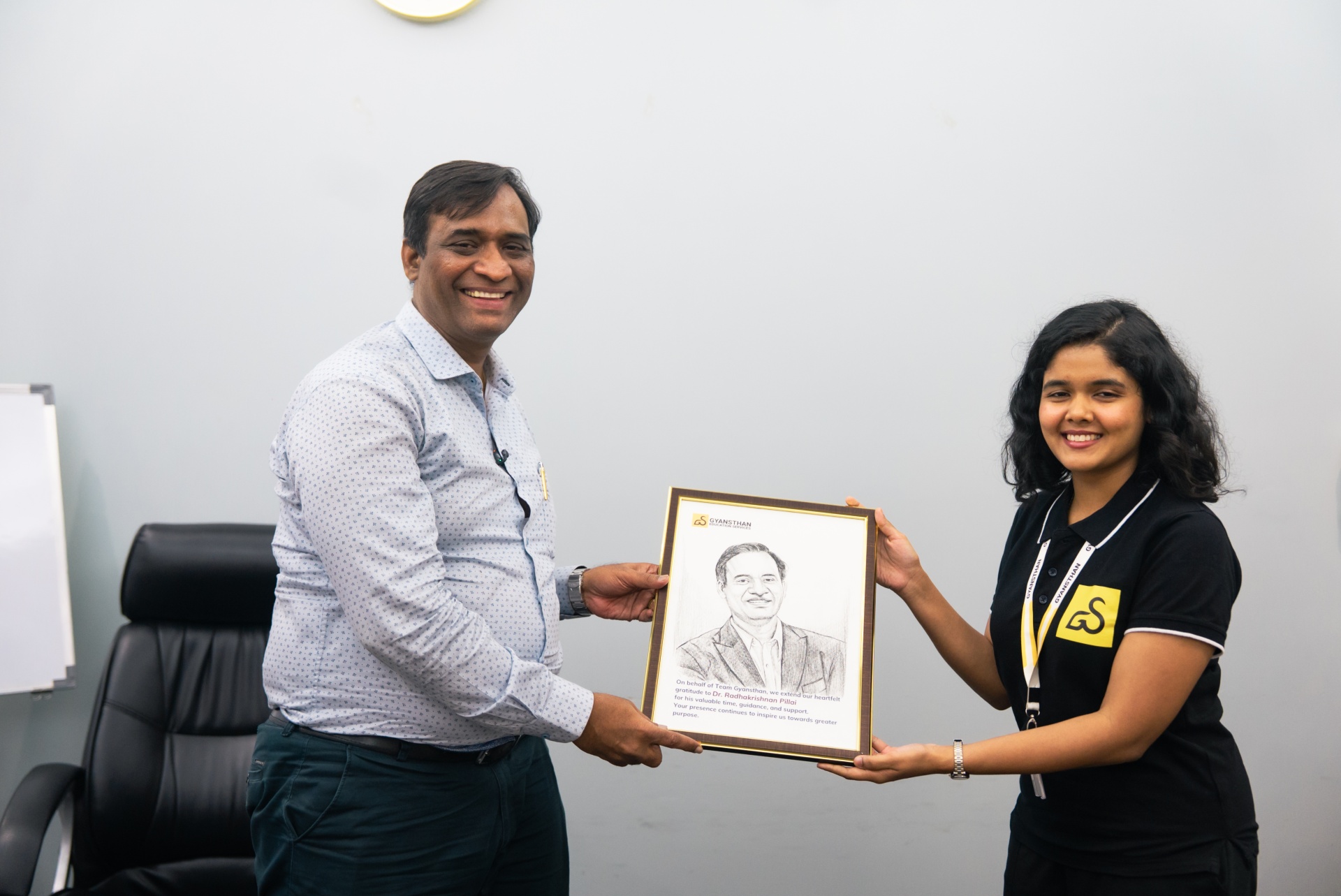
Dr Radhakrishnan Pillai: 24 Books, Butter-Dosa Strategy, and He Says He Has Barely Started
Dr Radhakrishnan Pillai – He opened with a question: who is the world’s number one bestselling poet? The room guessed. He spoke about Rumi as one of the most famous poet in the industry. Then he spoke about his 10,000-book personal library. A person dies. The book does not.
The lucky part: father wrote 13 books in Malayalam. Mother read 5 newspapers daily. Only child in a house where reading was pleasure, not obligation.
The hard work part: joke in Indian Express at age 10. Rs 100 cheque from Times of India. Bank account opened by his mother (he was a minor). Mumbai Mirror column for 4.5 years, every Monday, 500 words on Chanakya management, without a break. 1,000+ lectures. Advisory to Indian Army, Tata Group, Reliance, and RBI. Corporate Chanakya was a record-breaking debut. Crossword Bookstores award. Visits 20+ countries annually. World’s first PG programme in leadership science at University of Mumbai.
On strategy: same content, 6 formats:
- Newspaper article, magazine piece, LinkedIn post
- Research paper, book, film script
The butter-dosa analogy: same butter creates different dishes for different audiences at different times. Writing well is not purely creative. It is strategic.
On writer’s block: stop thinking about writing and just write. First book’s job: not to impress. To exist. Many people try to make the first draft perfect. That is how they never finish. The problem is when the comma becomes a full stop. Solution: a writer buddy (like a gym partner). His own accountability partner: his wife, who tracks manuscript progress after he signs a contract.
On reading: three modes:
- Glancing: 3-5 minutes (cover, blurb, contents, introduction) – this is the filter
- Detail reading: word by word, with notes
- Summary reading: final pass through notes + text, converting into usable material
On imitation: the Sachin Tendulkar’s comparison. He studies his technique closely, but if you try to become Sachin Tendulkar you are giving up whatever it is that you actually are. Favourite authors are starting points, not destinations.
On research: Google is the starting point, not research itself. AI produces information obesity. Real research requires reading, human experts, and at least 5% of yourself in the output. He studied 45 versions of the Arthashastra but then learned under a teacher in Kerala – agreeing, disagreeing, arguing. That conversation is where understanding came from 6,000 sutras. He has published 24 books and he sees a hundred more.
On confidence: spend time in nature. The Himalayas are larger than any person but make you feel charged, not diminished. Human structures designed around power (bank buildings, thrones, colonial architecture) often do the opposite. One man army is not an army – the word army implies plural.
He is writing 7 books simultaneously and considers his career to have barely started.
Student feedback: it helped us understand that writing is not just creativity but strategic thinking, consistency, and originality. It motivated us to read more, think deeply, and approach writing with discipline and purpose. If you too wish to pursue writing, poetry and to master the real craft of word, explore courses of Liberal Arts at Parul University!
What All Three Agreed On
- Writing is not done alone: chai pe charcha, writer buddies, 7 careers before authorship
- The first piece does not need to be good – it needs to exist
- Strategy matters as much as creativity: 6 formats, daily routine, structured feedback
- Nobody is waiting for your book. If you do not do the work, nobody realises you did not do it.
- Rejection and imperfection are the process, not obstacles to it
These writers spoke to Parul University students during the Writers Tour, part of 146 Practical Learning Tours across 19 cities. The same university that produces 3,500+ placements and 60 LPA at Microsoft sends liberal arts students to sit across from people who have written 300 songs, published 24 books, and woken at 5 AM for years.
Read more on Parul University Practical Exposure: 19 Cities, 280 Companies
Frequently Asked Questions
How do I start a writing career in India?
Start by writing, not planning. Build a daily routine (Karina Pandya: 5 AM, 2-3 hours). Experiment across formats before picking a lane (copywriting, journalism, poetry, ghostwriting, technical writing, advertising). Get structured feedback (Shiv Tandan: chai pe charcha). Collaborate - isolation kills writing. Do not wait for the first piece to be perfect (Dr Pillai: the first book's job is to exist). A book rarely pays bills alone: build multiple income sources and write in 6 formats.
How do I finish writing a book?
Find a writer buddy (Dr Pillai: like a gym partner). Tell an accountability partner when you sign a contract. Breaks are normal - the problem is when the comma becomes a full stop. Do not try to make the first draft perfect. The first book exists. The second improves. The third becomes habit.
How do I get honest feedback on my writing?
Shiv Tandan: finish a draft, same day message 25 friends, read the entire thing aloud together, every person talks about what they felt, write it all down, take a month, redraft. Study feedback as a science. In India, people tend to send rewrites instead of feedback. Learn the difference. Also: create listening sessions for songs and poems.
Can you make money as a writer in India?
Karina Pandya: a book rarely pays bills alone. Build income through freelance work, content writing, creative projects. Shiv Tandan: theatre writing became financially significant after a Singapore festival. Dr Pillai: same content in 6 formats (butter-dosa) maximises reach and income. None described it as easy money. All described it as sustainable with strategy, discipline, and multiple formats.