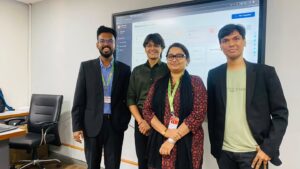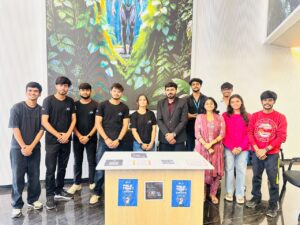
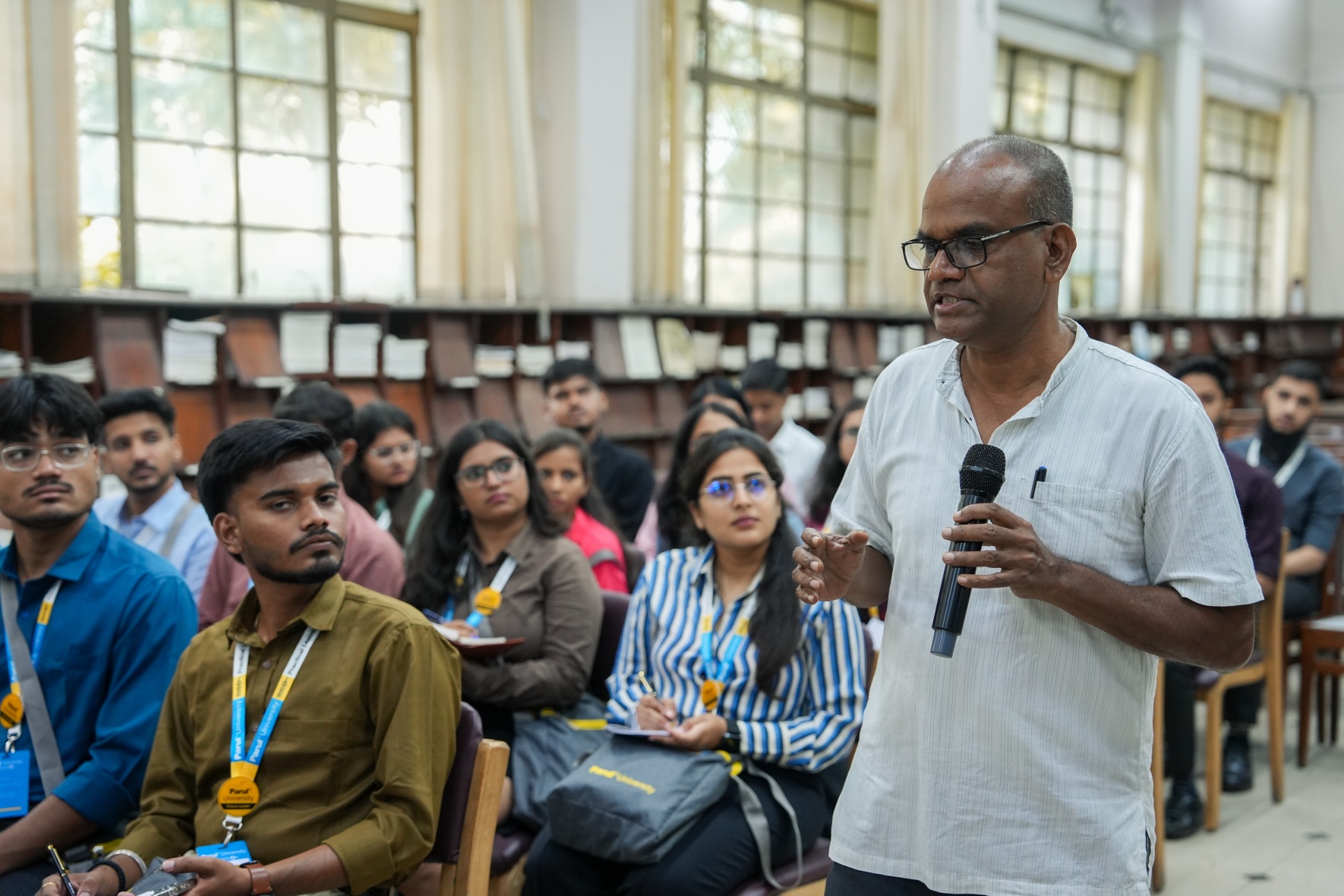
CSIR, also known as Indian Institute of Chemical Technology, was established in 1944 and is one of the most prestigious and oldest National Laboratories of the Council of Scientific and Industrial Research. It is world-famous for its work in chemistry research, drug discovery, agrochemicals and green technology. The institute supplied technology for Covaxin during the COVID-19 pandemic globally and developed indigenous technology for Hydrazine Hydrate in collaboration with Gujarat Alkalies & Chemicals Limited, right at Dahej.
On the very first day of the Biopharma Leadership Tour, 2 noble scientists deliberated work that is in sync with the subjects studied in B.Pharm Course of Parul University.
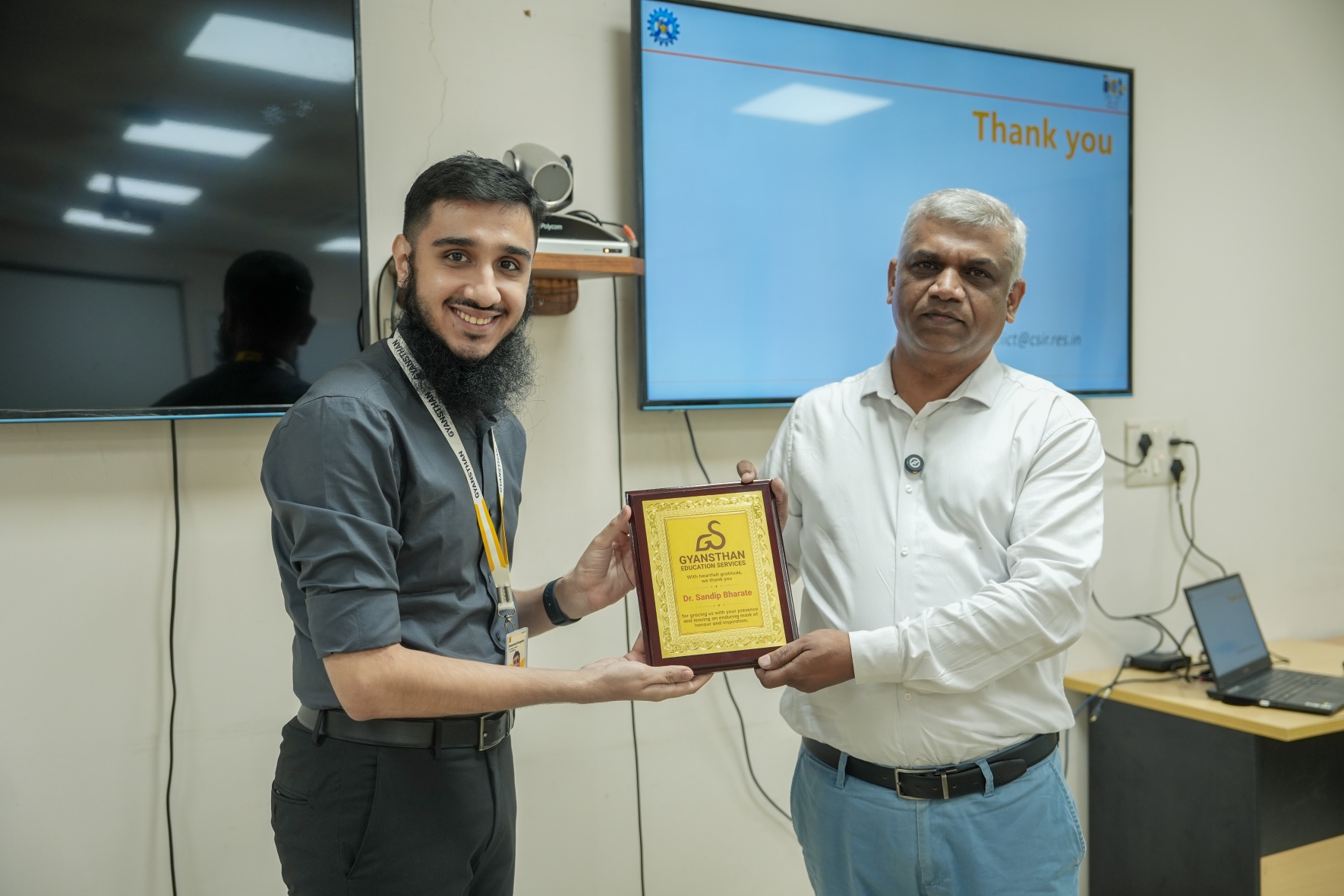
Dr Sandip B. Bharate - Natural Products & NDM-1 Crisis.
Dr. Sandip Bharate is a senior principal scientist and professor at AcSIR. He has 20+ years of post-PhD research experience in total synthesis of natural products, medicinal chemistry, and drug discovery with approx 120 publications & 35 patents. One of the rarest molecules his team discovered in industry is Licogliflozin, which is currently in Phase-II human clinical trials. His prime session with Parul University students covered the entire spectrum of drug discovery via natural products.
Key discussion points included:
- NDM-1 (New Delhi Metallo-beta-lactamase-1) – A rare gene that renders many antibiotics ineffective, creating drug-resistant bacteria that current medicines can’t treat. Dr Bharate explained in detail why this makes new drug discovery not optional but urgent.
- Plant-derived drugs with documented clinical applications – Crocin for Alzheimer’s disease, Cystone for Rheumatoid Arthritis, Risorine for rifampin-resistant bacteria.
- Cryptic biosynthesis pathways – hidden metabolic pathways within organisms that can be activated to produce bioactive compounds for drug research and extraction.
- Reverse pharmacology – an approach that begins by utilizing a standard medication that is already effective (e.g. Reserpine for hypertension) and works backward to understand the molecular mechanism of action, validating traditional knowledge with modern science.
- Phases of clinical trials – a stepwise progression from lab discovery to human medicine, where each phase has a distinct role in establishing safety and efficacy.
- Entry into CSIR careers – through competitive exams, summer internships, and direct recruitment pathways.
“Focus on natural products and their extraction processes to eradicate the major barriers in patient care and find new therapies by leveraging newer technologies.”
For pharmacy students studying pharmacognosy, pharmacology, and medicinal chemistry, these concepts move from theory to practice in active research environments where molecules progress into clinical trials. The NDM-1 challenge is not abstract—it represents why future pharmacists must discover new drugs, not only dispense existing ones. If you aim for a career at the intersection of technology and pharma, you can pursue M.Pharm in Industrial Pharmacy at Parul University.
Dr Rajendra Reddy: Analytical Instruments, Biogas, and Pheromone Pest Control
Dr Rajendra Reddy, the Chief Scientist deliberated to the students regarding analytical infrastructure that supports drug discovery, including XRD for crystal structure analysis, GC-MS, MALDI for protein analysis, and LC/HRMS for molecular characterization.
He also showcased two technologies having immediate social and agricultural impact:
- Anaerobic Gas Lift Reactor (AGR): CSIR-IICT technology for conversion of biodegradable waste to biogas and bio-manure. Real-world applications include waste processing at Bowenpally vegetable market in Hyderabad and the Akshaya Patra food programme. Students saw how chemistry research extends beyond pharmaceuticals into sustainable development.
- Pheromone Application Technology (PAT): An environmentally friendly pest control method using naturally occurring chemical signals to attract or repel insects, reducing the use of synthetic pesticides in agriculture.
Students also visited the Centre for X-ray Crystallography, where they received hands-on exposure to equipment they study in instrumental analysis courses. If you’re passionate about mastering it across all levels, explore master programmes in pharmacy from Parul University and gain strong industrial exposure along with academic learning.
Hetero Labs: Where India's Generic Drugs Are Manufactured
Hetero labs is one of the India’s Leading Pharma Companies, globally famous for producing the first-ever generic Remdesivir Injection amidst COVID-19 (global level pandemic), and for strong presence in APIs, generics and biosimilars. Mr. G.P. Rao, the Director of Operations and VP, hosted the PU students and briefed them about everything in detail!
Student Observation for Manufacturing Floor
– USFDA-recognized facilities – Hetero Labs maintains approval from the US Food & Drug Administration, validating its holistic manufacturing processes, quality systems, and documentation, ensuring compliance with the standards required to sell medicines in the US.
– Live anti-viral medicine production – PU students witnessed, for the first time, live manufacturing of antiviral drugs under controlled conditions, observing how raw materials enter one end and finished dosage forms exit the other.
– Tablet & capsule manufacturing – Spacious and large-scale production lines for solid dosage forms, including granulation, coating, compression, and qualitative packaging processes.
– Operational cycles – To be precise, there are two main operations: upstream and downstream. Upstream covers raw material processing and bioprocess optimization, while downstream operations manage purification, formulation, QA (quality assurance), and final packaging. This is critical for understanding pharmaceutical manufacturing. If you want to master it at all levels, enrol in Parul University’s M.Pharm in Pharmaceutical Quality Assurance program.
– Quality control – From sampling, testing, recording, and process checks ensuring that each tablet, capsule, and vial meets specifications before reaching patients, executed under strict validation systems.
– Regulatory compliance – Each framework operates through documentation systems, SOPs, and audit readiness as required by USFDA and other regulatory bodies.
“You should feel what you manufacture.”
Mr. Rao’s statement captures the ethos of pharmaceutical manufacturing at this level. A factory producing antiviral drugs for global distribution is not making consumer products—it is making medicine that patients depend on. The quality systems, regulatory compliance, and documentation discipline exist because even a small mistake can directly impact human life. For pharmacy students studying quality assurance and industrial pharmacy, seeing this in operation is fundamentally different from reading about GMP guidelines in theory.
How Day 1 Connects the Entire Drug Lifecycle
The two Day 1 sessions form a complete picture of how a drug moves from idea to patient:
- Discovery (CSIR-IICT): scientists identify a disease problem (NDM-1 resistance), search for molecules in natural products (plants, microorganisms), validate them through reverse pharmacology and clinical trials, and characterise them using analytical instruments (XRD, GC-MS, MALDI).
- Manufacturing (Hetero Labs): once a molecule is proven safe and effective, manufacturers produce it at scale under regulatory standards (USFDA), manage upstream and downstream operations, maintain quality through documentation and testing, and distribute globally.
A pharmacy student who visits only a research lab understands discovery but not production. A student who visits only a factory understands production but not why certain molecules exist. By scheduling CSIR-IICT and Hetero Labs on the same day, the Biopharma Leadership Tour gave students both halves of the same story.
This integrated learning approach is characteristic of Parul University’s Practical Learning Tour programme.
The university’s pharmacy research ecosystem includes faculty in the Stanford-Elsevier global top 2 percent (Dr Mange Ram Yadav, h-index 36; Dr Deep Pooja, h-index 37; Dr Bhupendra Gopalbhai Prajapati, h-index 34). B.Pharm at Parul University is designed for such experiential exposure, enabling students to connect field observations with advanced academic research in the same domains.
Have an idea? Enrol into PIERC’s GrowthPad Programme, which has incubated 254+ startups and facilitated over 20 crore in funding support.
Frequently Asked Questions
What is CSIR-IICT and what research does it do?
CSIR-Indian Institute of Chemical Technology, established in 1944 in Hyderabad, is one of the oldest CSIR national laboratories. It conducts research in drug discovery (natural products, medicinal chemistry), agrochemicals, biomaterials, green technologies, and sustainable chemistry. Key contributions include the Covaxin adjuvant, indigenous Hydrazine Hydrate production, AGR biogas technology, and clinical-stage drug molecules. Dr Sandip B. Bharate (120+ publications, 35 patents) leads natural products drug discovery.
What is NDM-1 and why does it matter for pharmacy students?
NDM-1 (New Delhi Metallo-beta-lactamase-1) is a gene that makes bacteria resistant to multiple antibiotics, including carbapenems (last-resort drugs). Infections caused by NDM-1 carrying bacteria are extremely difficult to treat with existing medicines. Dr Bharate at CSIR-IICT explained that this makes new drug discovery urgent and that plant-derived molecules (phytopharmaceuticals) offer promising pathways. Pharmacy students will be the professionals who discover, manufacture, and dispense the next generation of drugs that address this resistance.
What did students see at Hetero Labs?
Hetero Labs' USFDA-approved manufacturing facilities. Live production of antiviral medicines. Large-scale tablet and capsule manufacturing (granulation, compression, coating, packaging). Upstream and downstream pharmaceutical operations. Quality control processes (sampling, testing, batch records). Regulatory compliance documentation. Hetero is globally recognised for producing the first generic Remdesivir during COVID-19.
Is Parul University good for pharmacy?
NIRF 41 for Pharmacy (2025). PCI approved. 3 faculty in Stanford-Elsevier global top 2 percent: Dr Mange Ram Yadav (h-index 36, Medicinal Chemistry), Dr Deep Pooja (h-index 37, Drug Delivery), Dr Bhupendra Prajapati (h-index 34, Pharmacology). NAAC A++ (CGPA 3.55). Biopharma Leadership Tour covers CSIR-IICT, Hetero Labs, NIAB, CDFD, Piramal, and Indian Immunologicals. 146 Practical Learning Tours across 19 cities.
What is reverse pharmacology?
An approach that starts from traditional medicines known to work and works backwards to identify the molecular mechanism. Dr Bharate at CSIR-IICT illustrated this with Reserpine: a plant-derived compound used traditionally for hypertension, later validated scientifically and integrated into mainstream medicine. This approach bridges traditional Indian knowledge systems with modern pharmaceutical science.