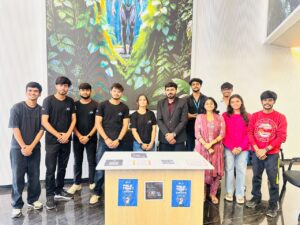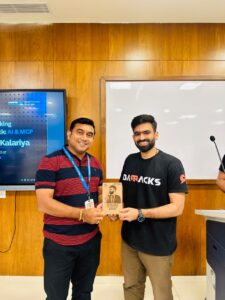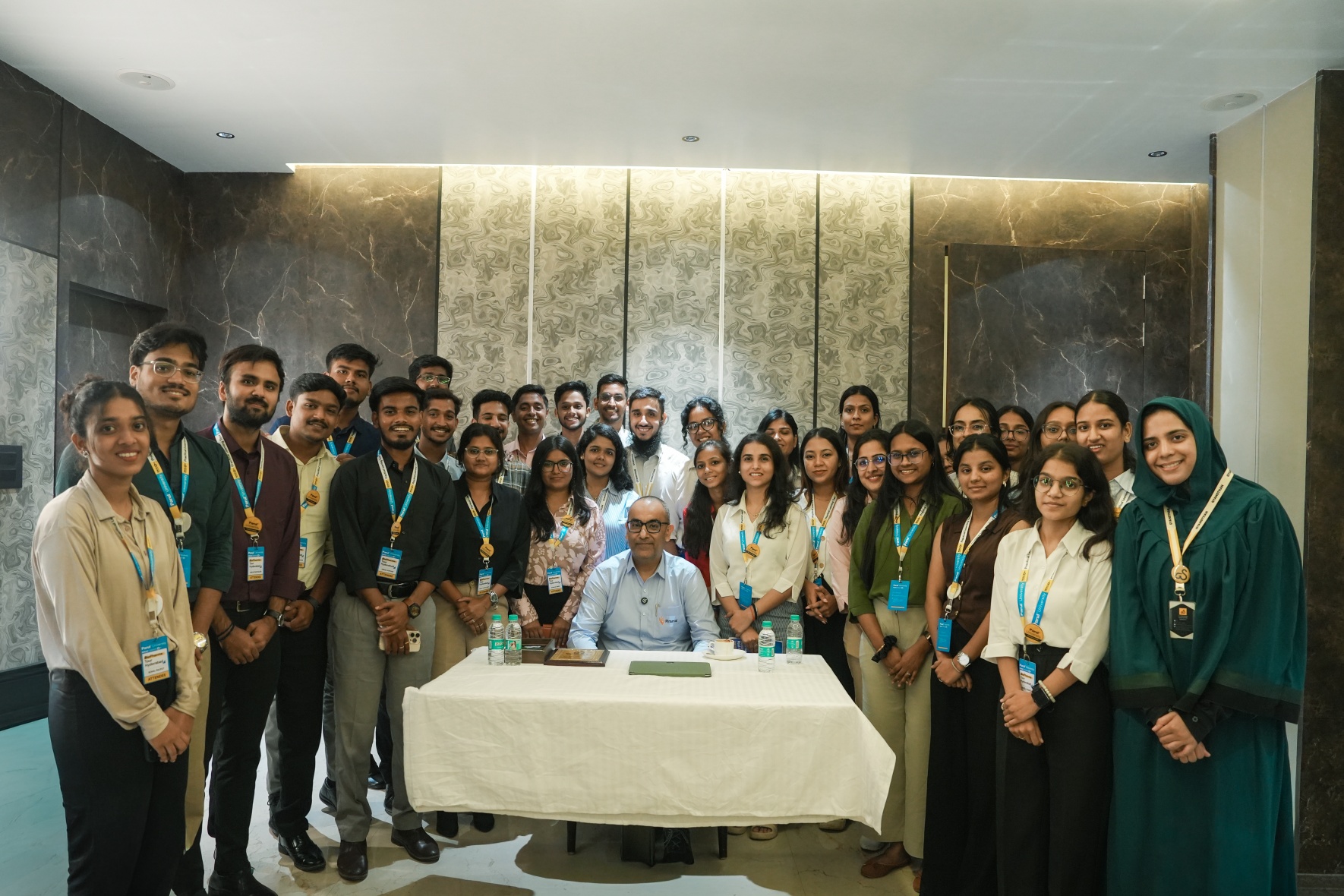
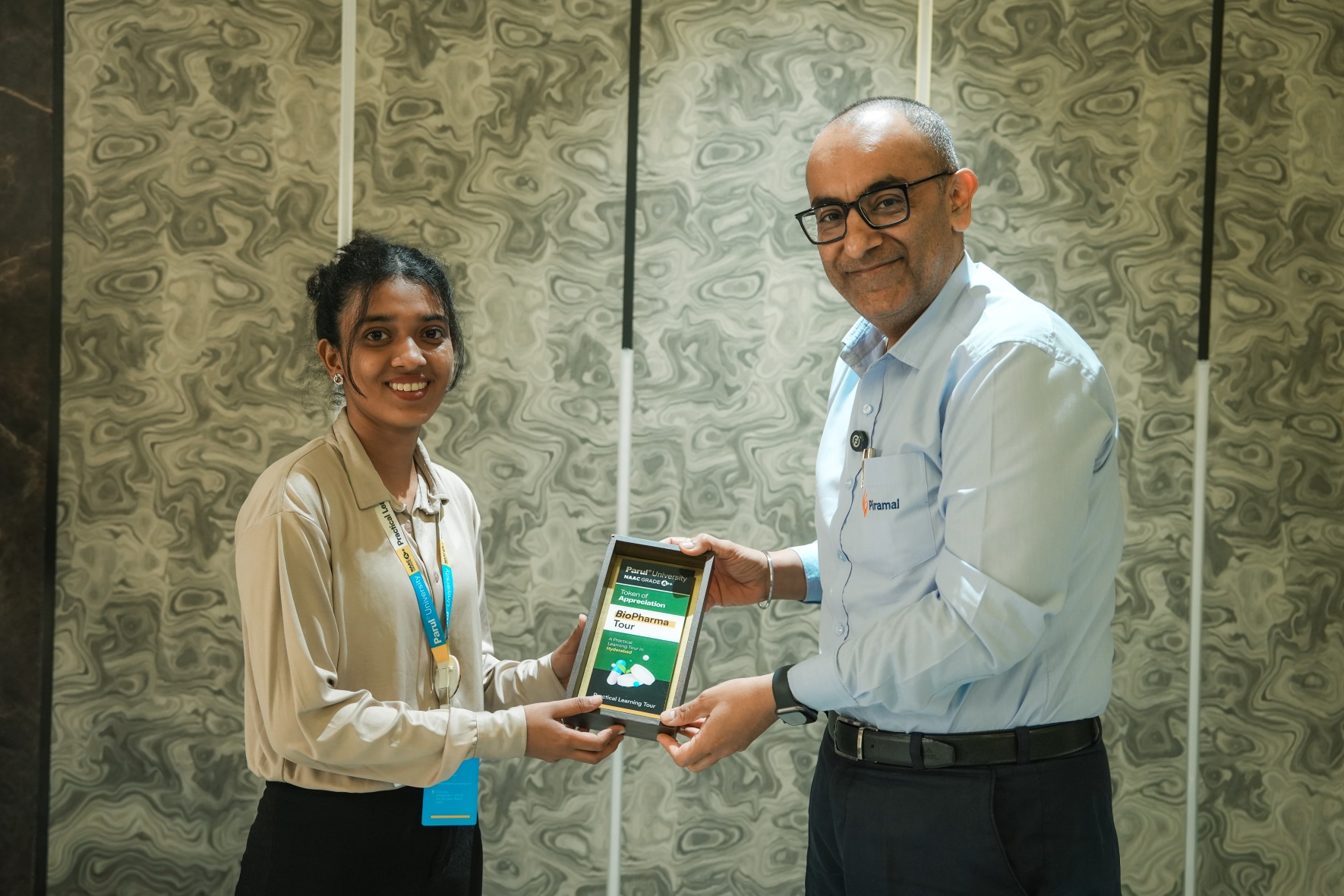
Mr Mandeep Suri has spent 24 years in the pharmaceutical industry across both API (Active Pharmaceutical Ingredient) and formulation divisions. He currently serves as Cluster Head for Quality of API, Patient Centricity, Transformation, and Remediation at Piramal Pharma Limited. When he spoke to 30 Parul University B.Pharm students, he did not deliver a corporate presentation. He explained how a global pharmaceutical company actually works.
How Piramal Pharma Is Structured
Piramal operates across three business segments:
- CDMO (Contract Development and Manufacturing Organisation): manufacturing products for other pharmaceutical companies. This is where big pharma companies from the US and Europe outsource production because domestic manufacturing creates pollution that their home-country regulations do not permit. India and China are the primary destinations for this outsourced work.
- Complex Hospital Generics: medicines used in critical care settings like ICUs, including inhalation anaesthesia and injectable anaesthesia.
- Indian Consumer Healthcare: daily-use products like Lacto Calamine.
Suri explained the economics clearly. When a company discovers a new drug, it patents the molecule. During the patent period, only that company can manufacture the drug. After patent expiry, other companies can produce the same molecule as a generic, which dramatically reduces cost and increases access. This patent–generic cycle is the structural foundation of the global pharmaceutical industry.
Why Data Integrity Is a Patient Safety Issue
The most serious segment of the session dealt with data integrity. Suri was direct: cGMP (current Good Manufacturing Practices) compliance is not just a rule. It requires significant investment and disciplined systems. Many companies claim compliance but underinvest. When data in pharmaceutical manufacturing is wrong, the medicine can be wrong, and a patient can be harmed.
He shared real examples where companies faced production shutdowns and regulatory consequences due to data integrity failures. Patients who depended on those products suffered because supply chains broke. The lesson for students was unambiguous: pharmaceutical quality is not an abstract concept. It has direct consequences for human life.
“Always prioritise yourself and your family.”
This advice, seemingly personal, was actually professional. Suri shared that he started as a chemical engineer in production but later shifted to quality after a personal difficulty. What seemed like a career setback became his defining expertise. He told students that life does not follow plans, but every experience builds capability. His core lesson was simple: give 100 percent in every role, because your contribution matters regardless of position.
Patient Centricity: Not a Poster, a Practice
Suri explained that historically, API manufacturing companies did not think about patients directly. They produced ingredients, shipped them to formulators, and the formulators dealt with patients. Now the industry mindset is shifting: every employee in the supply chain, including the person operating a reactor in an API plant, should understand that their work eventually reaches a patient. When people feel connected to the purpose, they work more carefully and responsibly.
He connected this to Piramal’s values: knowledge, action, care, and impact. In the pharmaceutical supply chain, vendors, manufacturers, formulators, and distributors are all linked. Trust and coordination across this chain determine whether the right medicine reaches the right patient at the right time.
Career Archetype 2: The First-Generation Entrepreneur (Mr Arun Bijjala, Converge Biotech)
Mr Arun Bijjala is the Founder and Managing Director of Converge Biotech. His background is the opposite of a corporate pharma executive: he comes from a small village where his family was involved in agriculture, and he was the first person in his family to complete postgraduation. When he spoke to students, he did not hide the messiness of his career path. He showed it as a feature, not a bug.
The Non-Linear Career
After completing his postgraduation, Bijjala became a lecturer. He found teaching the same material repeatedly unfulfilling and left. He moved to a microbiology lab where he tested samples and waited for results, which felt equally repetitive. Then he became a medical representative, and everything changed: he met doctors daily, understood real patient problems, learned about diseases and treatments in practice, and found the excitement that classroom teaching and lab work had not provided. He grew through area manager, regional head, and marketing roles before starting his own company.
His career lesson for students: confusion at age 21 is normal and even necessary. If you are too sure of your path too early, you may get stuck later. Different students have different interests: research, quality control, marketing, sales. Everyone should choose based on their own skills and interests, not by copying peers.
Entrepreneurship Is Problem-Solving, Not Grand Vision
Bijjala’s approach to entrepreneurship was deliberately unglamorous. He described it as solving small problems and managing money properly, not chasing grand ideas. His specific example: taking existing medicines and improving their delivery method, such as giving an injection instead of a tablet for better bioavailability. Innovation, he argued, is not always about discovering new molecules. Sometimes improving how an existing drug reaches the patient is more impactful and more commercially viable.
“There is no limit to innovation.”
He also explained the practical realities of pharma business: regulatory approvals take time, production processes are slow, and pharma should not be compared with IT or other fast-growth industries. Patience and financial discipline matter more than speed.
Integrity as a Business Test
Bijjala gave students a sharp quality test: if you are not confident to use your own company’s medicine, you should not work there. This applies equally to entrepreneurs building companies and employees choosing employers. For pharmacy graduates who will work in manufacturing, quality assurance, or regulatory affairs, this test cuts through corporate complexity to a simple ethical standard.
He also told students to never stop learning, to unlearn outdated knowledge, and to accept that even younger colleagues can teach them. He shared that he learns new things from his children because the world changes faster than any curriculum can track.
Career Archetype 3: The Vaccine Pioneer (Indian Immunologicals Limited)
Indian Immunologicals Limited (IIL) is one of India’s leading biotechnology companies. Dr Bhaskar Ganguly (Veterinarian and Senior Manager, Veterinary Services) and Dr Sarvesh Tayshete briefed students on what it means to operate at the intersection of human health, animal health, and environmental health.
One Health: Not a Buzzword, an Operating Principle
IIL operates under the One Health approach, which recognises that human, animal, and environmental health are interconnected. Diseases that start in animals can jump to humans (zoonotic diseases). Environmental degradation creates conditions for disease spread. A vaccine company that works across all three domains has a fundamentally different mission than one focused only on human pharmaceuticals.
- IIL is the world’s largest manufacturer of Foot-and-Mouth Disease (FMD) vaccines, protecting livestock that millions of Indian farmers depend on for livelihood.
- IIL has pioneered drone-based vaccine delivery, reaching remote areas that ground transport cannot serve reliably.
- In 2024, IIL launched Havisure, a Hepatitis A vaccine for human use.
- IIL contributed to codon-optimised COVID-19 vaccines during the pandemic.
- IIL sources serum ethically from New Zealand to maintain quality standards.
What Students Saw on Site
Students toured IIL’s facilities including advanced cold storage systems and liquid nitrogen storage techniques that are critical for maintaining vaccine potency during distribution. The cold chain, from manufacturing facility to patient’s arm, is one of the most complex logistics challenges in healthcare. For pharmacy students studying pharmaceutical storage and distribution, seeing this infrastructure in operation connects supply chain theory to biological reality.
“Your path is your power. Never mimic anyone, be your true self. Emotional decisions should not be taken as they will lead to distress. Instead, make data-driven decisions.”
What Day 4 Reveals About Career Paths in Pharmacy
The three sessions represent three fundamentally different career architectures:
- Mr Suri’s path: chemical engineering to production to quality over 24 years within established global pharmaceutical companies. This is the corporate career, building deep expertise in one domain (quality), gaining regulatory knowledge across geographies, and reaching senior leadership through domain mastery.
- Mr Bijjala’s path: lecturer to lab technician to medical representative to area manager to founder. This is the entrepreneurial career, iterating through roles until finding the intersection of personal skill and market need, then building a company around that intersection.
- Dr Ganguly and Dr Tayshete’s path: veterinary and pharmaceutical science applied to public health at scale. This is the mission-driven career, working at an institution whose purpose (affordable vaccines, One Health) is the primary motivator.
None of these paths was planned from age 21. Suri shifted to quality after a personal crisis. Bijjala left two jobs before finding his fit as a medical representative. IIL’s drone delivery programme did not exist a few years ago. The careers were built by staying open, working hard in every role, and responding to opportunities as they appeared.
Parul University’s ecosystem supports all three archetypes. The corporate path is supported by 2,200+ recruiters (Microsoft, Amazon, TCS, Zydus, Sun Pharma, Alembic). The entrepreneurial path is supported by PIERC (254 startups, Rs 20 crore+ funding, Rs 40 crore+ revenue). The mission-driven path is supported by Rs 58.31 crore in government-funded research through the Micro Nano Research and Development Center (MNRDC) and 3 Stanford-Elsevier global top 2 percent pharmacy faculty.
Frequently Asked Questions
What career paths are available after B.Pharm?
Three archetypes from the Biopharma Leadership Tour: corporate quality (Mr Suri, 24 years at Piramal across QA, QC, regulatory, API, formulation), entrepreneurship (Mr Bijjala, medical representative to founder of Converge Biotech), and mission-driven public health (IIL, One Health vaccines, drone delivery). Additional paths include R&D, regulatory affairs, clinical research, hospital pharmacy, sales and marketing, and academic research.
What is a CDMO in pharma?
Contract Development and Manufacturing Organisation. A company that manufactures pharmaceutical products for other companies. Piramal Pharma operates as a CDMO, producing APIs and formulations for global pharma companies that outsource manufacturing. Mr Suri explained that US and European companies outsource because domestic manufacturing regulations make local production of certain APIs costly due to pollution controls.
Is pharma entrepreneurship realistic for B.Pharm graduates?
Mr Arun Bijjala of Converge Biotech is the proof case: first-generation postgrad from a village who built a pharmaceutical company. His approach: improve delivery of existing drugs (injection vs tablet), manage resources carefully, be patient with regulatory timelines, and maintain absolute quality integrity. PIERC at Parul University has incubated 254 startups, including Solnce Energy (Rs 1 crore on Shark Tank) and Voldebug Innovations (award from Home Minister), demonstrating that student entrepreneurship is structurally supported.
What is Indian Immunologicals known for?
World's largest manufacturer of Foot-and-Mouth Disease vaccines. Operates under the One Health approach integrating human, animal, and environmental health. Pioneered drone-based vaccine delivery. Launched Havisure (Hepatitis A vaccine) in 2024. Contributed to codon-optimised COVID-19 vaccines. Sources serum ethically from New Zealand. Provides affordable and accessible vaccines for both human and animal health.
What is patient centricity in pharma?
The principle that every employee in the pharmaceutical supply chain, from API reactor operator to quality auditor to logistics coordinator, should understand that their work eventually reaches a patient. Mr Suri at Piramal explained that this mindset shift changes how people work: when they feel connected to the patient outcome, they work more carefully. It is not a marketing term. It is an operational principle that directly affects drug quality.