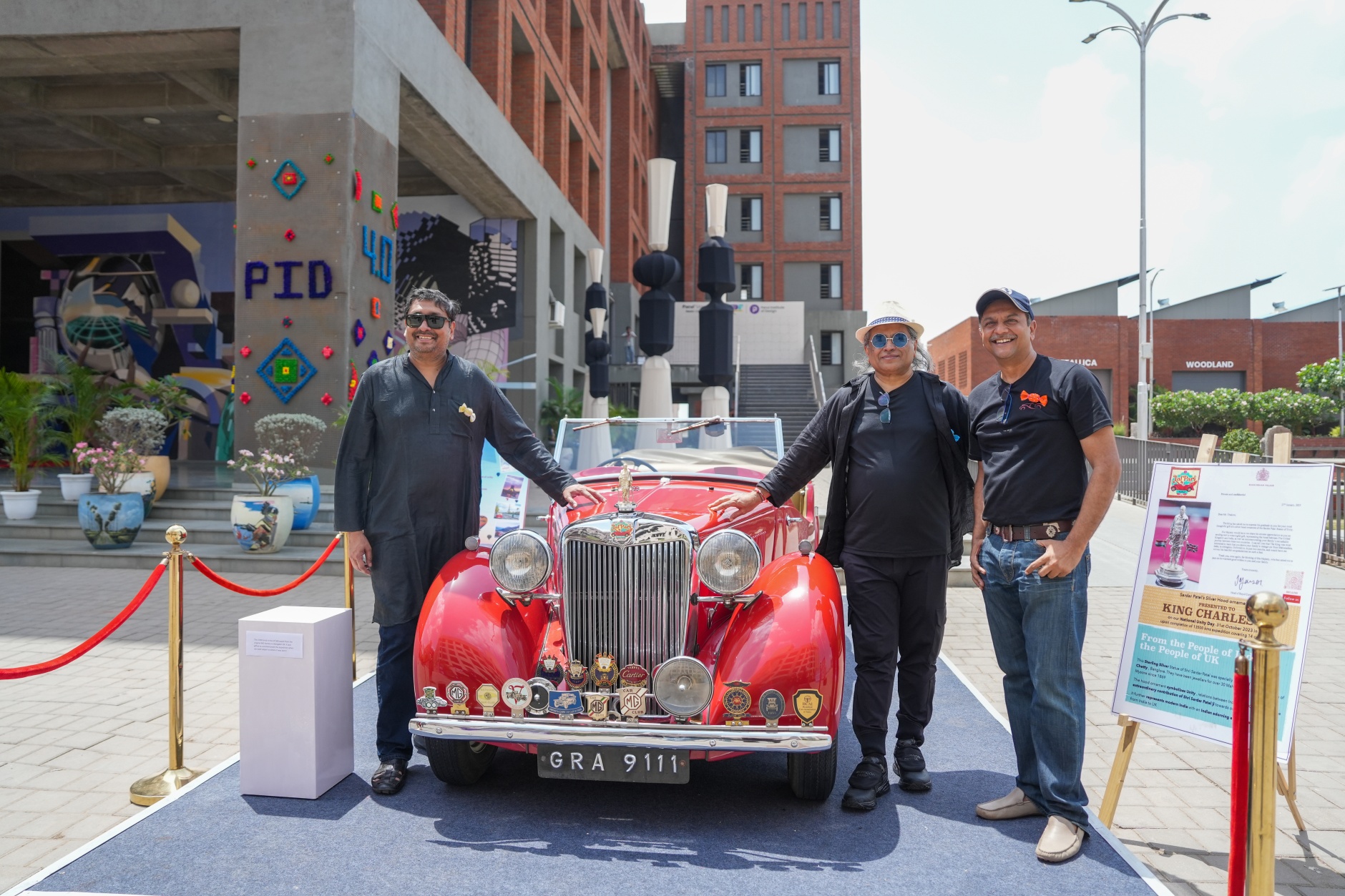
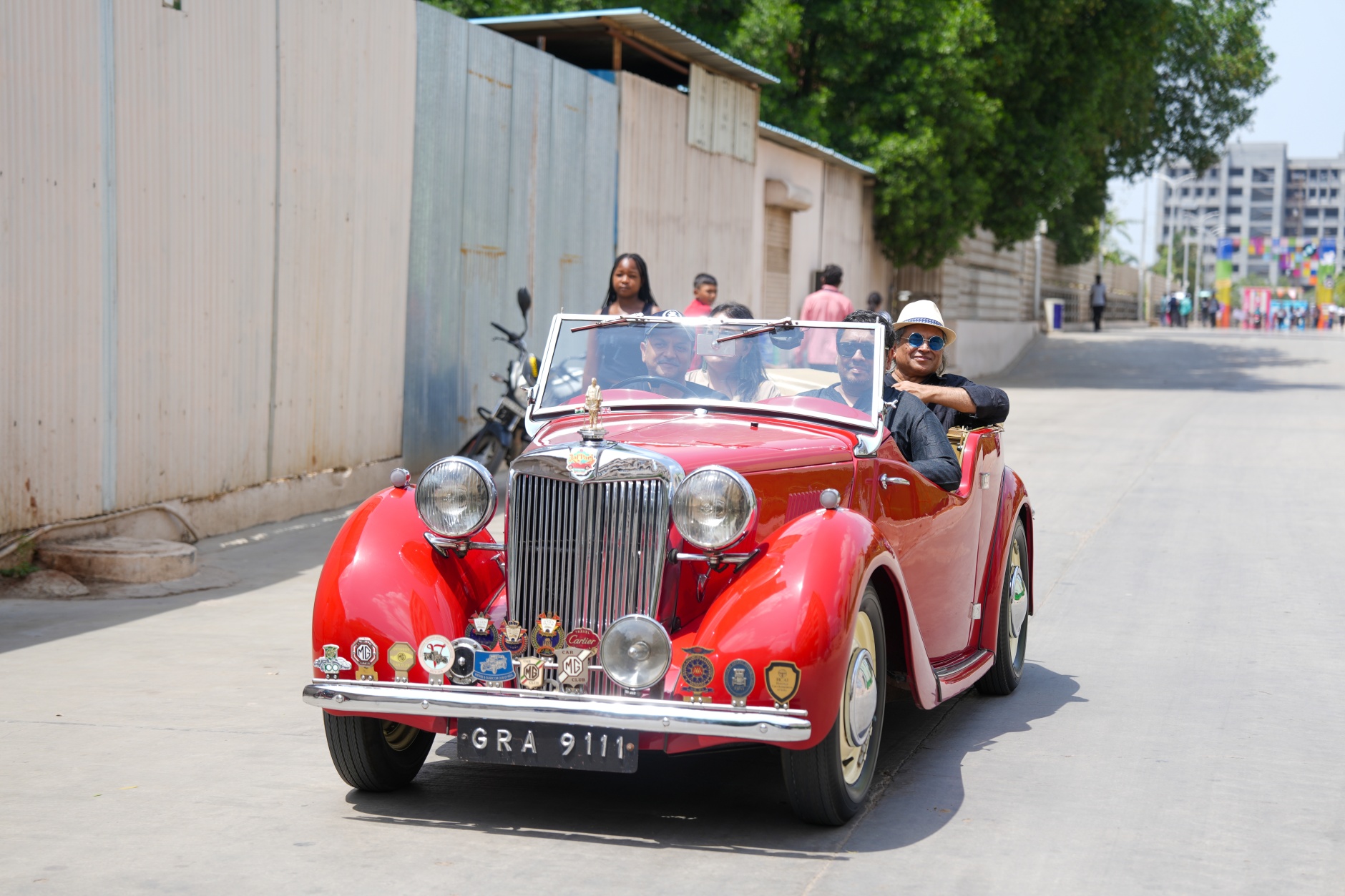
Lal Pari is the name Thakore gave the 1950s car he chose to restore.
The name, which translates to Red Fairy, reflected both the colour he would eventually paint the vehicle and the emotional relationship he developed with it through the restoration process. A restoration project of this depth is not a mechanical exercise. It is a years-long commitment to an object that can disappoint you daily, that asks for money, time, and patience you did not know you had, and that repays the investment only when it starts running reliably on a journey no one thought it could complete.
The mechanics of the car itself had specific constraints that a modern driver would find unusual.
- The clutch-to-accelerator pedal gap is 20 centimetres, significantly wider than in contemporary vehicles.
- The car requires a different driving technique that most Indian drivers under fifty have not experienced.
- Finding materials for the car today is difficult because they are not commercially available, leading to period-accurate substitutes.
- Many parts, specifically body panels, chrome fittings, fasteners are procured from the international sources.
Each of these constraints taught Thakore something about the relationship between industrial design and its era. The pedal spacing reflects a driving posture that was standard in the 1950s but has since been optimised for taller drivers with different ergonomic expectations.
Read More : The event that inspired many students, VFDF 4.0.
Parts Sourcing Across 15 to 17 Countries
The specific challenge of 1950s car restoration is that the global supply chain for the parts does not exist in a consolidated form.
Thakore’s Lal Pari required parts from 15 to 17 countries, sourced through a mix of specialist vintage-car networks, online auction platforms, independent restoration workshops, and personal connections developed over years of project work. The sourcing process was itself a slow education in global design heritage.
“Every country has a different relationship with its mid-century vehicles. Some preserved them. Others discarded them. The difference shows up in what you can still find thirty years later.”
The parts-sourcing experience across 15 to 17 countries is itself a case study in how design heritage is preserved or lost at a national scale. Countries with strong vintage-vehicle clubs, active restoration communities, and cultural valuation of automotive craft retain the parts ecosystem. Countries where older vehicles are treated as disposable lose the parts within a generation.
The Rexine Versus Leather Debate
The upholstery decision for Lal Pari was not purely aesthetic.
The debate between Rexine (a branded leather-look synthetic material popular in mid-century Indian automotive interiors) and genuine leather came down to three specific considerations.
- Period accuracy: Rexine was the standard material for 1950s Indian-market vehicles in this category, while leather was used primarily in premium imports.
- Economics: Rexine costs a fraction of leather per square metre, and restoration budgets rarely allow the full-leather option.
- Heat behaviour: Rexine traps heat significantly more than leather in Indian summer conditions, creating a thermal discomfort issue on long drives.
- Aging characteristics: leather develops patina and softens over years while retaining structural integrity; Rexine eventually cracks and peels.
Thakore worked through this decision across several months before settling on a specific combination. The thinking behind the decision is exactly what interior designers and product designers do professionally. Every material choice involves trade-offs among period accuracy, budget, climate behaviour, and longevity. Students at the Parul Institute of Design who sit for the Livspace interview’s material-fluency round face versions of this same question.
Read more: B.Design Interior and Furniture Design at Parul Institute of Design
The In-Built Hydraulic Jack
One of the more unusual restoration decisions Thakore made was retrofitting an in-built hydraulic jack into the vehicle.
Classical mid-century vehicles did not typically come with in-built jacks. Drivers carried a mechanical jack separately and deployed it when needed. Thakore anticipated that a 30,500-kilometre journey across 14 countries, including rural terrain in Iran and Turkey, would involve tyre changes in locations without roadside assistance. An in-built hydraulic jack, accessible from inside the vehicle, reduces the time and exposure of a tyre change significantly.
The retrofit itself required custom fabrication. The hydraulic system had to fit within the original body geometry without compromising structural integrity. The controls had to be period-appropriate in appearance while being modern in reliability. The decision is a specific example of the restoration practitioner’s core dilemma: how to add modern capability to a heritage object without erasing its authenticity.
Read More: Pu-Dat 2026, Aptitude Test For Students Conducted By Institute Design Of Parul University
The Route: Dubai, Iran, Turkey, Greece, Bulgaria, Italy, Switzerland, France, UK
The 30,500-kilometre route ran through 14 countries in a specific sequence.
Each country contributed a distinct experience to the journey.
- Dubai: the administrative starting point for the cross-continental drive, with vehicle registration, documentation, and final supply verification.
- Iran: the country that most surprised Thakore with its hospitality. Strangers offered meals, shelter, and mechanical help without expectation of payment.
- Turkey: a crossroads geographically and culturally, with terrain ranging from coastal roads to mountain passes.
- Greece and Bulgaria: the entry point to continental Europe, with changing road infrastructure and border formalities.
- Italy: a country with deep automotive culture and vintage-vehicle recognition, where Lal Pari drew attention in every town.
- Switzerland and France: the Alpine crossings and the approach to the Channel, involving altitude changes and weather variability.
- United Kingdom: the destination, where the car completed its journey and participated in vintage-vehicle events.
The surprise element was Iran. Most Indian travellers approach the country with geopolitical caution and cultural uncertainty. Thakore described the country as the warmest on his entire route, with specific instances of mechanics refusing payment for urgent repairs and families offering overnight hospitality to strangers driving an Indian-registered vintage vehicle.
“Every country on the route taught me something. Iran taught me the most.”
The Companions on the Road
Thakore’s father, aged 75 at the time, joined him for part of the journey.
A 75-year-old making part of a 30,500-kilometre drive is itself a remarkable commitment. The conversations between father and son across those days, the transfer of generational perspective that happens when family members share unusual experiences, and the simple physical reality of two generations in the same car across countries together, is the kind of memory that the journey produced beyond the mechanical accomplishment.
Two other travellers Thakore encountered on the road stayed with him as points of reference.
- A 94-year-old motorbike traveller encountered somewhere along the European stretch, making his own long-distance ride at an age when most people have stopped driving entirely.
- A cyclist covering 200 kilometres a day on a long-distance route, demonstrating physical endurance at a level most people never attempt.
Both encounters reframed what Thakore thought he was doing. The 94-year-old made his own accomplishment look modest by comparison. The cyclist showed what daily physical commitment at scale actually looks like. The long-distance travel community globally includes people whose journeys make even ambitious projects seem conservative.
Best Restoration Award
Lal Pari won the Best Restoration Award at a vintage-vehicle recognition event.
The award reflected the specific choices Thakore made across the restoration process.
- Period accuracy maintained across visible components while allowing modern reliability where safety required it.
- Material authenticity prioritised within budget constraints, with the Rexine upholstery decision defended on period grounds.
- Mechanical capability demonstrated through the actual completion of the 30,500-kilometre journey, which is the most honest test any restoration can face.
- Documentation and provenance maintained through photographs, mechanical records, and the narrative of the restoration itself.
This combination of factors is what distinguishes a restoration-for-display from a restoration-for-use. Both have value. The restoration-for-use category, which Lal Pari occupies, demonstrates that heritage objects can continue to function as originally intended when the restoration is committed enough.
What Restoration Teaches Design Students
The Lal Pari session at VFDF 4.0 was not a design lecture. It was a story. Design students who attended took specific lessons from it that transferred to their own practice.
Five takeaways that generalise beyond vintage-car restoration.
- Material choices always involve trade-offs. Period accuracy, budget, climate behaviour, and longevity rarely align perfectly. The designer’s job is to make the trade-offs consciously.
- Sourcing takes time. Quality components for any design project, whether vintage car parts or specialised fabric or custom hardware, require patient network-building that cannot be compressed.
- The test of any design is the object’s performance under real conditions. A restoration that looks good but cannot complete the journey it was built for has failed at its core purpose.
- Heritage and modernity are not opposites. Thakore’s hydraulic jack retrofit demonstrated that authentic-looking design can incorporate modern capability when the decision is made with craft sensitivity.
- The story matters as much as the object. Lal Pari’s 30,500-kilometre journey, the Iran hospitality, the father’s participation, the 94-year-old motorbike traveller, all of these become part of what the restored car carries with it. The narrative is part of the artefact.
These are the kinds of lessons design students absorb when working practitioners tell their stories on campus. The Parul Institute of Design’s festival model regularly produces these sessions, which is why the four-day festival matters for student development in ways that lectures alone cannot match.
Frequently Asked Questions
Who is Daman Thakore and what is Lal Pari?
Daman Thakore is the owner and restoration practitioner behind Lal Pari, a 1950s car he restored and drove 30,500 kilometres from Ahmedabad to London across 14 countries. The name Lal Pari means Red Fairy. The vehicle won the Best Restoration Award and was the subject of Thakore's Day 3 session at VFDF 4.0 in April 2026 at the Parul Institute of Design.
What countries did Lal Pari travel through?
The 30,500-kilometre route ran through 14 countries including Dubai, Iran, Turkey, Greece, Bulgaria, Italy, Switzerland, France, and the United Kingdom among others. Iran was the country that most surprised Thakore with its hospitality. The United Kingdom was the destination, where Lal Pari participated in vintage-vehicle events.
Why is a vintage car restoration relevant to design students?
Because it compresses the core challenges of design practice into a single object: material choices under trade-off pressure, sourcing at global scale, heritage-modernity balance, and testing the object under real performance conditions. Design students who hear working practitioners tell these stories absorb lessons that transfer directly to interior design, product design, and fashion design practice.
What is the Rexine versus leather debate in restoration?
Rexine is a branded leather-look synthetic material that was standard in 1950s Indian-market vehicles. Leather was used primarily in premium imports. The choice between them in a restoration involves period accuracy, budget, heat behaviour in Indian conditions, and aging characteristics. Thakore settled on a specific combination for Lal Pari after months of consideration.
How can a design student approach restoration or heritage-craft work?
By developing material fluency, sourcing patience, and the willingness to commit to projects over years rather than weeks. The Parul Institute of Design's curriculum supports this through workshops with visiting practitioners, artisan sessions with Manaben and others, and exposure to craft-heavy disciplines including Button Masala by Anuj Sharma. Students interested in restoration and heritage work can build on this foundation through independent practice and PIERC incubation for founder-track projects.


