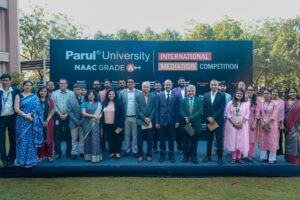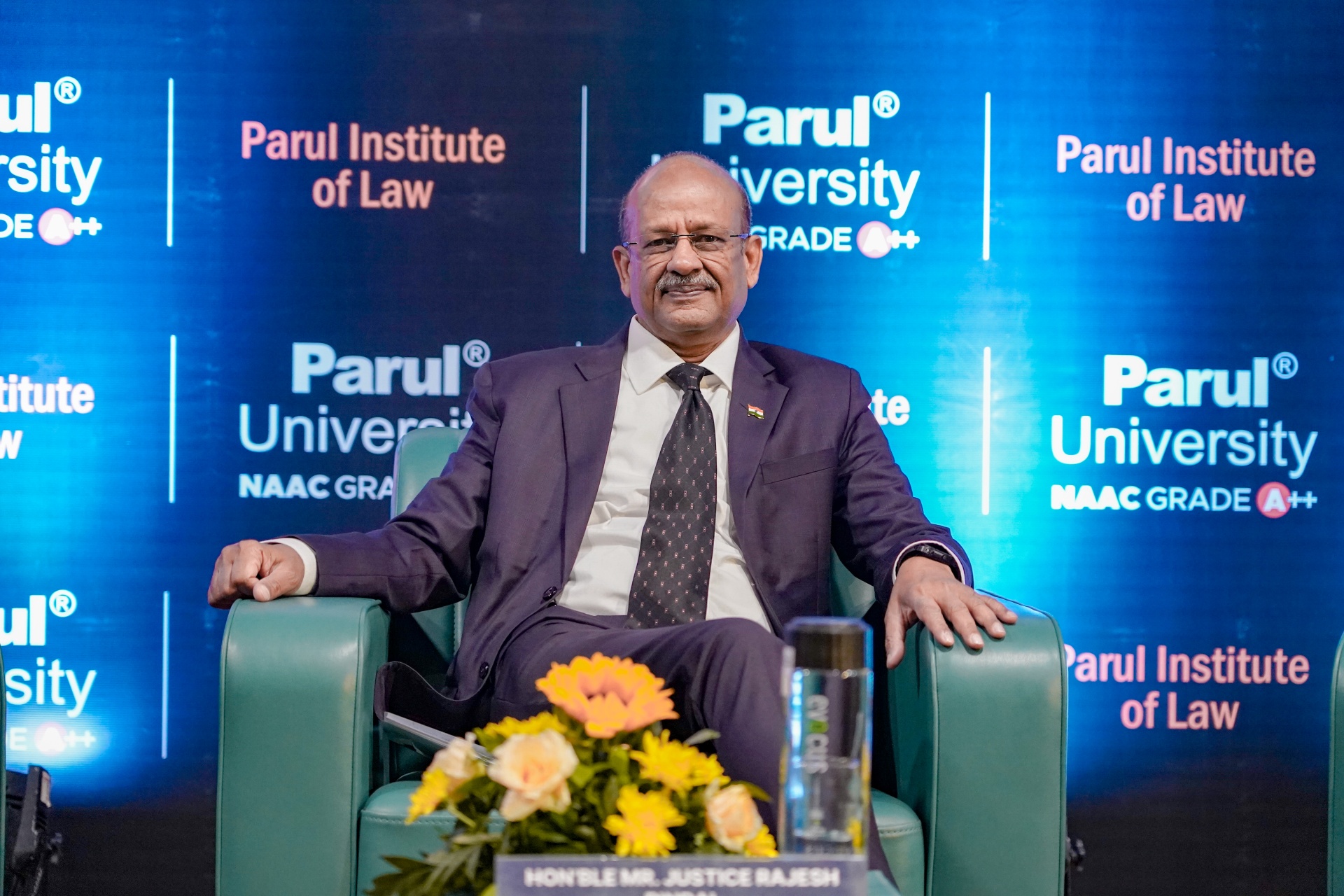
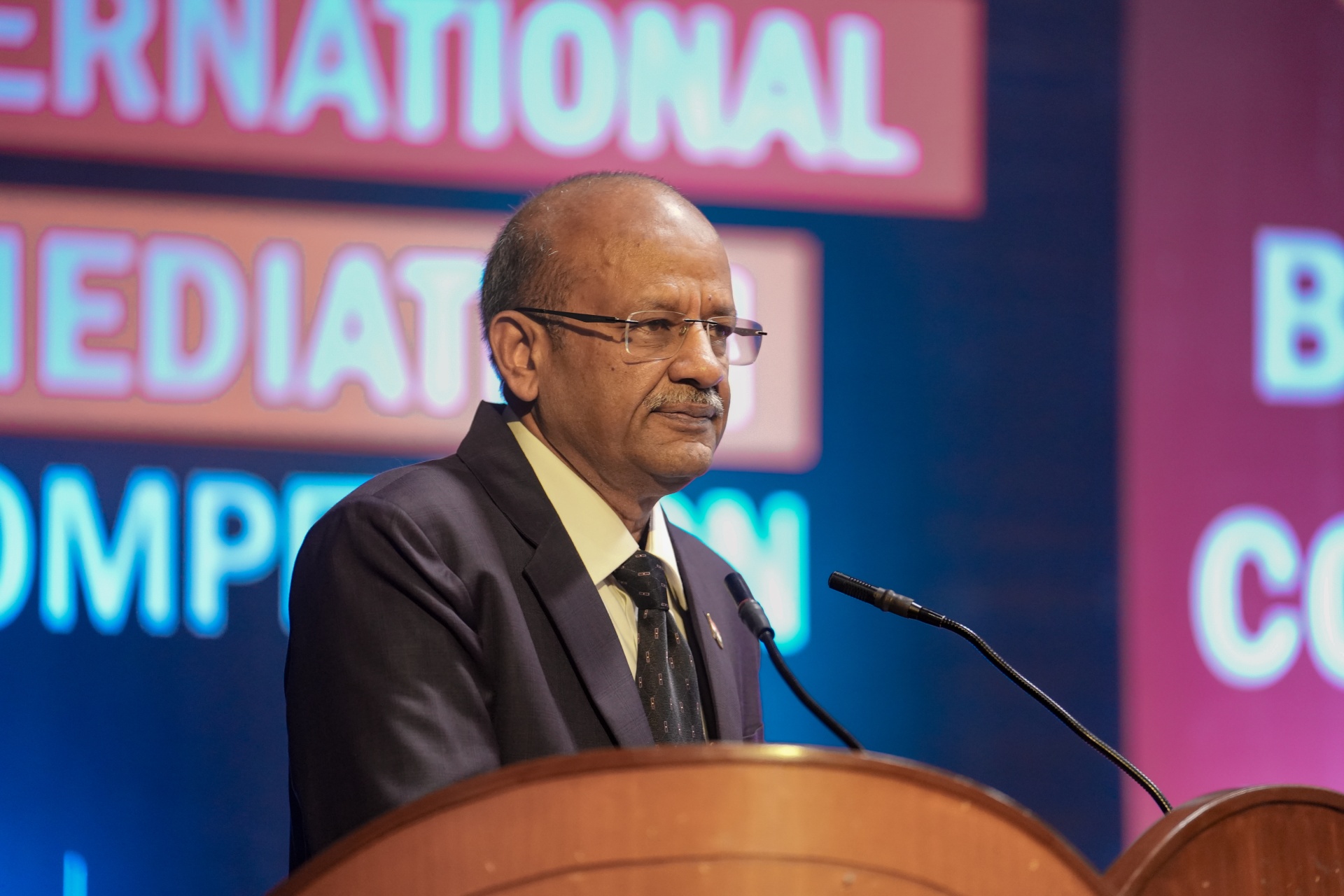
The journey of Justice Rajesh Bindal starts with him taking up LLB. He did LLB from Kurukshetra University. He was born on 16 April 1961 in Ambala, Haryana. After completing his LLB, he worked at the Punjab and Haryana High Court. He became a judge of the Punjab and Haryana High Court in 2006 and then served as a judge of many other High Courts, including the Jammu & Kashmir, Calcutta, and Allahabad High Courts, where he also became the Chief Justice. All these experiences led him to become a Supreme Court judge in 2023 on 13th February. Then he retired on 15th April 2026. Throughout his tenure at the Supreme Court, Justice Bindal documented and authored 166 judgments at an average of 55 per year. His highest records were in criminal matters, almost 46 judgments, followed by service matters with 44 judgments. Property matters have a count of 30 judgements, followed by civil matters with 20 judgements and motor vehicle cases with 17 judgements. This data shows how diverse the profile was with high output.
Justice Bindal’s areas of substantive judicial expertise include constitutional law, taxation law, administrative law, criminal law, and service jurisprudence. He has heard matters spanning constitutional interpretation, fundamental rights doctrine, fiscal disputes at the apex level, administrative challenges to state action, and the procedural and evidentiary standards that govern criminal adjudication. The breadth of subject-matter authority across his judicial career produces an instructional perspective that very few academic faculty can offer, regardless of their scholarly credentials.
Notable judgments and the substantive judicial record
Several of Justice Bindal’s judgments hold particular significance for students and practitioners studying contemporary Indian jurisprudence. The Property Owners Association
- State of Maharashtra (2024), a nine-Judge Constitution Bench decision led by former Chief Justice D. Y. Chandrachud, is the most constitutionally significant matter on his record. The Bench held by an 8:1 majority that not all privately owned properties can be classified as ‘material resources of the community’ under Article 39(b) of the Constitution, disagreeing with Justice Krishna Iyer‘s 1977 interpretation in the State of Karnataka v. Ranganatha Reddy line of cases. The Bench further held that courts must not endorse a particular economic ideology in constitutional interpretation, a structural observation about constitutional adjudication that has ongoing doctrinal implications.
In Shazia Aman Khan v. State of Orissa (2024), the Bench set aside a High Court direction that had ordered a 14-year-old girl to be transferred to her father, from whose custody she had never lived since birth. Justice Bindal held that a child cannot be treated as a chattel and that the stability of the child is of paramount consideration in custody adjudication. The judgment reinforces the child-welfare orientation of Indian custody law against rigid biological-parent presumptions.
In Parminder Singh v. Honey Goyal (2025), Justice Bindal enhanced motor accident compensation from ₹15.25 lakh to ₹36.84 lakh and directed that an alternative to Tribunal-routed claims would be the direct bank transfer of compensation to victims. The direction operates as a systemic reform observation rather than only case-specific relief, recognising the procedural friction that delays compensation reaching motor accident victims and proposing an administrative pathway around it.
In Neeraj Dutta v. State NCT of Delhi (2023), the Bench held that allegations of demand and acceptance of gratification against a public servant must be established beyond reasonable doubt, reinforcing the evidentiary standard in bribery prosecutions. In one of his final rulings in 2026, Justice Bindal held that gratuity is not a bounty but the entitlement of an employee, a labour-rights observation with implications for service jurisprudence across the formal employment sector. Earlier, while serving as Acting Chief Justice of the Jammu and Kashmir High Court in 2020, he directed all courts in Jammu and Kashmir and Ladakh to avoid disclosing the identity of rape survivors in proceedings and judgments, an administrative direction that anticipated the broader institutional shift toward survivor-identity protection in Indian criminal procedure.
Read More: Justice Rajesh Bindal architected India’s nationwide Medico-Legal
The MedLEaPR system: a nationwide institutional legacy
Apart from his judicial journey, he contributed as an architect of MedLEaPR, the Medico-Legal Examination and Post-Mortem Reporting System. This software helps standardize and secure the forensic, post-mortem reporting, addressing long-standing concerns about evidentiary amalgamation in medico-legal cases. The first launch was in Punjab; the system was made mandatory for all states by the Central Government in 2023 and incorporated with the Crime and Criminal Tracking Network and Systems (CCTNS).
The nationwide rollout is arguably Justice Bindal’s most durable institutional contribution: a structural reform that operates across India’s criminal investigation infrastructure independent of any individual case or judgment.
For law students examining the intersection of judicial vision and administrative reform, MedLEaPR is a concrete case study of how a Judge’s institutional initiative can translate into operational change at national scale.
What Justice Bindal will bring to the Parul Institute of Law
Justice Bindal’s teaching engagement at Parul University departs from the conventional honorary professorship model in important ways. Rather than delivering scheduled syllabus-aligned lectures, he has expressed a clear preference for an experience-anchored pedagogy: teaching through judgments he has authored, courtroom situations he has presided over, and deliberative considerations that shape how apex court reasoning actually develops. The model treats his accumulated judicial experience as living curriculum rather than ceremonial credential.
Allow me, instead of teaching the books, to share the experience of my journey in the law through these textbooks. It would be better, instead of directly going through the syllabus, if I can share my experience through my judgments and through the understanding of what the deliberative process actually looks like inside the Court.
Hon’ble Justice Rajesh Bindal, on his teaching philosophy at the
Parul Institute of Law
Three substantive areas anchor his planned engagement. The first is constitutional law and fundamental rights doctrine, where his perspective from the 9-Judge Property Owners Association Bench, alongside his broader constitutional case record, provides instructional depth that traditional academic faculty cannot match. The second is taxation, administrative, and service jurisprudence, where his volume of authorship across these domains during his Supreme Court tenure equips him to illustrate how doctrinal principles actually operate under apex court scrutiny. The third is contemporary legal challenges including the implementation of the Mediation Act 2023 and the evolving alternative dispute resolution framework, areas where current legal practice is still settling and where forward-looking jurisprudential perspective carries particular value.
Justice Bindal has also signalled significant emphasis on professional ethics and courtroom conduct, an area where Indian legal education has historically left a structural gap. The norms governing a lawyer’s bearing before the Bench, the unwritten expectations of restraint and decorum that animate the adversarial system, and the cultural dimensions of professional conduct in legal practice are difficult to transmit through textbook instruction. They require the perspective of someone who has observed lawyers from the Bench across thousands of proceedings. His engagement is also expected to extend into career guidance, particularly on the wider spectrum of legal career options beyond conventional litigation and corporate practice, including judicial service, government legal positions, regulatory body roles, and the legal advisory components of various central and state government departments and statutory authorities regulated by the Bar Council of India framework.
Research, international collaboration, and institutional contributions
Justice Bindal’s engagement at Parul University extends beyond classroom teaching into research guidance and institutional development. He has expressed willingness to guide students on research papers and publishable legal scholarship, an opportunity that has particular value for students considering academic careers or scholarly directions within their professional practice. Research mentored by a former Supreme Court Judge carries weight in journal review processes and supports placement in reputable legal scholarship platforms.
His international academic relationships, developed across visits and guest lectures at law schools abroad, position the Parul Institute of Law to pursue formal research collaborations with international legal academic institutions. Such collaborations remain underdeveloped in most Indian private law schools and represent a meaningful area for the Parul Institute of Law to advance its scholarly footprint. Justice Bindal has also indicated willingness to contribute to the Board of Studies, the body responsible for curriculum review and approval; to advise on Memoranda of Understanding (MOUs) with national and international academic partners; and to provide input on infrastructure development for the law programme. The comprehensive scope of engagement, from teaching to research to curriculum to partnerships to institutional advisory, distinguishes the appointment from a conventional honorary title.
The outreach for the appointment was led by the Training and Placement Cell leadership at the Parul Institute of Law, with sustained engagement over several months before the formal appointment was finalised. The Parul University leadership has also approved up to four additional Distinguished Honorary Professorships of Law to be filled by former Supreme Court Judges, former Chief Justices of India, and former Chief Justices of various State High Courts. The combined ambition represents the most concentrated effort by a private law institution in India to bring direct judicial perspective into academic instruction at scale.
Read More: Law graduate at ICICI Lombard from Parul Institute of Law.
The broader Parul Institute of Law proposition
Justice Bindal’s appointment sits within a broader institutional proposition at the Parul Institute of Law that combines academic depth with structured professional preparation. Parul University offers a five-year program, BA LLB (Hons.) and BBA LLB (Hons.), with a three-year LLB program and a postgraduate program that is LLM. The university has an internship integrated into the program that guarantees two internship placements per academic year for each student, one covered during the summer break and the other during winter.
The internships network is spread over law firms, advocates, courts, and legal advisory bodies. They support almost 1,100 students simultaneously in internship placements, with mandatory one-on-one counseling sessions with senior faculty, a review of each internship, and guidance for the next. There is a moot court and clinical training cell at the institute that organizes moot court programming into a broader suite of clinical legal skills, including trial advocacy, client counseling, mediation, and arbitration.
The 2026 batch received placement where 80 to 90 percent of students seeking employment got placed, with the highest package being ₹8 lakh per annum, a competitive outcome for entry-level legal practice at private law schools. The placement cell focuses on each student and helps them get placed by giving them training.
Read More: From BA LLB student to law clerk at Supreme Court.
FAQs
Who is Justice Rajesh Bindal?
Justice Rajesh Bindal is a retired judge of the Supreme Court of India who is appointed as the Distinguished Honorary Professor of Law by Parul University. He was born on 16th April 1961 in Ambala, Haryana. He studied LLB from Kurukshetra University in 1985 and began his career at the Punjab and Haryana High Court. He then became Chief Justice of J&K, Punjab, Haryana, Allahabad and Calcutta High Courts. He was appointed as the supreme court judge on 13th February 2023 and he retired on 15th April 2026.
For which role is Justice Rajesh Bindal appointed at Parul University?
Justice RajeshBindal is appointed as the Distinguished Honorary Professor of Law at the Parul University's Law Faculty. He aims to integrate experience-anchored teaching rather than conventional patterns of teaching. He will incorporate the judicial reasoning, courtroom culture and contemporary legal challenges drawn from his career on the Bench. His appointment will help the university and students with research guidance, publications, institutional advisory on the Board of Studies and on national and international academic MOUs and career guidance.
What are Justice Bindal's most notable judgments?
Justice Rajesh Bindal's most constitutionally significant matter is Property Owners Association v. State of Maharashtra (2024), a nine-Judge Constitution Bench decision led by former Chief Justice D. Y. Chandrachud that held by 8:1 majority that not all privately owned properties can be classified as 'material resources of the community' under Article 39(b). His other notable judgments include Shazia Aman Khan v. State of Orissa (2024) on child custody and the principle that a child cannot be treated as chattel; Parminder Singh v. Honey Goyal (2025) on motor accident compensation enhancement and direct bank transfer of compensation; Neeraj Dutta v. State NCT of Delhi (2023) on the evidentiary standard in anti-corruption prosecutions; and a 2026 ruling holding that gratuity is the entitlement of an employee rather than a bounty.
What is the MedLEaPR system?
MedLEaPR, the Medico-Legal Examination and Post-Mortem Reporting System, is a software platform architected by Justice Rajesh Bindal that standardises and secures forensic and post-mortem reporting. The system was initially launched in Punjab and was made mandatory for all states by the Central Government in 2023, with subsequent integration into the Crime and Criminal Tracking Network and Systems (CCTNS). The nationwide rollout is widely considered Justice Bindal's most durable institutional legacy, operating as a structural reform across India's criminal investigation infrastructure. MedLEaPR is studied at the Parul Institute of Law as a case study of how judicial vision can translate into administrative reform at national scale.
What law programmes does Parul Institute of Law offer?
The Parul Institute of Law at Parul University offers integrated five-year law programmes including BA LLB (Hons.) and BBA LLB (Hons.), the three-year LLB programme for graduates from other disciplines, and the postgraduate LLM (Master of Laws) programme. The Institute is recognised by the Bar Council of India and operates within Parul University, which holds NAAC A++ accreditation at 3.55 CGPA and Category 1 University status with Grant of Graded Autonomy. The Institute supports structured internship placements (two per academic year guaranteed for each student), a Moot Court and Clinical Training Cell covering trial advocacy, client counselling, mediation, and arbitration, and a Training and Placement Cell that achieved 80 to 90 percent placement rates for the 2026 graduating batch with the highest package at ₹8 lakh per annum.
Why is Justice Bindal's appointment significant for Indian legal education?
The appointment of a retired Supreme Court Judge as a Distinguished Honorary Professor of Law at a private Indian university remains rare. The pool of individuals who have served on the Supreme Court of India at any time is small (the Court has 33 sanctioned positions), and the engagement of such individuals in sustained academic capacity at private law institutions has been undertaken by very few universities. Justice Bindal's appointment at Parul Institute of Law is the first in a planned series of additional honorary professorships approved by the Parul University leadership, with capacity for up to four more former Supreme Court Judges, former Chief Justices of India, or former Chief Justices of State High Courts. The combined institutional ambition represents the most concentrated effort by a private law school in India to bring direct judicial perspective into legal academic instruction at scale.