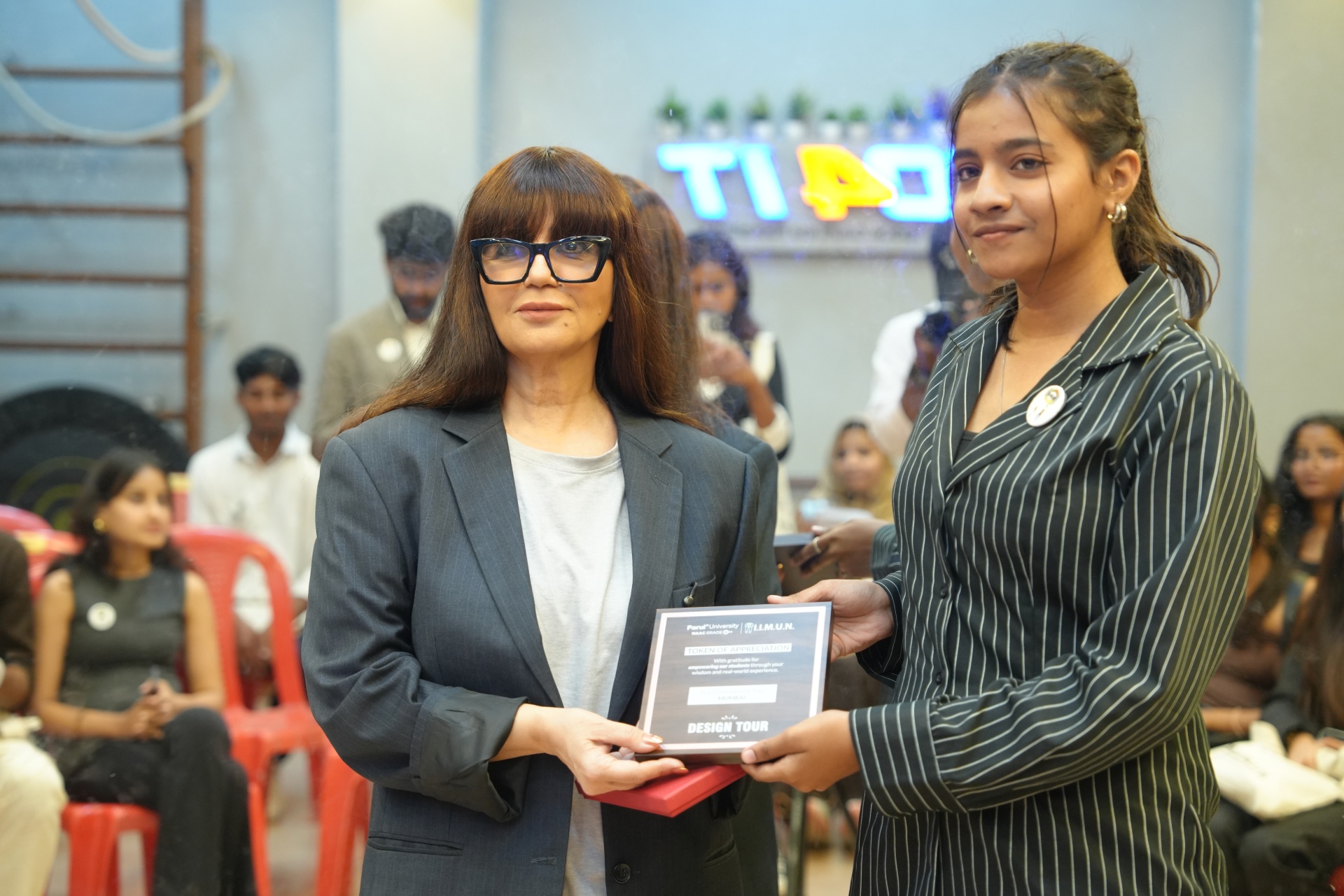
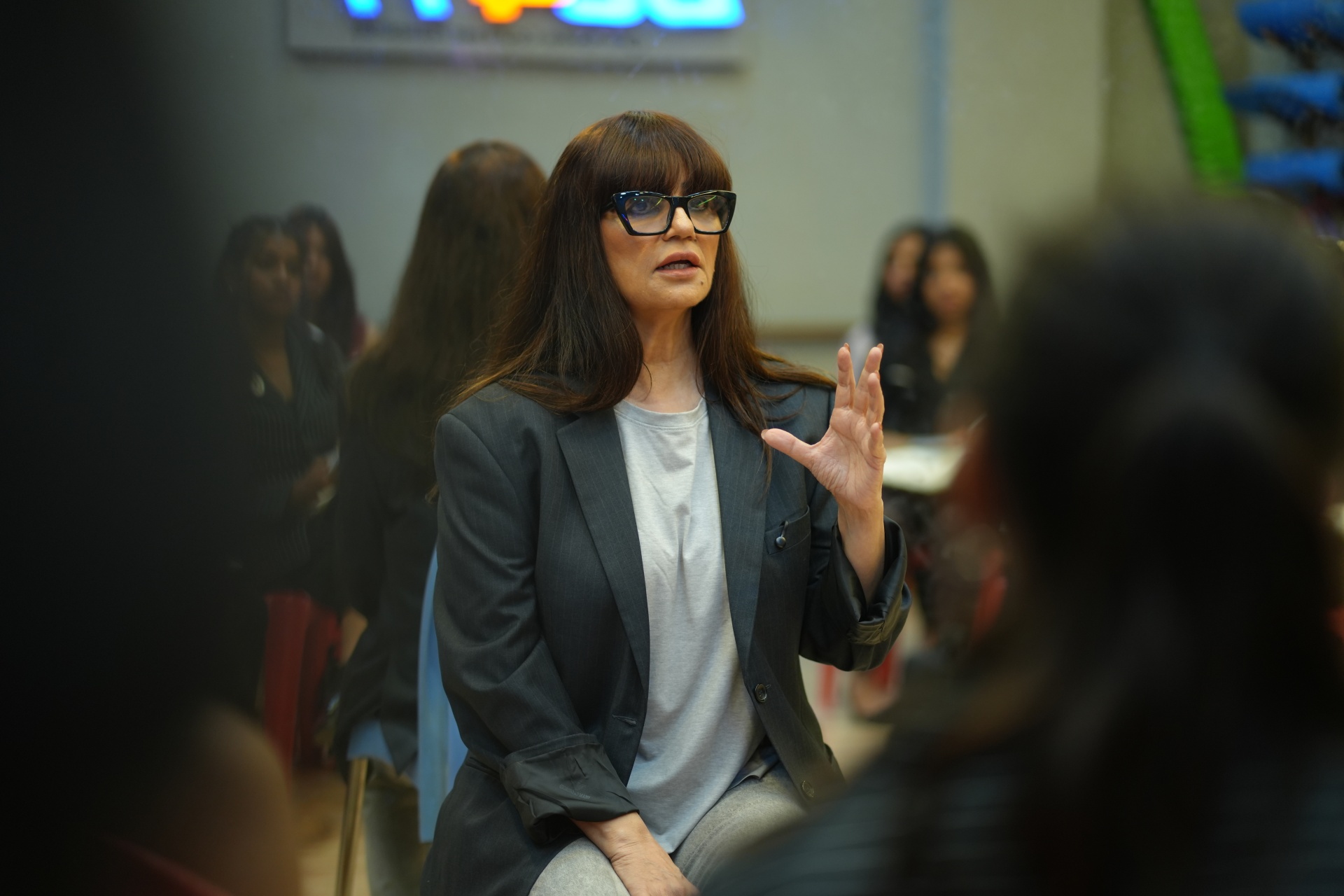
The session with Neeta Lulla, one of India’s most established costume designers, reframed costume as narrative device rather than fashion.
Ms. Neeta Lulla addressed the discipline of costume design as something fundamentally different from fashion. Costumes are not garments designed for trend or seasonal release. They are narrative devices for character, era, and emotion, designed to work within a script and a director’s vision rather than against the rhythms of the fashion calendar. The session covered six dimensions of the practice.
While designing something on set, your script should talk to you.
Ms. Neeta Lulla, Indian Costume Designer
- Costume as character: The garment is a tool for character development, not an end in itself. Every choice of fabric, cut, and detail serves the figure inside the costume.
- Translating script and director’s vision: The script and the director’s intent are the design brief. The costume designer interprets them visually.
- Textiles, embroidery, and craftsmanship: Indian textiles and crafts are powerful storytelling tools in their own right; deep research adds authenticity and credibility.
- Large-scale production management: Cinema operates at production scale. Costume continuity, the consistency of a character’s wardrobe across scenes and shoot dates, requires discipline and time management.
- The evolution of Bollywood costume design: Over decades, Indian cinematic costume has evolved through specific aesthetic eras, each with its own conventions.
- Authenticity versus cinematic appeal: Period costume must be researched and accurate; it must also work on screen. The balance is the craft.
Her takeaway for students was direct: costumes are not fashion. Research adds credibility. Every costume must align with character, era, and emotion. Teamwork and time management are critical in film projects. Attention to detail, including fabric, colour, and accessory choice, defines quality. Indian textiles and crafts are not decoration but active narrative tools. A successful designer combines creativity with discipline and adaptability.
Shubhika Sharma on building Papa Don't Preach as a contemporary brand
Ms. Shubhika Sharma, founder of Papa Don’t Preach, addressed the work of building a recognisable contemporary Indian fashion brand. Papa Don’t Preach has become known for bold colour, embellishment, and a confident storytelling voice that differentiates the label in a crowded contemporary Indian fashion market. Her session covered the practical work behind that recognisability.
Her single quoted line was unusual in its directness.
Think like your mom, and always do and learn through internships.
Ms. Shubika Sharma, Founder, Papa Don’t Preach
The advice reads as a joke but carries operational weight. Thinking like your mother is shorthand for the discipline of practicality, value-for-money, and end-user empathy that distinguishes a brand from a marketing exercise. Internships are the only way to learn the working reality of fashion entrepreneurship. The session covered seven dimensions of independent brand-building.
- Building a unique brand identity: A strong contemporary brand needs a clear, recognisable identity. Without distinct signature, the label competes only on price.
- Bold colours, embellishment, and storytelling: Visual signature is a language. The choice of colour palette, embellishment vocabulary, and narrative voice produces brand recognition over time.
- Inspiration and concept development: Concept is the spine; without it, every collection is reactive rather than directional.
- Balancing creativity with wearability and market demand: The clothes must be worn. Pure artistic experimentation that ignores the buyer fails commercially.
- Branding, marketing, and social media: Visibility is part of the design business. A great garment without distribution and audience never reaches scale.
- The growth of independent Indian labels: India’s contemporary fashion landscape now supports many independent labels in a way it did not a decade ago.
- Entrepreneurship as ongoing discipline: Running a label requires both design skill and business strategy across every operational decision.
Her takeaway for students: design should reflect personality and narrative. Experimentation produces a signature style. Branding and visibility are as important as the design itself. Consistency builds long-term brand value.
Also Read: PER-DISCIPLINE TAKEAWAYS ACROSS ALL TWELVE SPEAKERS
Nidhi Yasha on bridal couture and the discipline of bespoke
Ms. Nidhi Yasha, founder of Nidhi Yasha Design, hosted the session at the IIMUN office. Her label specialises in bridal and occasion wear, a sub-field in which customisation is not an optional service but the core of luxury itself. The session addressed the working reality of running a bespoke fashion business in India.
Her single quoted line was a working philosophy for any creative entrepreneur.
Failure is feedback. Feedback is data.
Ms. Nidhi Yasha, Founder, Nidhi Yasha Design
The line collapses a working philosophy into seven words. In a bespoke business, every project is a one-off, every client is unique, and every misjudgement is recoverable only if it is read clearly. Treating failure as feedback turns a setback into an input. Treating feedback as data depersonalises it and makes it usable. The session covered seven dimensions of the bespoke fashion practice.
- Establishing an independent design label: Building a label in your own name requires both design vision and business discipline.
- Bridal and occasion wear specialisation: Bridal is a sub-field with its own conventions, expectations, and customer dynamics distinct from contemporary or luxury fashion.
- Craftsmanship, detailing, and customisation: In bespoke, craftsmanship is the entire product. The garment is built by hand for one person.
- Understanding client needs in bespoke fashion: The bespoke client is not buying off a rack. The designer is reading her, her event, and her family.
- Textiles, embroidery, and surface techniques: The materials and surface treatments of bridal couture are themselves the visible craft.
- Managing production and design teams: Bespoke at scale requires organised teams of artisans and project managers, not solo artistry.
- Evolving trends in Indian bridal fashion: Bridal trends shift, but the underlying expectations of quality and craftsmanship remain constant.
Her takeaway for students: bridal design is highly detail-oriented and client-specific. Customisation is the heart of luxury at this level. Craftsmanship defines the value of the garment. Time management is essential in made-to-order work. Trends evolve, but quality and detailing remain constant. Running a label requires both design skill and business sense.
What the three sessions share across distinct sub-fields
Three speakers, three distinct corners of fashion. The convergences across their accounts revealed the working principles of independent fashion entrepreneurship in India.
Each of the three speakers, asked what students should do, returned to the same answer: internships and practical experience. Lulla emphasised discipline and adaptability. Sharma was explicit (do and learn through internships). Yasha framed failure itself as the input for learning. Each emphasised that craftsmanship and detail are the substance of the work, not its decoration. Each acknowledged that running a fashion business requires more than design skill; it requires business sense, time management, and the discipline to handle clients and production teams. Each operates in a field where customisation, narrative, and identity are the differentiators from generic mass-market fashion. And each has built her name and her practice by holding a specific, defendable position in the field rather than competing on volume or price.
What each design discipline took from the three sessions
- Fashion Design students: Character-based, research-driven design from Lulla; brand identity and contemporary storytelling from Sharma; textile-based design, craftsmanship, and bridal-specific customisation from Yasha. Three working models for how Fashion Design careers can be built.
- Product and Interior Design students: Detail, discipline, collaboration, material exploration, and the importance of distinctive identity in any design product.
- Visual Communication and Animation students: How costumes function as storytelling tools, bold aesthetics and narrative voice as brand differentiators, and the value of culture, narrative, and traditional inspiration in design.
How the three sessions connect to Parul Institute of Design's Fashion Design programme
The three sessions modeled three career trajectories that Parul Institute of Design Fashion Design students can pursue: costume design for cinema, contemporary independent brand-building, and bridal couture as bespoke entrepreneurship. The complementary luxury-embroidery supply-chain story documented in the Milaaya Embroideries article and the editorial leadership story from Vogue India’s Rochelle Pinto complete the map of the fashion-industry career spectrum that the tour exposed students to.
FAQs
Who is Neeta Lulla, and what did talk about at the Design Tour?
A costume designer, Neeta Lulla, with years of experience in Indian cinematic productions. She addressed the students of Parul Institute of Design during the Design Tour in Mumbai. The session talked about a narrative direction in design for character, era, and emotion rather than fashion in the usual sense. She spoke on giving justice to the director’s vision by translating the script into costumes, which depends on the fabric, Indian textiles, and embroidery as storytelling tools; the field of managing the large-scale production costumes with continuity; and the evolution of Bollywood costume design over decades, now keeping a check on to maintain a balance between reality and cinematic appeal. Her quoted line: while designing something on set, your script should talk to you.
Who is Shubhika Sharma, and what did she talk about in the Design Tour session?
Shubhika Sharma is the founder of Papa Don’t Preach. It is a present-day contemporary fashion. Indian fashion label known for bold color, embroidery, and confident storytelling voice. She addressed the students of Parul University at the Design Tour in Mumbai. She discussed the importance of color, brand identity, and embellishment as a signature language, and maintaining a balance between the creativity, wearability, and market demand, and the role of branding, marketing, and social media in today’s day and age for independent fashion. Her quoted advice: think like your mom, and always do and learn through internships.
Who is Nidhi Yasha and what does her label specialise in?
Nidhi Yasha is the founder of Nidhi Yasha Design, an independent Indian fashion label specialising in bridal and occasion wear. She spoke to Parul Institute of Design students during the 2026 Mumbai Industry Tour at the IIMUN office on the journey of establishing an independent design label, the highly detail-oriented and client-specific practice of bridal design, the centrality of customisation in luxury fashion, the importance of understanding client needs in bespoke work, the use of textiles and surface techniques, and managing production and design teams. Her quoted philosophy: failure is feedback, feedback is data.
How does costume design differ from fashion design?
According to Neeta Lulla, costume design and fashion design are different disciplines that happen to share materials and techniques. Fashion is designed around trend, seasonal release, and the consumer market. Costume is designed around character, script, era, and emotion within a cinematic production. The costume designer's brief is the script and the director's vision. Every choice of fabric, cut, and detail serves the figure inside the costume rather than the wearer in a general market. Indian textiles, embroidery, and craftsmanship are not decoration but active narrative tools that anchor characters in their period and emotional context. Costume continuity, large-scale production discipline, and time management are non-negotiable in the cinematic environment.
What career paths in fashion design did Parul Institute of Design students see on the Mumbai tour?
The 2026 Parul Institute of Design Mumbai Industry Tour exposed Fashion Design students to multiple career trajectories within the field. From Neeta Lulla, costume design for cinema as a research-driven, character-led discipline. From Shubhika Sharma at Papa Don't Preach, building an independent contemporary fashion label with a distinctive brand identity. From Nidhi Yasha, bridal and occasion-wear couture as a bespoke practice. From Gayatri Khanna at Milaaya Embroideries, the global luxury-craft supply chain that supports international fashion houses. From Rochelle Pinto at Vogue India, fashion journalism and editorial leadership. The breadth was designed to demonstrate that Fashion Design careers are plural, not singular.
Why are tours like the Parul Institute of Design Tour planned?
The Parul Institute of Design (PID) tours are planned as part of the curriculum to give students direct exposure to how fashion, design, and related industries work by meeting the experts of the field. The students got an opportunity to visit the creative industries and the experts from Vadodara in Mumbai. The tour took place from 9 to 12 March 2026. The event was organized in association with IIMUN. Attended by the founder of Abha Narain Lambah Associates, Applause Entertainment, ShroffLean, NIFT Mumbai Principal, and others. They all emphasized practical learning.