Ask the students at Parul University’s Indian Summer School what stayed with them, and the answer is rarely a building or a lecture. It is the people they sat next to. For international students weighing whether to study in India, that turns out to be the part worth understanding first, because it is both the biggest draw and the thing prospectuses describe least well.
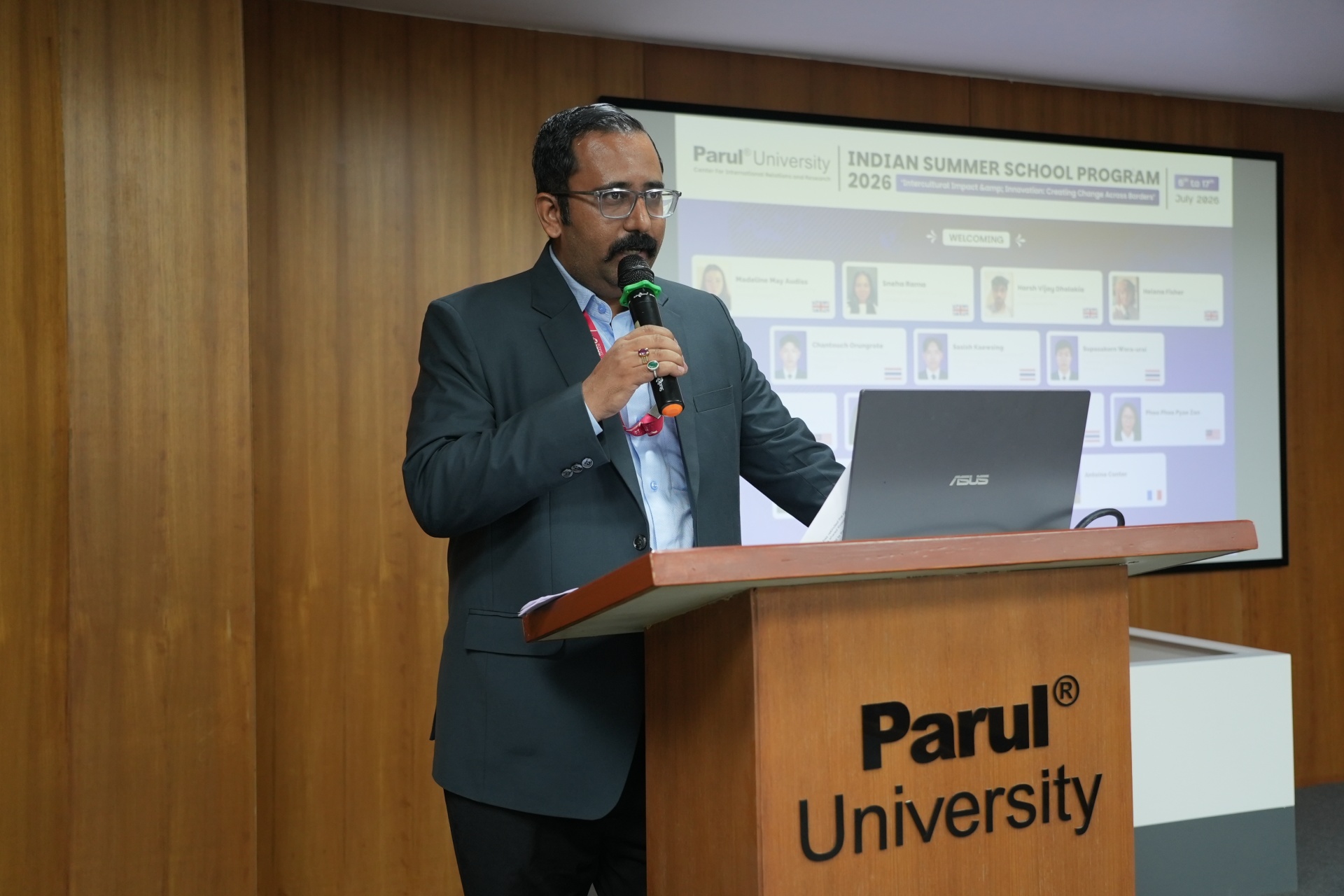
The July 2026 cohort brought fourteen students from seven countries into one classroom by the Centre for International Relations & Research, Parul University. Read ahead to unveil what studying in India looks like for a foreign student!
Read more about – A Designer’s-Eye View Through Parul University’s Indian Summer School!
The International Classroom Is the Program
Sneha, a second-year Education Studies student from the United Kingdom, arrived expecting a room of Indian and British students. What she found instead reshaped the whole experience: classmates from Madagascar, Ghana, Bangladesh and Zimbabwe, among others.
That composition changed what her coursework meant. Her subject examined how inequality, gender gaps and social structures shape access to education across different countries, and the classroom turned an abstract syllabus into a set of first-hand accounts. She was not reading about other education systems; she was sitting beside people who had grown up inside them.
“Now I’ve got the knowledge of the countries I haven’t been to, the way their education systems work, and the hierarchy that works there.” – Sneha, Education Studies, Nottingham Trent University
A student can read about another country in a library anywhere. Learning alongside people from seven countries at once is a different kind of education, and it is the specific thing an international cohort in India offers.
You can read about another country’s schools in any library. Sitting beside someone who grew up in them is a different education.
Read more about – Learning, Culture & Connection – Indian Summer School Journey at Parul University!
Why Study in India for International Students?
Studying in India is a growing option for international students, and it sits within a deliberate national effort. The National Education Policy 2020, published by the Ministry of Education, calls explicitly for the internationalisation of Indian higher education, and the Government of India pursues it through the Study in India initiative, which positions the country as a study destination and eases the path for inbound students.
For Parul University specifically, an international student joins a substantial existing community. Students from more than 75 countries and partnerships with over 120 universities worldwide mean that a visiting student is not an isolated novelty but part of an established international presence on campus. Helena, a Fine Arts student who came to the program by way of her studies in the United Kingdom, left with both Indian friends and friends among the international students already studying at Parul University.
The Honest Side of Studying in India!
- A residential, boundaried campus: Several students came from universities woven into a city centre, where you walk out into the town at will. Parul University is a large, self-contained residential campus, secured and about an hour from the city. It took adjustment, and several concluded it was a genuine advantage for focused study. Helena called it an almost perfectly isolated place to study, and meant it well.
- A fixed daily timetable: Regular classes each day, in place of the once-a-week tutorials they were used to. Demanding at first, and several came to enjoy the structure.
- Shared hostel rooms: Three or four students to a room, rather than the single rooms common in the UK. As several noted, this made friendships form much faster than they would have otherwise.
- Communication cues: The Indian head-nod and a more indirect style of classroom feedback briefly left some of the cohort unsure how to read a room, until the cues became familiar.
- The climate: Warmer than the cooler countries they came from, and something that took a few days to settle into.
Sneha was clear-eyed that the early communication gap was a gap to cross, not a fault to blame. She recognised that tutors likely read the group’s initial quiet as disengagement when it was closer to careful listening from students still decoding an unfamiliar rhythm of feedback. Treating unfamiliar cues as information rather than an inconvenience is, in the end, the central skill that studying abroad teaches, and this cohort was learning it in real time.
The Warmth That Surprised Them!
The single observation the students returned to most often was not academic at all. It was how readily strangers offered warmth and help.
“If you’re sitting by yourself, they’ll just come and speak to you. When you’re walking around, if you’re alone, they’ll smile at you.” – Sneha, Education Studies, Nottingham Trent University
For students used to a more reserved culture at home, this was disarming, and it recurs across the interviews as the detail they were most certain they would carry back. It is also, for a nervous international student weighing a first trip to India, probably the most reassuring thing in this entire account: the people are the easy part.
Her advice to anyone considering a program like this was unqualified, and it is worth ending on because it comes from someone who arrived reserved and left with a network across several continents.
“Honestly, do it. You’ll meet the nicest people, not just from India, but from around the world. I feel like it’s a one-time opportunity. So don’t overthink, just go for it.” – Sneha, Education Studies, Nottingham Trent University
Read more about – What Makes a Summer School in India Worth It?
FAQs
What is it like to study in India as an international student?
According to students on Parul University's Indian Summer School Program, the standout feature is the international classroom, with the July 2026 cohort drawing fourteen students from seven countries. Alongside that come real adjustments: a residential, boundaried campus about an hour from the city, a fixed daily timetable, shared hostel rooms, and unfamiliar communication cues. Students consistently highlighted the warmth of the people as the easiest and most memorable part.
Is India a good place to study for international students?
India is an increasingly established destination, supported by the National Education Policy 2020 and the Government of India's Study in India initiative, both aimed at welcoming international students. At Parul University, an international student joins a community drawn from more than 75 countries. Students in the 2026 summer program described the experience in strongly positive terms, valuing the global classroom and the friendliness of the people they met.
What adjustments do international students face in India?
Students on the 2026 Indian Summer School named a residential campus set apart from the city, a fixed daily class timetable in place of weekly tutorials, shared hostel rooms rather than single rooms, unfamiliar communication cues such as the Indian head-nod and indirect feedback, and a warmer climate. Several came to view the contained campus and shared rooms as advantages, since they aided focus and helped friendships form quickly.
Will international students find a community at Parul University?
Yes. Parul University reports students from more than 75 countries and partnerships with over 120 universities worldwide, so a visiting international student joins an established international presence rather than arriving in isolation. Students in the summer program made friends both among Indian students and among the international students already studying at the university.
How do I start studying in India as an international student?
A short program such as the Indian Summer School is a low-commitment way to experience studying in India before committing to a longer course. It runs through Parul University's Centre for International Relations and Research, which also offers semester exchanges, international internships and other mobility options. The Government of India's Study in India initiative provides a national entry point for inbound international students.