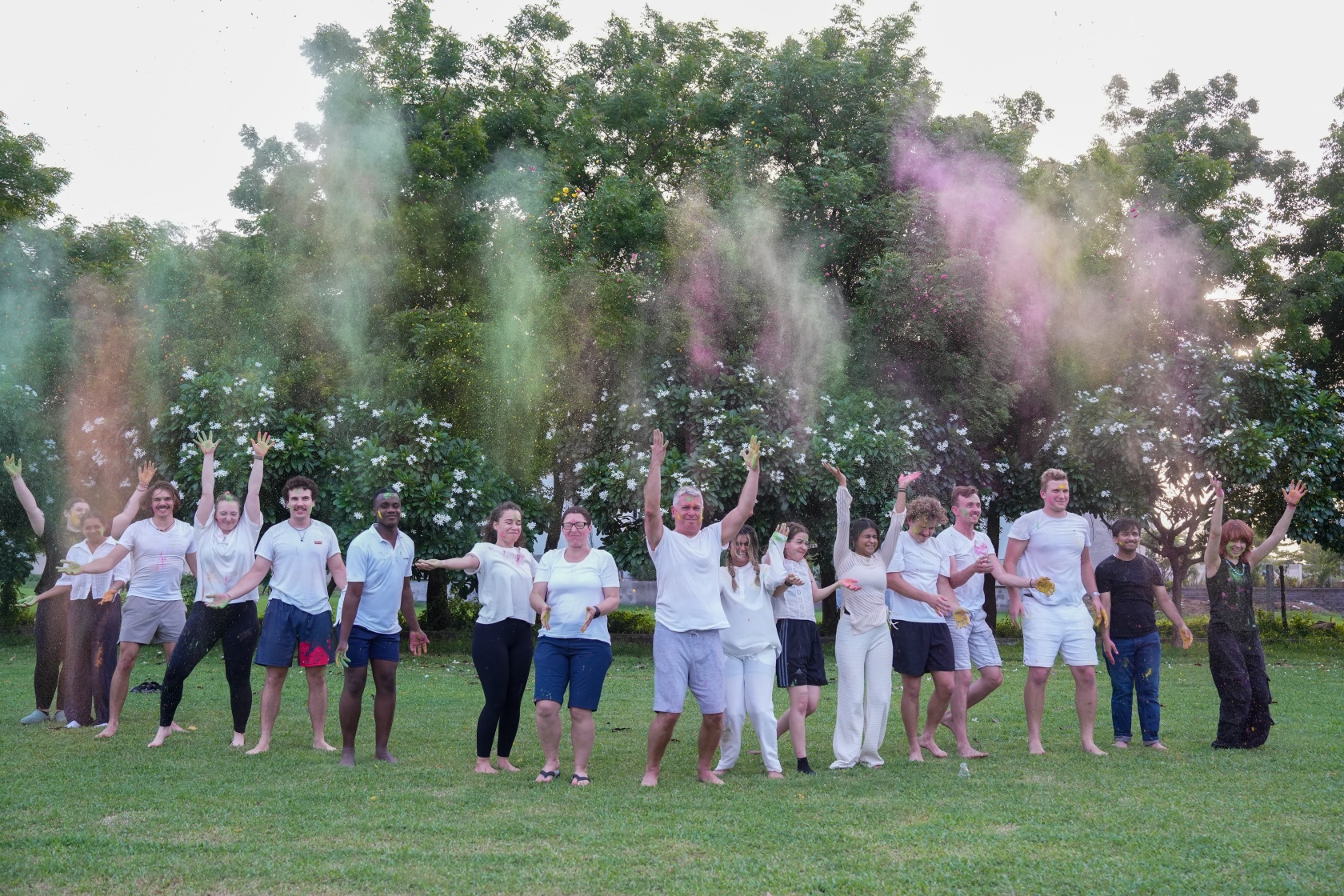
An interior design student and a fine arts student do not look at a city the way a tourist does. A palace facade is a study in proportion and light; a temple carving is a catalogue of ideas; a street market is a riot of colour, texture and material to be filed away for later. When Parul University’s Indian Summer School brought a cohort of international students, several of them designers, to Vadodara in July 2026, the city gave them a great deal to look at.
This companion piece is a guide to the things to do in Vadodara that most impressed those students, and to the heritage and culture behind them. It is written partly as a heritage guide, because Vadodara rewards that treatment, and partly as an account of what the cultural side of a study program in India actually offers.
Read more about – Learning, Culture & Connection – Indian Summer School Journey at Parul University!
The Heritage Architecture: Palaces and Temples
The cohort’s city tour took in several of Vadodara’s landmarks, and for the design students, they were the highlight of the fortnight. India’s built heritage is overseen in part by the Archaeological Survey of India, and Gujarat’s wider heritage is promoted through Gujarat Tourism, but a heritage site lands differently when you are being trained to build things yourself.
- Laxmi Vilas Palace: The vast royal residence that anchors any visit to Vadodara, and a study in scale and ornament for anyone with a design eye.
- Sursagar Lake: The lake at the centre of the city, and a fixture of the cohort’s tour.
- Poicha temple: A temple complex whose architecture, water features and lighting left a particularly strong impression on the group.
- Kirti Mandir: Named by an interior design student as her favourite place in the city, precisely for the small design details she could study up close.
Madeline, an Interior Design student from the United Kingdom, spent long stretches simply looking at the detail of old buildings, temples and carvings for the ideas they gave her. For a student of interior architecture, that is not sightseeing; it is research, and she said as much, describing the detail as a direct source of creative ideas. Kirti Mandir was her favourite, chosen for exactly that reason.
Helena, whose own work is in sculpture, was similarly struck. She described the temple architecture as among the best things she experienced in India, which for a sculptor is a considered judgement about form and craft rather than a passing compliment. The point worth drawing out is that a city like Vadodara offers a working design education in stone, and the students who came trained to see it got the most from it.
For an interior design student, a temple carving is not a photo stop. It is a source file.
Read more about – What Makes a Summer School in India Worth It?
Living Culture: Garba, Classical Performance and Navratri
Heritage in Vadodara is not only in its buildings. The program included cultural sessions that put the students inside living traditions rather than in front of them.
A Garba session, the traditional Gujarati dance most associated with the Navratri festival, was a highlight, and for one student it was unexpectedly personal. Sneha, whose family has Gujarati roots, found the Garba connected directly to her own Navratri traditions, making the moment both a new experience and a piece of inheritance at once. The cohort was also shown performances drawn from several Indian states, widening their sense of the country’s cultural range well beyond Gujarat in a single fortnight.
“I have no words for it. It’s fantastic. Here it’s absolutely crazy. Wonderful.” – Sneha, on the temple architecture and cultural program
Experiencing a festival tradition by taking part in it, rather than watching it, is the kind of cultural immersion that a program can arrange and a tourist rarely stumbles into. It is one of the genuine advantages of seeing a city through a structured study program.
More Things to Do in Vadodara: The Markets, Colour and Craft!
For students used to fixed prices and supermarket aisles, Vadodara’s street markets were their own kind of education. The cohort visited local markets in the city, and they became a recurring highlight.
The experience of choosing goods by hand and bargaining for a price was unfamiliar and, for most of the students, delightful. Madeline described walking the small streets and taking in the clothes, jewellery and handmade goods, finding every shop stocked with something different, and bought gifts for herself and her family. The markets read, in the students’ accounts, as the most colourful and characterful part of daily life in the city.
For the design students, the markets were also material in the literal sense: textiles, ornament, colour and craft, seen at close range and in use rather than in a museum case. A market is where a city’s visual culture is on everyday display, and it is one of the most useful things to do in Vadodara for anyone whose work is visual. If you’re passionate about how the global design economy is thriving, enrol on Parul University’s Bachelor’s Programs in Design and get to experience globally recognised programs!
Seeing India for the First Time
Alongside the heritage and the culture, the students met the ordinary surprises of a first visit to India, and their honesty about these is part of what makes their enthusiasm credible.
Cows on the roads, unremarkable to any resident, were genuinely novel to students from countries where cattle stay behind farm fences. The free-flowing traffic of Vadodara, cars, bikes, auto-rickshaws and pedestrians all moving together, was intimidating at first and then, within a few days, simply normal. The food, which several had been warned would be too spicy, was a happy surprise: Madeline, braced for the worst, found she liked it, and Helena found the food culture far more diverse and interesting than what she was used to.
None of this is heritage in the formal sense, but it is the texture of the place, and it is what turns a list of monuments into an experience of a city. The students came for a program and left with a city they had come to know.
Read more about – Study in India at Parul University – A Global Learning Experience for International Students!
FAQs
What are the best things to do in Vadodara?
Vadodara's heritage highlights include Laxmi Vilas Palace, the vast royal residence at the heart of the city, Sursagar Lake, the Poicha temple complex, and Kirti Mandir, noted by visiting design students for its intricate detail. The city's street markets, rich in textiles, jewellery and handmade goods, are a further highlight, and cultural experiences such as Garba, the traditional Gujarati dance, offer a route into living heritage.
What is there for design and art students to see in Vadodara?
A great deal. International design students on Parul University's summer program singled out the city's heritage architecture, the palaces, temples and stone carving, as a direct source of creative ideas, with one interior design student naming Kirti Mandir her favourite for its detail and a fine arts student calling the temple architecture among the best she saw in India. The street markets add textiles, ornaments, and crafts seen at close range.
What is Garba, and can visitors take part?
Garba is a traditional Gujarati dance most closely associated with the Navratri festival. On the Indian Summer School Program, international students took part in a Garba session as part of the cultural program, experiencing the tradition by participating rather than watching. For one student of Gujarati heritage, it connected directly to her own family's Navratri traditions.
Is Vadodara a good place for international students?
International students on Parul University's 2026 summer program found Vadodara rich in heritage and culture and consistently praised the friendliness of the people. The city offers palaces, temples, lakes and lively markets, alongside the ordinary novelties of a first visit to India, from cows on the roads to bustling traffic and diverse food. Several students, warned the food would be too spicy, found they enjoyed it.
How can students experience Vadodara's culture through a program?
Parul University's Indian Summer School Program includes a structured cultural component: a city tour of heritage sites such as Laxmi Vilas Palace, Sursagar Lake and the Poicha temple, cultural performances drawn from several Indian states, and participatory sessions such as Garba. A structured program arranges immersive experiences, like taking part in a festival dance, that an independent visitor would rarely encounter.