Haridwar is not a classroom. It is the operational centre of India’s Ayurvedic and yogic tradition, where the University of Patanjali conducts research collaborations with AIIMS, where Moksha Ayurveda Hospital develops Ayurvedic injections, and where pharmaceutical manufacturers like Akums produce medicines under GMP standards. For Parul University BAMS students, spending time inside this ecosystem with clinicians, researchers, and industry professionals was learning that connects Samhita texts to operating hospitals and production floors.
The tour was organised as part of Parul University’s Practical Learning Tour programme, which runs 146 tours across 19 cities covering 280 companies. The BAMS programme operates within a university holding NAAC A++ (CGPA 3.55), with India’s first NABH-accredited Ayurveda teaching hospital in Gujarat (Parul Ayurved Hospital, 268 IPD beds, 9 speciality OPDs, Panchakarma and Shalyatantra facilities). 100 percent scholarship students were included in the tour cohort.
Session 1: University of Patanjali (Prof. Mayank Kumar Agrawal, Pro Vice-Chancellor)
The Ayurveda tour started at Patanjali University, and the session was started by Prof. Mayank Kumar Agrawal. He is the pro vice chancellor. Students explored the Science College and herbal gardens there to gain insights into the textbook knowledge. The professor then explained about the global journey of the Ayurveda. How these medicines and practices are getting acceptance in Sri Lanka and Australia, with potential recognition in the UK and Germany. Uttarakhand’s GDP has an almost 5.7% contribution from wellness tourism, where they have international patients visiting the Patanjali Centre for treatment. Prof. also mentioned that they have research collaborations with AIIMS to work on the lifestyle-related disorders and make new formulations positioning Ayurveda as evidence-based and globally relevant. In this session he shared how a patient who had cancer at the fourth stage is reportedly cured through the combination of Ayurvedic practices and medicines like Rasa Aushadhis and building mindset. Such cases require deep scrutiny backed by a scientific approach. But, to show the importance of Ayurveda, more emphasis is put on the positive mindset.
“The global acceptance of Ayurveda in the coming decade is increasing due to mainly research in various areas of medicines, treatment modalities, and evidence-based validation.”
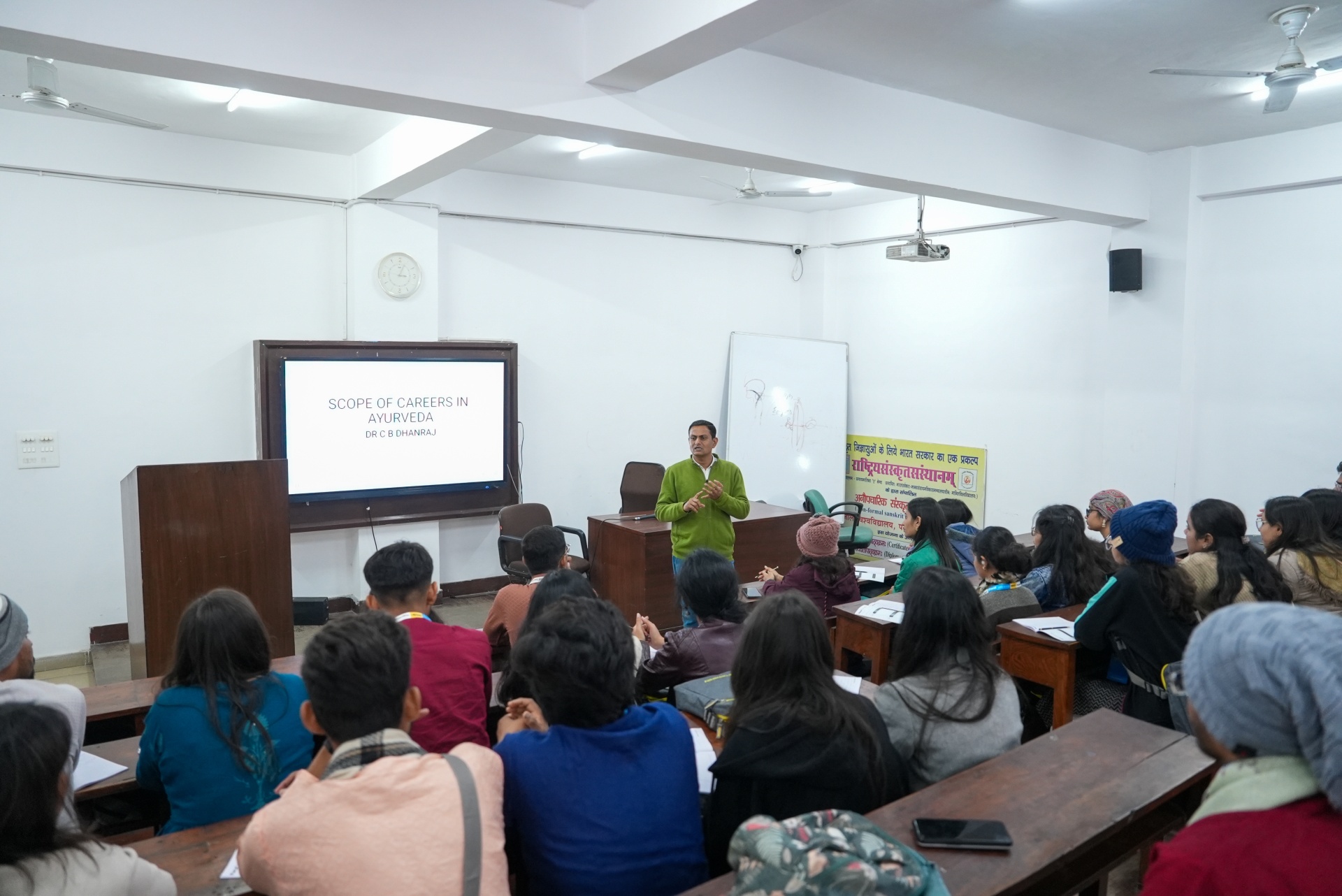
Session 2: Patanjali Ayurveda College (Dr Ramakant Marde and Dr C.B. Dhanraj)
Session two was led by Dr. Ramakant Marde (Dean of PG Studies) and Dr. C.B. Dhanraj (Director Of PG Studies) focused on PG education, clinical practice, and research. Topics and factors that cure the diseases are:
- Tridosha: Keeping a balance of vata, pitta, and kapha; imbalance in this can lead to illness.
- Rasayana Therapy: not only a treatment but a way to enhance immunity, longevity and overall vitality
- Diet Changes: Treatment becomes successful only when the diet is followed.
- Counselling: The patient’s counselling is done depending on the treatment required to work on the mindset.
- In-silico research: Computational analysis and simulations as a bridge between traditional knowledge and modern scientific validation.
- Credibility of Ayurvedic Medicines: Where right formulas and purity work.
- Global Stacks: Ayurveda is increasingly becoming accepted by the global leaders and countries; students are suggested to get BLS and ACLS.
Session 3: Clinical Skills and Personal Growth (Dr Swastik Jain and Dr Bhaskar Sharma)
Dr. Swastik Jain and Dr. Bhaskar Sharma took session three, where they talked about their journey of becoming qualified Ayurvedic practitioners.
They emphasized observation skills and proper patient history-taking as foundational. The discussion covered research-based and clinical-based learning; developing command over selected diseases for specialization; building patient trust through effective communication, the role of psychiatry in Ayurveda (mental health as integral to the mind-body framework); government career opportunities; and personality development, including spoken English, technology proficiency, and basic psychology.
Session 4: Moksha Ayurveda Hospital (Dr Uttam Kumar, Anorectal Surgeon)
Session four was about Dr. Uttam Kumar, an Anorectal Surgeon and Ayurvedic specialist. He focused on how Ayurvedic principles are adopted in a hospital setting. Treatments are designed in a manner that they match the individual constitution, symptoms and underlying imbalances.
He discussed Ayurvedic management of liver disorders, hepatitis, and burn cases, and introduced the development of an Ayurvedic injection, this all shows the efforts to modernise traditional practices without losing their essence.
He emphasised the concept of Yukti (logical reasoning): every medicine should be modified based on the practitioner’s judgment for each individual case. Specific preparations discussed included Sapta Amruta Loha for anaemia, and herbs like Manjishta and Asaka for skin diseases and infections.
Session 5: Quadra Medical Institute (Dr Rishabh Jain, Dean)
Dr. Rishabh Jain focused on how classical Ayurvedic principles apply to modern disease management. His session on diabetes (Prameha) explained it as a group of variations, each requiring specific treatment tailored to patient constitution and disease stage. The key concept was Strotas: internal channels facilitating movement of nutrients, fluids, and waste. Disruption or blockage in these channels is a major contributing factor to disease. He also explained how Ayurvedic treatment works at the cellular level, linking traditional concepts with modern biological understanding.
Session 6: Ayurveda Kumbh (Dr Gopi Krishna, Ayurveda Specialist)
Dr Gopi Krishna introduced students to Pottali preparation, an advanced and specialised area of Ayurvedic therapeutics involving meticulous combinations of herbs and minerals. Each step affects potency and effectiveness. He discussed Pottali’s application in cancer treatment and presented a case study where Pottali preparation contributed to disease management. This session connected directly to the Rasa Aushadhi discussion at Patanjali University, demonstrating a specialised branch of Ayurveda that extends beyond preventive and supportive care into managing critical conditions.
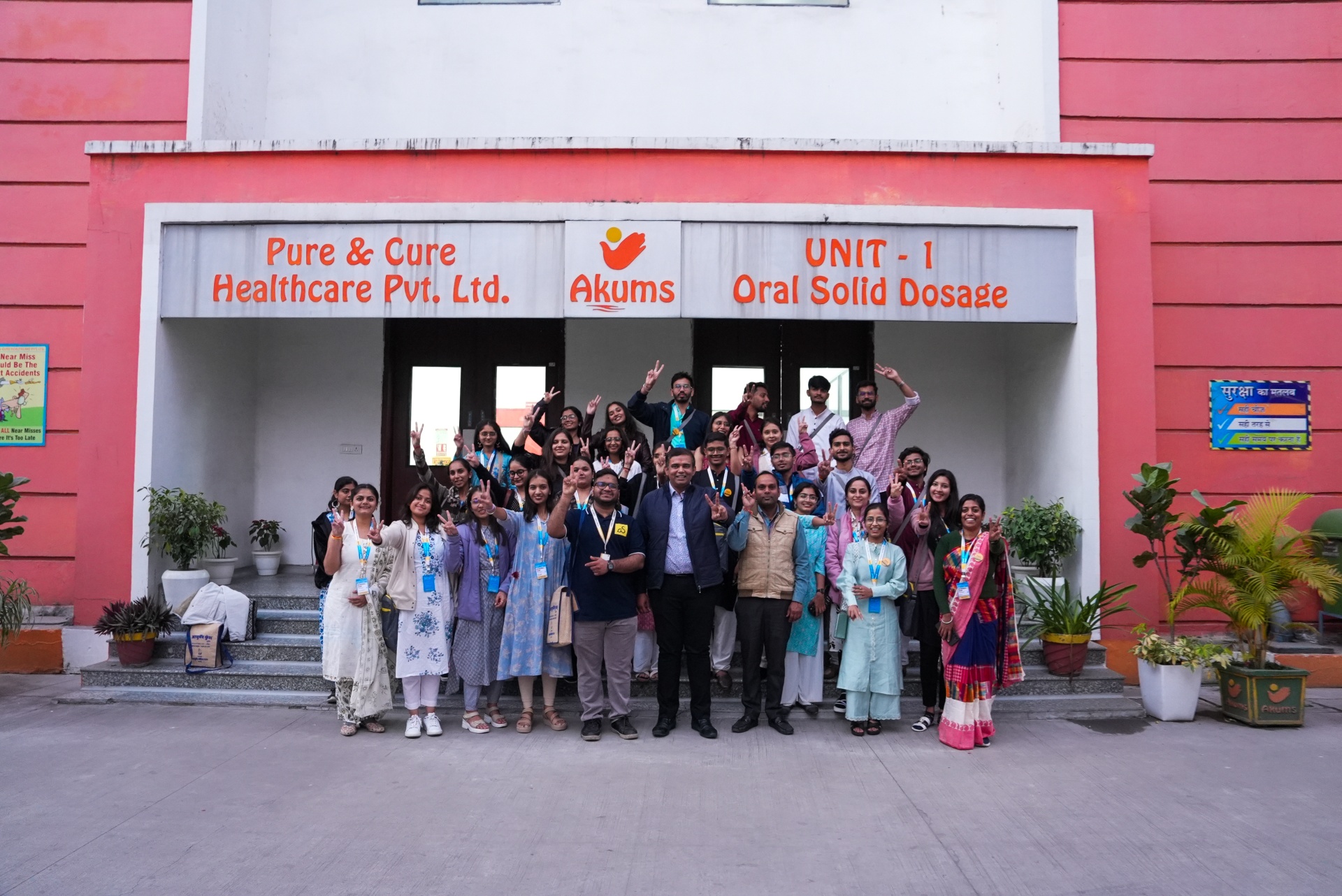
Session 7: Akums Drugs and Pharmaceuticals (Mr Rahul Chauhan, Senior Operations Manager)
Mr. Rahul Chauhan guided students through the pharmaceutical manufacturing side: raw material handling, formulation, packaging, and quality control. Students toured manufacturing units and the QC laboratory, observing how medicines are tested for safety, purity, and effectiveness before approval. This session provided industrial exposure connecting pharmaceutical theory to production, quality assurance, and distribution. It demonstrated that behind every Ayurvedic or allopathic medicine lies a complex manufacturing process dedicated to patient safety.
The Institutional Foundation Behind the Tour
This tour is one of 146 Practical Learning Tours Parul University runs across 19 cities covering 280 companies. The BAMS programme sits within a broader ecosystem: NAAC A++ (CGPA 3.55), India’s first NABH-accredited Ayurveda teaching hospital in Gujarat (Parul Ayurved Hospital, 268 IPD beds, 9 speciality OPDs), Panchakarma and Shalyatantra surgical facilities, Rs 58.31 crore in government-funded research through the Micro Nano Research and Development Center (MNRDC), 7 NABH-accredited hospitals across the university (1 Allopathy and Super-speciality, 2 Ayurved, 4 Homoeopathic), and 2,200+ recruiters with 60 LPA highest placement.
Frequently Asked Questions
What did Parul University BAMS students see at Patanjali University?
Pro Vice-Chancellor Prof. Mayank Kumar Agrawal briefed students on Ayurveda's globalisation (Sri Lanka, Australia, potential UK and Germany recognition), research collaborations with AIIMS, wellness tourism (5.7 percent of Uttarakhand GDP), and the Amit Vaidya cancer recovery case using Rasa Aushadhis. Students also toured the Science College and herbal garden.
Is Parul University good for BAMS?
Parul University operates India's first NABH-accredited Ayurveda teaching hospital in Gujarat (268 IPD beds, 9 speciality OPDs, Panchakarma and Shalyatantra facilities). NAAC A++ (CGPA 3.55). The Ayurveda tour to Haridwar covered Patanjali University, Moksha Hospital (Ayurvedic injections), Quadra Institute (cellular-level treatment), Ayurveda Kumbh (Pottali cancer therapy), and Akums Pharmaceuticals (GMP manufacturing). 100 percent scholarship students participated.
What is Pottali preparation in Ayurveda?
An advanced therapeutic formulation involving meticulous combinations of herbs and minerals. Dr Gopi Krishna at Ayurveda Kumbh explained that each preparation step affects potency and effectiveness. Pottali is used in Ayurvedic protocols for serious conditions including cancer. A case study was presented during the session demonstrating clinical application.
What is the concept of Yukti in Ayurvedic practice?
Yukti means logical reasoning applied to treatment modification. Dr Uttam Kumar at Moksha Ayurveda Hospital explained that practitioners should not blindly follow standard formulations but adapt treatments to each patient's constitution, symptoms, and condition. This makes Ayurveda dynamic rather than rigid, requiring both knowledge and clinical judgment.