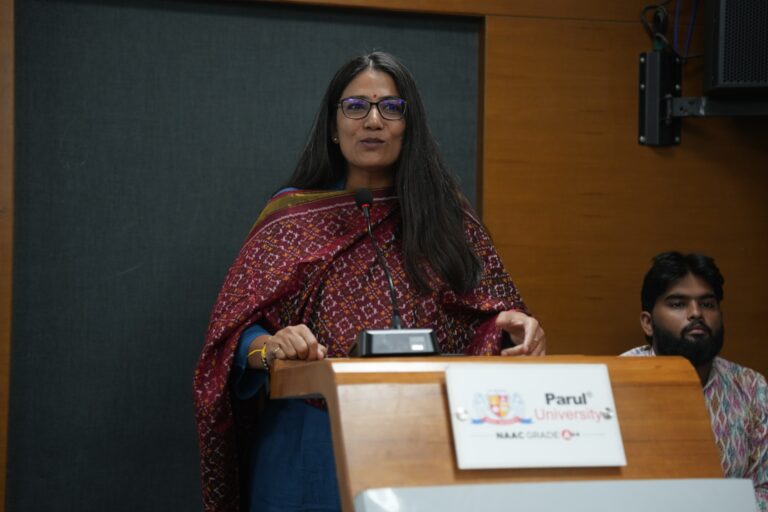
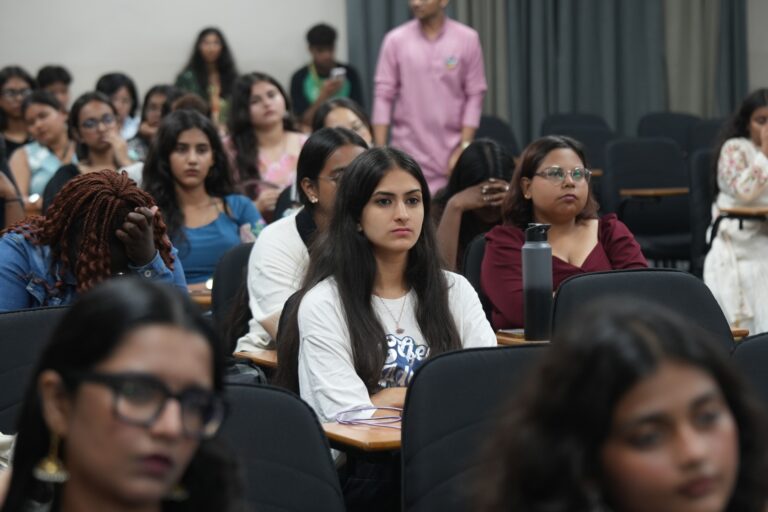
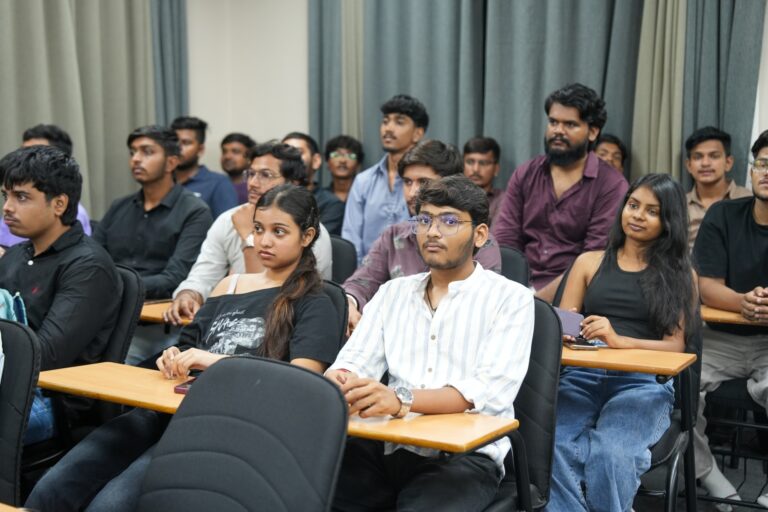
Students are divided into pairs and given five minutes to design a wallet. Rule: no talking. Results are creative: magnetic phone attachments, cross-body bags, folding chain purses. But when asked which product they would buy with their own money, most say only their own. The lesson: nobody asked the customer. Everyone designed for themselves. Hence, PIERC aims to tighten the ideas that solve customer’s problem.
The activity is repeated with a change: before designing, students interview their partner (the customer) and note requirements. Results are dramatically better. One user needs space for a comb, medicine, and paper soap. Another hates bulky wallets, so the designer uses foam. The facilitator calls this the butterfly effect: when you ask the customer first, everything improves. He used a daily life example: when hostel food is bad on Sunday, students discuss what to order before ordering. That discussion is design thinking.
The Five Stages
1. Empathize
Connect with the customer. Feel what they feel daily. If the founder does not know the customer’s problems, the founder cannot solve them.
2. Define
State the problem clearly. Set a specific goal. If the goal is vague, the solution will be vague.
3. Ideate
Think of solutions. Tata sold Indigo and Nano for years. When they understood consumers wanted style, they created the Harrier. Creativity must still follow standards (ISO, BIS).
4. Prototype
Make a rough version. The first roti you made was not round. It takes a month of five rotis a day to get it right. The first 149 rotis are prototypes. Each teaches something. Helios made 300+ prototypes in two years before finalising.
5. Test
Try with real users. If it fails, figure out why, fix it, try again. Design thinking is a cycle: fail, go back, fix, repeat.
The MVP: The 150th Roti
The Minimum Viable Product is the version good enough for a real customer. The first 149 rotis are prototypes. The 150th is the MVP. Not the final product. The first version that proves the idea works.
Real-World Examples
- Square water bottles: round bottles leave wasted space in boxes. Square fits more units, solving logistics for shopkeepers and delivery companies.
- Train bunk water bottles: no space to tilt a bottle on the top bunk. Side handles solved the problem. Small design change, real user impact.
Check how Affordable Innovation: PIERC x BFH Switzerland can be achieved.