
Gist of 13 Concepts by C-Suite Executives
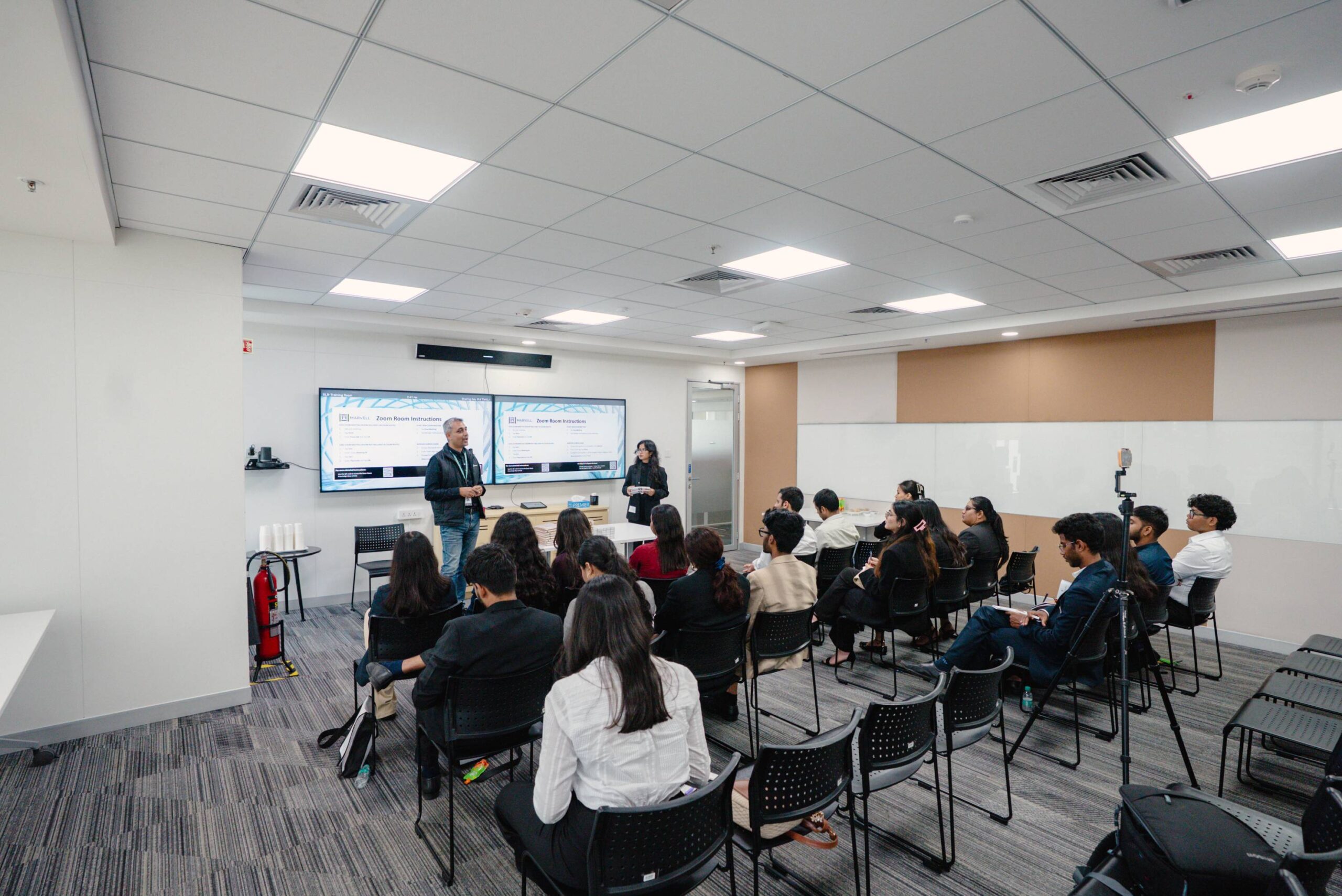
- Source: sessions 13 senior business leaders conducted with nine Parul University students during the Business Leadership Programme in Bangalore (7 to 10 October 2025)
- Concept 1: First Principles Thinking (taught by Mr. Rishikesh SR of Rapido, Mr. Sateesh KV of Acko, and Mr. Sanjeev Kumar Singh of Ather Energy)
- Concept 2: Eudaimonia (taught by Mr. Viren Shetty at Narayana Health)
- Concept 3: The Palm Tree Principle (taught by Mr. Atul Ujagar, former Managing Director of Nike Sourcing India)
- Concept 4: The 5 Ps – Proper Planning Prevents Poor Performance (taught by Mrs. Sudha Sankaran at Alstom Global Finance Centres)
- Concept 5: Learn, Unlearn, Relearn (taught by Mrs. Sudha Sankaran at Alstom)
- Concept 6: Trust as Default (taught by Mr. Rishikesh SR at Rapido)
- Concept 7: Outlier Success Requires Outlier Behaviour (taught by Mr. Viren Shetty at Narayana Health)
- Concept 8: Ears to the Ground (taught by Mr. Rishikesh SR at Rapido)
- Concept 9: Insurance Hierarchy Inversion (taught by Mr. Sateesh KV at Acko)
- Concept 10: Enabler versus Gatekeeper HR (taught by Mr. Subramanian Kumar at Zepto)
- Concept 11: Bloom Where You Are Planted (taught by Mr. Navin Bishnoi at Marvell Technology)
- Concept 12: 48 Laws of Power versus 21 Irrefutable Laws of Leadership (compared by Mr. Atul Ujagar)
- Concept 13: Boundaryless Thinking (taught by Mr. Sateesh KV at Acko)
Parul University Sponsors 9 Students for 4-Day Industry Programme
1. First Principles Thinking
Definition
First principles thinking is the discipline of solving a problem by breaking it down to its most basic, irreducible elements (the first principles) and reasoning upward from there, rather than working by analogy or copying how others have solved similar problems. It was popularised in the modern business context by founders like Elon Musk, but the idea dates back to Aristotle in ancient Greece.
Who Taught It at the Parul University Programme
- Rishikesh SR, Co-founder of Rapido: explained how Rapido designed its low fixed daily subscription fee for drivers from scratch rather than copying the traditional high-commission model used by competitors
- Sateesh KV, Chief People Officer of Acko: explained how Acko inverted the traditional insurance hierarchy by rethinking what an insurance company actually exists for, starting with customer needs rather than cost management
- Sanjeev Kumar Singh, Chief Operating Officer of Ather Energy: explained how Ather Energy builds around fundamentals rather than chasing electric vehicle trends
How It Is Applied in Practice
- Before starting a project, state the assumptions being inherited from competitors or past experience
- Ask whether each assumption holds if you start from zero
- Identify which assumptions are fundamental (physics, human behaviour, economics) and which are just conventions
- Rebuild the solution from the fundamental constraints up
- Accept that the result may look unusual or go against industry practice
- If you’re interested in building your career in business domain, then delay not and enrol into Parul University’s MBA Program.
2. Eudaimonia
Definition
Eudaimonia (pronounced you-dye-MOH-nee-ah) is a Greek philosophical concept from Aristotle‘s ethics, often translated as human flourishing or the satisfaction of meaningful work. It refers to the fulfilment that comes from living a purposeful, virtuous, and meaningful life, as distinct from mere pleasure or material satisfaction. In modern business contexts, it is used to explain why people stay in demanding roles beyond what salary alone would justify.
Who Taught It at the Parul University Programme
- Viren Shetty, Executive Vice Chairperson of Narayana Health: used the concept during his Day 3 session to explain why healthcare professionals stay in high-stress, emotionally demanding roles
How It Is Applied in Practice
- Organisations that rely purely on salary for retention produce burnout and attrition
- People stay in jobs where they feel impact, purpose, and fulfilment
- Leaders who design roles around Eudaimonia build more resilient teams
- The test: if the salary disappeared tomorrow, would the work still feel meaningful to the person doing it
- In healthcare specifically, Eudaimonia explains why doctors and nurses work through crises that pure financial incentive alone could not sustain
3. The Palm Tree Principle
Definition
The Palm Tree Principle is a framework for realistic self-assessment and goal-setting. It uses a simple botanical metaphor: a palm tree cannot become a coconut tree no matter how hard it tries or how much it wants to, but a palm tree can become the best possible palm tree. The principle argues that trying to become fundamentally different from who you are is a losing strategy, while maximising your actual strengths and capabilities is where real growth happens.
Who Taught It at the Parul University Programme
- Atul Ujagar, former Managing Director of Nike Sourcing India: used the metaphor during his Day 3 leadership session after 28 years at Nike across more than 50 countries
How It Is Applied in Practice
- Identify your actual strengths through honest self-assessment, not aspirational self-image
- Maximise those strengths rather than trying to fix fundamental weaknesses
- Avoid unrealistic comparisons with people who have fundamentally different capabilities
- Accept the limits of what you can become, then go as far as possible within those limits
- The principle is not an excuse for low ambition; it is a rejection of the self-help myth that anyone can become anything
- Mr. Ujagar paired this with a written clarity exercise: write down (do not just think about) where you want to be in 5, 10, and 25 years, and what you want people to say about you after your death.
4. The 5 Ps (Proper Planning Prevents Poor Performance)
Definition
The 5 Ps is a memorable five-word business mantra: Proper Planning Prevents Poor Performance.
It argues that poor performance is almost always a downstream symptom of inadequate upstream planning. The framework is widely used in project management, manufacturing, and operations contexts as a reminder to invest in planning discipline before execution begins.
Who Taught It at the Parul University Programme
- Sudha Sankaran, Managing Director of Alstom Global Finance Centres: used the mnemonic during her Day 1 leadership session
How It Is Applied in Practice
- Before executing a project, ensure planning is thorough and documented
- When performance problems appear, trace them back to planning gaps rather than blaming execution
- Treat planning discipline as a daily habit, not an occasional workshop
- The mnemonic is deliberately simple so that it can be recalled under pressure
- In a global operations context (Alstom runs teams across India, the Philippines, and Romania), the 5 Ps are particularly valuable because planning errors compound across time zones and cultures
5. Learn, Unlearn, and Relearn
Definition
Learn, Unlearn, and Relearn is a professional development framework popularised by futurist Alvin Toffler. It argues that in a fast-changing world, the real skill is not acquiring knowledge (learning) but being willing to let go of knowledge that has become obsolete (unlearning) and then acquiring new knowledge in its place (relearning). The emotional difficulty of unlearning is the reason many otherwise successful professionals stall mid-career.
Who Taught It at the Parul University Programme
- Sudha Sankaran, Managing Director of Alstom Global Finance Centres: used the framework to explain why continuous learning alone is not enough in today’s business environment
How It Is Applied in Practice
- Accept that the methods, tools, and frameworks learned at the start of a career become obsolete mid-career
- Consciously identify which parts of your expertise are no longer relevant
- Be willing to lose the confidence that comes from mastery of an outdated approach
- Invest in relearning even when it feels uncomfortable and slow
- Leaders who succeed in transformational environments are the ones who can let go of prior expertise without feeling threatened
6. Trust as Default
Definition
Trust as Default is an organisational operating principle that starts from the assumption that employees, partners, and customers are trustworthy and requires specific evidence of abuse before restricting their freedom. It is the opposite of the traditional corporate approach, which starts from distrust (requiring permission, approval, and monitoring) and extends trust only to those who have proven themselves over time.
Who Taught It at the Parul University Programme
- Rishikesh SR, Co-founder of Rapido: explicitly framed the principle in philosophical terms, saying that children are born with 100 percent trust in everyone and that the world teaches distrust, and that returning to default trust is a deliberate organisational choice
How It Is Applied in Practice
- Rapido does not measure office attendance days; output is the only metric
- The entire company has access to operational data, not just senior leadership
- Drivers can withdraw earnings through any family account of their choice (extending the same trust default to non-employees)
- When abuses appear (one account accumulating earnings for 100 people), the response is to patch the specific gap, not to change the underlying default
- The discipline is to maintain the default even when exploitation is possible, because the cost of blanket distrust is higher than the cost of occasional patching
- The above listed practices can be mastered by pursuing MBA in AI & Technology Management wherein you will get an exposure of how to take enhanced financial & business decisions.
7. Outlier Success Requires Outlier Behaviour
Definition
This principle states that exceptional results come from exceptional effort, and exceptional effort almost always looks uncomfortable, unsustainable, or strange from the outside. The implication is that most people are unwilling to do the things that produce outlier outcomes because those things feel abnormal while they are happening. The ones who are willing to do the unglamorous, repetitive, strange work are the ones who produce the results that look magical from outside.
Who Taught It at the Parul University Programme
- Viren Shetty, Executive Vice Chairperson of Narayana Health: used the principle as one of the defining lines of his Day 3 session, documented across multiple student LinkedIn posts.
How It Is Applied in Practice
- Accept that average behaviour produces average results, regardless of intention or talent
- Identify the specific uncomfortable habits that outlier performers have in common
- Adopt those habits even when they feel strange or socially odd
- Expect criticism and misunderstanding from people who see the effort from outside
- Measure results, not how sustainable or comfortable the process feels
8. Ears to the Ground
Definition
Ears to the Ground is an organisational principle that prevents product and design teams from losing touch with the reality of the people they build for. At Rapido, the principle is enforced as a company mandate: every employee is required to take a minimum number of rides as a customer and a minimum number of rides as a captain every month. The rule is not a suggestion; it is a structural mechanism that prevents employees from designing in isolation.
Who Taught It at the Parul University Programme
- Rishikesh SR, Co-founder of Rapido: described it as an internal operating principle at Rapido
How It Is Applied in Practice
- Convert empathy from a soft value into a hard rule
- Require employees to use the product they build as both customer and producer
- Enforce the rule through HR systems, not through cultural exhortation
- Rishikesh SR’s line captured the principle: ‘you can not solve a problem that you can not empathize with; your eyes only see what your mind knows’
- The result is product decisions that account for real user friction rather than theoretical assumptions
9. Insurance Hierarchy Inversion (Customer-Regulation-Cost)
Definition
The Insurance Hierarchy Inversion is a structural reordering of priorities within an insurance company. The traditional insurance model orders its priorities as Cost first, then Regulation, then Customer. The inverted Acko model orders priorities as Customer first, then Regulation, then Cost. The inversion is not a marketing slogan; it is a structural choice that affects every downstream decision, from how premiums are calculated to how claims are processed to how products are designed to how employees are hired.
Who Taught It at the Parul University Programme
- Sateesh KV, Chief People Officer of Acko: explained how the inverted hierarchy drives every decision at the company during his Day 4 session
How It Is Applied in Practice
- When the customer is genuinely first, the company builds different products than when cost management is first
- Customer experience innovations become possible that would be rejected under a cost-first hierarchy, such as preventive car servicing platform integration and free rides after parties as a safety initiative
- Hiring shifts from cost-per-hire optimisation to quality-of-fit optimisation
- Regulatory compliance remains essential but becomes a constraint on solution design, not the starting point
- The inversion is hard to fake because downstream decisions reveal which hierarchy the company is actually operating on
10. Enabler versus Gatekeeper (HR Reframing)
Definition
The Enabler versus Gatekeeper framework is a reframing of the human resources function. Traditional HR sees itself as the gatekeeper of policy: the approver of requests, the enforcer of compliance, the checker of boxes. This framing creates friction and hostility between HR and the rest of the organisation. The alternative framing sees HR as the enabler: the function that removes obstacles for employees to do their best work. The same policies can be designed either way; what changes is the default posture and the operational priority. If you’re passionate about building a career in HR, then enrol into Parul University’s MBA in Human Resource Program!
Who Taught It at the Parul University Programme
- Subramanian Kumar, Senior Director and Head of People Operations at Zepto: used the reframing to explain Zepto’s approach to managing more than 35,000 workers across dark stores and corporate offices
How It Is Applied in Practice
- Employee-centric policies like salary advance features during emergencies are treated as operational infrastructure, not generosity
- HR systems are designed to minimise friction for employees, not to protect the company from employees
- Response times for employee requests become an operating metric
- The reframing also requires a complementary principle: learn when to say no, because overcommitment breaks trust as surely as gatekeeping does
11. Bloom Where You Are Planted
Definition
Bloom Where You Are Planted is a classic career advice principle: do your best in whatever situation you currently find yourself in, rather than waiting for ideal conditions before committing fully. The phrase originated with St. Francis de Sales in the 17th century but has been adopted widely in modern management literature. It is a counter to the common pattern of young professionals constantly looking for a better role, a better manager, or a better company while underperforming in the one they have.
Who Taught It at the Parul University Programme
- Navin Bishnoi, Country Head of Marvell Technology India: used the phrase as one of his three principles for Parul University students during his Day 4 session.
How It Is Applied in Practice
- Commit to doing the best possible work in your current role, even if the role is not what you ultimately want
- Build relationships and capabilities in your current environment rather than treating it as temporary
- The discipline is to separate dissatisfaction with current conditions from effort in current conditions
- Mr. Bishnoi also paired this with ‘say yes if instead of no but’: approach problems with a solution orientation rather than an objection orientation
12. The 48 Laws of Power versus The 21 Irrefutable Laws of Leadership
Definition
This is a comparative framework for thinking about two opposing schools of leadership philosophy. The 48 Laws of Power by Robert Greene argues that power works through manipulation, deception, and strategic self-interest. The 21 Irrefutable Laws of Leadership by John C. Maxwell argues that leadership works through values, trust, inspiration, and ethical influence. The two frameworks are not merely different tactics; they represent fundamentally different views of what leadership is and what it is for.
Who Taught It at the Parul University Programme
- Atul Ujagar, former Managing Director of Nike Sourcing India: explicitly compared the two books during his session with Parul University students
How It Is Applied in Practice
- Ujagar’s position: power is not the same as leadership; ethical leadership is more sustainable
- Manipulative leadership produces short-term results but destroys trust over time
- Once trust is gone, the leader has nothing left to work with
- His definition of leadership as a direct operational consequence: leadership is the ability to build trust so people take action willingly
- The test: do the people around a leader stay, grow, and recommend the leader to others, or do they leave as soon as they have another option
- His final line: ‘Keep your word. Do not break promises. Your word is your brand. Once you lose that, nothing else matters’
- If you wish to amp your career trajectory from scratch, enrol into Parul University’s MBA in Operation Management program.
13. Boundaryless Thinking
Definition
Boundaryless Thinking is the principle that professionals should not limit themselves to the formal boundaries of their job description. Instead, they should focus on solving problems wherever they see them, even if those problems technically belong to another function or department. The principle is a counter to the traditional organisational pattern in which employees say ‘that is not my job’ whenever they encounter something outside their formal role.
Who Taught It at the Parul University Programme
- Sateesh KV, Chief People Officer of Acko: used the principle to explain how he has been involved in office design, business decisions, and cross-functional projects despite being formally an HR leader
How It Is Applied in Practice
- Define your scope by the problems you can solve, not by the role description in your offer letter
- Be visibly useful across functions rather than protecting your own territory
- Accept that this invites additional work and responsibility in the short term
- Accept that the visibility and career growth that follow are proportional to the scope of problems you have demonstrably solved
- The principle pairs naturally with First Principles Thinking: both require moving past inherited frameworks to focus on underlying problems
Why This Glossary Matters for Parul University Students and Parents
Parents of prospective Parul University students often ask whether undergraduate education in India gives real exposure to how modern businesses actually operate. Students themselves ask whether industry visits are substantive or ceremonial. This glossary answers both questions with specific evidence:
- Each concept listed above was introduced by a named C-suite executive of a specific company during a specific documented session
- The concepts are not abstract theory; they are operating principles the executives use to run their organisations
- PIERC of Parul University supports student founders at all the levels, from idea to pitching to funding. From receiving recognition to Shark-tank Level Recognition, students founders are surely making a mark.
- The nine Parul University students who attended the sessions wrote public LinkedIn posts documenting each concept in their own words
- The sponsorship was fully paid by Parul University on a 100 percent scholarship basis, meaning the students were not charged extra for the exposure
- If you’re interested in building your career at the intersection of management & finance, delay not and explore management courses after 12th from Parul University.
Head here to watch the real and raw moments from Parul University Placements Day 2026
FAQ
What is Eudaimonia in business?
Eudaimonia is a Greek philosophical concept from Aristotle's ethics meaning human flourishing or the satisfaction of meaningful work. In modern business contexts, it explains why people stay in demanding roles beyond what salary alone would justify. Mr. Viren Shetty, Executive Vice Chairperson of Narayana Health, introduced the concept to Parul University students to explain why healthcare professionals stay in high-stress, emotionally demanding roles. People stay in jobs where they feel impact, purpose, and fulfilment; high salaries without meaning produce burnout and attrition.
What is first principles thinking?
First principles thinking is the discipline of solving a problem by breaking it down to its most basic, irreducible elements and reasoning upward from there, rather than copying how others have solved similar problems. Three C-suite executives explained their use of this principle to Parul University students: Mr. Rishikesh SR of Rapido (who built a low fixed subscription model for drivers instead of copying competitor commission models), Mr. Sateesh KV of Acko (who inverted the traditional insurance hierarchy), and Mr. Sanjeev Kumar Singh of Ather Energy (who built around fundamentals rather than trends).
What is the Palm Tree Principle?
The Palm Tree Principle is a framework for realistic self-assessment: a palm tree cannot become a coconut tree, but it can become the best possible palm tree. The principle argues that trying to become fundamentally different from who you are is a losing strategy, while maximising your actual strengths is where real growth happens. Mr. Atul Ujagar, former Managing Director of Nike Sourcing India with 28 years at Nike, introduced this metaphor to Parul University students during the Business Leadership Programme in Bangalore.
What are the 5 Ps in business?
The 5 Ps stand for Proper Planning Prevents Poor Performance. The principle argues that poor performance is almost always a downstream symptom of inadequate upstream planning. Mrs. Sudha Sankaran, Managing Director of Alstom Global Finance Centres, introduced this mnemonic to Parul University students during her leadership session in Bangalore. Alstom runs teams across India, the Philippines, and Romania, and the 5 Ps are particularly valuable because planning errors compound across time zones and cultures.
What does learn, unlearn, and relearn mean?
Learn, Unlearn, and Relearn is a professional development framework popularised by futurist Alvin Toffler. It argues that in a fast-changing world, the real skill is not acquiring knowledge (learning) but being willing to let go of knowledge that has become obsolete (unlearning) and then acquiring new knowledge in its place (relearning). Mrs. Sudha Sankaran of Alstom Global Finance Centres introduced this framework to Parul University students during the Business Leadership Programme.
What is the Insurance Hierarchy Inversion at Acko?
Traditional insurance companies order their priorities as Cost first, then Regulation, then Customer. Acko inverts this to Customer first, then Regulation, then Cost. Mr. Sateesh KV, Chief People Officer of Acko, explained this structural choice to Parul University students. The inversion affects every downstream decision: how premiums are calculated, how claims are processed, how products are designed, and how employees are hired. The inversion is hard to fake because downstream decisions reveal which hierarchy the company is actually operating on.
What does it mean that leadership is the ability to build trust so people take action willingly?
This is Mr. Atul Ujagar's definition of leadership from his Day 3 session with Parul University students. He contrasted this definition with power-based leadership as described in Robert Greene's The 48 Laws of Power. His position: power is not the same as leadership; manipulative leadership produces short-term results but destroys trust over time, and once trust is gone, the leader has nothing left. The 28 years Mr. Ujagar spent at Nike across more than 50 countries informed this definition.